Art Deco sofas are enjoying a resurgence among modern buyers. But they’re not after a modern version; they want the OG.
Original 1920s and 30s Art Deco sofas are beautifully crafted with bold colours, geometric shapes and an opulence that reflects the golden age of Jazz. Who wouldn’t want a piece of that in their living room?
Find a comfy seat as we take you through the key considerations for choosing the right piece of history to suit today’s decor without compromising on authenticity.
Key considerations when choosing an Art Deco sofa
For modern consumers, the Art Deco sofa offers a range of options, from original geometric designs in muted tones and monochrome to later styles with softer, fluid lines, curvature and tapered legs.
1. Room size and layout
The size and layout of your living room are key factors in picking the right Art Deco sofa. In large spaces, oversized sofas work well, while in open-plan rooms, L- and U-shaped sofas give the space structure.
If space is at a premium, but your heart is set on Art Deco, consider a small accent chair like a club chair or a version of a chaise lounge (in fact, there are so many Art Deco chairs that it requires an entirely different blog post to do it justice).
Consider also your ceiling height and the scale of your sofa. Famously, Art Deco sofas have bold, brilliant backrests that vary in size and style. A high-backed sofa with a shaped design requires a taller ceiling than, say, the low profile of a traditional Chesterfield sofa with iconic pin-tucks and rolled arms.
2. Material and upholstery
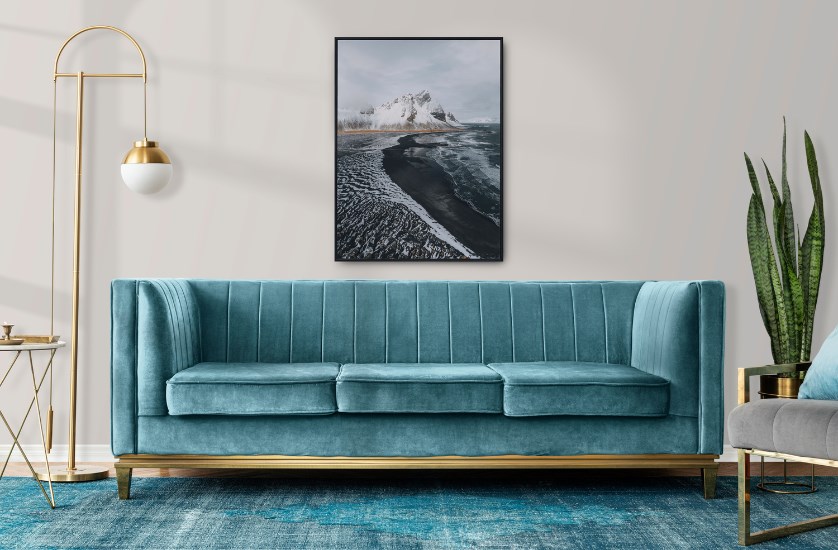
All Art Deco furniture can be characterised by its use of rich, opulent materials, but none more so than the sofa. Upholstered sofas in particular use luxury fabrics including velvet, chenille, and high-quality leather.
You might have a favourite among these, which will naturally sway your decision towards picking an Art Deco sofa for your living area. If you don’t, you’ll almost certainly have a view on the use of its other exotic materials for the structure and feet.
Art Deco is synonymous with polished, exotic woods such as rosewood and mahogany. Reflective accents such as chrome, brass, and gold are another rich part of the Art Deco style. Consider how this will fit with the rest of your decor.
3. Colour
Finally, and perhaps most importantly, is colour. This will likely have the biggest impact on your decision – luckily (or not, if you don't like making decisions), there are lots of options to choose from.
Earlier pieces leaned heavily on monochrome patterns and muted earthy tones (moss green, creams, and browns). While later versions of the Art Deco sofa used rich jewelled colours — emerald green, ruby red, sapphire blue, and deep burgundy.
Your choice of colour, size, shape, and materials will all be influenced by the role you want your sofa to play. If you want it to be the focal point, then a larger-sized sofa with a striking geometric silhouette in a vibrant colour ticks all the boxes. In a busy room, where you want your sofa to take a “back seat”, muted colours, gentle curves, and a smaller scale work better.
Keep reading: Exploring the history and trends of Art Deco sofas