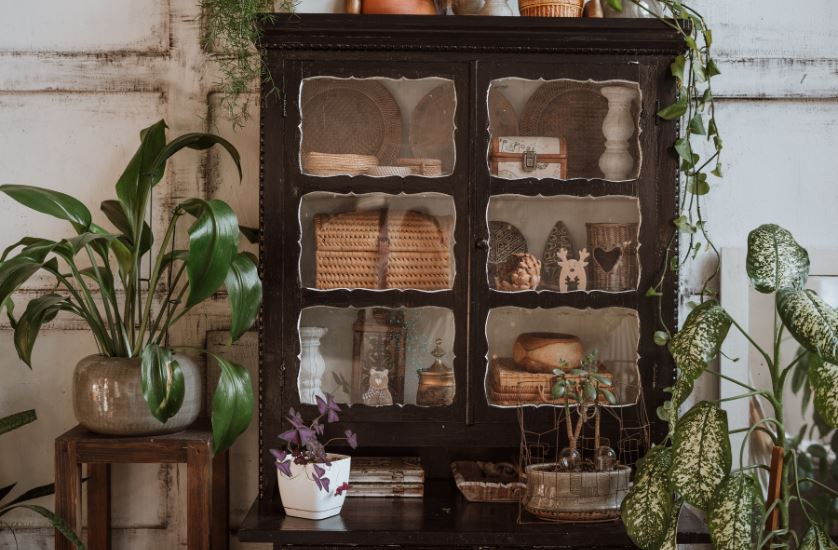
A French vitrine is much more than a glass cabinet; it elevates everyday objects into a display. Typically of French origin or style, these pieces are most commonly glass-fronted or glass-sided. In this post, we’re going to discuss the different styles and sizes of French vitrines, as well as what you should check when purchasing one and how to use it in your home.
What is a French vitrine?
Simply put, a French vitrine is a display cabinet that features glass panels, designed to showcase objects whilst still providing protection. Typically manufactured from fine woods such as walnut, mahogany, or oak, French vitrines were made popular in the 18th and 19th centuries and were most commonly used to house porcelain and other decorative objects.
French vitrines come in a range of styles, from ornate gilded Louis XV styles to simpler pieces that suit modern homes.
Choosing the right style
The trickiest part of purchasing a French vitrine can be finding the right style to match your home. Here’s a breakdown of the most common styles and what we would recommend pairing them with.
Ornate/gilded: More traditional pieces, suited for maximalist homes or period rooms. These vitrines are definitely a statement piece.
Painted/distressed: Perfect for country homes and relaxed interiors, as they have a much softer presence.
Dark wood/mahogony: Much more formal, making them perfect for libraries, dining rooms and hallways.
Slim or demi-lune (half-moon): These are more ideal for narrow spaces and alcoves.
When looking at a French vitrine, it’s important to think about the space you have. Do you need something tall and freestanding, or lower but wider? Make sure the vitrine complements, not competes with, what’s inside.
What to check before buying
As with most antiques, there are a few things you should check before purchasing.
Glass condition: Original glass adds value to a piece, but make sure to check for any cracks or loose panels.
Shelves: Are the shelves still intact, adjustable and the correct depth?
Lock and key: This isn’t essential, but it’s a nice bonus for protecting your valuable display items.
Structure: Check joints, hinges and door alignment for any inconsistencies.
Back panel: Mirrored backs add depth; solid wood feels more traditional.
Proportions: Make sure to measure your space and the items you want to display before making the purchase.
Styling your vitrine
When styling your vitrine, think about what you want to highlight. If there's less inside, then the pieces will give more impact. This is the same when grouping pieces: try to keep some level of theme, whether that’s grouped by colour or material. Try also to incorporate a variety of heights, even using small stands and books as risers.
An incredible, underrated feature of French vitrines is the ability to light them up. Due to them often having glass shelves, using LED strips or battery pack lights can completely transform your display.
Finding your French vitrine
Incorporating these French antiques into your home doesn’t have to mean losing your personal style; match the style to your room. With such a wide scope of styles, you are almost guaranteed to find the perfect compromise for your home.