A Hagi piece leaves the kiln unfinished. Not flawed, unfinished: the clay is soft and porous, fired low, and the glaze crazes into a net of fine lines as it cools. Whatever touches the surface works into those lines, a little at a time, and over the years the colour of the whole piece slowly turns. Japan calls this the seven disguises of Hagi. The piece you buy is not the piece you will own in ten years.
The kilns began with Korean potters, brought to the western tip of Honshu after Hideyoshi's wars in the 1590s. Tea masters rank the ware second only to Raku: first Raku, second Hagi, third Karatsu.
Turn a piece over and you may find a notch cut into the foot. By tradition a deliberate flaw, so that ware made for a feudal lord could pass into ordinary hands.
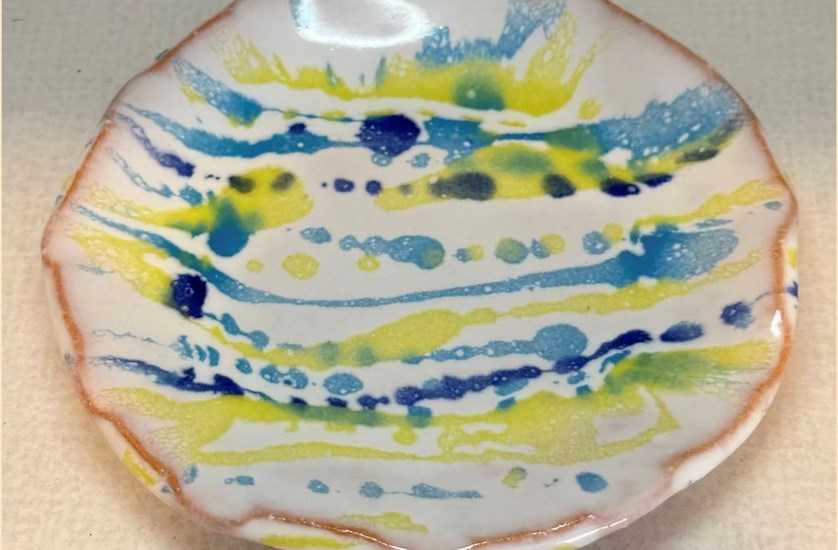
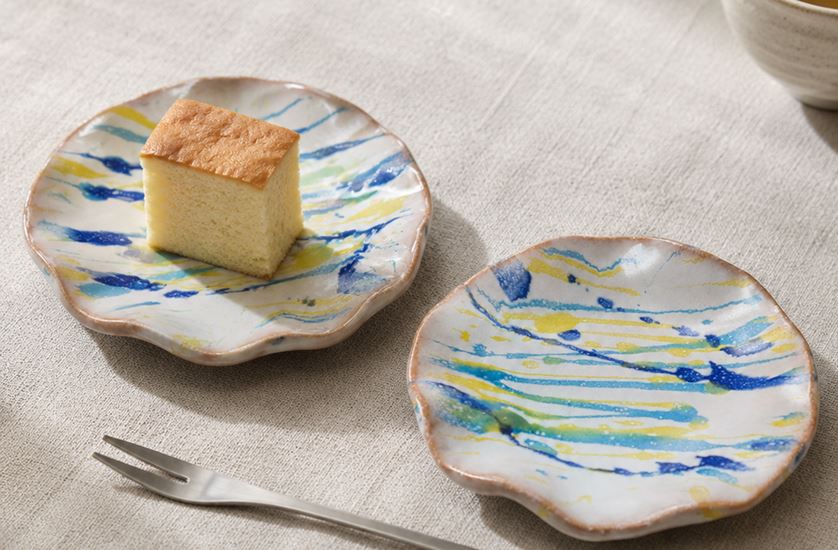
This small plate keeps its foot bare, raw orange clay under a white glaze splashed with indigo and yellow. Made for a sweet and a quiet moment, and made to change: every serving, every washing, settling into the lines. What it looks like today is only where it starts.