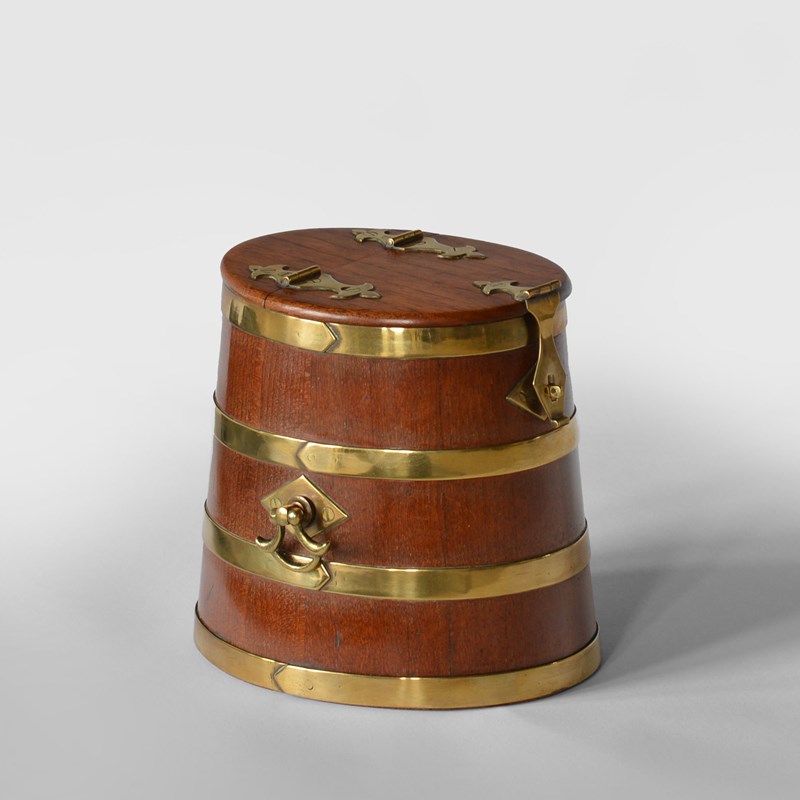
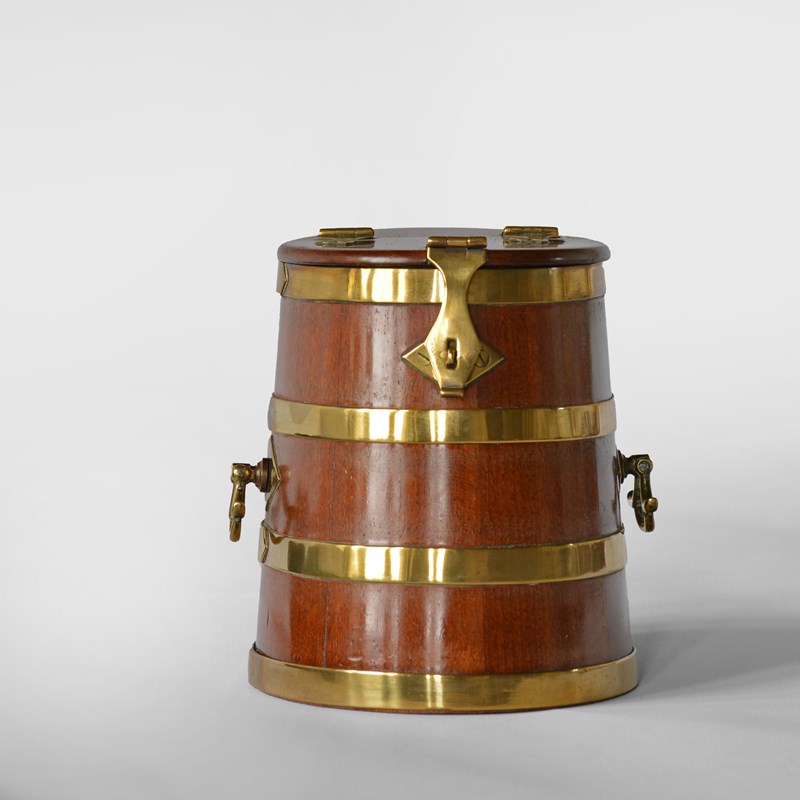
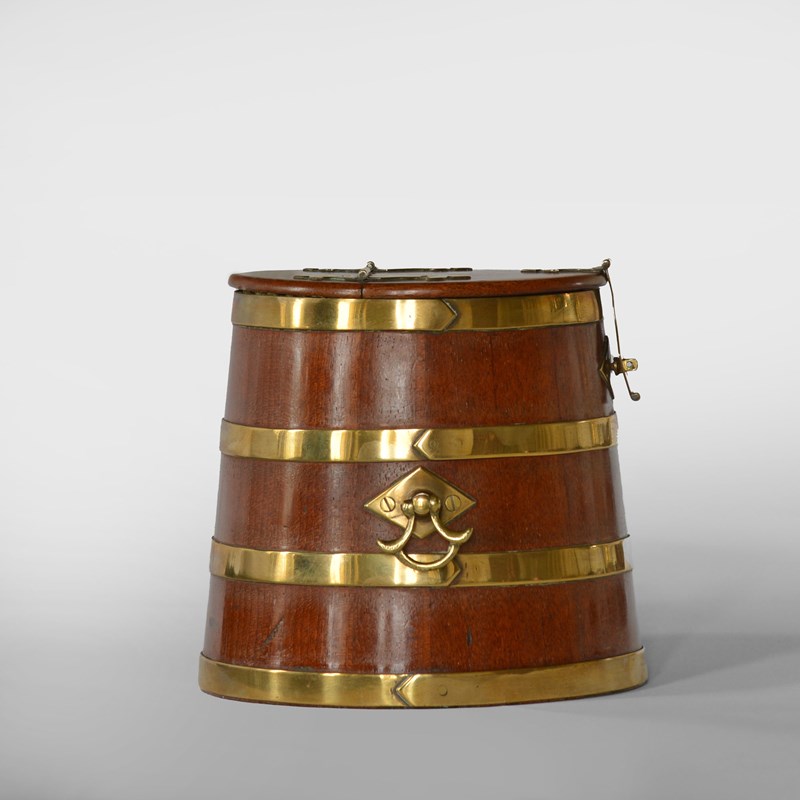
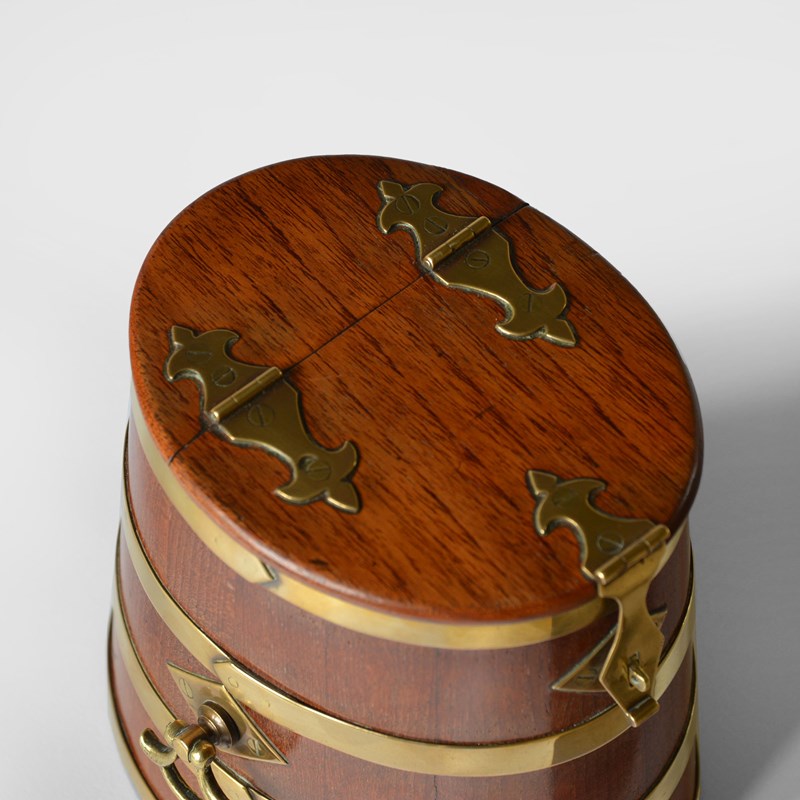
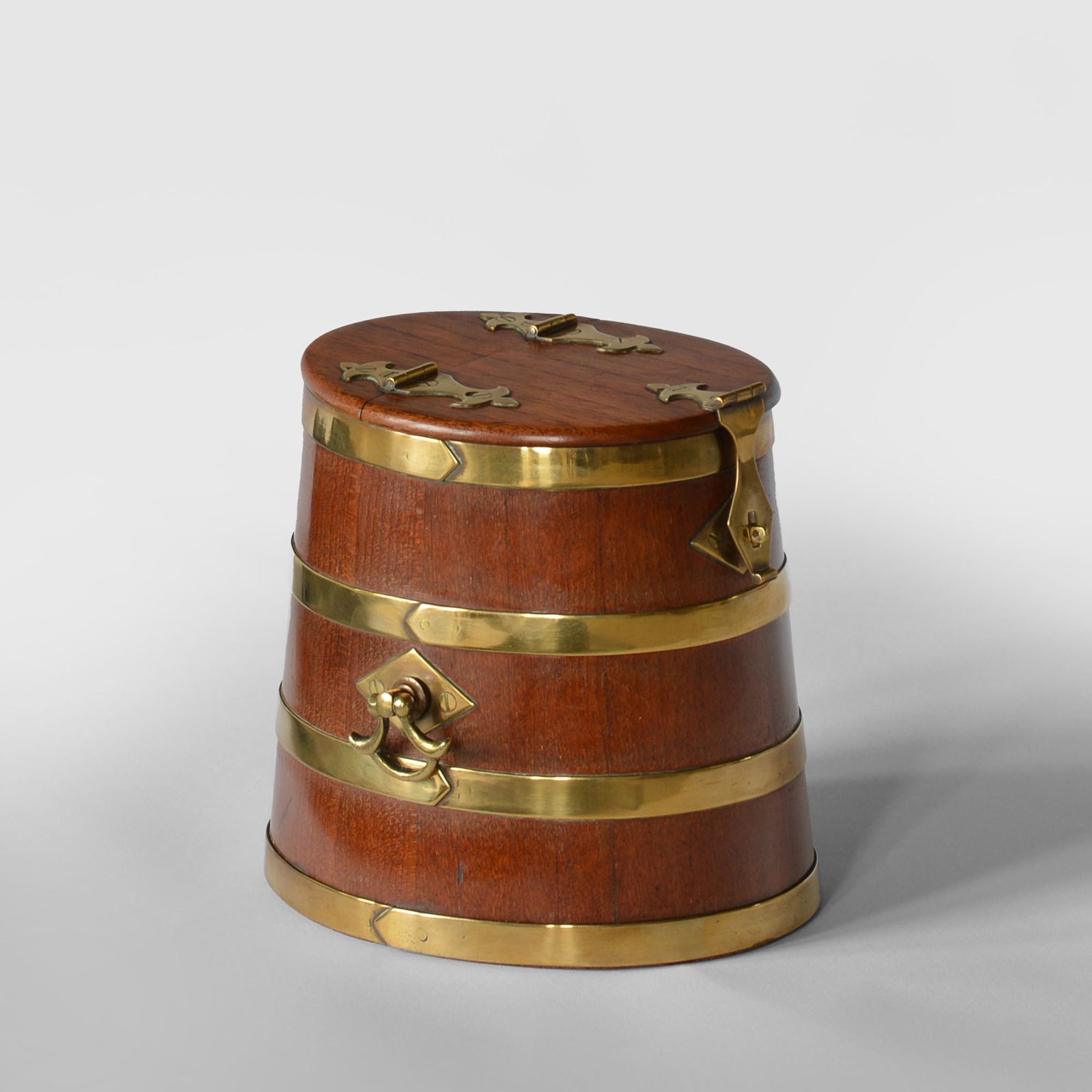
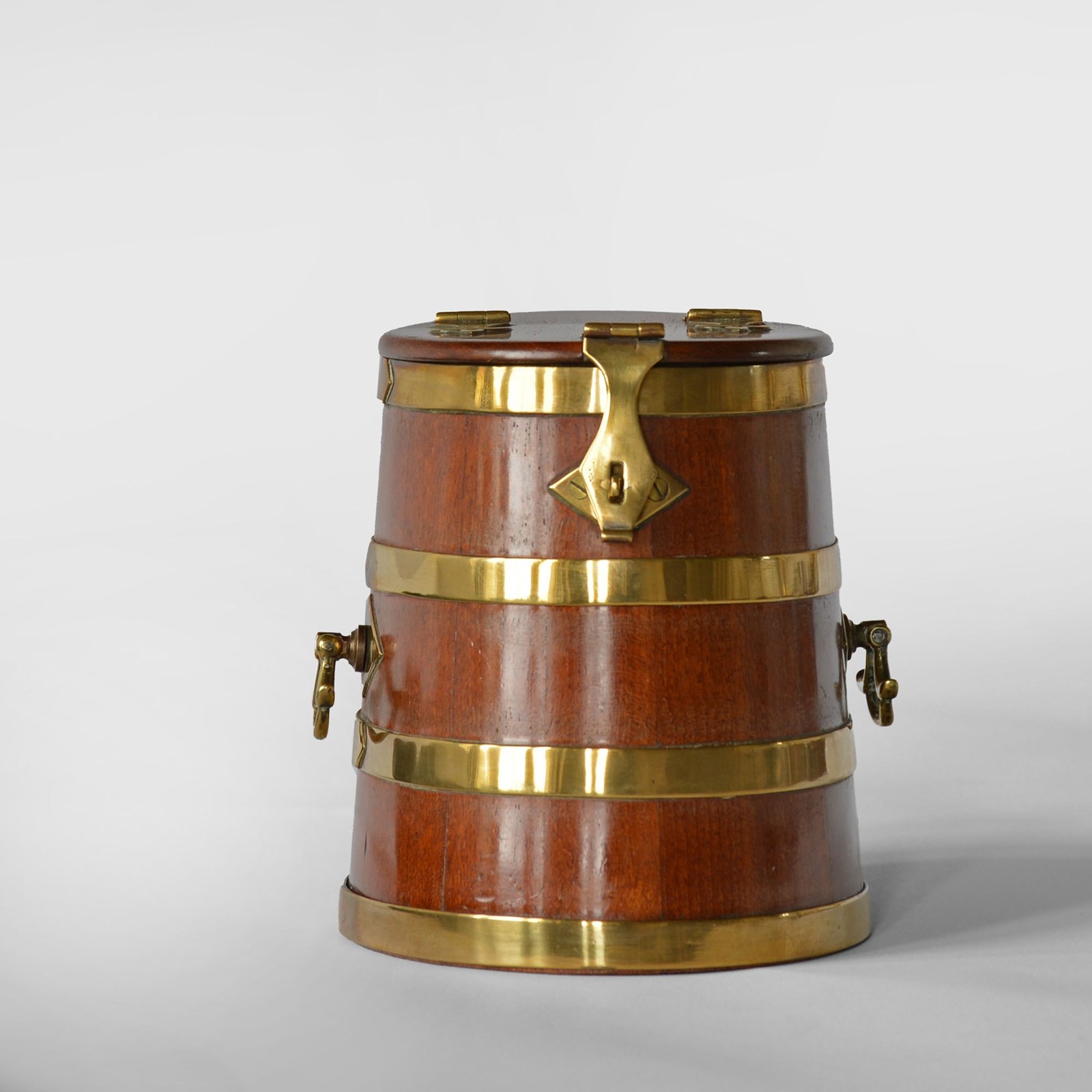
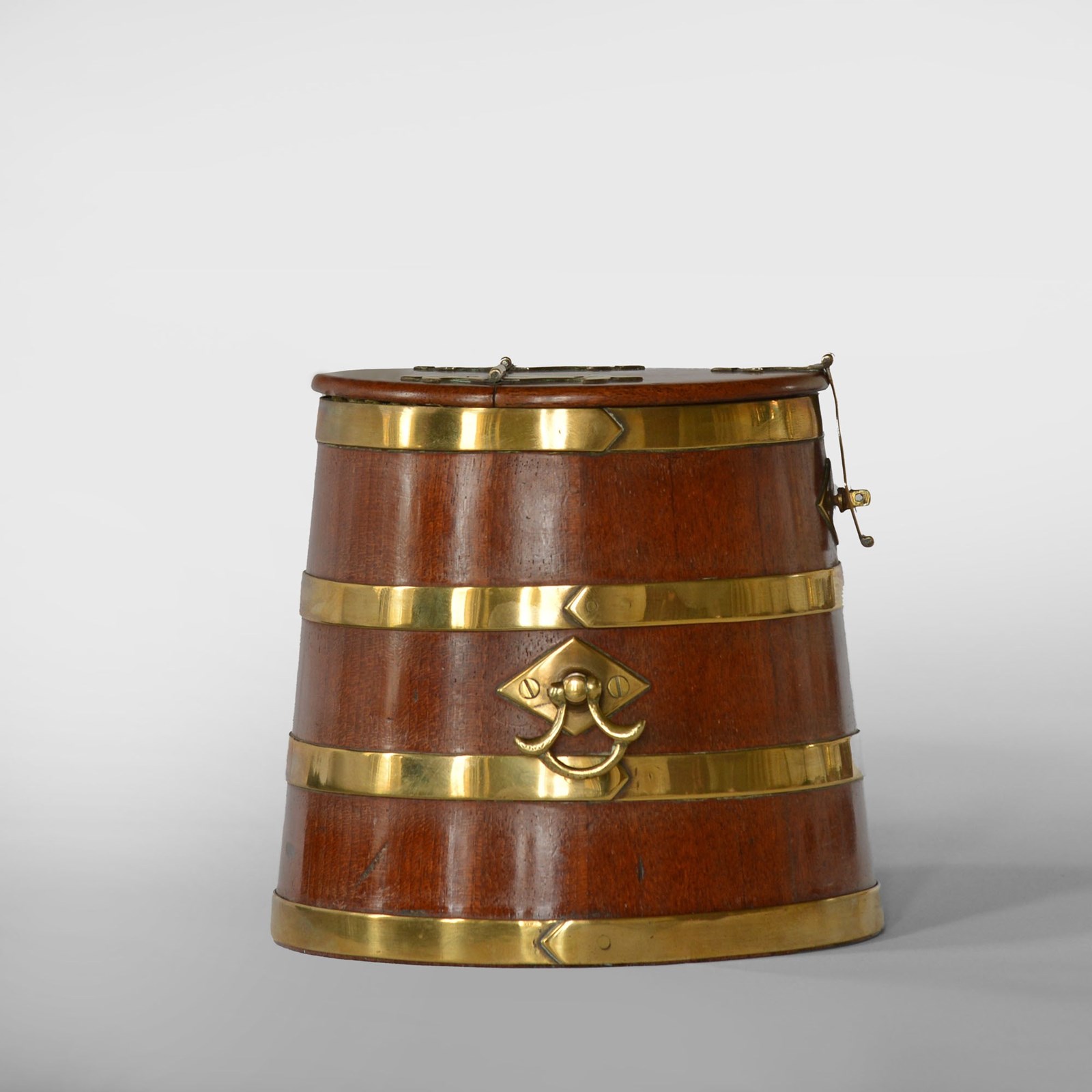
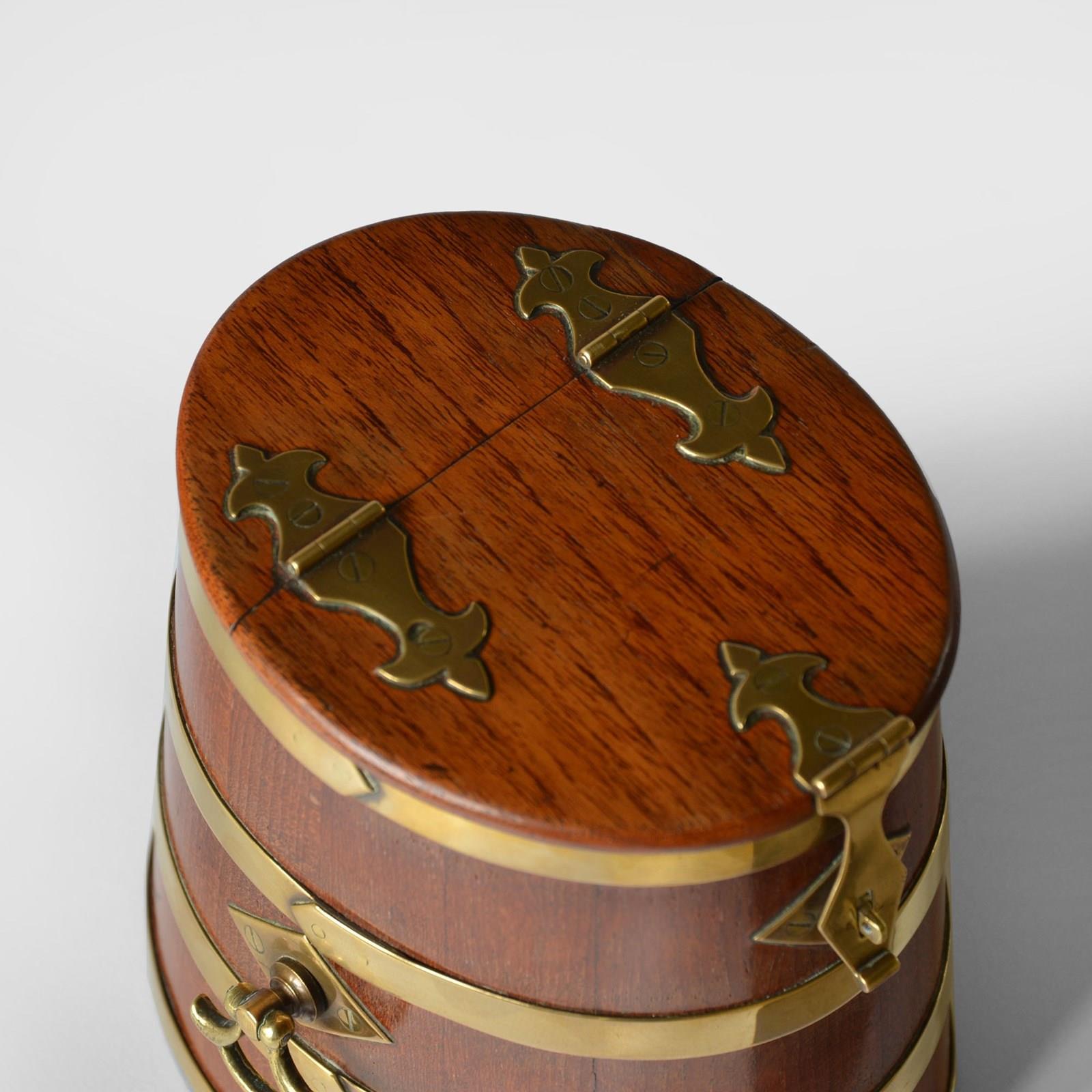
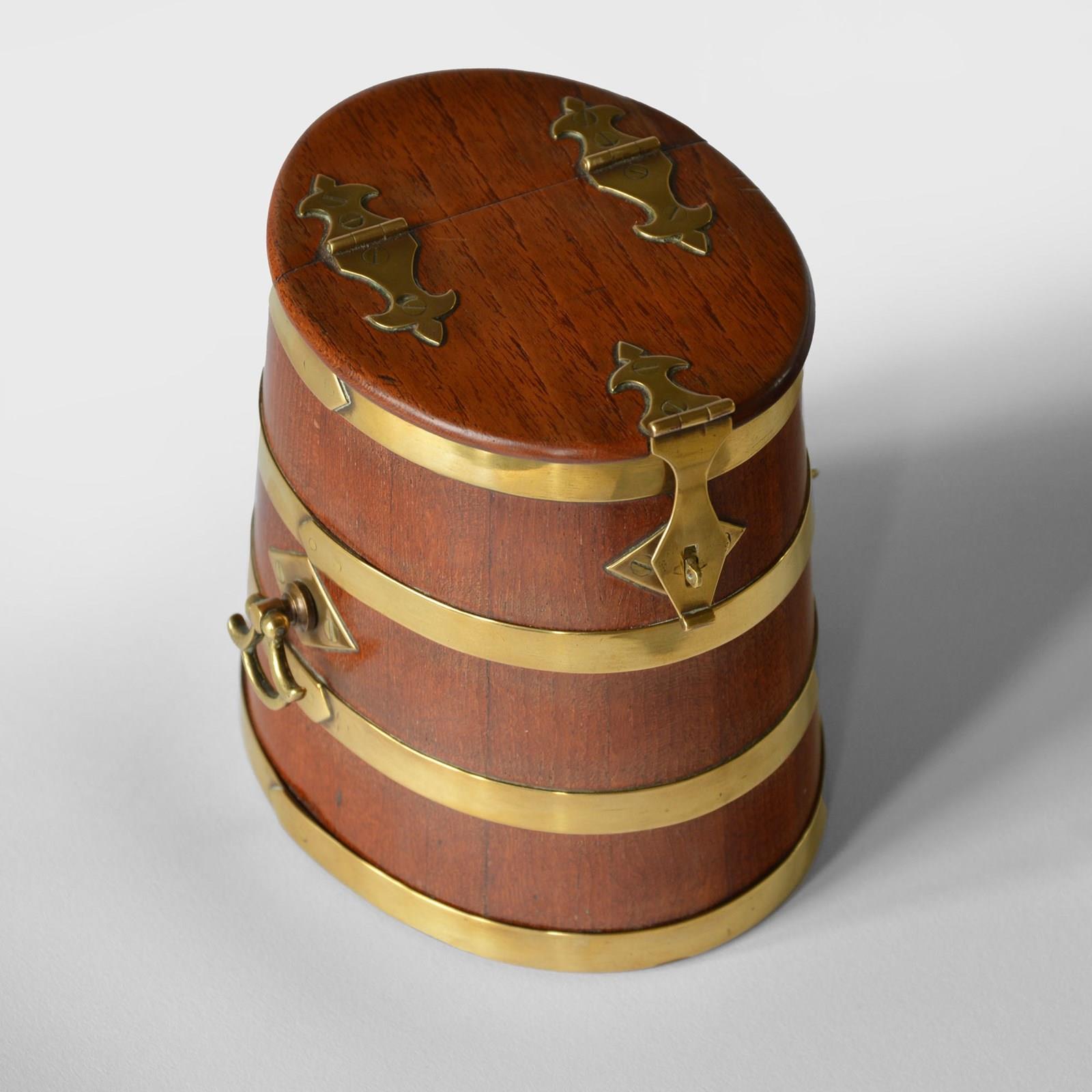
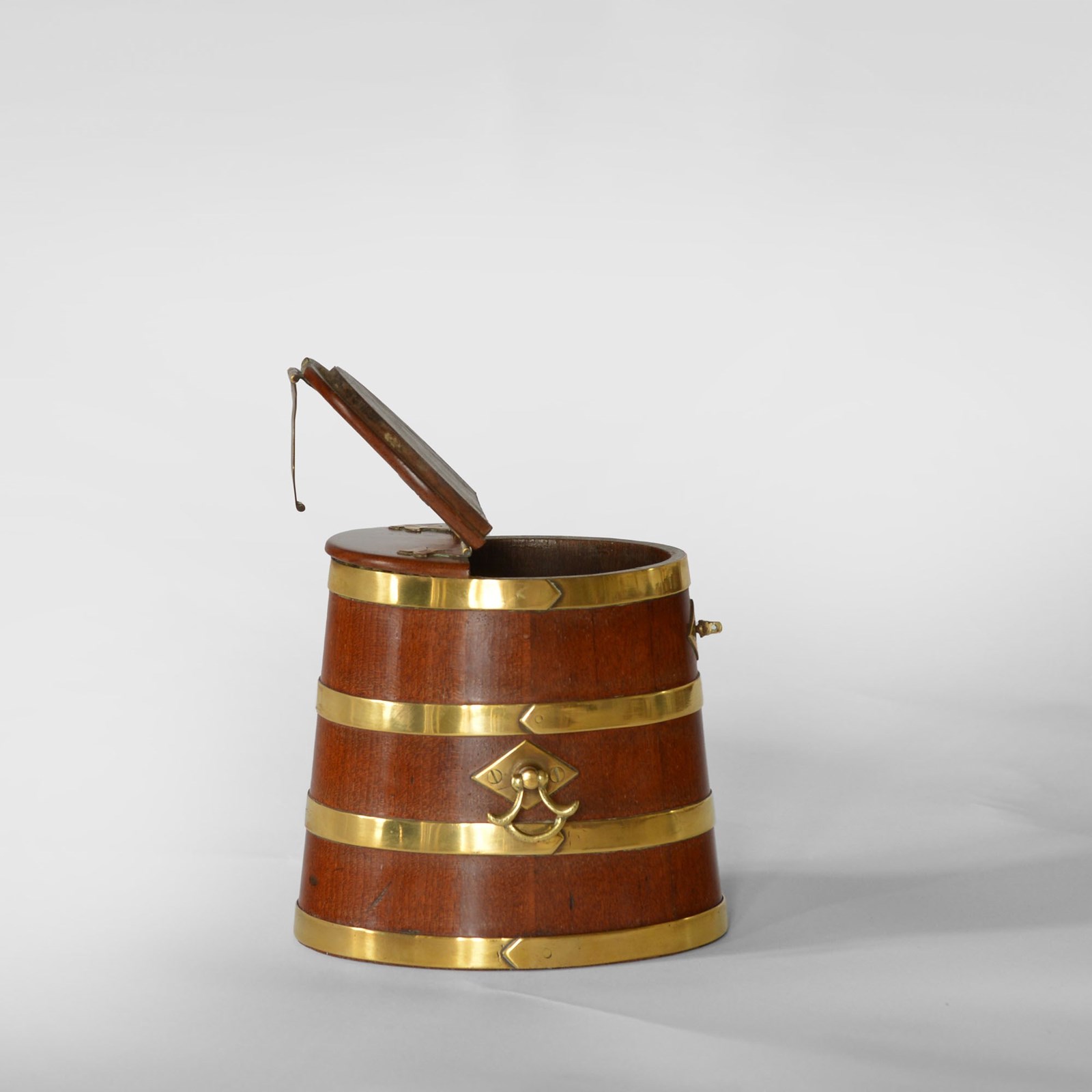
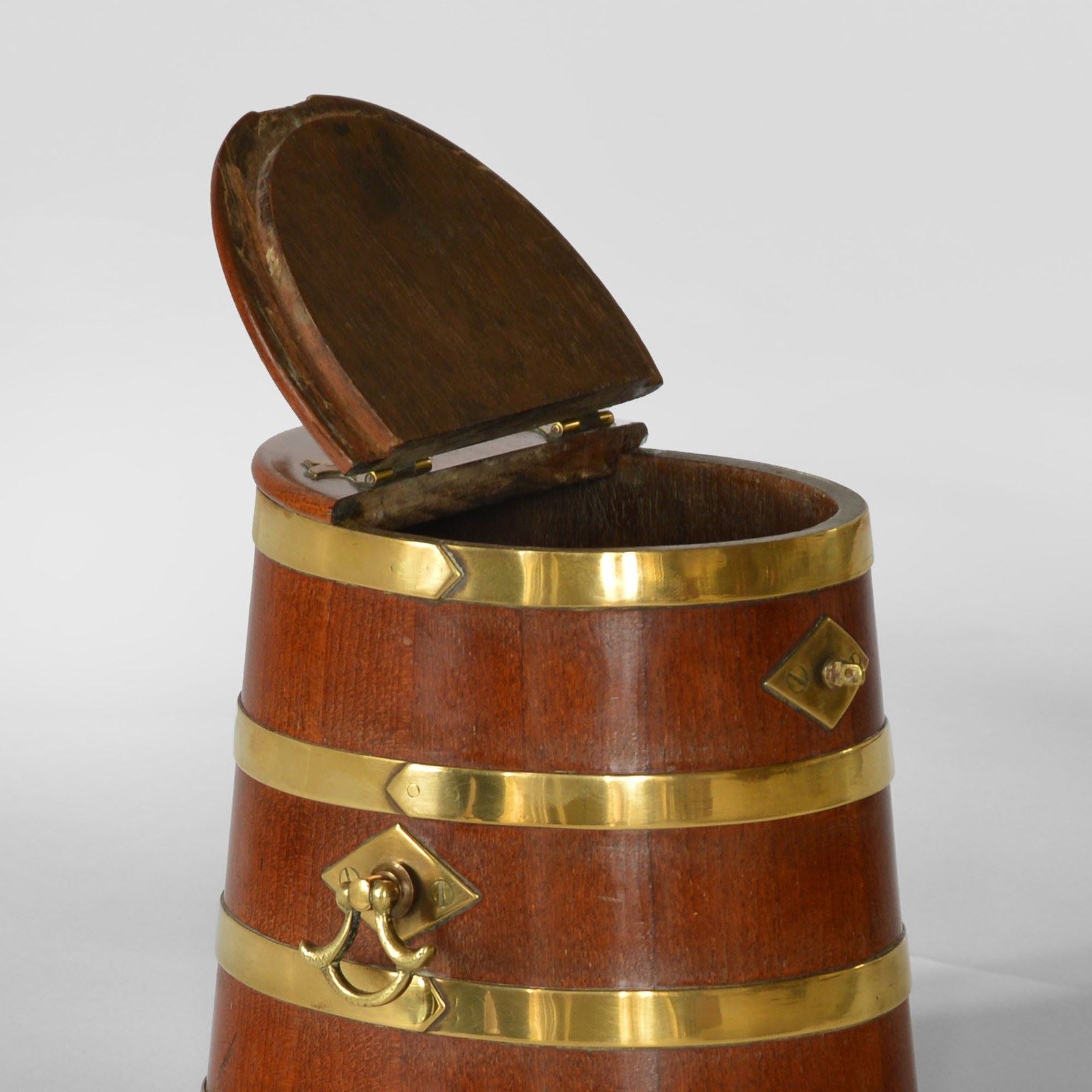
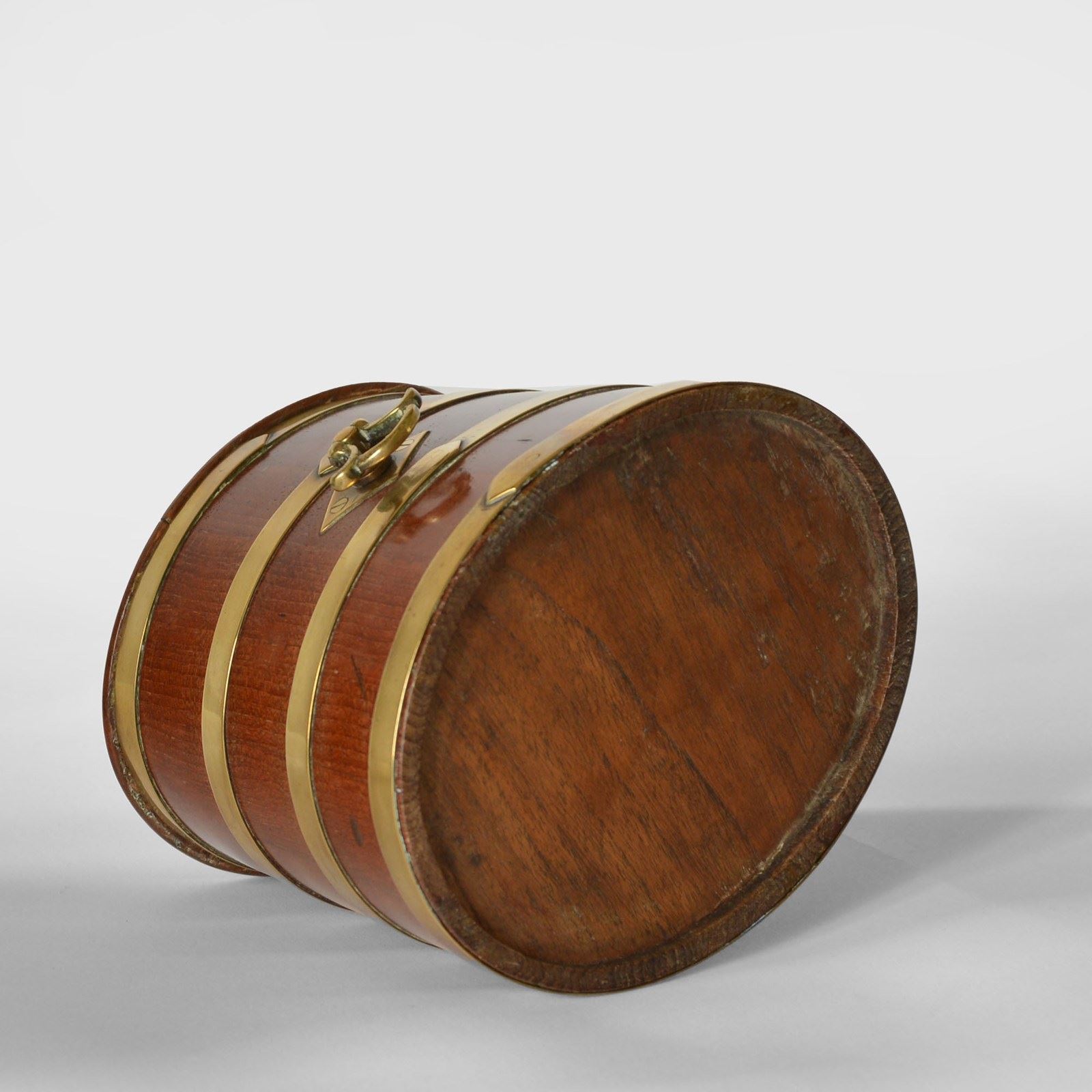
Miniature Georgian Brass Bound Coopered Naval Rum Barrel
Stock No
BCSL2145
2019
- £1,250.00
- €1,481 Euro
- $1,658 US Dollar
Questions about this item?
Like this item?
Item Description
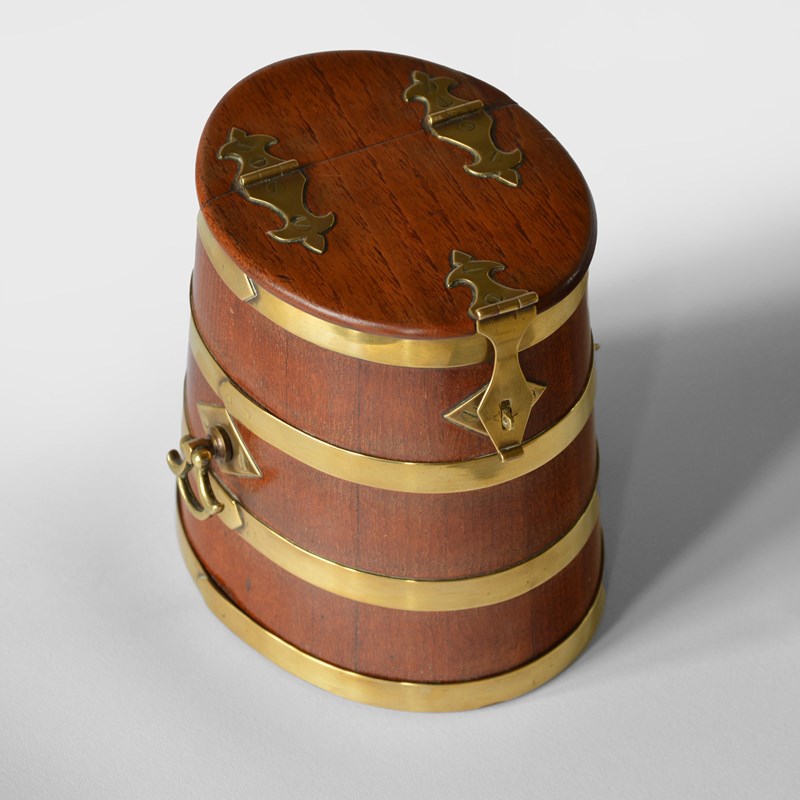
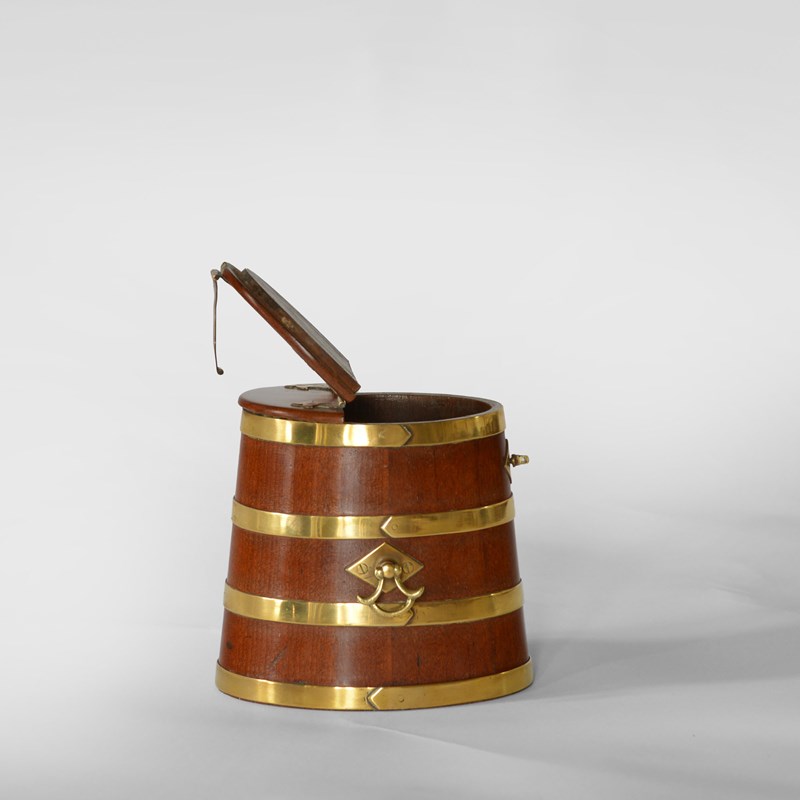
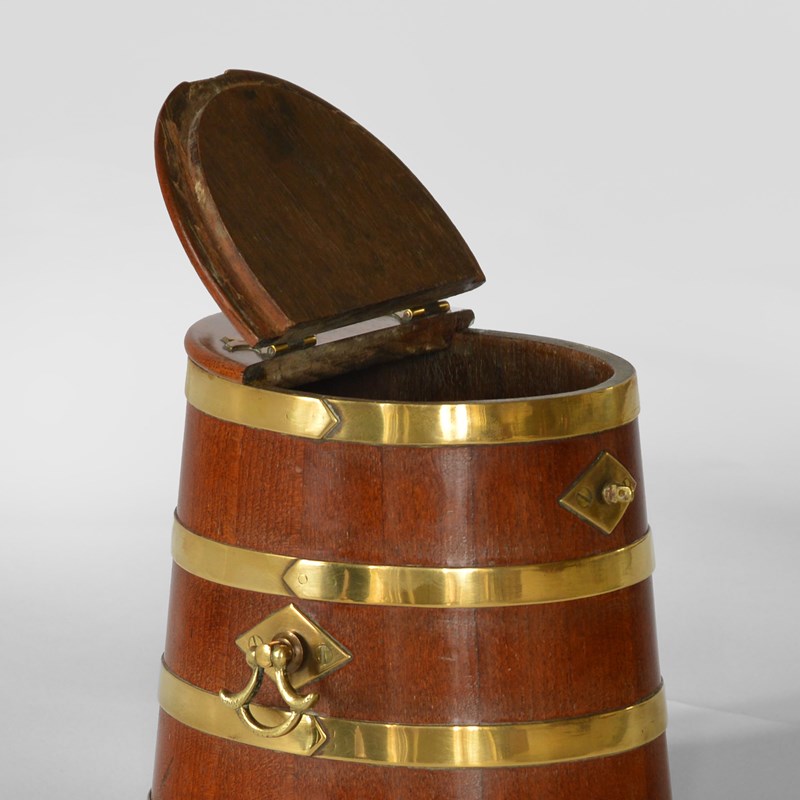
A small and rare Georgian presentation naval rum barrel
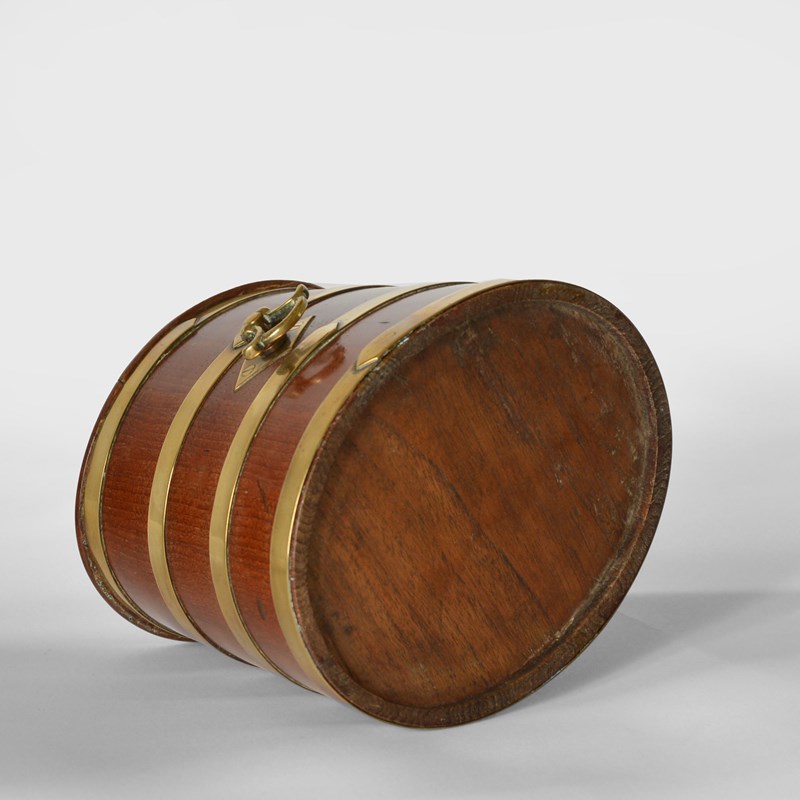
Brass bound oval teak coopered barrel of tapering form, with hinged lid, ornate brass strap hinges and catch, a pair of axehead handles to the sides. Beautifully detailed in miniature form and of the best quality.
English, circa 1800-1830
Probably made to be presented to the ship’s captain or mess. Full size grog barrels of this form were to be found on board ship to hold rum and was rationed out to the crew.
"The nature of the work for seamen aboard ship, often boring, usually perilous, strenuous and difficult, and frequently extremely tense and nerve-wracking, demanded some form of relief. Perhaps the most common relief in the navy came from the rum ration aboard and the bottle ashore. From the earliest days of ocean sailing, wine and spirits were taken aboard ship to alleviate thirst, as alcoholic drinks did not spoil as did water in wooden casks. By the eighteenth century, rum and brandy were common aboard ship.
Admiral Edward Vernon (1684-1757) introduced watered rum as a regular ration in the Royal Navy, to reduce the drunkeness that impaired efficiency when sailors drank straight rum. Vernon, a hot-tempered but effective British naval officer who had served in Parliament before being given a last command to attack the Spanish Main, was known to his crew as 'Old Grog' for the 'grogram' foul-weather cloak he wore. Having led a small naval squadron of six ships against the Spanish in the Caribbean, in 1739, the next year he gave an order that his men be issued rum in the amount of a half-pint per day, in two rations per day. Mixing one part of rum with four parts of water, the ration became known thereafter in the English language as 'grog'. Later the standard ratio of water to rum became three parts of water to one part of rum. Vernon required the grog to be consumed at the barrel where it was doled out, but other captains were less strict, allowing all seamen to take their grog ration to their quarters and to store it up for several days."
Ref: Henderson & Carlisle, 'Jack Tar A Sailors Life', ACC, 1999.
Item Info
Seller
Seller Location
Castle Douglas, Scotland
Item Dimensions
H: 14cm W: 15cm D: 13cm
Period
18th Century & Earlier
Item Location
United Kingdom
Seller Location
Castle Douglas, Scotland
Item Location
United Kingdom
Seller Contact No
+44 (0)7881 823369
More from BAGGOTT & CO