
Bronze Crocodile Fountain Head Spout In The Manner Of Antoine-Louis Barye
Stock No
CACL609
2023
- £5,000.00
- €5,911 Euro
- $6,626 US Dollar
Questions about this item?
Like this item?
Item Description
A Rare French Antique Bronze Crocodile Fountain Head Spout
Water Feature Garden Sculpture in the Manner of Antoine-Louis Barye, c.1920
Subject & Medium
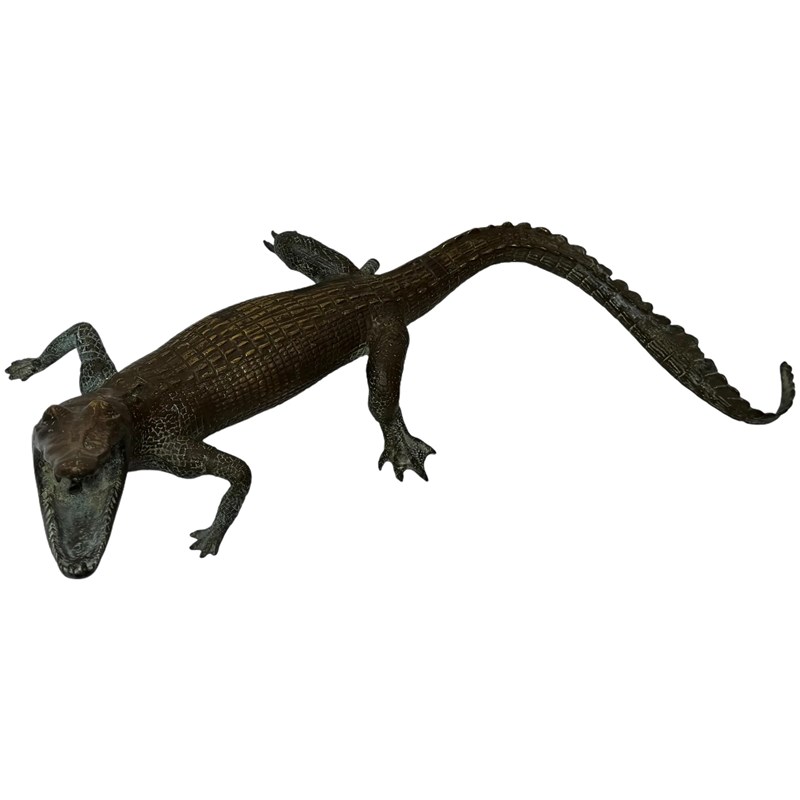
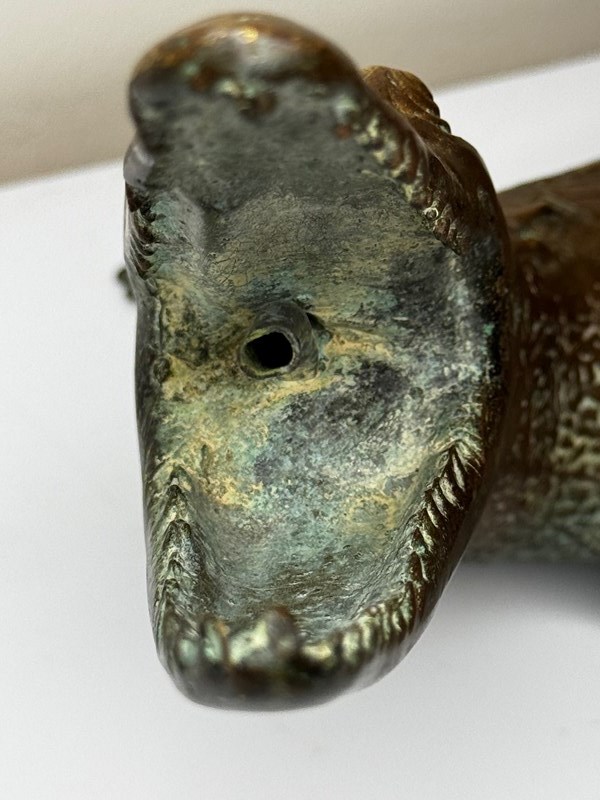
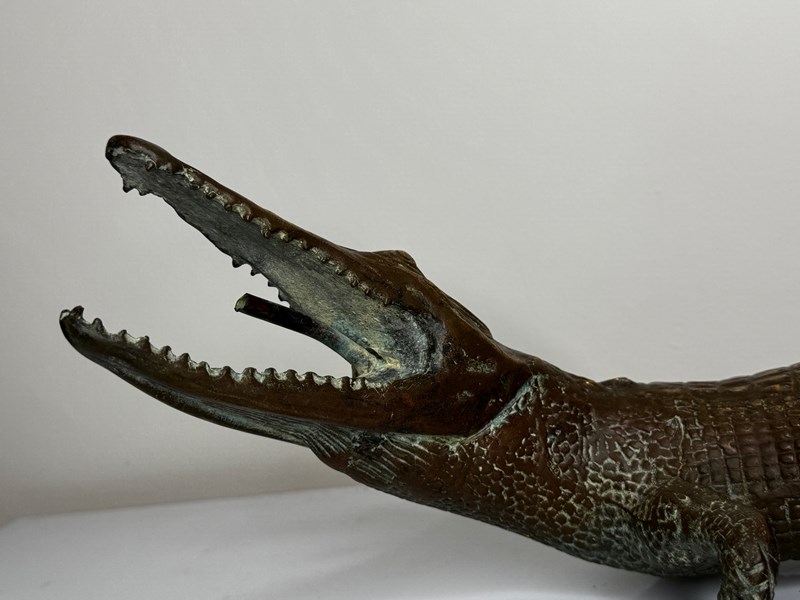
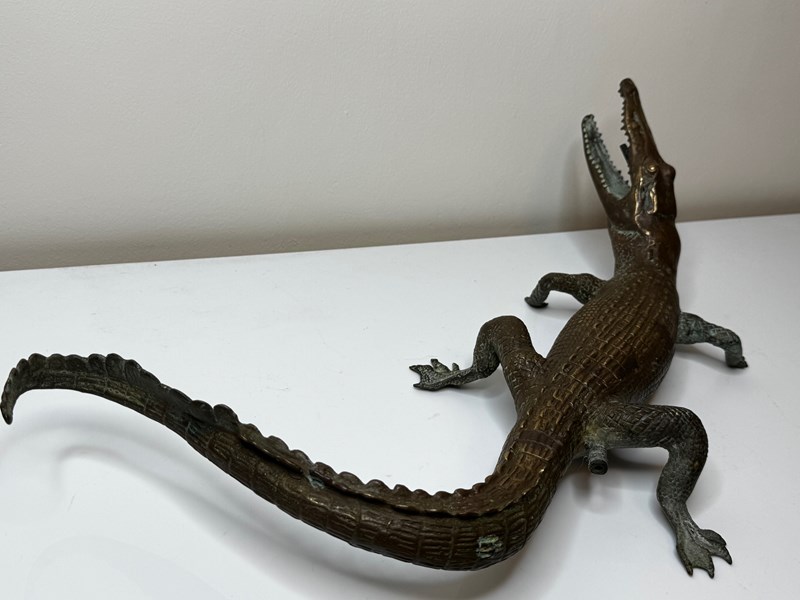
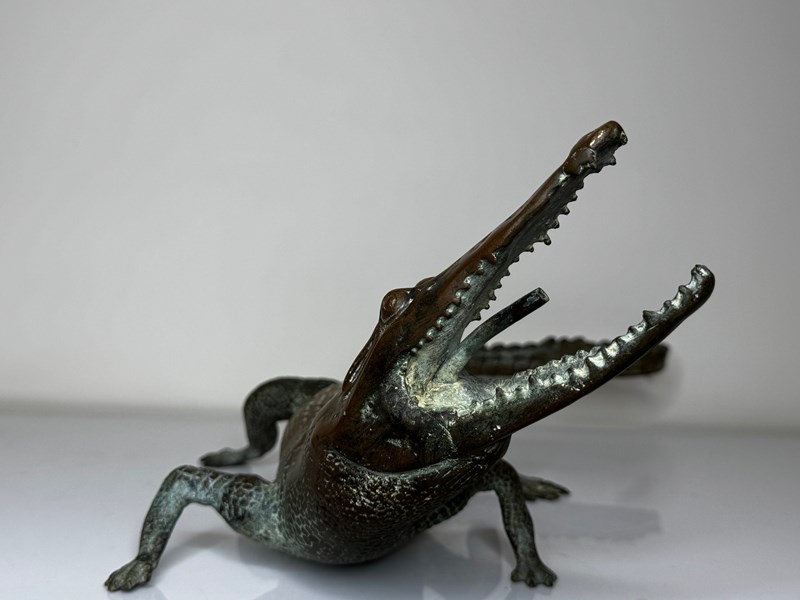
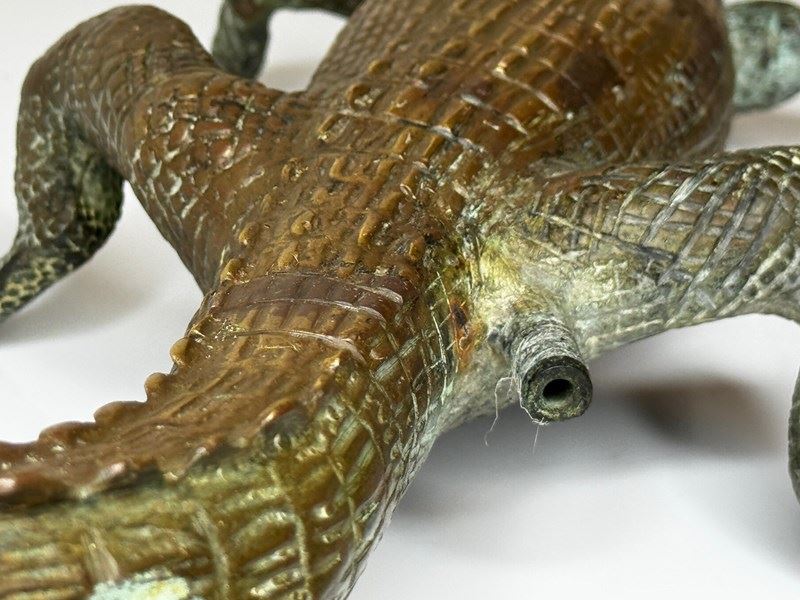
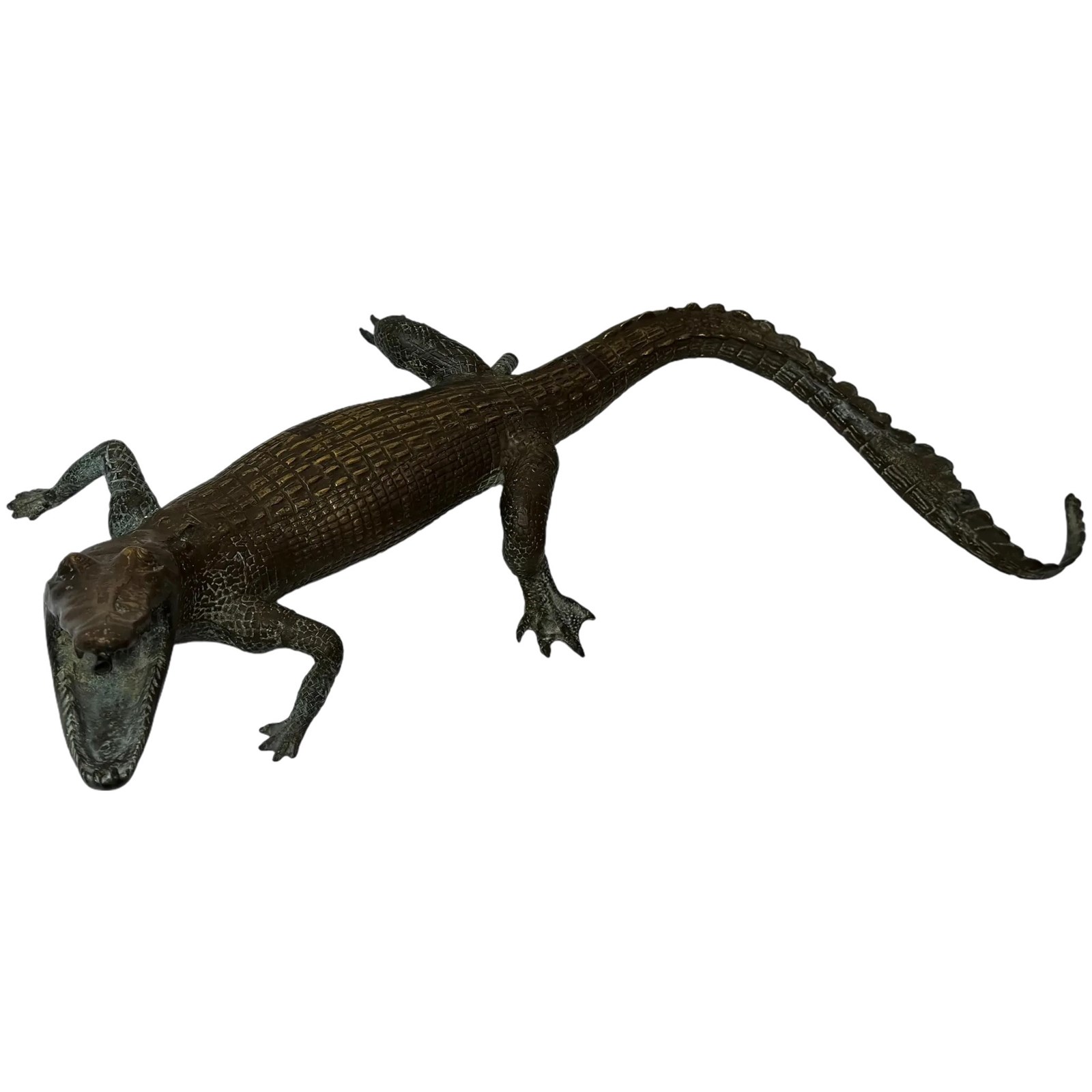
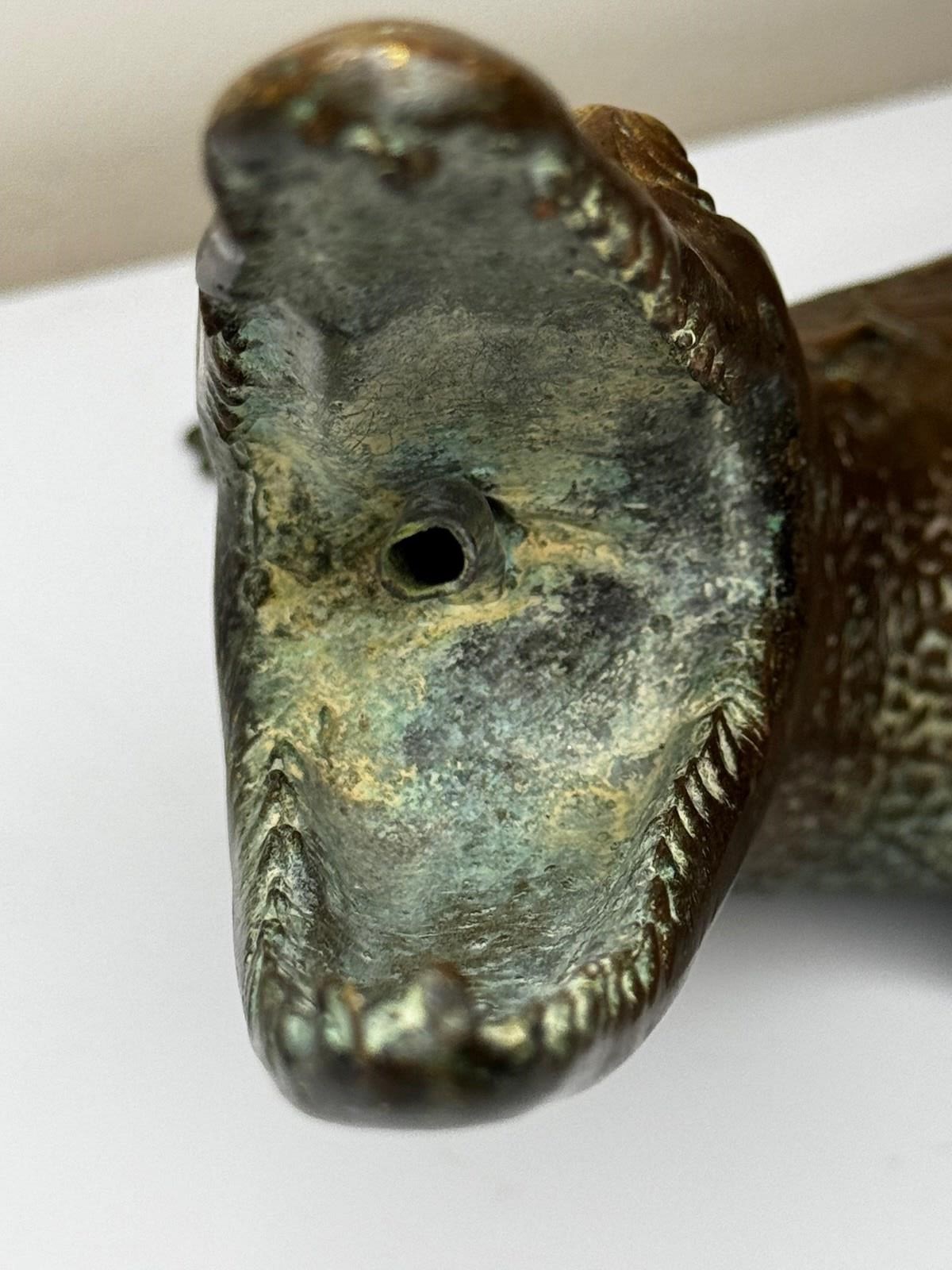
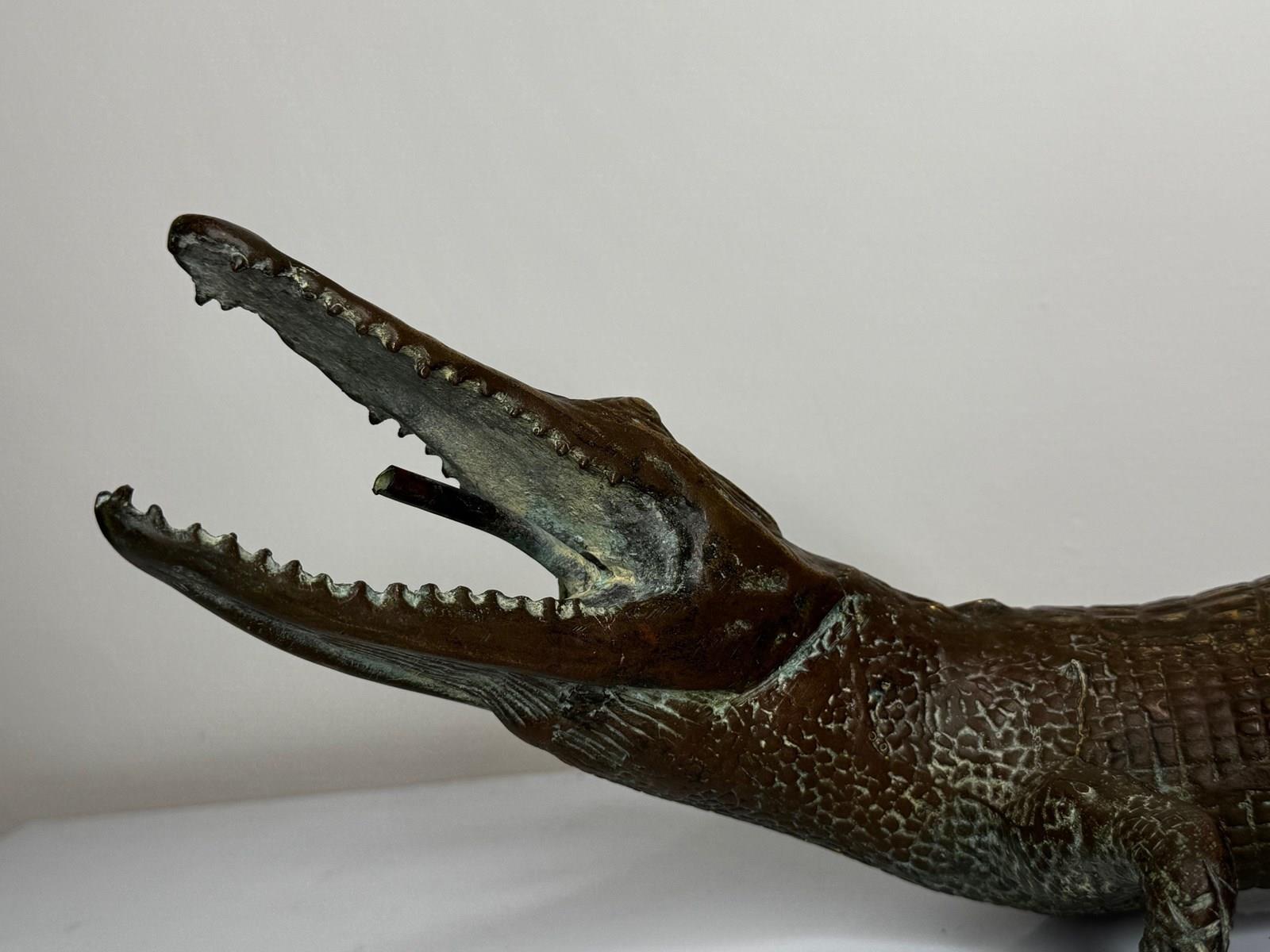
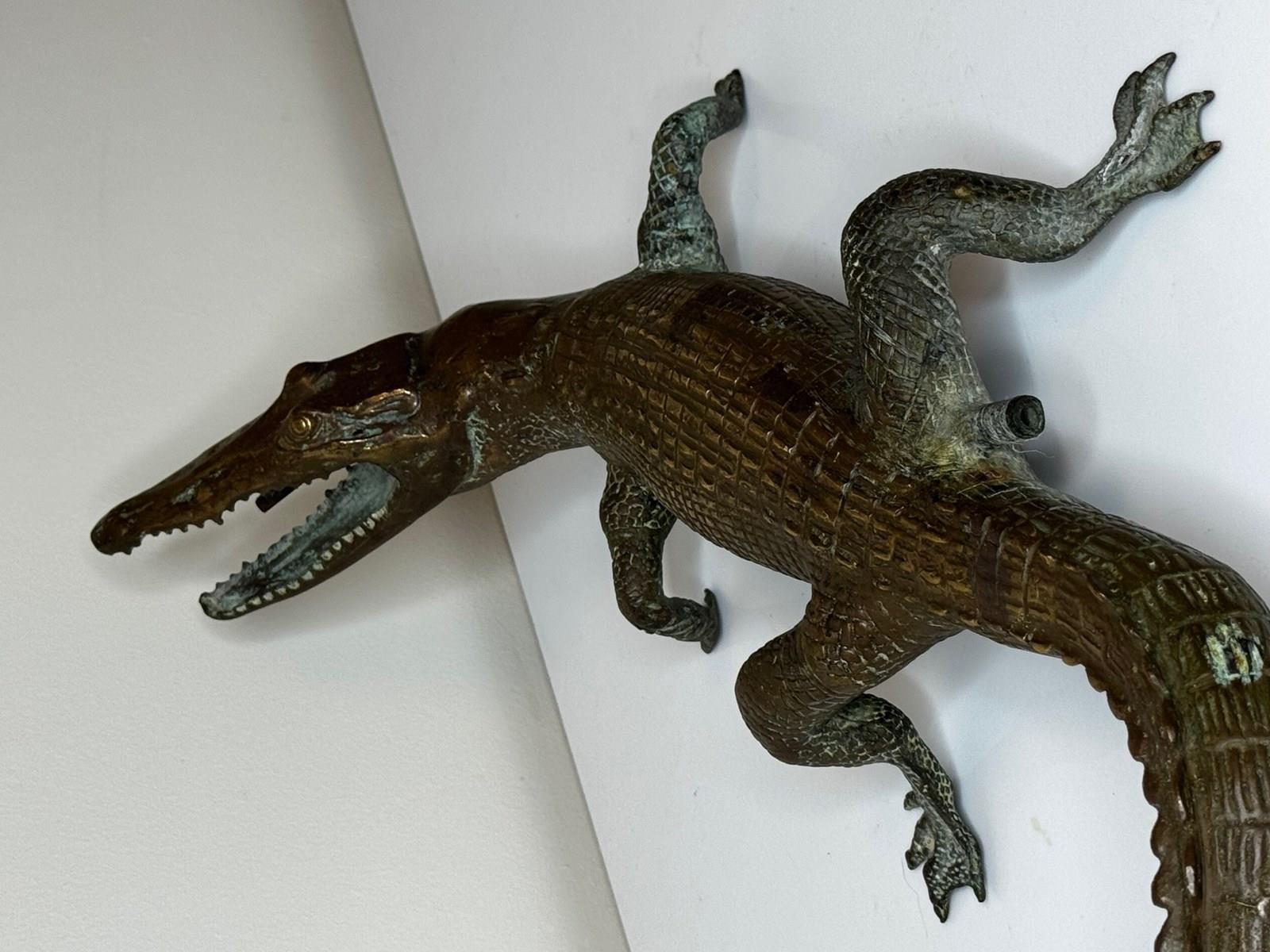
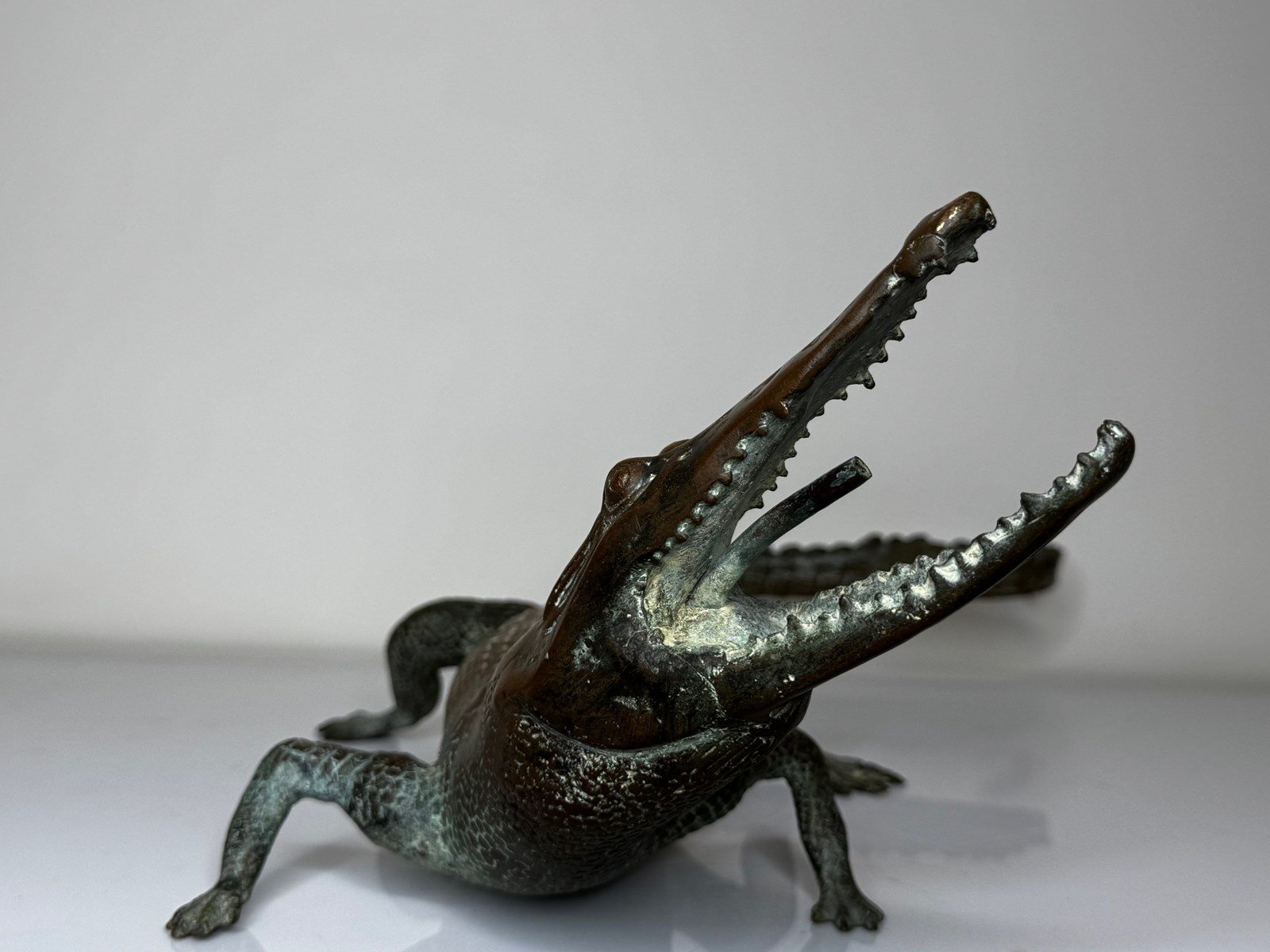
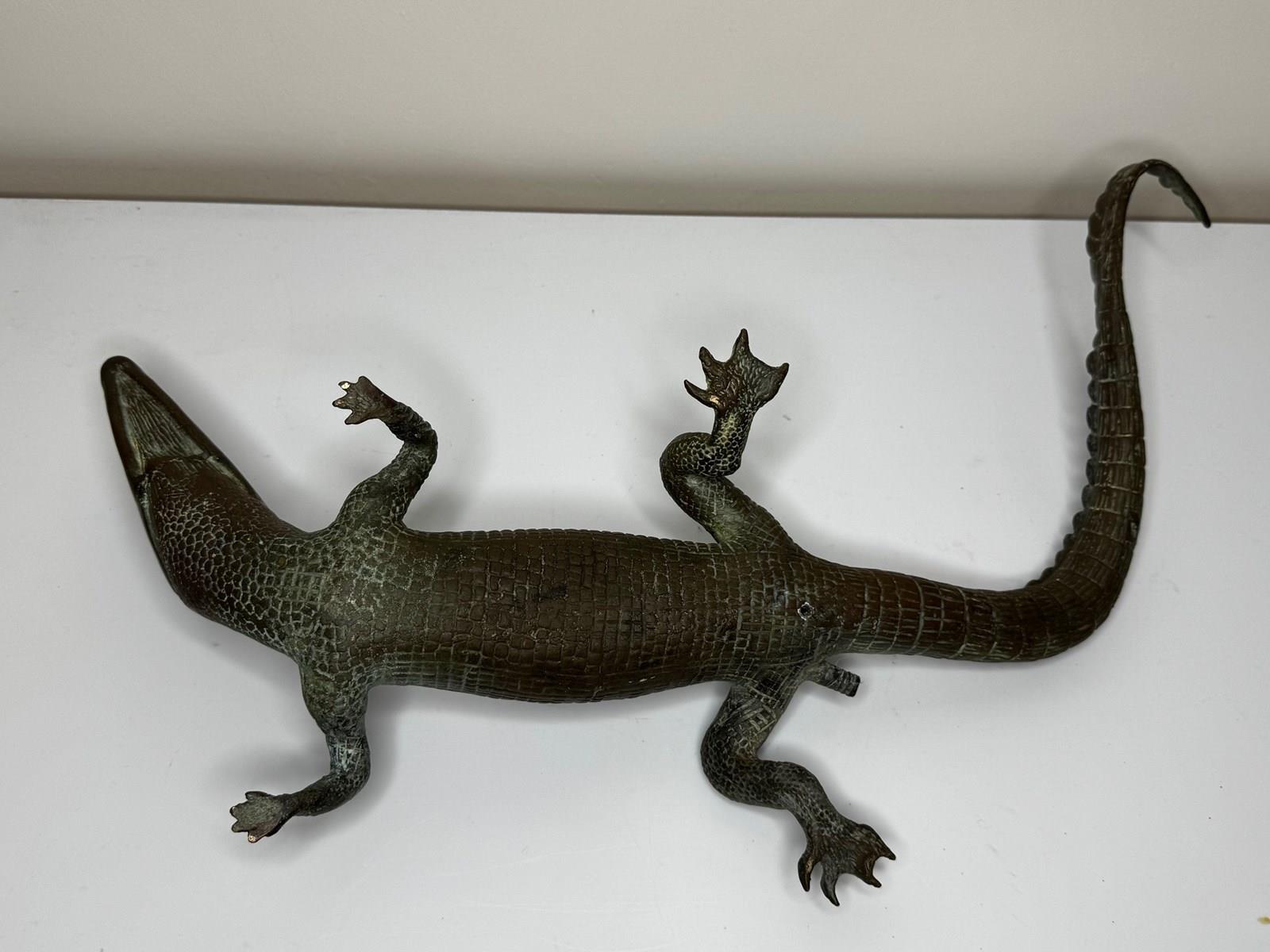
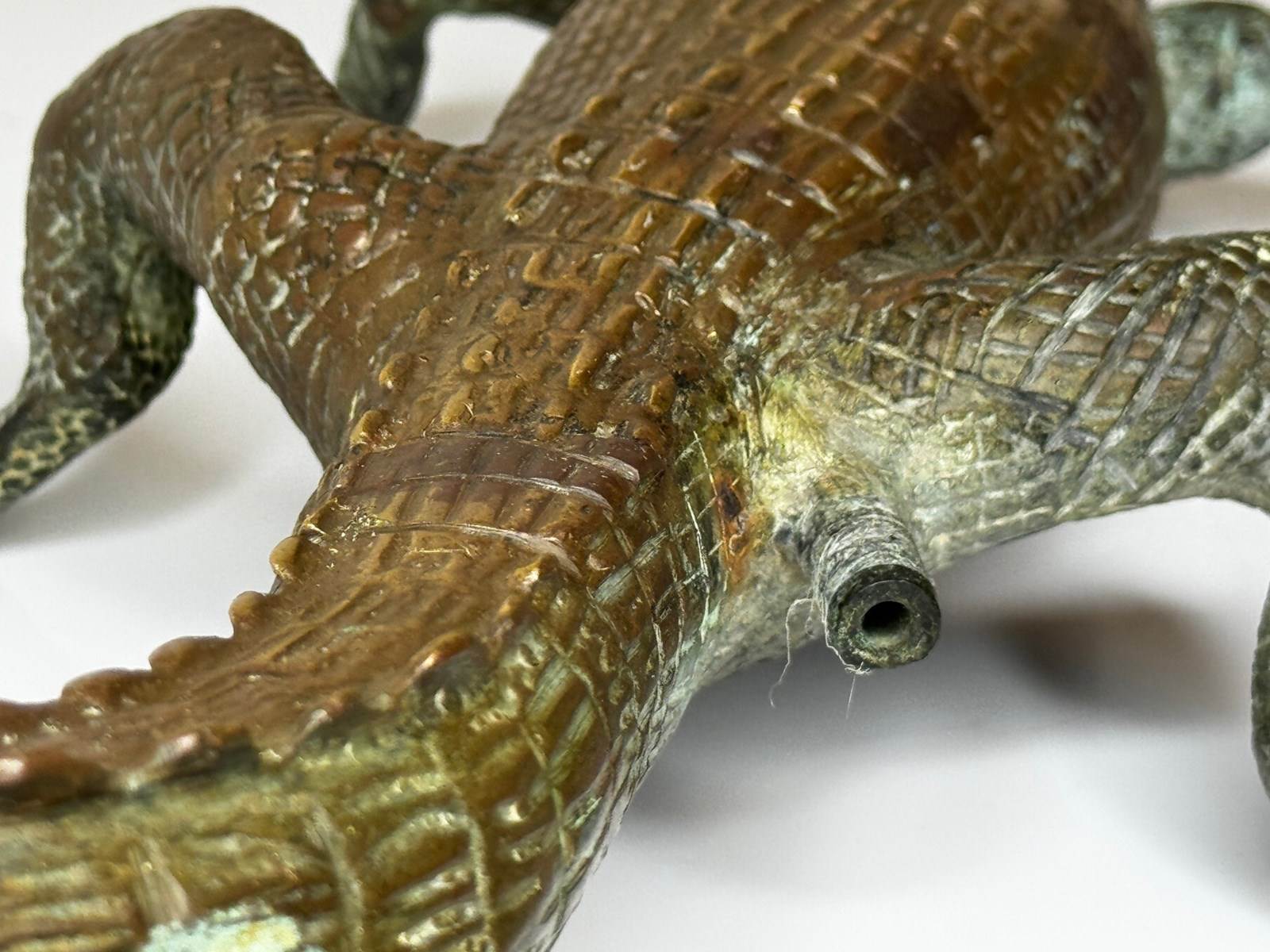
This early 20th-century bronze crocodile fountain head is a rare and striking example of animalier sculpture adapted for the garden. Cast in bronze and measuring an impressive 59 cm in length, it was conceived not merely as a decorative figure but as a working fountain: internal metal pipework carries water from the back and discharges it through the open jaws, so the crocodile appears to spit a stream into the pond below.
The subject matter is unusual and highly distinctive. While early 20th-century garden ornaments and fountains typically draw on classical masks, putti, nymphs or familiar heraldic and mythological creatures, a full-length crocodile in this role is genuinely uncommon. Crocodiles do feature in the wider history of art and architectural ornament, but they are far from standard in domestic garden sculpture. Here, the choice of subject adds a note of exoticism, wit and drama that sets the piece apart from more conventional fountain heads.
Composition & Technique
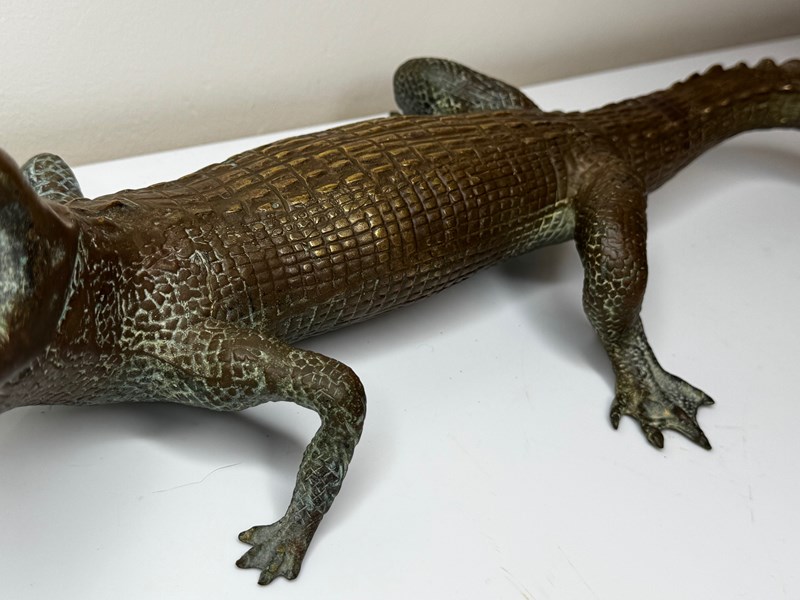
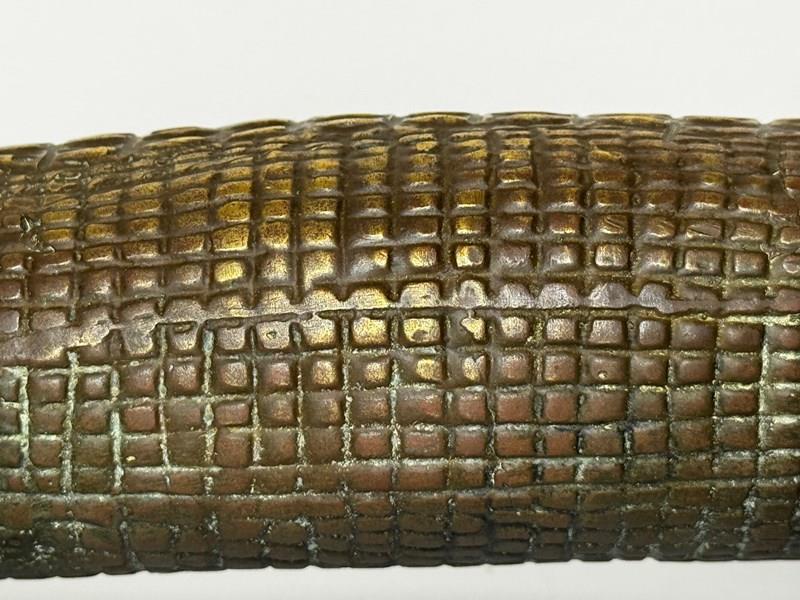
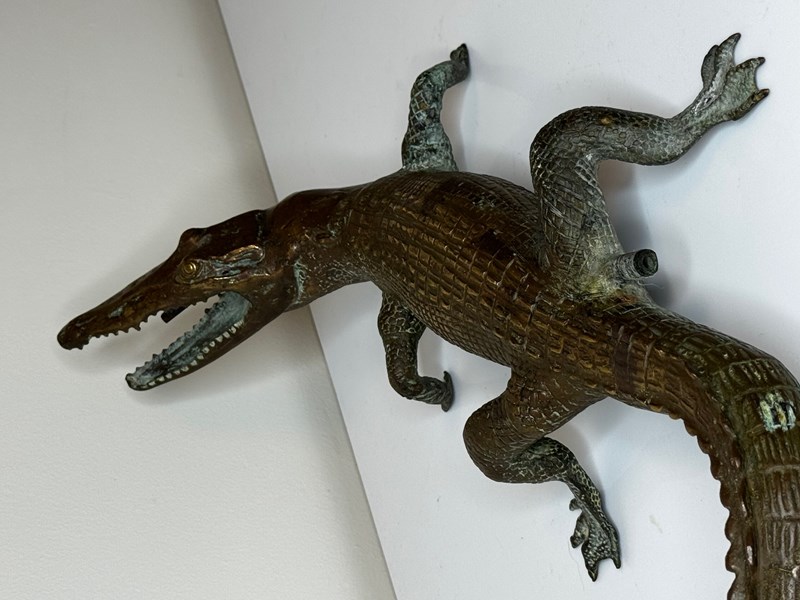
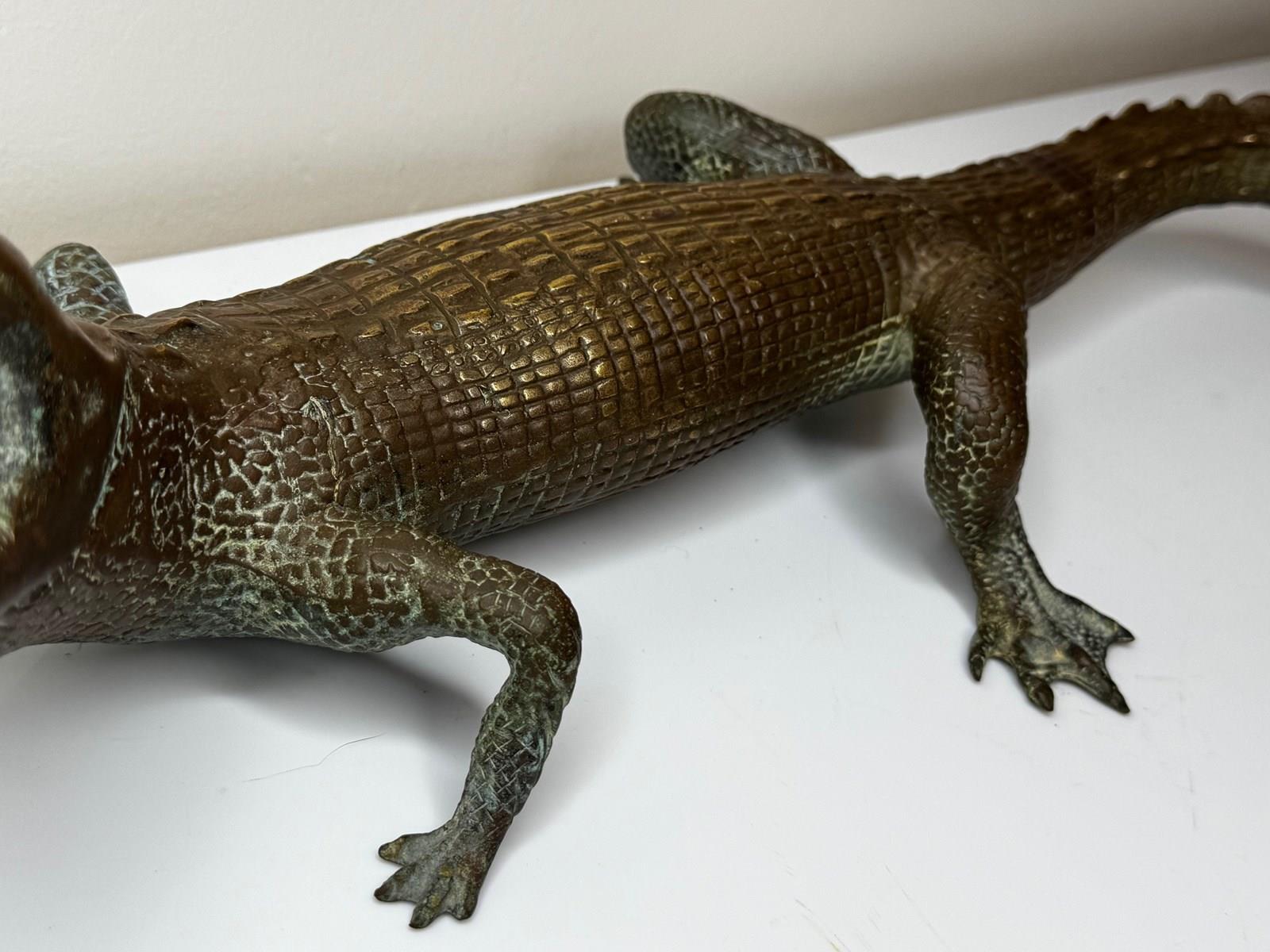
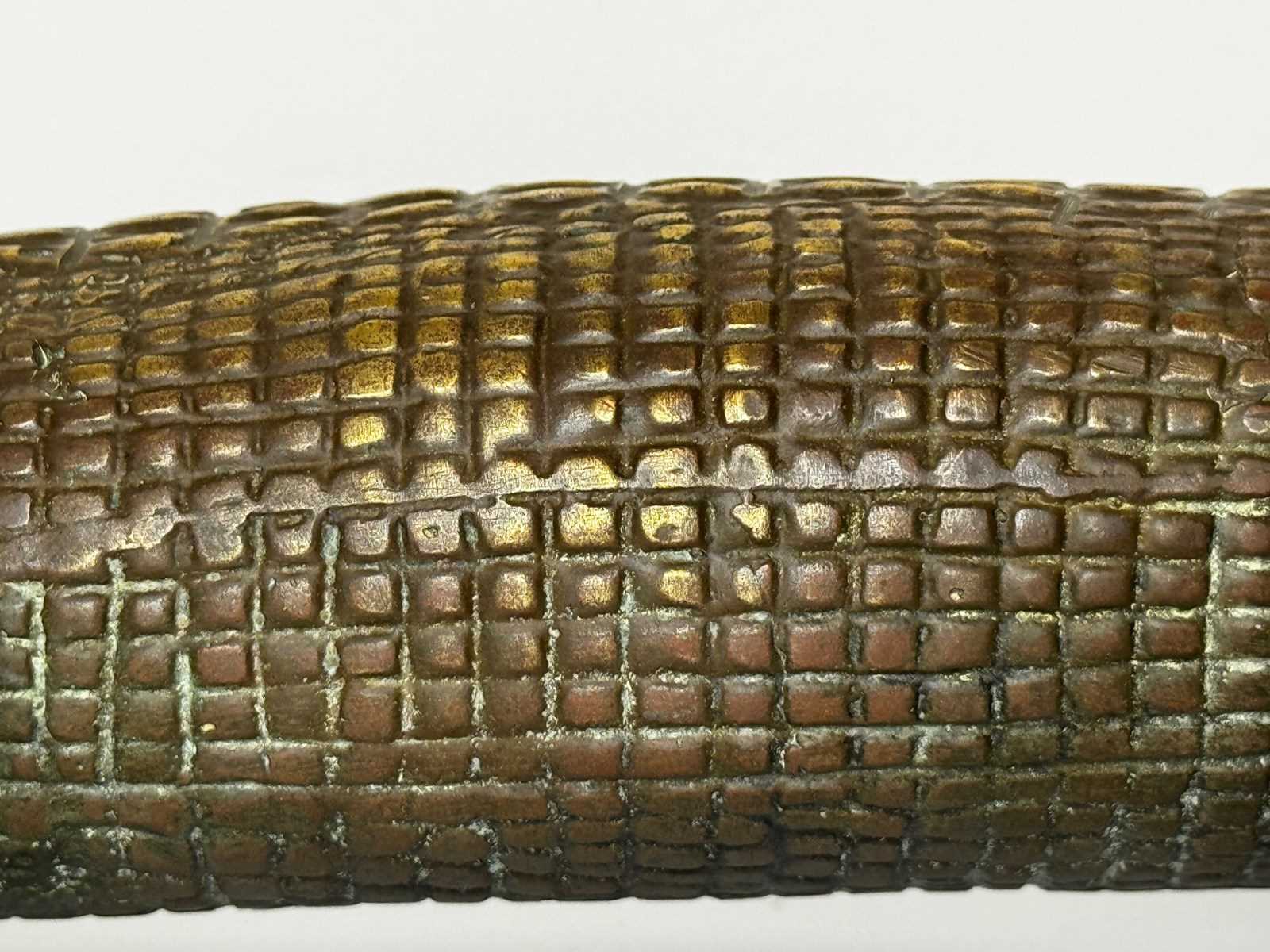
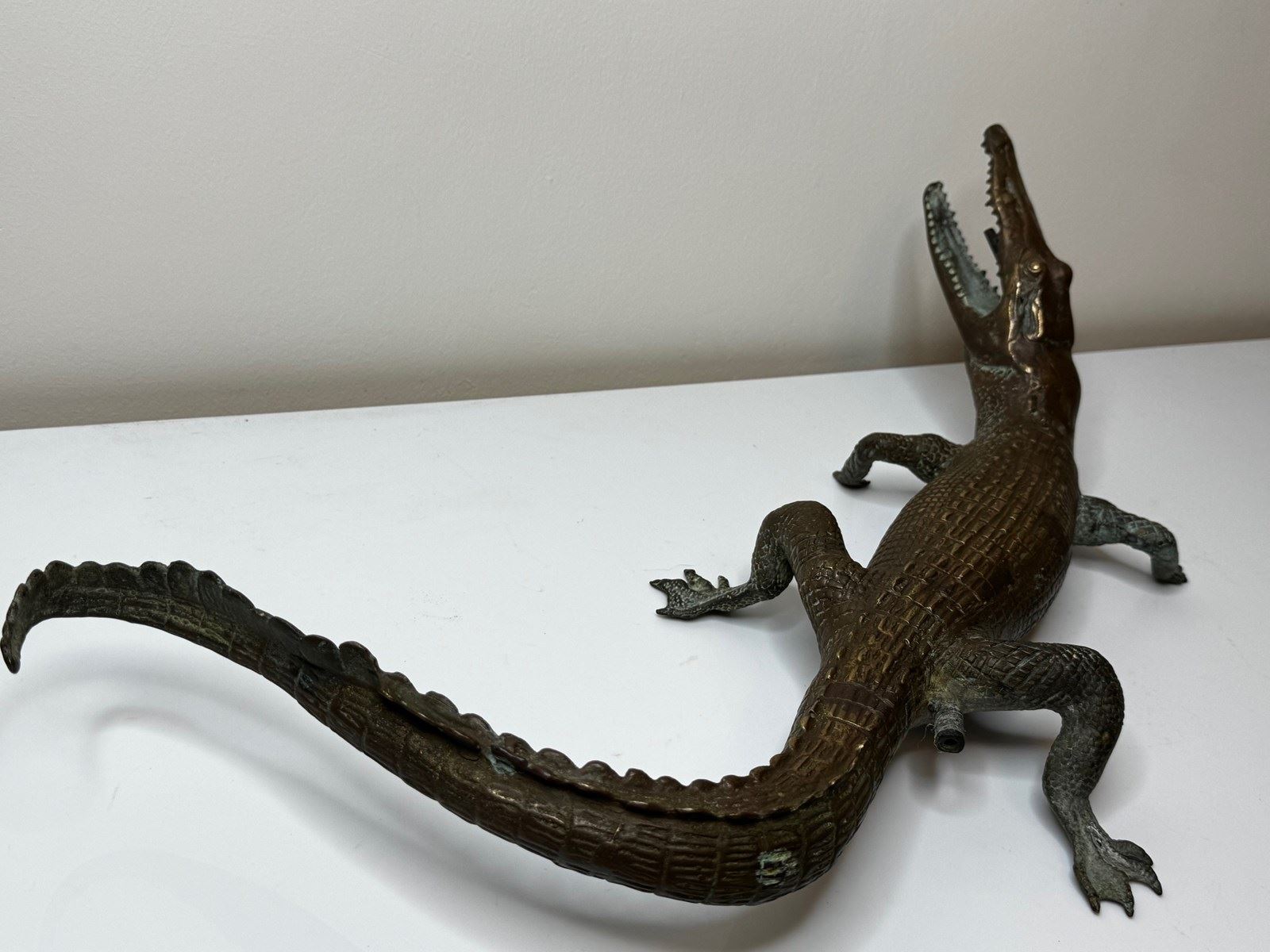
The crocodile belongs firmly to the animalier tradition. The modelling is naturalistic without being clinical, with carefully rendered scales along the back and tail, webbed feet planted firmly beneath the body, and a powerful tail that curves to one side. The jaws are wide open, revealing the interior of the mouth where the water exits, and the eyes and jawline are shaped to give the creature a sense of alertness and latent movement.
Seen in profile, the composition suggests an animal that has just hauled itself from the water and is about to move forward again. The sweeping curve of the tail introduces a dynamic line that prevents the piece from feeling static, while the braced legs and splayed claws give it tension and weight. The engineering is integrated discreetly into the sculpture: the fountain function is fully practical yet does not compromise the overall form.
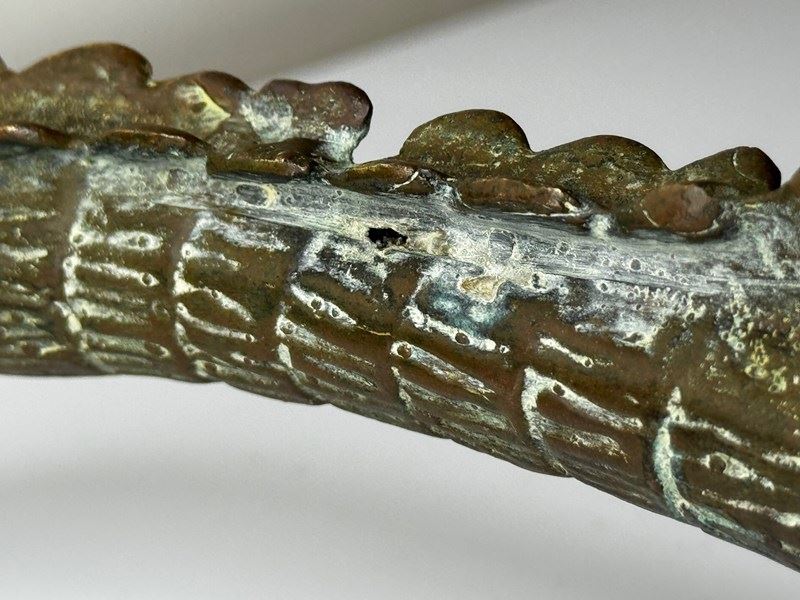
Decades of outdoor life have produced a complex, attractive patina. Warm bronze tones remain on the raised areas, while greenish verdigris has settled into the recesses and around the details. The surface bears honest evidence of age and use – gentle rubbing to the snout, feet and tail tip, and small knocks from garden life – giving it depth and nuance that modern reproductions rarely achieve. Technically and stylistically, the combination of naturalistic modelling with robust plumbing is characteristic of inter-war European decorative bronzes, and a date of around 1920 is entirely consistent.
Dimensions
Length: 59 cm
Width: 25 cm
Height: 18.5 cm
Weight (unpacked): 3.5 kg
These proportions give the crocodile real presence as a focal point, while remaining practical to handle and position in a variety of garden, terrace or interior settings.
Historical Significance
This crocodile sits at the intersection of two important strands in late 19th- and early 20th-century taste: the rise of animalier sculpture and the increasing use of designed water features in domestic gardens. From the mid-19th century onwards, bronze animal sculptures – popularised by figures such as Antoine-Louis Barye and his followers – found a ready market among collectors who valued both naturalistic observation and decorative impact. At the same time, garden design was evolving, with fountains, statuary and architectural elements being used to create atmosphere and narrative in outdoor spaces.
Within this context, a crocodile conceived as a working fountain head is both characteristic and rare. It is characteristic in that it draws on the animalier language of closely observed, lively animal forms and places them within the setting of an ornamental garden feature. It is rare in that the chosen creature – a crocodile – is markedly more exotic than the lions, dolphins and classical masks that dominate the category.
The piece also reflects early 20th-century fascination with exploration, empire and the natural world beyond Europe, channelling those themes into an object intended for everyday enjoyment in a private garden. As a surviving period example retaining its fountain function and original patina, the work offers a tangible link to inter-war garden design and collecting habits. It can be appreciated equally as a decorative object, a piece of garden history and a continuation of the animalier tradition adapted to a specifically outdoor, domestic context.
Why You’ll Love It
Striking focal point: at 59 cm long, it instantly draws the eye beside a pond, on a terrace or in a garden room.
Full of character: open jaws, sweeping tail and detailed scales give it drama, presence and a touch of humour.
Authentically antique: original patina, honest wear and integrated fountain engineering clearly mark it as a genuine period bronze.
Versatile: can be used as a functioning fountain or as a standalone sculptural statement indoors or out.
Collectable: a distinctive piece within the sought-after world of animalier bronzes and garden sculpture.
Provenance
Private collection, Vale of Glamorgan.
Notable auction house in Wales.
Curated by Cheshire Antiques Consultant LTD.
Condition Report
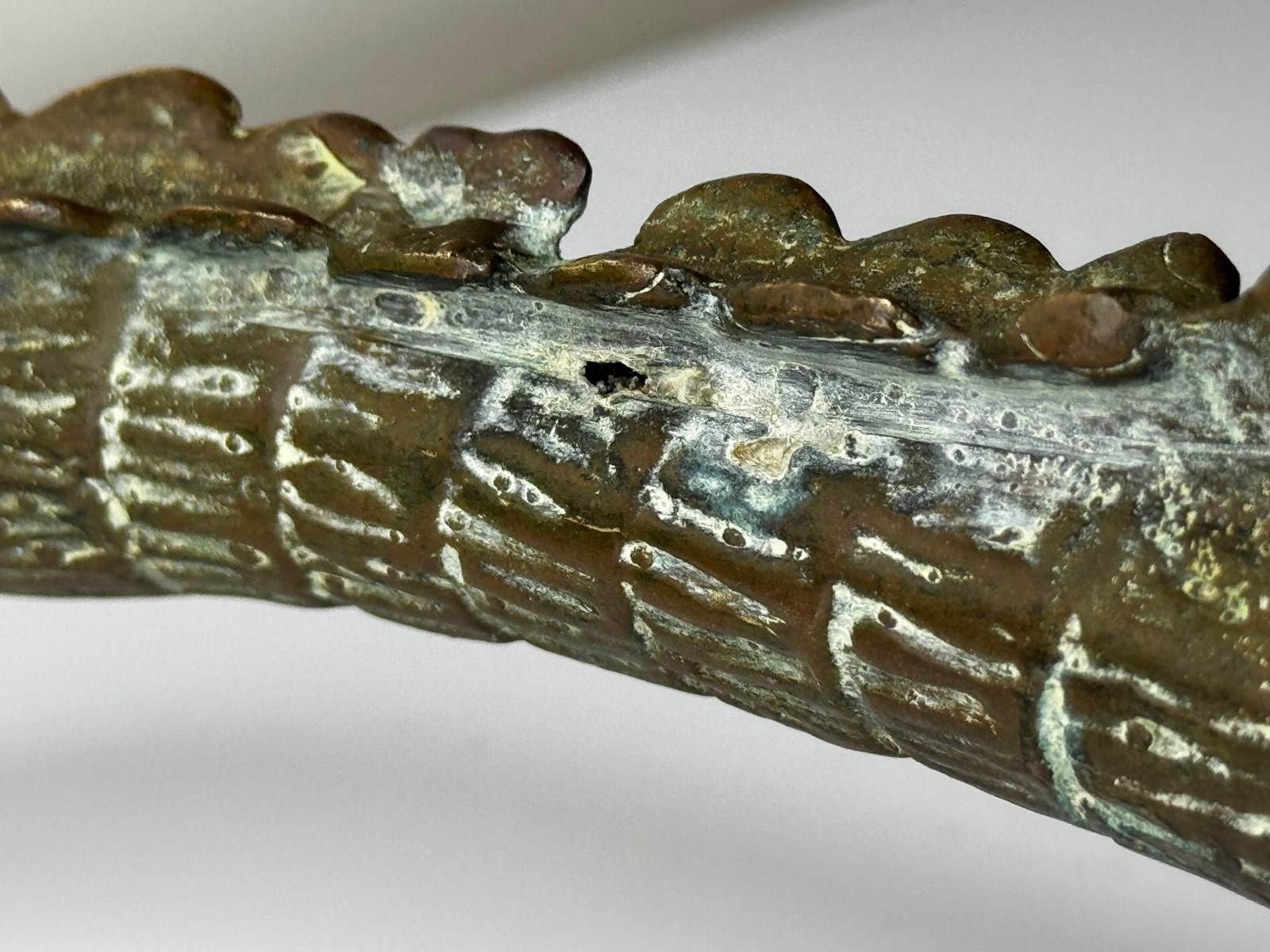
The crocodile is in good decorative condition, with a rich, naturally developed patina showing warmer bronze tones on the high points and greenish verdigris in the recesses. There is honest wear and a few minor knocks from long outdoor use, with light rubbing to exposed areas such as the snout, feet and tail tip and some small losses and weathering-related surface holes commensurate with age. This is precisely the sort of surface experienced buyers look for in a period garden bronze.
A later drilled service or fixing hole is present at the back, introduced during its working life as a fountain to accommodate plumbing or securing. This is typical of practical garden fittings and is not structurally significant. No structural cracks are visible and the casting feels sound in the hand, bearing its age well. The internal pipework is present but, as with any period fountain head, should be checked and adapted or extended by a suitably qualified installer before being brought back into use.
Worldwide Shipping
This piece will be professionally packaged and fully insured for safe global delivery.
Item Info
Seller Location
Covent Garden, London
Item Dimensions
H: 18.5cm W: 25cm D: 59cm
Period
1920
Item Location
United Kingdom
Seller Location
Covent Garden, London
Item Location
United Kingdom
Seller Contact No
+44 (0)7494 763382
More from CHESHIRE ANTIQUES CONSULTANT LTD