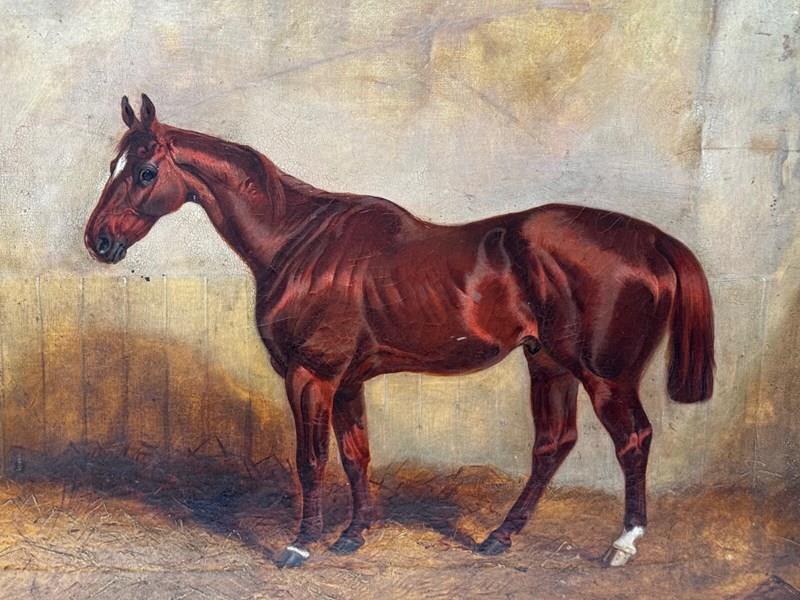
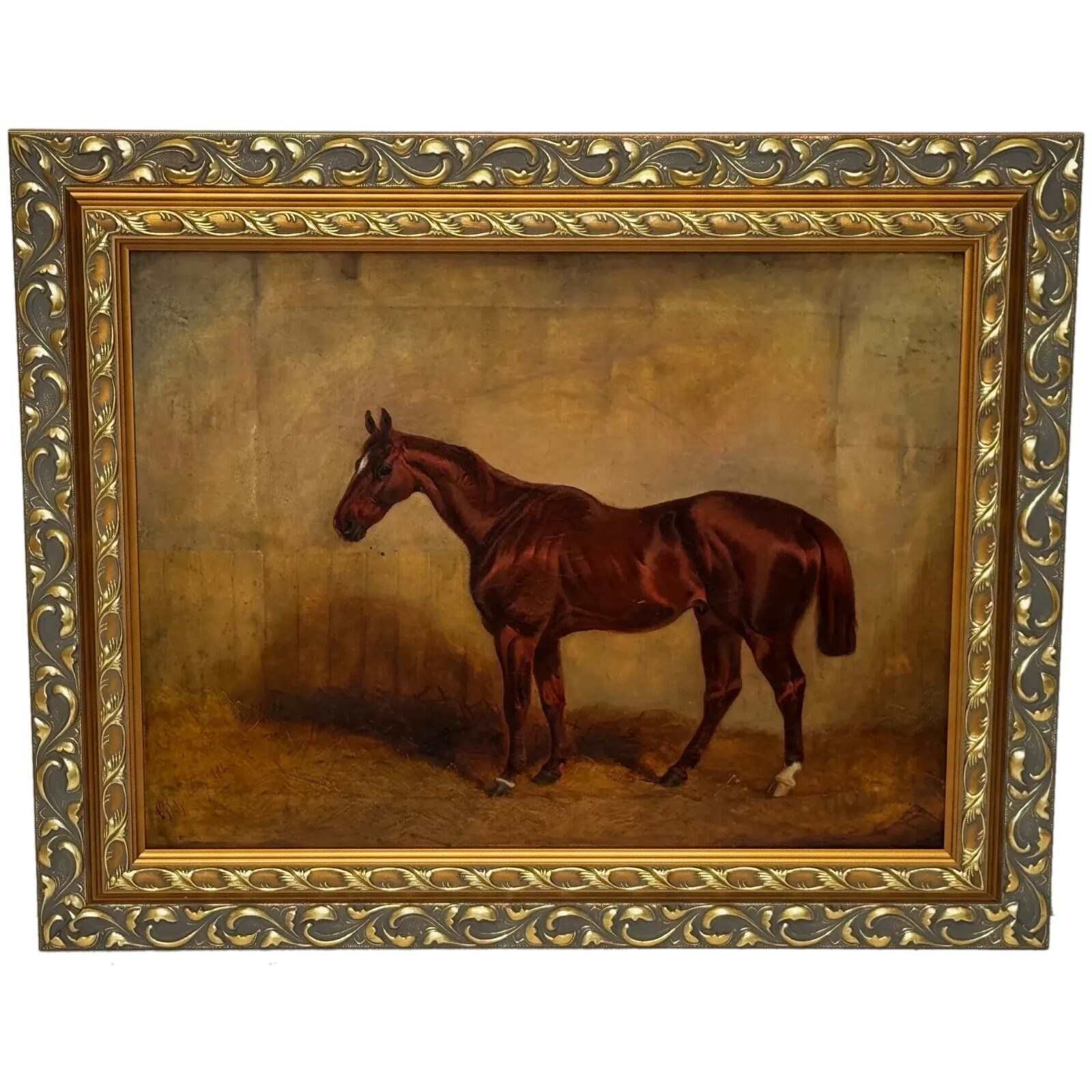
Charles Bilger Spalding Chestnut Hunter Early Victorian Equestrian Oil Painting
Stock No
CACL719
2023
- £8,000.00
- €9,450 Euro
- $10,585 US Dollar
Questions about this item?
Like this item?
Item Description
**Charles Bilger Spalding 1843 Chestnut Hunter Early Victorian Equestrian Oil Painting**
Signed British Sporting Portrait of a Chestnut Hunter in a Stable by Charles Bilger Spalding (1810–1871)
**Highlights**
• Charles Bilger Spalding (British, 1810–1871)
• A Chestnut Hunter in a Stable
• Signed and dated 1843
• Original oil on canvas
• Early Victorian British sporting and equestrian portrait
• Mature chestnut hunter standing within an atmospheric stable interior
• Painted during an important early period of Spalding’s documented career
• Royal Academy exhibitor from 1840
• Spalding exhibited an equestrian subject at the Royal Academy in 1843
• Documented association with sporting publishers S. & J. Fuller
• Related sporting work represented in the Walker Art Gallery, Liverpool
• Mallams, Oxford provenance
• Canvas 53 cm wide × 41 cm high
• Framed 66.5 cm wide × 54 cm high × 2.5 cm deep
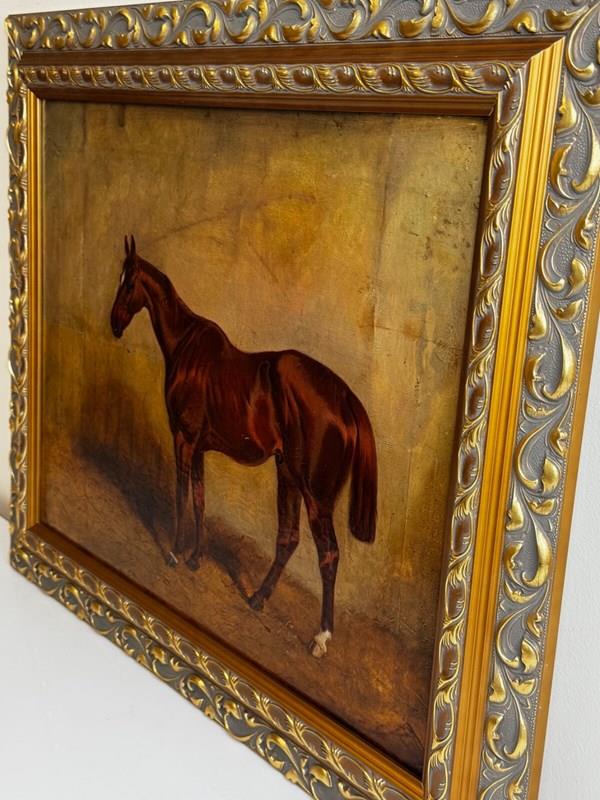
• Later decorative gilt moulded frame
• An evocative work for collectors of British sporting, equestrian and country-house art
**Introduction**
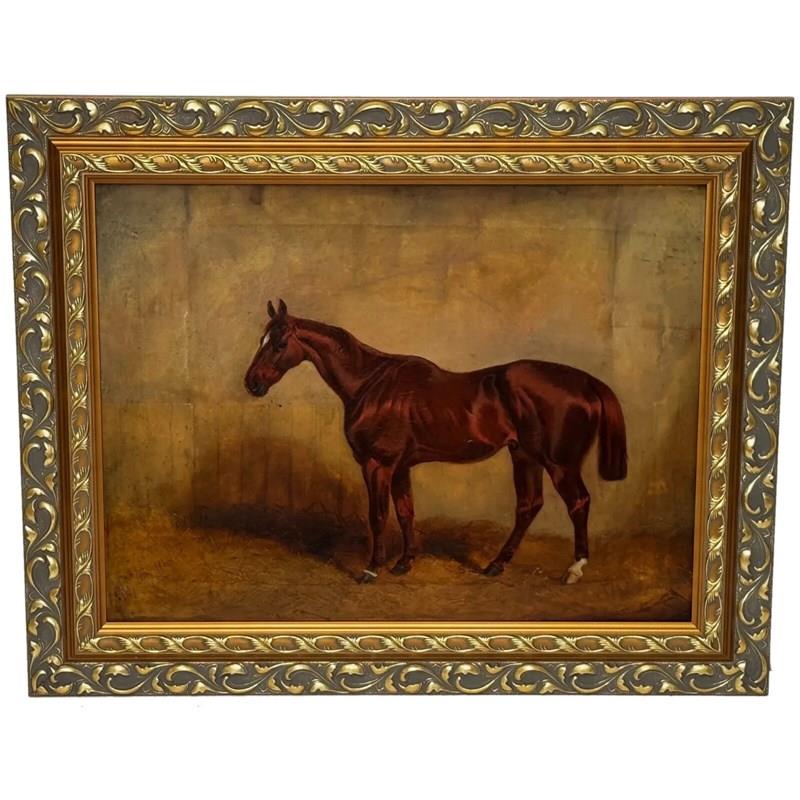
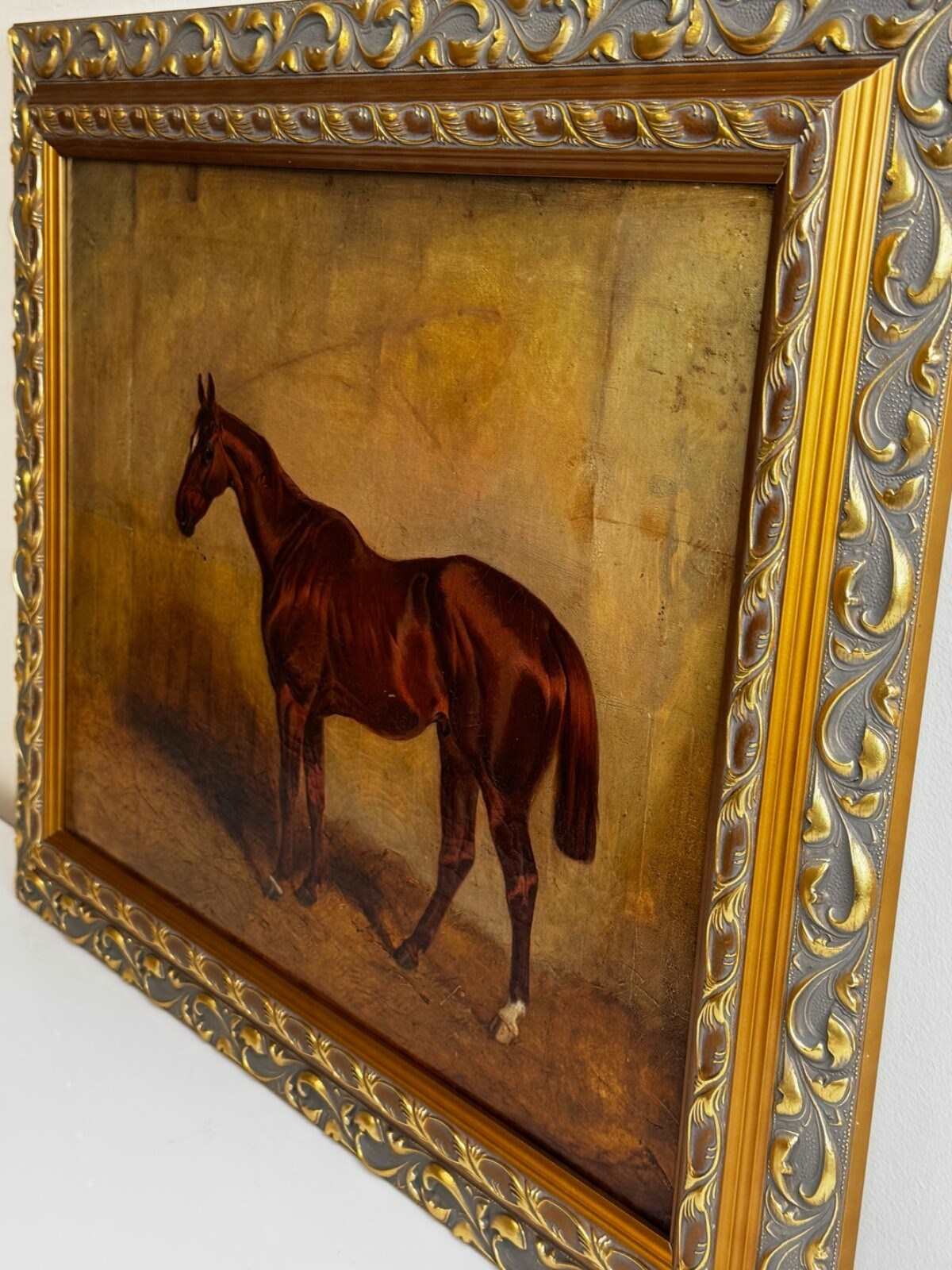
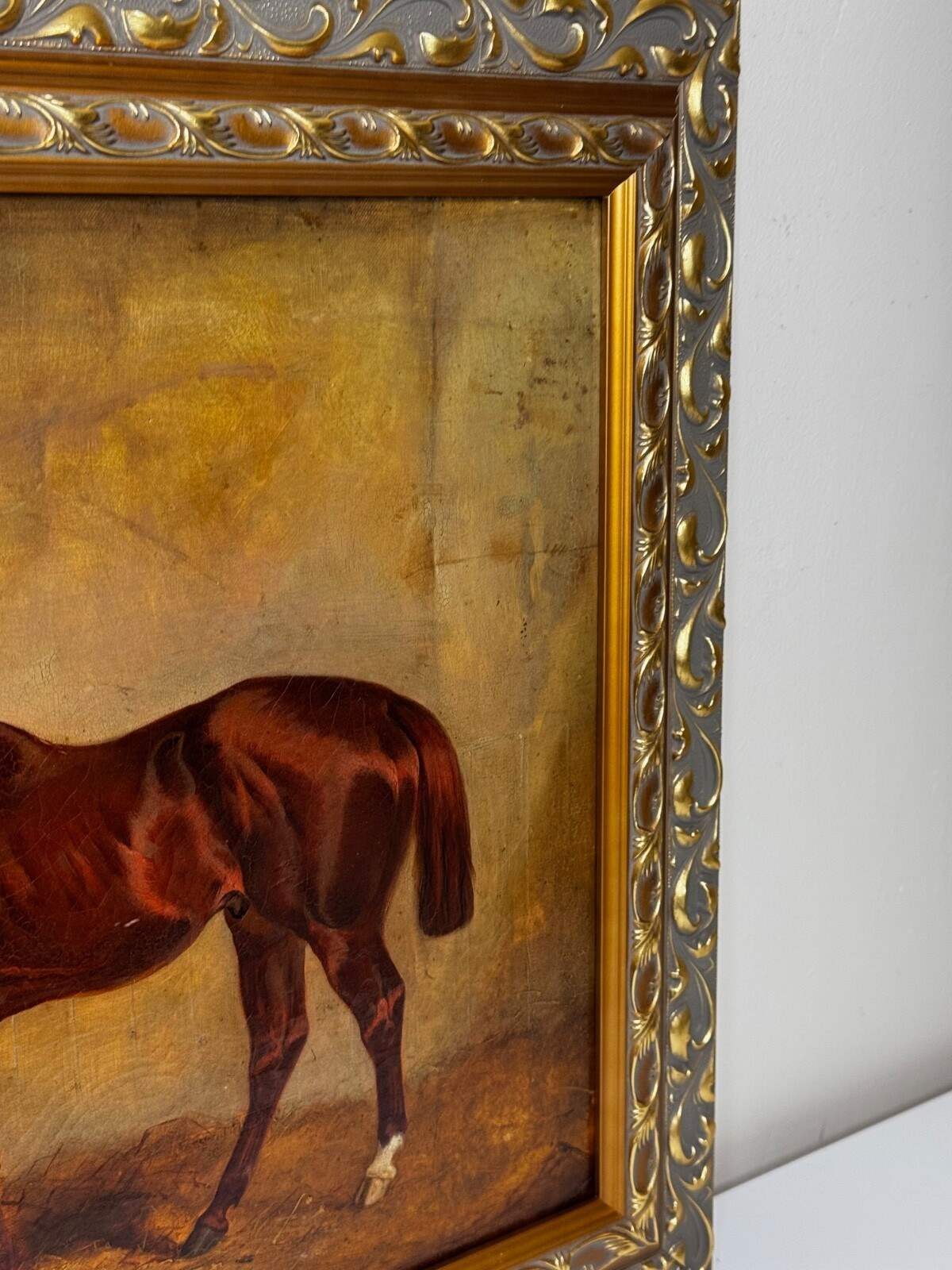
A handsome signed and dated 1843 British equestrian oil painting by Charles Bilger Spalding (1810–1871), depicting a mature chestnut hunter standing quietly within its stable.
The composition has an intimacy that distinguishes it from the elaborate hunting scenes traditionally associated with nineteenth-century sporting art. There are no riders, hounds or sweeping country landscape. Instead, Spalding concentrates attention upon the horse itself.
Its rich chestnut coat provides the dominant colour within the composition, contrasting with the muted ochres, creams, greys and earthy browns of the stable interior.
The painting is particularly interesting within Spalding’s documented chronology. He first exhibited at the Royal Academy in 1840, while the Academy records an equestrian subject, Horses of Sir E. Filmer, Bart., exhibited by him in 1843, the same year as the present work.
**Catalogue Details**
Artist: Charles Bilger Spalding (1810–1871)
Title: A Chestnut Hunter in a Stable
Date: 1843
School: British
Period: Early Victorian / mid-19th century
Medium: Oil on canvas
Signature: Signed
Date inscription: Dated 1843
Subject: Mature chestnut hunter standing within a stable interior
Canvas: 53 cm wide × 41 cm high
Frame: Later decorative gilt moulded frame
**Catalogue Note**
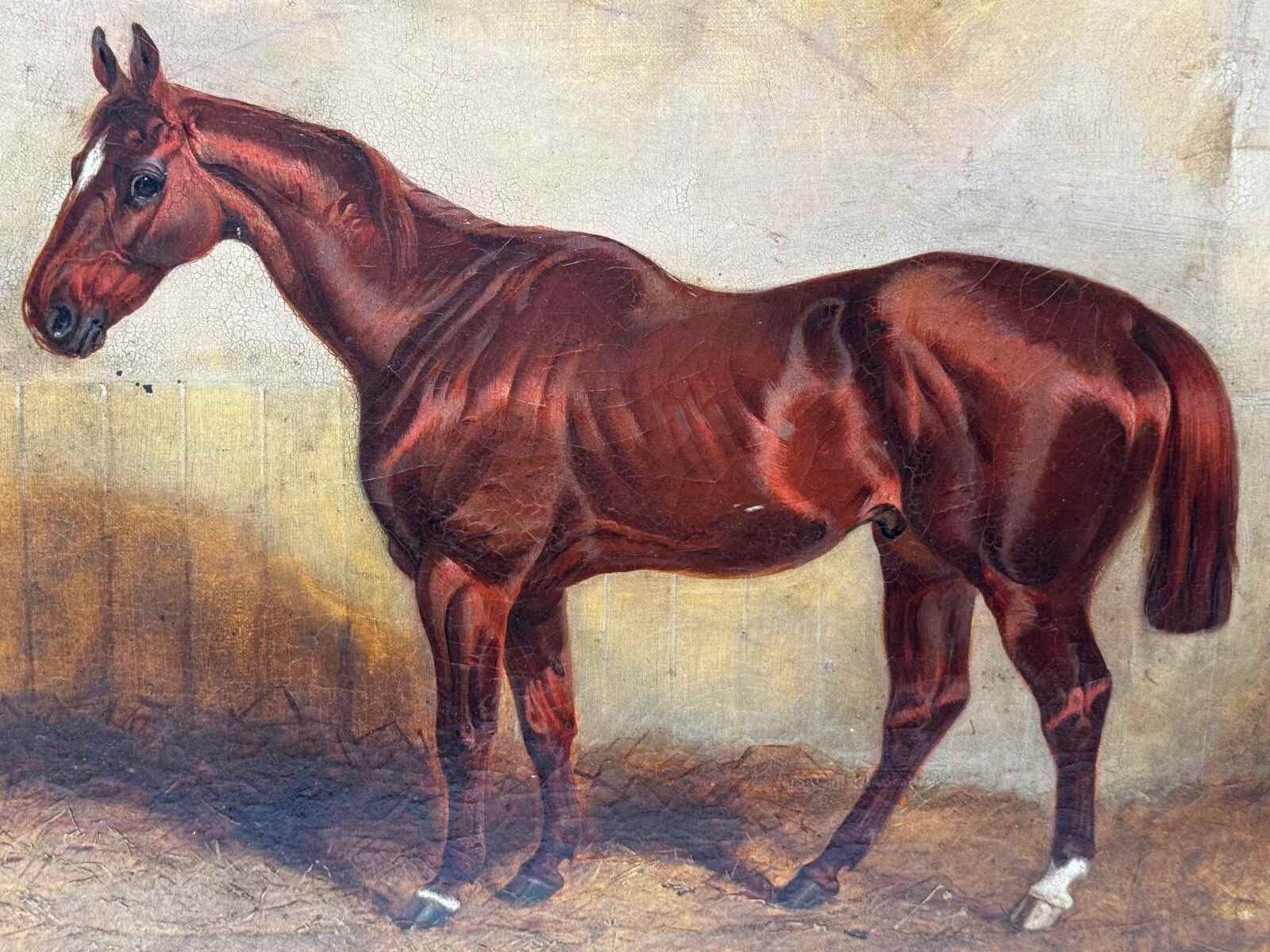
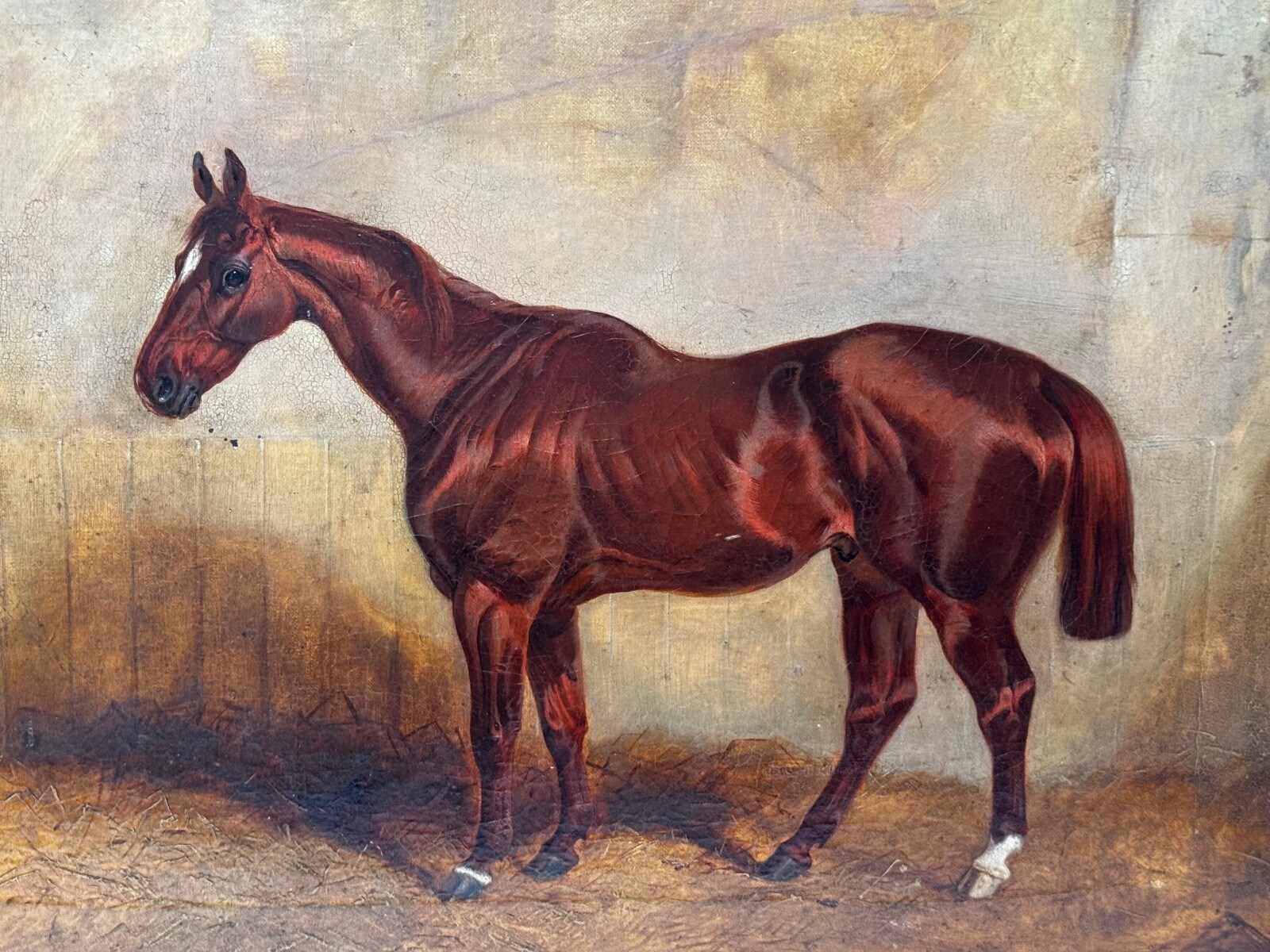
The horse is shown almost entirely in profile, its elongated form establishing the principal horizontal structure of the composition.
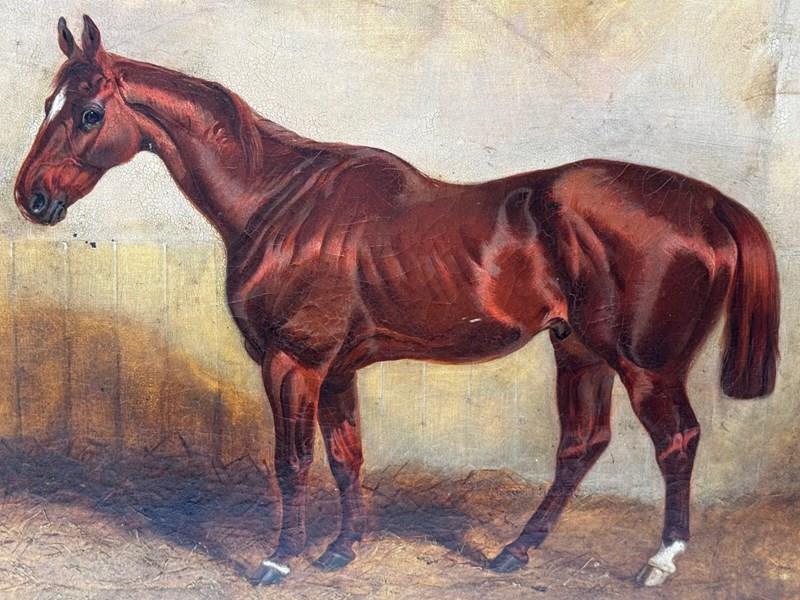
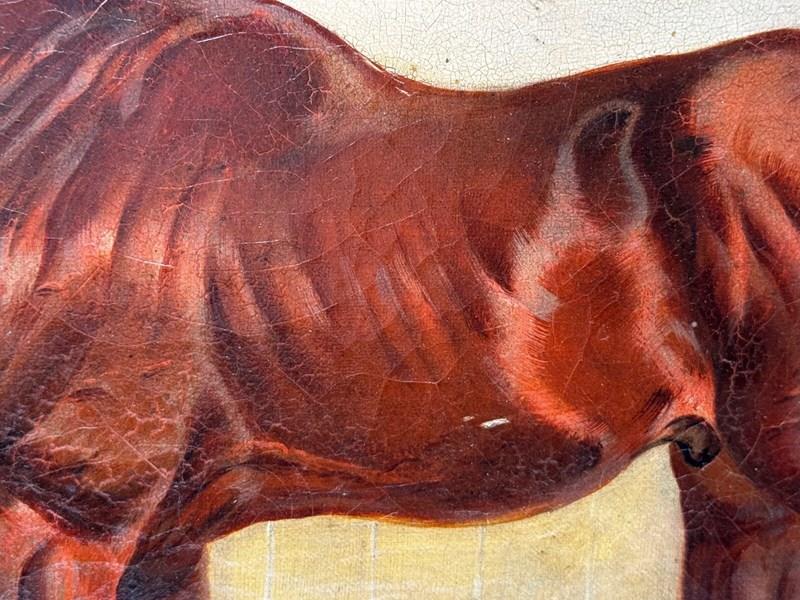
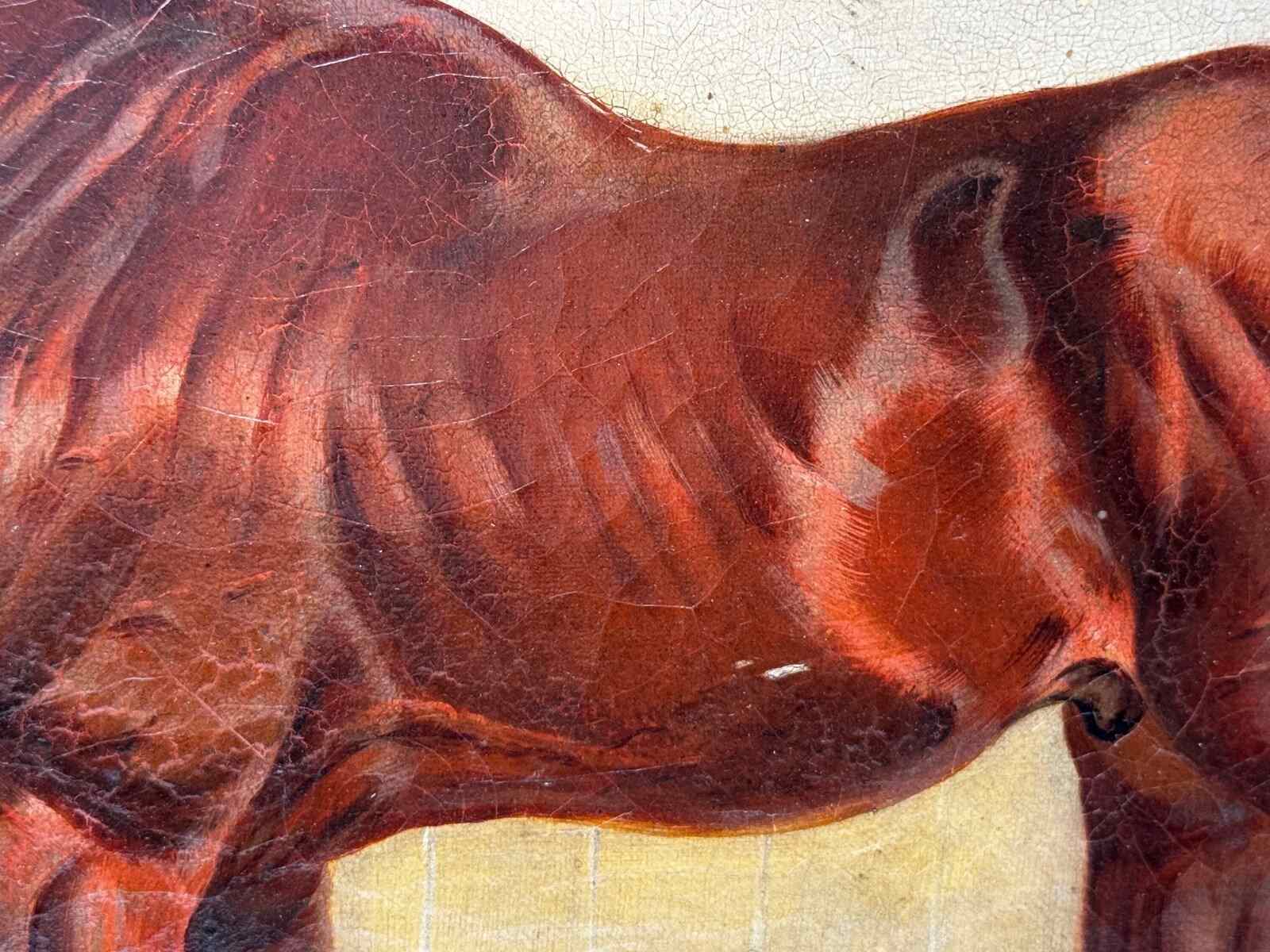
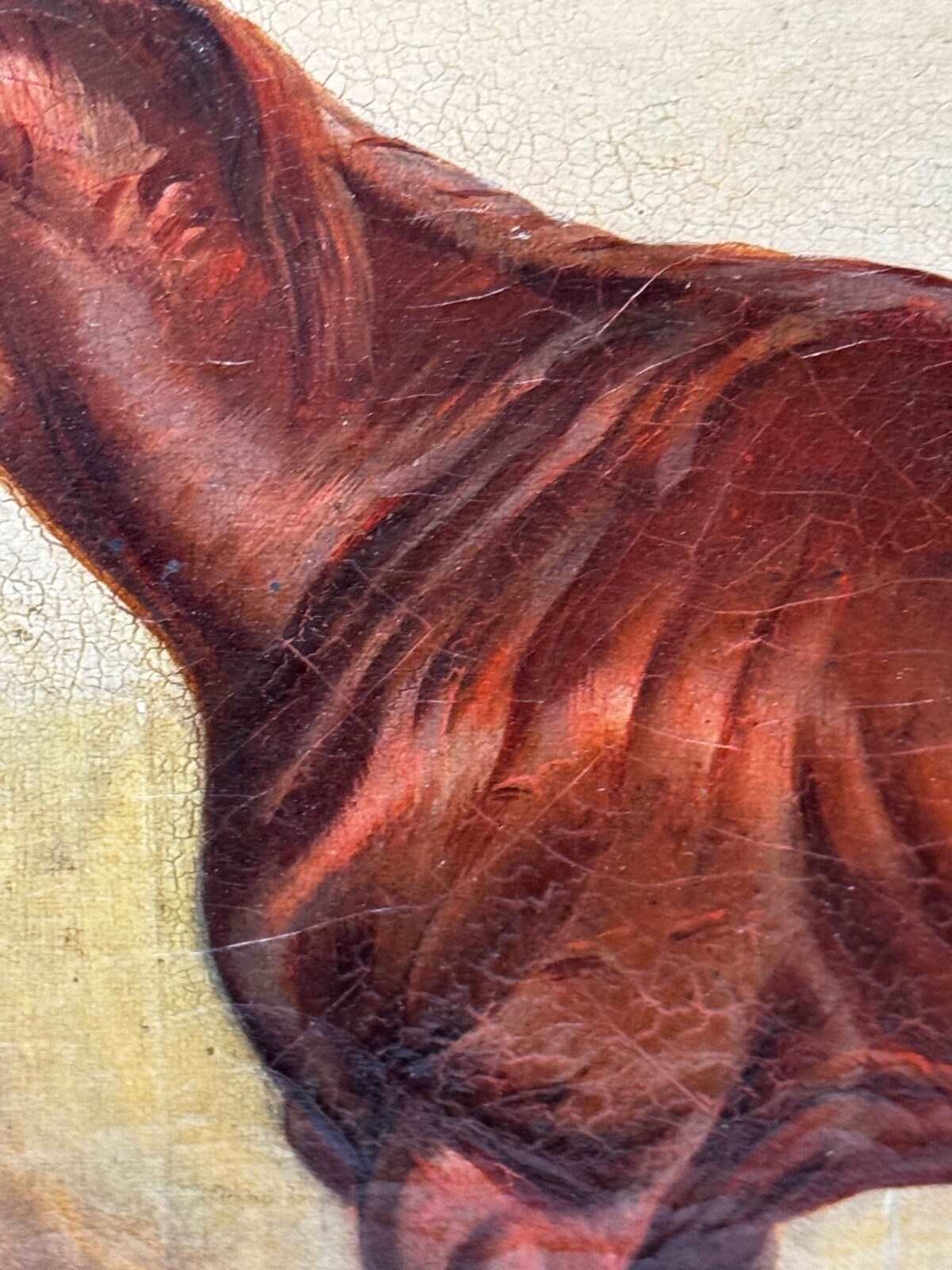
Spalding builds the animal through rich passages of chestnut, russet and mahogany. Carefully controlled highlights across the neck, shoulder, barrel and hindquarters articulate the musculature and suggest the sheen of the coat.
The visible eye introduces an engaging sense of awareness. Although the horse stands calmly, it appears attentive to its surroundings.
The stable architecture is deliberately subordinate. Broad passages of ochre, cream, grey and brown establish a convincing interior without distracting from the animal.
Across the foreground, broken linear strokes suggest straw scattered beneath the horse.
The resulting work has the character of an individual equine portrait rather than a generalized sporting scene.
**The Chestnut Hunter and Stable Setting**
The animal is appropriately described as a mature chestnut hunter.
Its developed physique, substantial bone and balanced sporting proportions are consistent with the type of horse traditionally associated with British hunting and country pursuits.
No independent documentary evidence presently establishes the animal’s individual name, exact breed or historic owner.
The stable location has likewise not been securely identified.
The absence of these details makes cautious cataloguing important. The painting is therefore presented according to what can be established from the physical work and surviving documentation.
Spalding’s decision to portray the horse at rest gives the composition much of its appeal. Removed from the hunting field, the animal becomes an individual portrait subject.
**Colour and Technique**
The painting is executed in oil on canvas.
Warm chestnut, mahogany, russet and brown tones dominate the horse.
Spalding concentrates his most careful modelling upon the animal, using changes of tone and controlled highlights to articulate the body.
The stable is treated more broadly. Muted ochres, creams and greys establish the architecture while allowing the horse to remain visually dominant.
The straw-covered foreground introduces a looser and more energetic element through broken linear brushwork.
This contrast between detailed equine observation and atmospheric background handling gives the painting both clarity and warmth.
**Dating the Painting**
The painting is dated 1843.
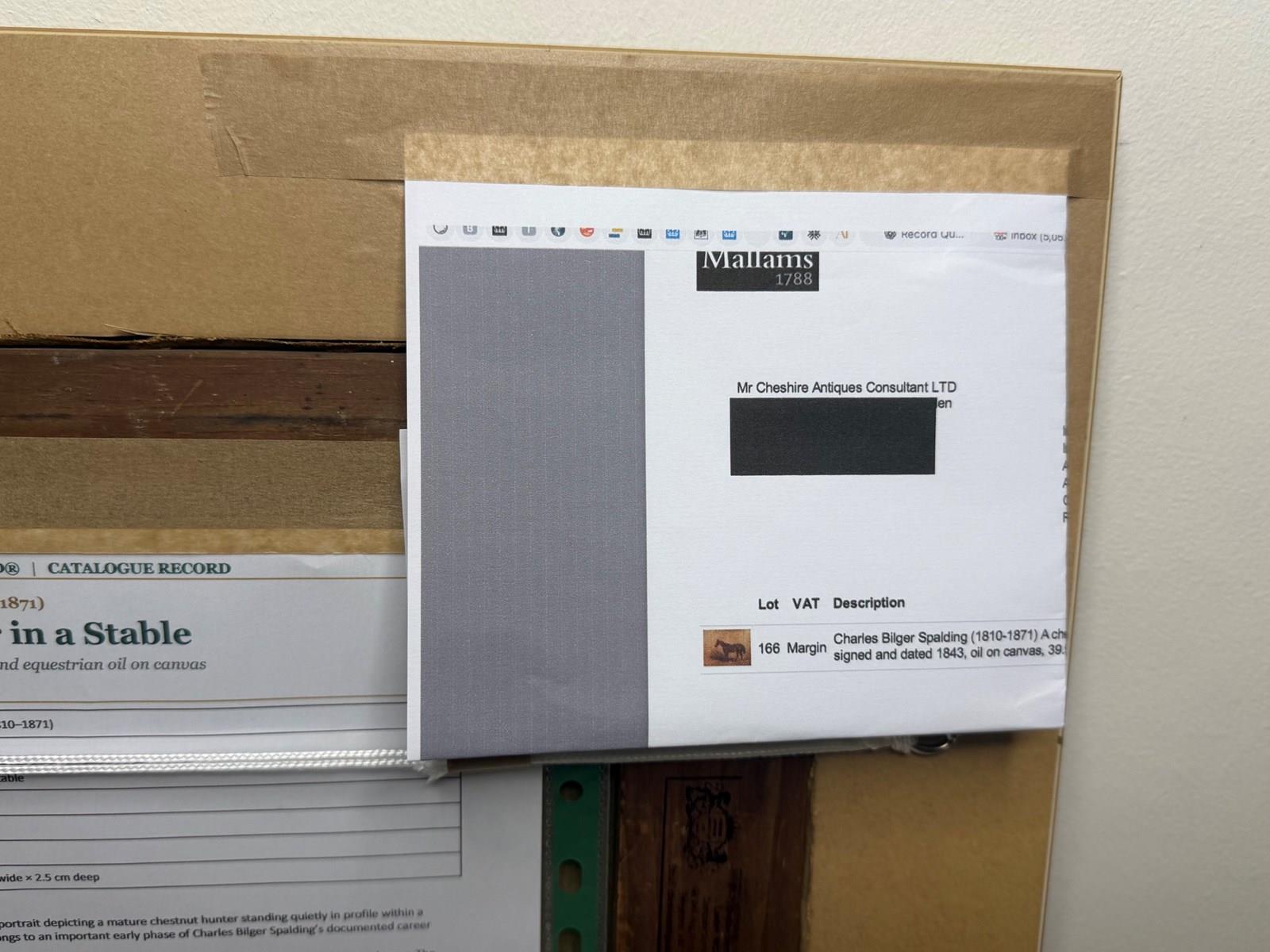
Mallams, Oxford, catalogued the work as A Chestnut Hunter in a Stable, signed and dated 1843.
The date is particularly relevant to Spalding’s documented career.
He first exhibited at the Royal Academy in 1840. The historical Royal Academy exhibitor record lists Horses of Sir E. Filmer, Bart. under Spalding in 1843.
The present painting therefore dates from precisely the same year in which an equestrian subject by Spalding was being exhibited at the Royal Academy.
**Early Victorian Sporting Art**
Equestrian portraiture occupied an important place within nineteenth-century British sporting culture.
Valued hunters, racehorses and riding horses could be commemorated as individual subjects, recording their appearance and character for their owners.
A Chestnut Hunter in a Stable belongs firmly within this tradition.
Its particular quality lies in its restraint.
Rather than celebrating the spectacle of the hunt, Spalding records the horse within the private environment of its stable.
**The Artist**
Charles Bilger Spalding (1810–1871) was a British painter specialising in sporting and country subjects.
He first exhibited at the Royal Academy in 1840.
Spalding also worked for the important London sporting publishers S. & J. Fuller. His documented work included a portrait of Satirist, winner of the 1841 St Leger.
His recorded oeuvre encompasses horses, hounds, hunting scenes and other aspects of British country and sporting life.
**Royal Academy Exhibition History**
Spalding’s Royal Academy exhibition history provides particularly important context for this painting.
The historical exhibitor record documents:
1840 - Sailor, Jerry and Lottery, celebrated steeple-chase horses.
1843 - Horses of Sir E. Filmer, Bart.
1848 - The battle of Aliwal and Horses.
1849 - A forester.
The present work is dated 1843, the same year as the documented Royal Academy equestrian exhibit Horses of Sir E. Filmer, Bart.
Spalding should correctly be described as a Royal Academy exhibitor. The available evidence does not establish his election as a Royal Academician, and the post-nominal letters RA are therefore not used.
**Sporting Publications and S. & J. Fuller**
Spalding’s association with S. & J. Fuller places him within the wider commercial culture of nineteenth-century British sport.
The London firm was closely associated with racing, hunting and equestrian imagery.
Spalding’s documented portrait of Satirist, winner of the 1841 St Leger, demonstrates his professional involvement with important equestrian subjects immediately before the present painting was produced.
**Museum Collections**
Spalding’s sporting work is represented within British public collections.
The Walker Art Gallery, Liverpool, holds A Huntsman with His Horse and a Group of Hounds.
The museum work presents the broader world of British hunting through horse, huntsman and hounds.
The present painting offers a more intimate counterpart, concentrating entirely upon a single horse within its stable.
**Comparable Works**
Spalding’s documented oeuvre demonstrates sustained engagement with horses and sporting subjects.
A particularly important comparison is The Meet of the Hambledon Hounds at Preshaw House, Hampshire, the Seat of Walter Long in 1844.
Painted only one year after the present portrait, the substantial composition demonstrates Spalding’s ability to move between intimate individual horse portraiture and ambitious multi-figure hunting scenes.
**Auction Market and Collecting History**
Spalding’s sporting paintings have an established history within the British and international art market.
His recorded works encompass individual horses, hounds, huntsmen and substantial sporting compositions.
Paintings by Spalding have appeared through established auction houses and specialist sporting-art sales.
Such records demonstrate continuing collecting interest but should be understood as market context rather than direct valuation comparisons with the present work.
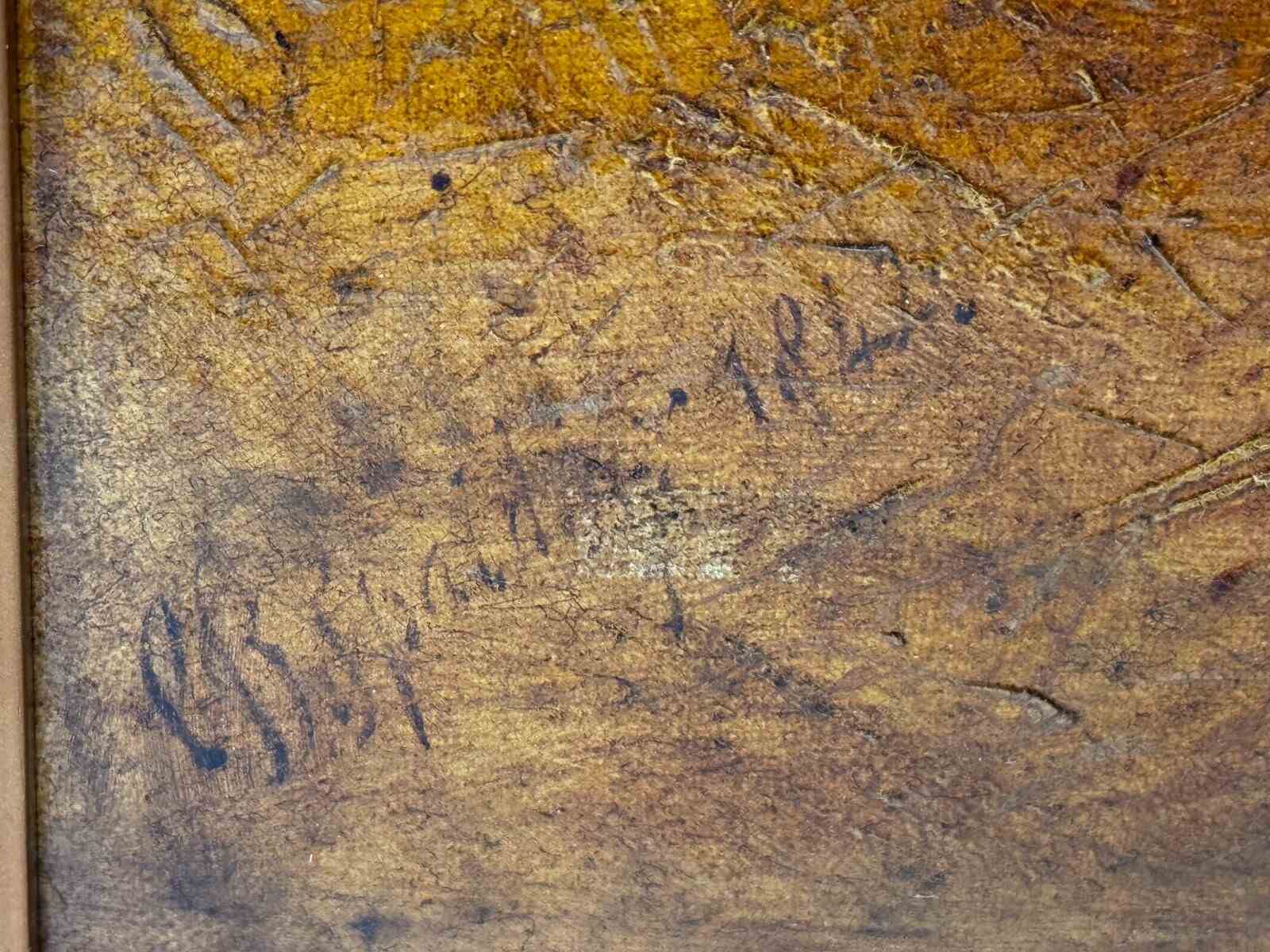
**Signature and Date**
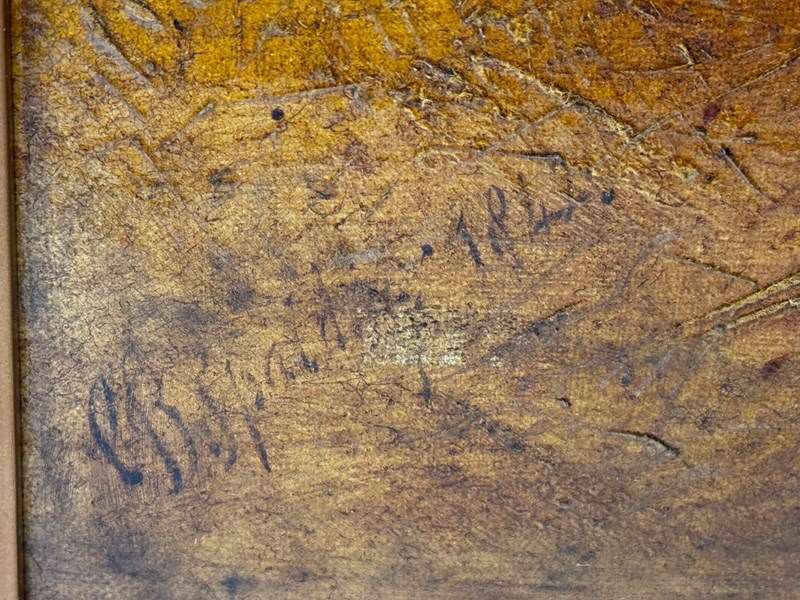
The painting is signed and dated.
The date is catalogued as 1843.
Its signed and dated character, together with its equestrian subject and Spalding’s independently documented Royal Academy exhibition of an equestrian work in the same year, provides particularly relevant historical context.
No secure documentary evidence presently identifies the individual horse.
**Provenance**
Private collection, United Kingdom.
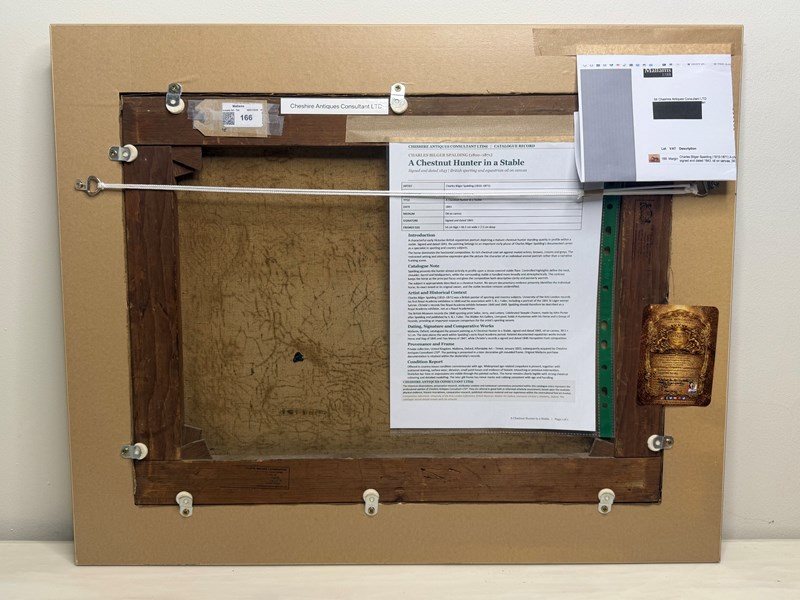
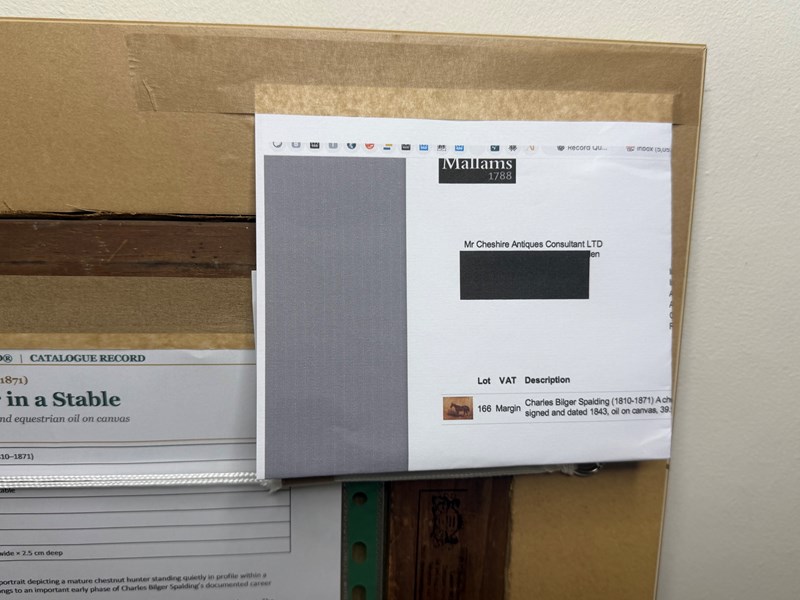
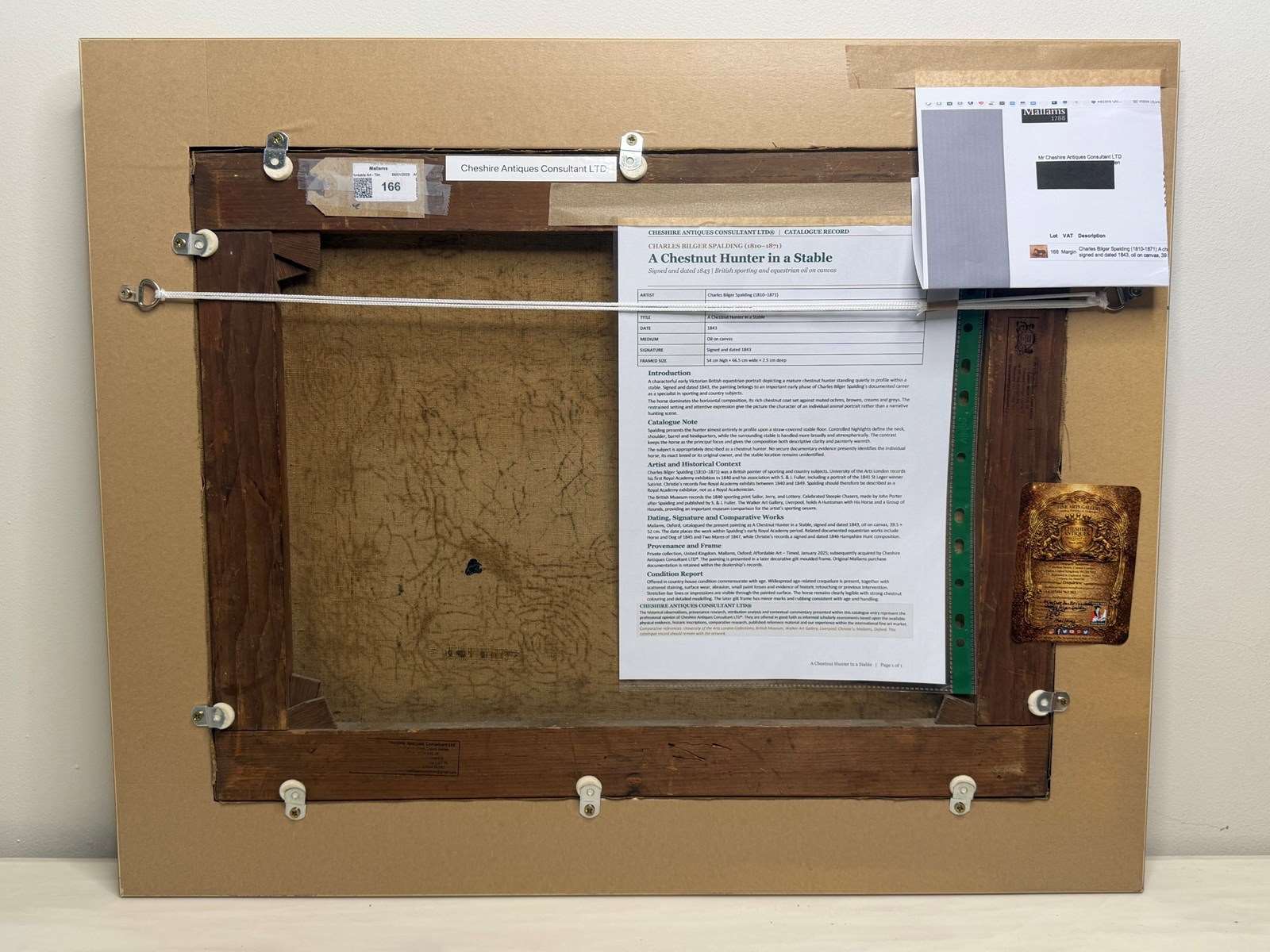
Mallams, Oxford; Affordable Art - Timed, January 2025; catalogued as Charles Bilger Spalding (1810–1871), A Chestnut Hunter in a Stable, signed and dated 1843, oil on canvas.
Acquired by Cheshire Antiques Consultant LTD®, 2025.
Original Mallams purchase documentation retained.
**Dimensions**
Framed:
Width: 66.5 cm
Height: 54 cm
Depth: 2.5 cm
Approximately 26.2 × 21.3 × 1 inches.
Canvas:
Width: 53 cm
Height: 41 cm
Approximately 20.9 × 16.1 inches.
**Frame**
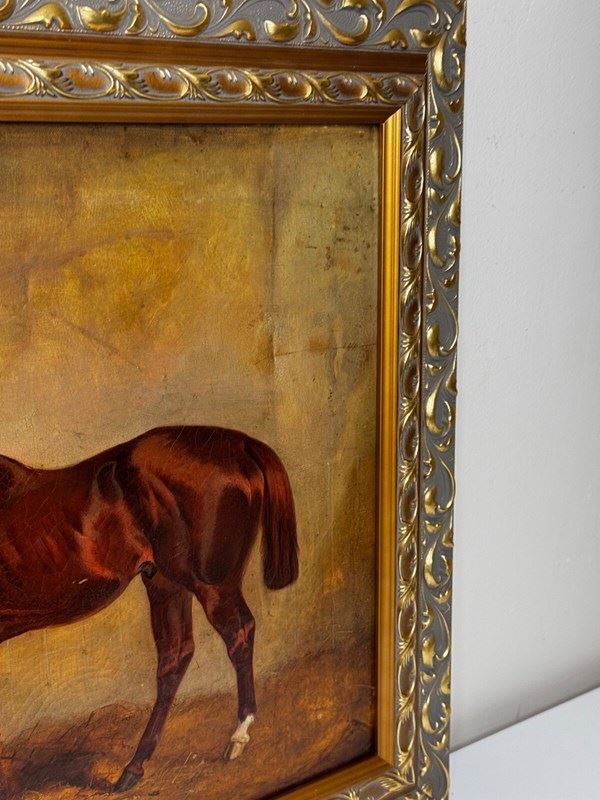
Presented in a later decorative gilt moulded frame.
The scrolling and foliate ornament provides a sympathetic traditional presentation for the early Victorian sporting subject.
The frame is not represented as original to the painting.
Minor marks, rubbing and surface variations are present consistent with manufacture, handling and use.
**Condition Report**
The painting is offered in country-house condition commensurate with its age of more than 180 years.
The canvas appears to retain an older, apparently unlined presentation based upon the available visual examination and photographs.
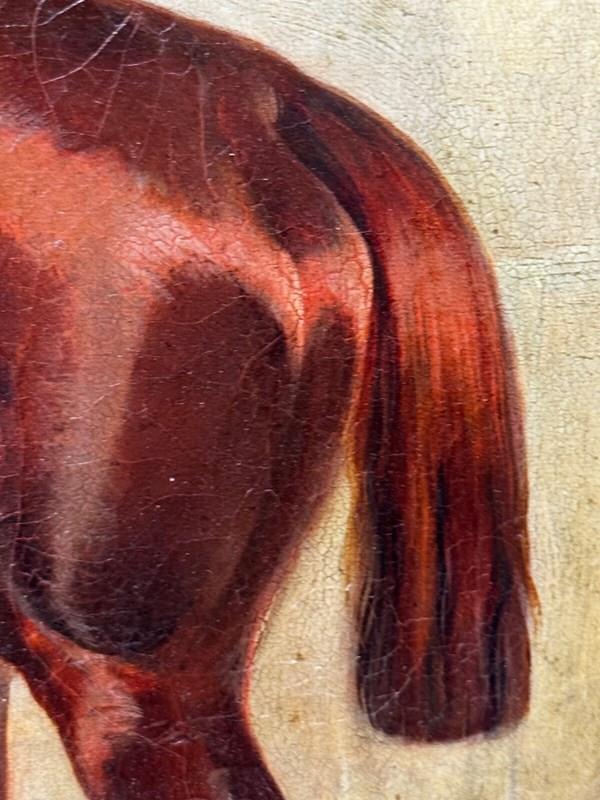
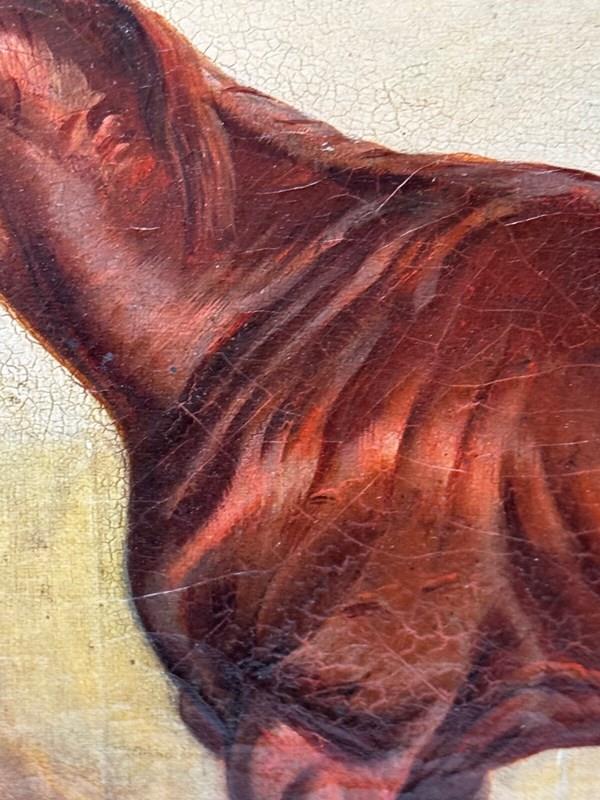
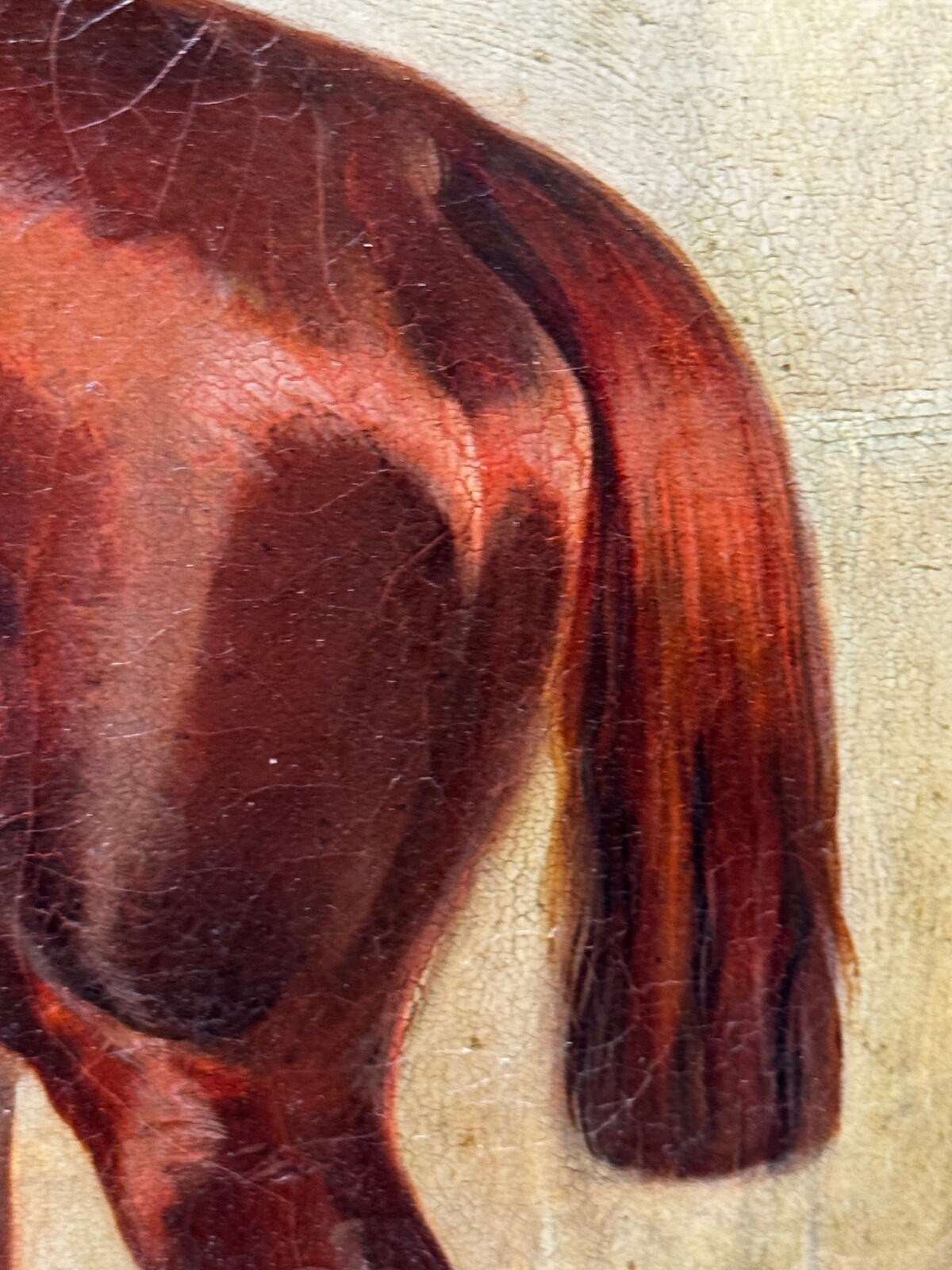
There is widespread age-related craquelure across the painted surface, together with scattered staining, surface wear, abrasion, small areas of paint loss and evidence of historic retouching or previous intervention.
Stretcher-bar lines / impressions are visible through the painted surface.
The stable background displays areas of age-related discolouration and surface marking.
The darker passages of the horse likewise show craquelure and wear, although the principal modelling, rich chestnut colouring and anatomical detail remain clearly legible.
The later decorative gilt frame displays minor marks, rubbing and imperfections consistent with handling and use.
Please examine the extensive close-up photographs carefully, as these form an integral part of the condition description.
**Collecting Interest**
A Chestnut Hunter in a Stable combines several qualities of particular interest to collectors of nineteenth-century British sporting art.
It is a signed and dated equestrian portrait by an identified sporting painter whose documented career includes Royal Academy exhibitions and work for an important sporting publisher.
The 1843 date is especially significant because Spalding exhibited an equestrian subject at the Royal Academy in the same year.
Its intimate stable setting provides an appealing contrast with the artist’s larger hunting compositions, while its documented Mallams provenance adds a clear modern art-market history.
**Shipping**
Worldwide shipping is available.
Owing to the historic framed presentation of the artwork, it will be professionally packaged using appropriate protective materials and dispatched fully insured.
International buyers are welcome. Please contact us for a destination-specific delivery quotation or to discuss any particular shipping requirements.
**Certificate of Sale & Dealer Attribution**
The artwork will be supplied with a Certificate of Sale & Dealer Attribution issued by Cheshire Antiques Consultant LTD®, recording the artwork’s catalogue details, attribution, provenance as stated, exhibition history and details of the sale. This document accompanies the work as part of its ongoing ownership and provenance record.
**Attribution and Research**
The historical observations, provenance research, attribution analysis, dating and contextual commentary presented within this catalogue entry represent the professional opinion of Cheshire Antiques Consultant LTD®. They are offered in good faith as informed scholarly assessments based upon the available physical evidence, historic inscriptions, comparative research, published reference material and our experience within the international fine art market.
These observations should be understood as professional opinions rather than definitive statements of fact or guarantees of authorship, attribution, date, origin, provenance, identity of the horse, stable location or historical interpretation. As with all historic works of art, future documentary discoveries, technical examination, conservation analysis or advances in academic research may refine, expand or revise current interpretations.
**Cheshire Antiques Consultant LTD®**
Specialising in carefully curated British and European fine art, antiques and historic works of art.
Every artwork is professionally researched and catalogued using comparative scholarship, published reference material and more than two decades of experience within the international fine art market. We are committed to offering collectors works of artistic and historical merit accompanied by transparent provenance research, detailed catalogue descriptions and professional, client-focused service.
Additional photographs and further information are available upon request.
Item Info
Seller Location
Covent Garden, London
Item Dimensions
H: 54cm W: 66.5cm D: 2.5cm
Period
1843
Item Location
United Kingdom
Seller Location
Covent Garden, London
Item Location
United Kingdom
Seller Contact No
+44 (0)7494 763382