Victorian Oil Painting Game Dogs In Highland Landscape Signed Robert Cleminson
Stock No
CACL610
2023
- £7,500.00
- €8,847 Euro
- $9,898 US Dollar
Questions about this item?
Like this item?
Item Description
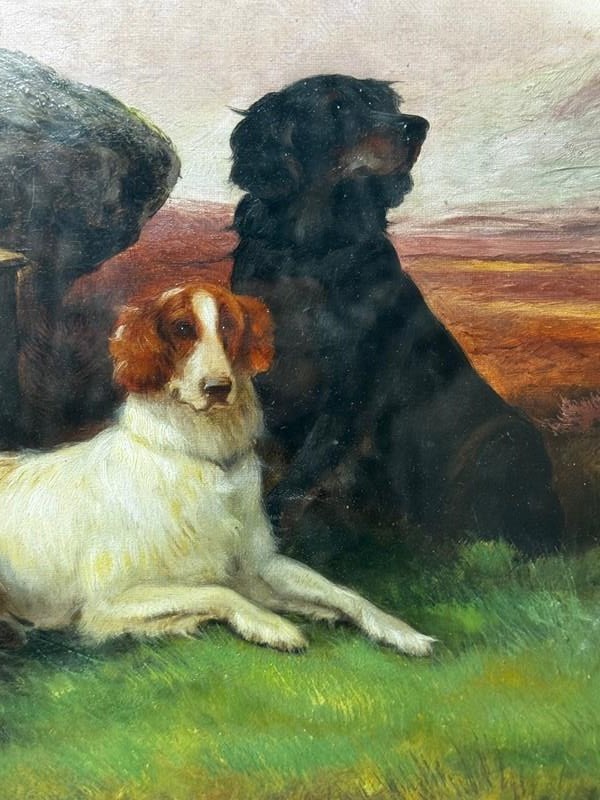
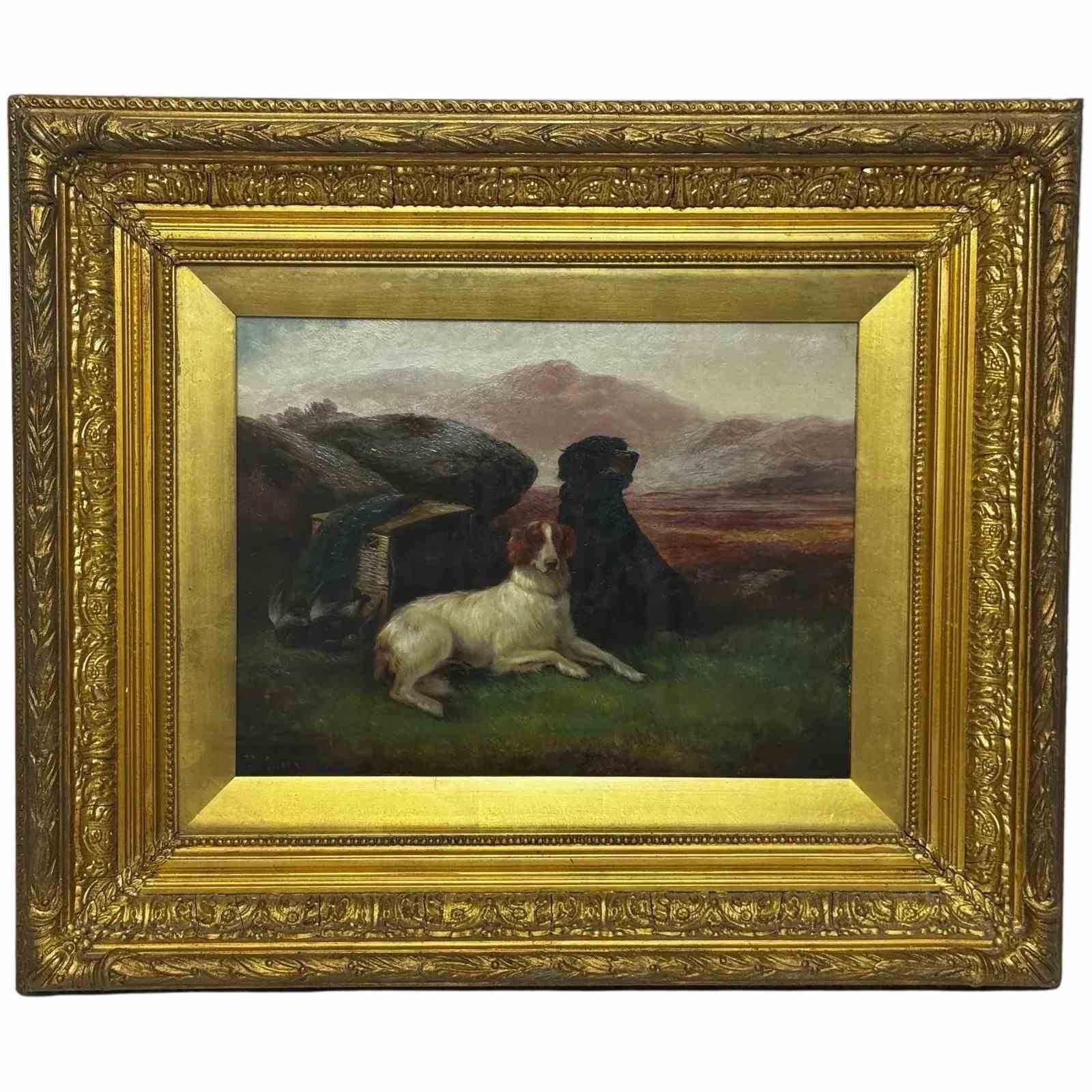
Victorian Oil Painting “Game Dogs” in a Highland Landscape – Robert Cleminson
In the late 19th century, when field sports and country house life were at the heart of British upper- and middle-class culture, artists like Robert Cleminson supplied a steady stream of evocative images for drawing rooms, smoking rooms and shooting lodges. This Victorian oil painting, commonly referred to as “Game Dogs”, is a particularly attractive example of that tradition: a finely observed sporting scene combining characterful animals, a romantic Highland backdrop and the quiet sense of satisfaction after a successful day’s sport.
A Classic Sporting Subject
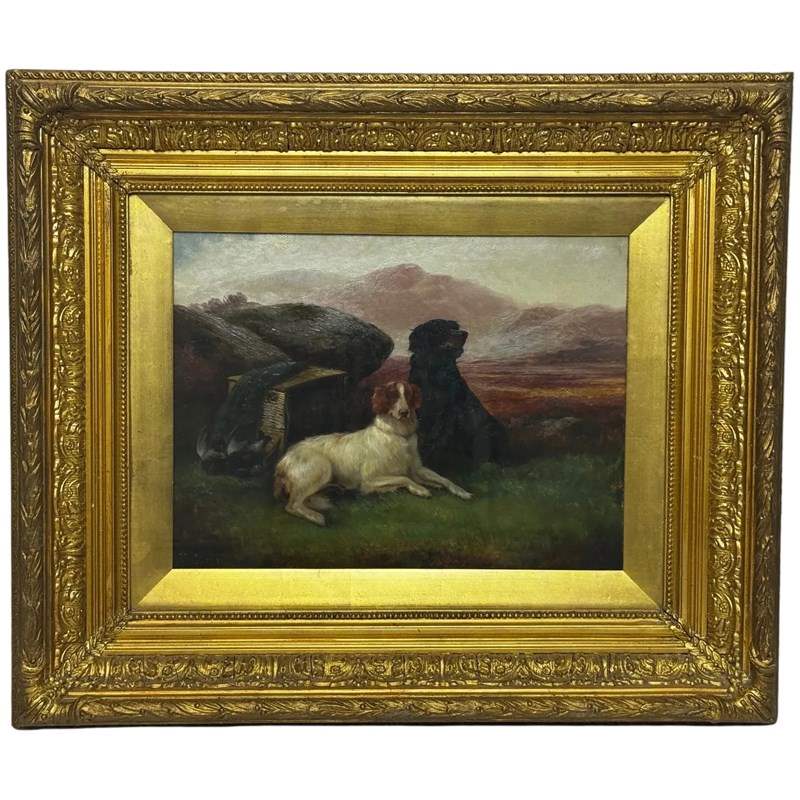
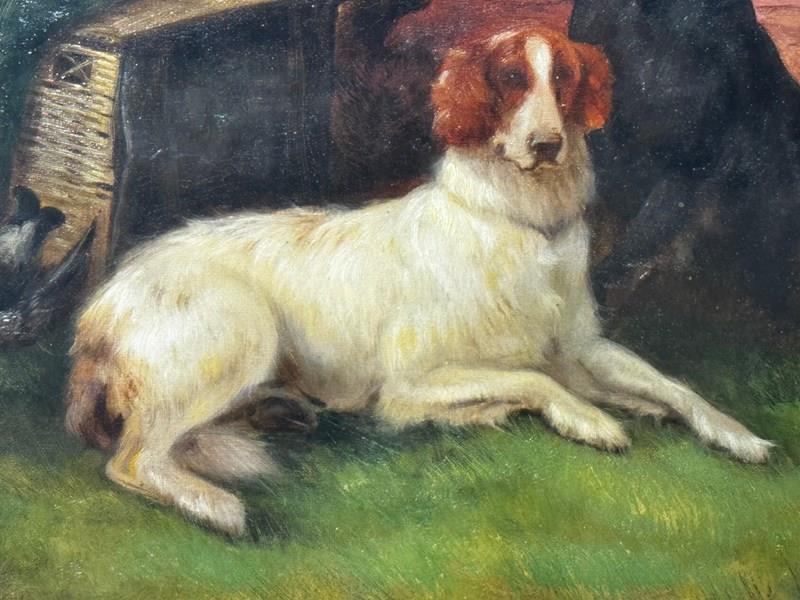
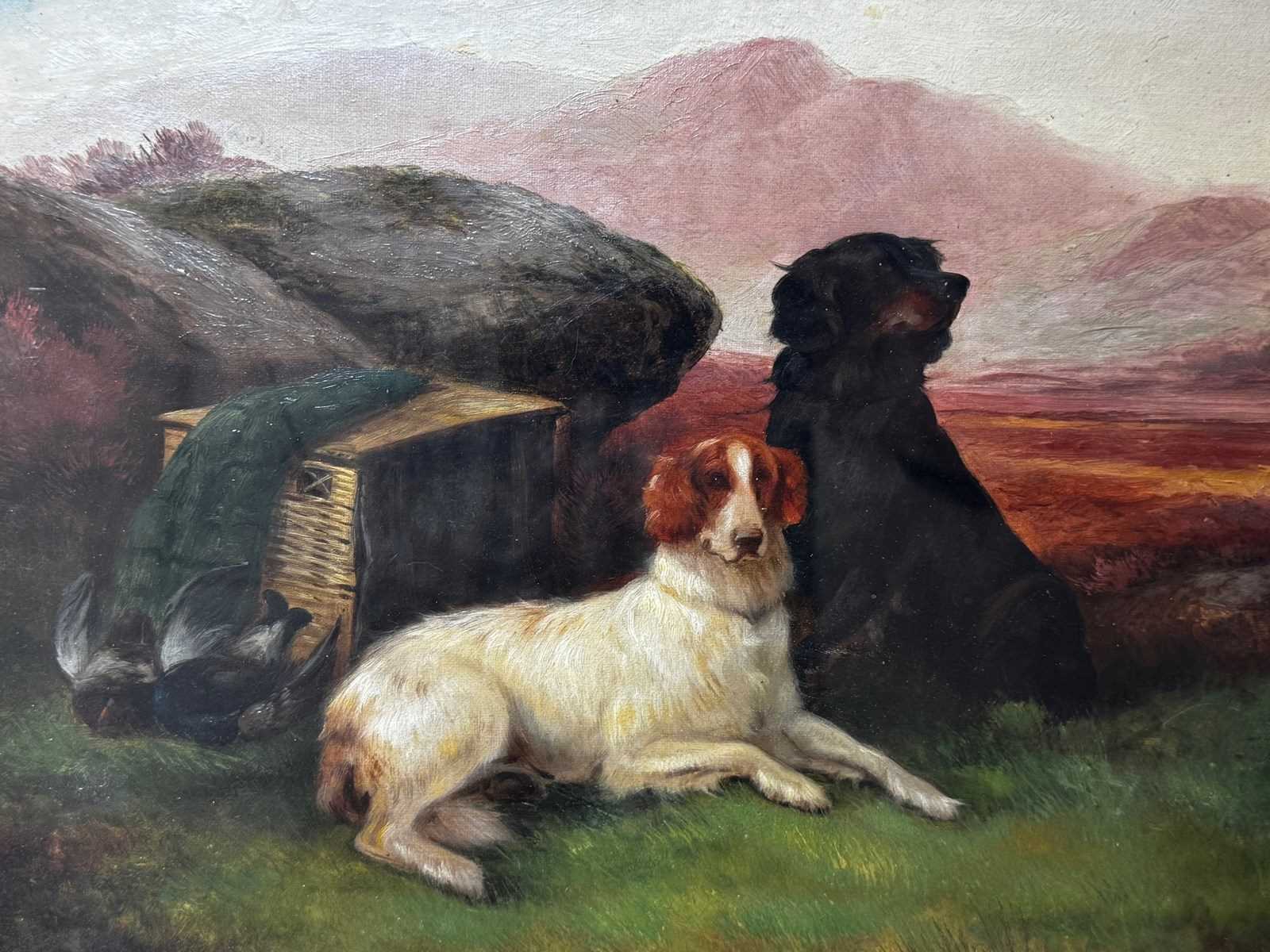
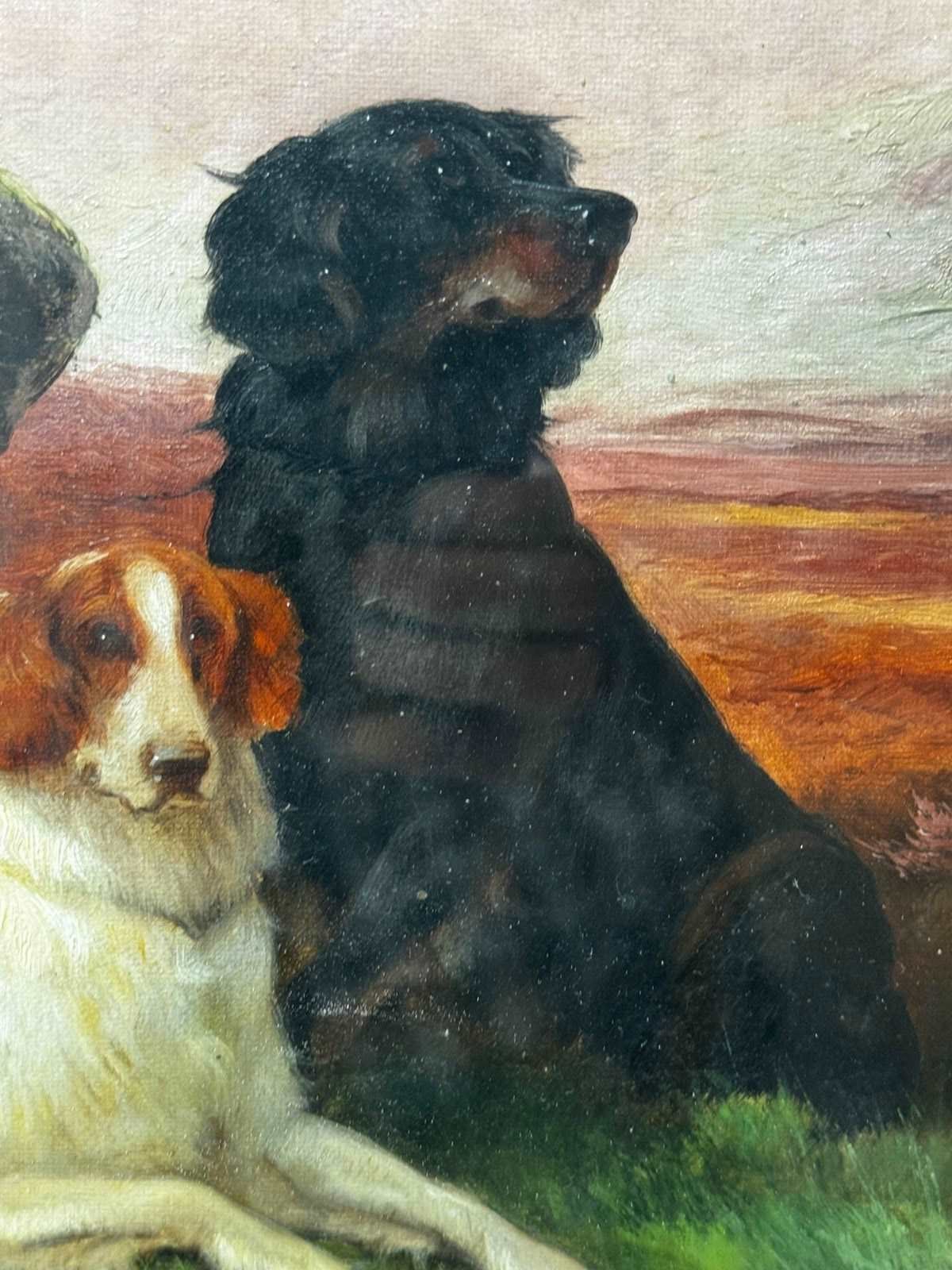
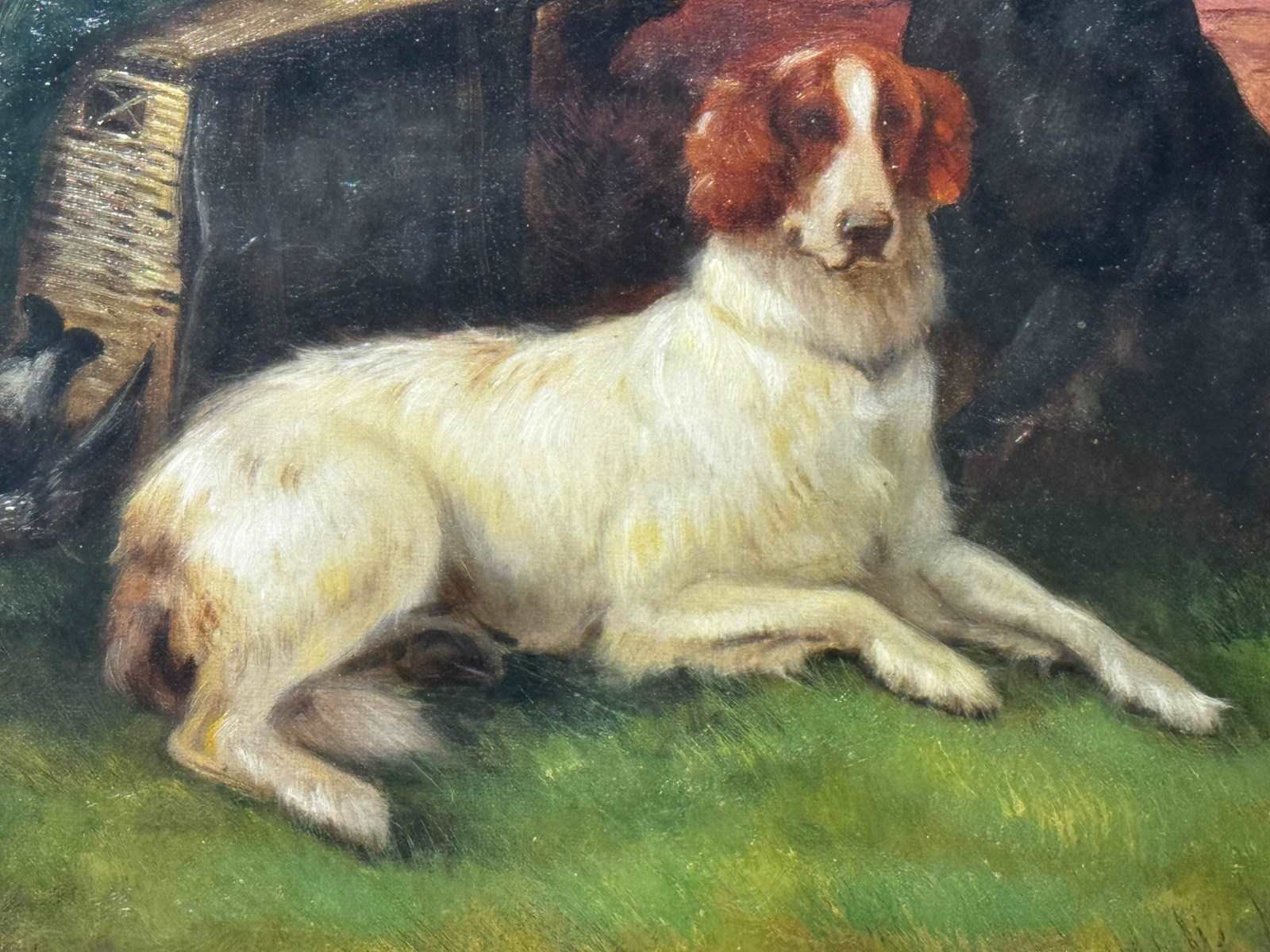
Painted in oil on canvas laid on board, and dating to around 1890, the work shows two game dogs in a Scottish Highland landscape. The day’s shooting is over. In the foreground, on a patch of green grass, the dogs keep watch beside the bagged game.
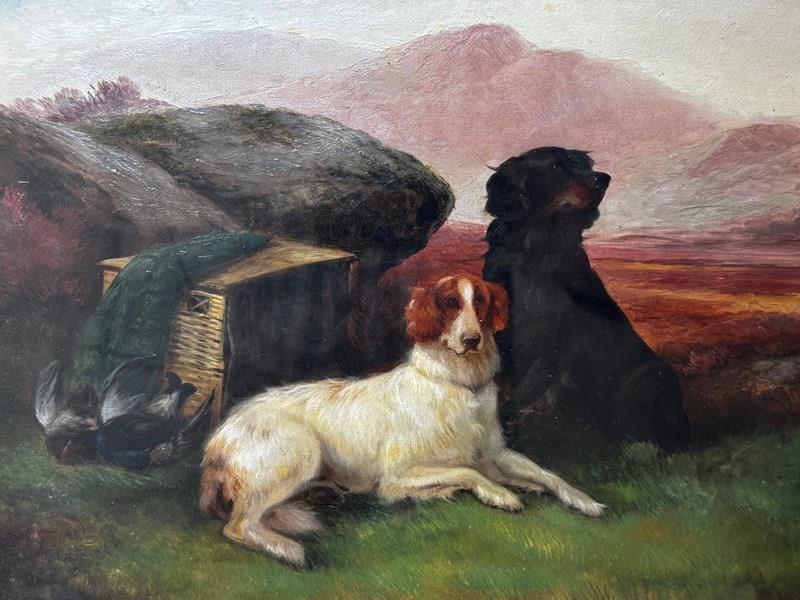
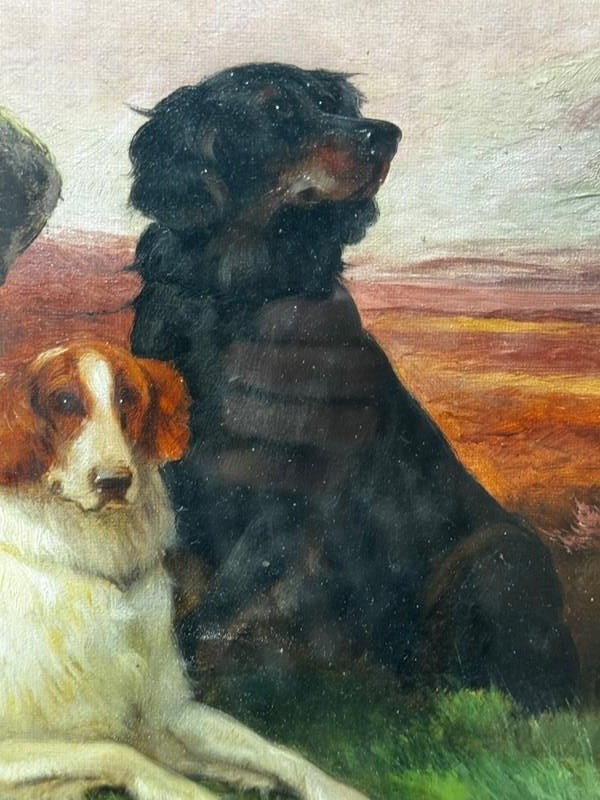
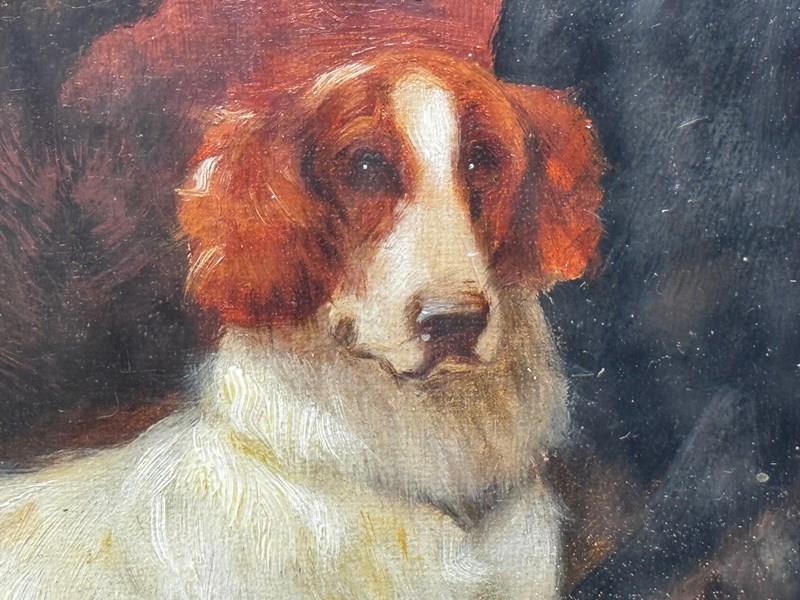
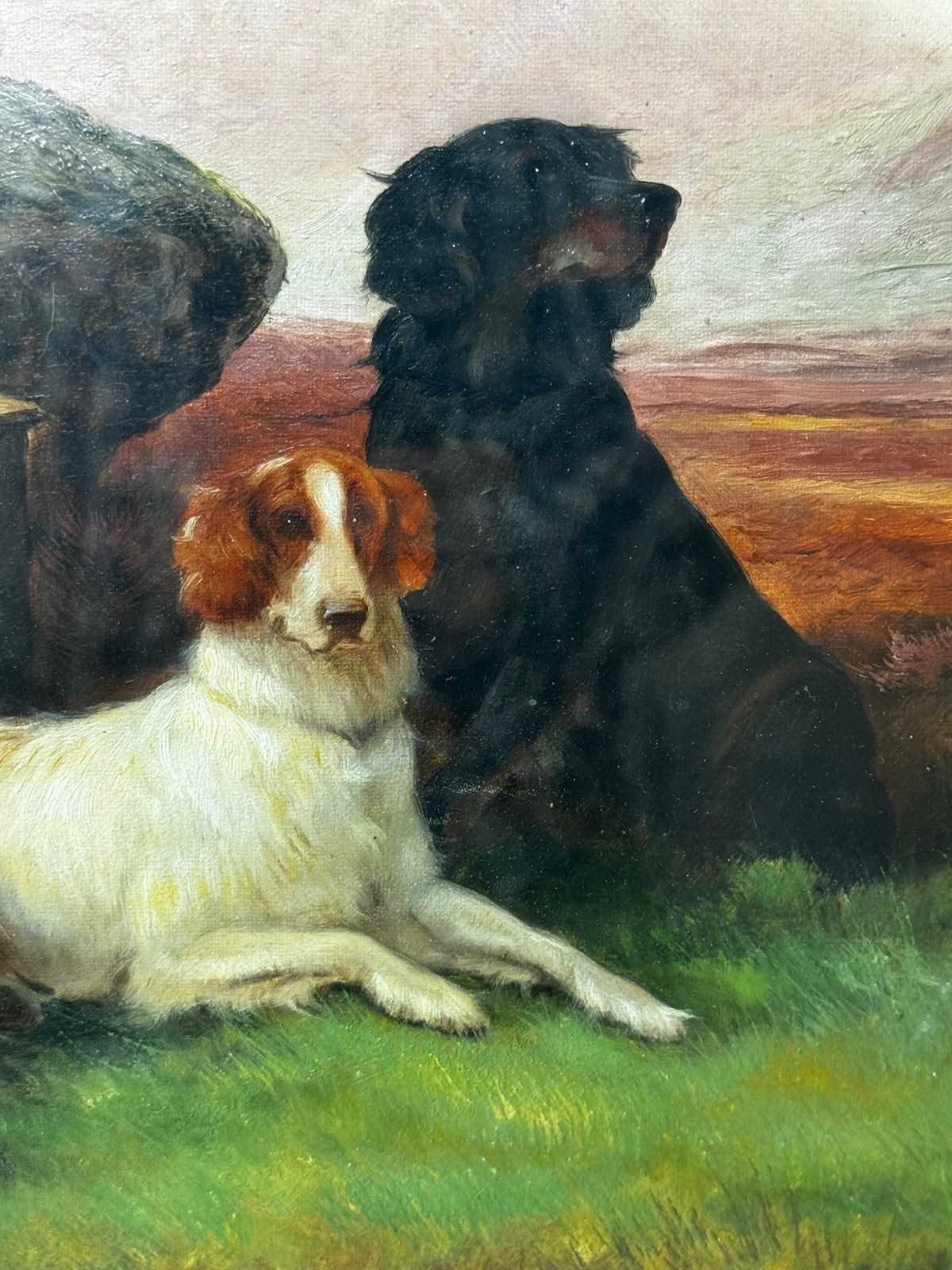
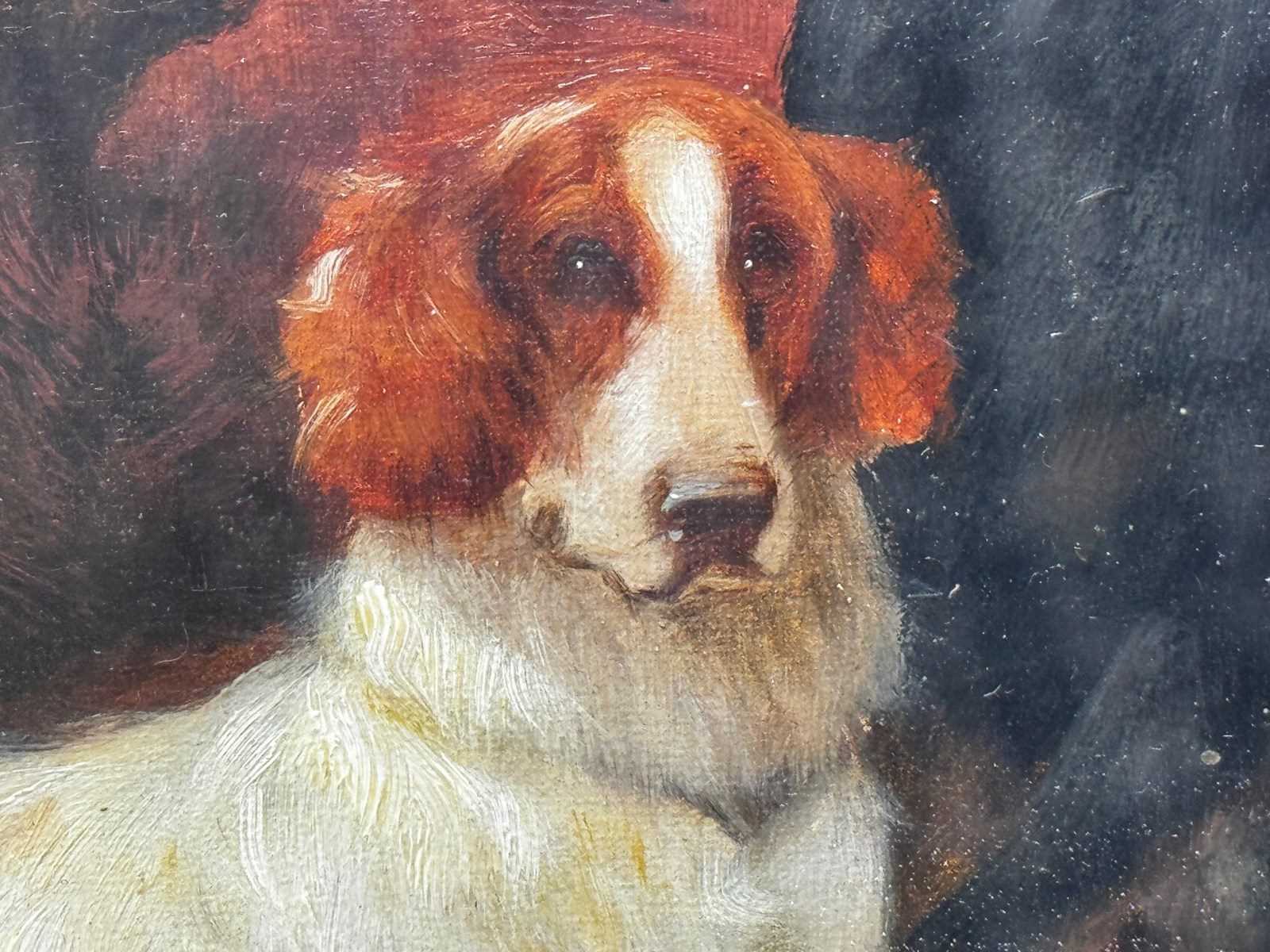
One, a white and brown dog, is shown lying almost frontally, its posture relaxed and content. It embodies the pleasant fatigue of an animal that has worked hard and earned its rest. The second, a black dog, stands alert in side profile, head turned to the right as if listening for its master’s return. The contrast between repose and watchfulness adds narrative to the scene and reminds the viewer that these are not just decorative animals, but trained and responsive working dogs.
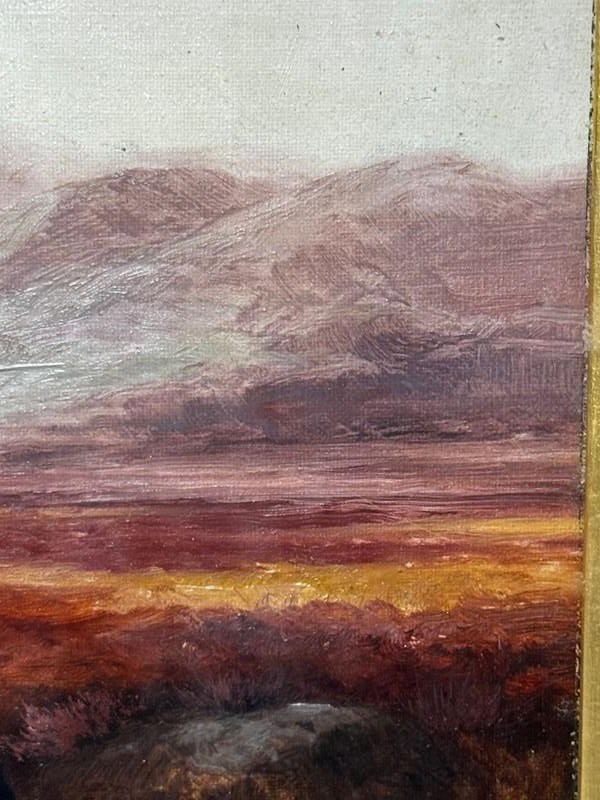
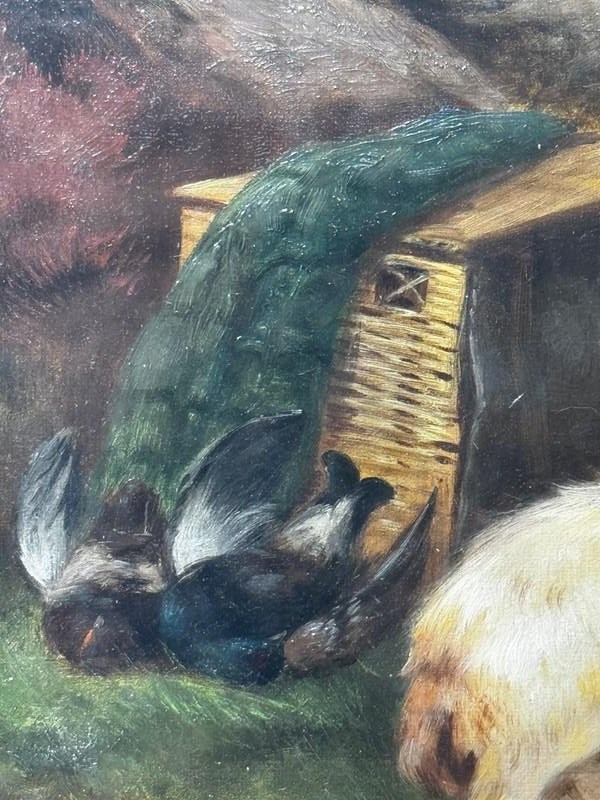
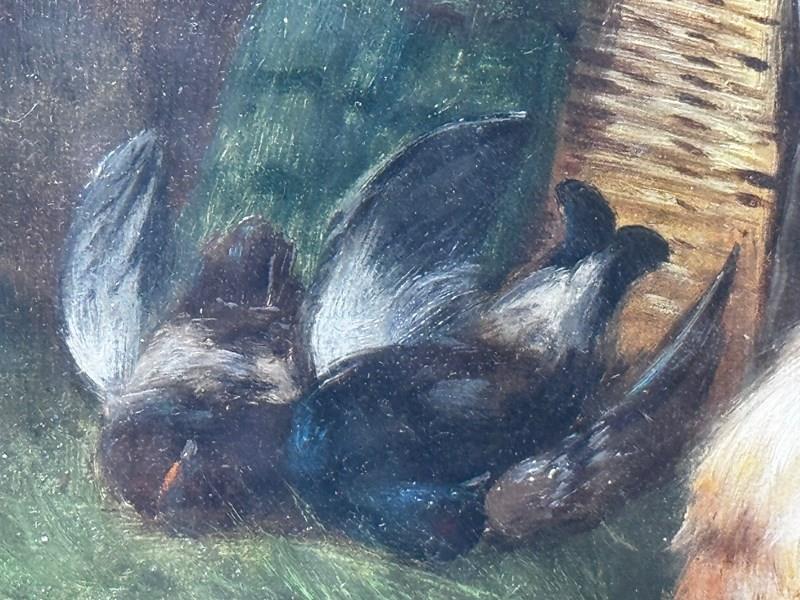
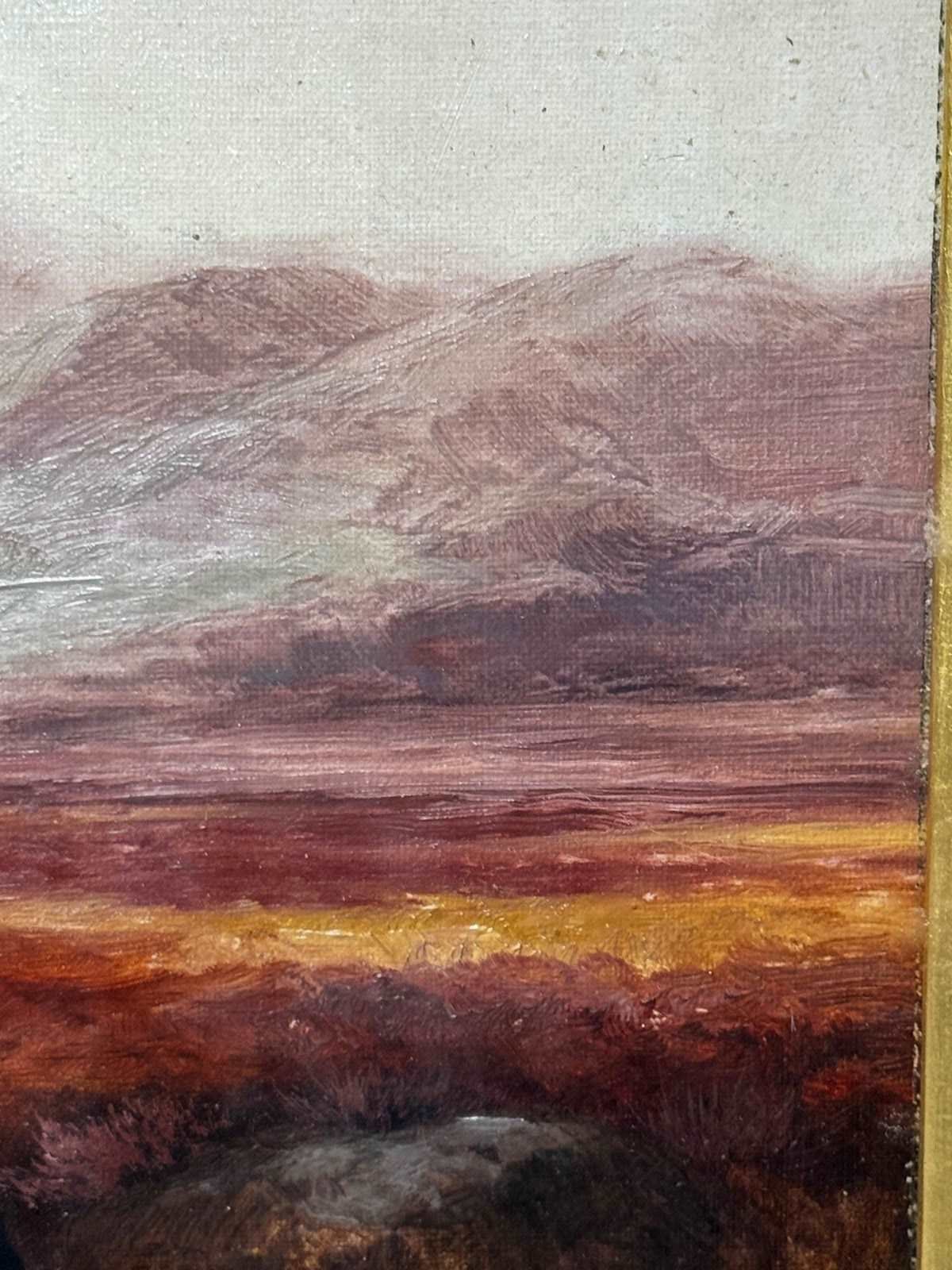
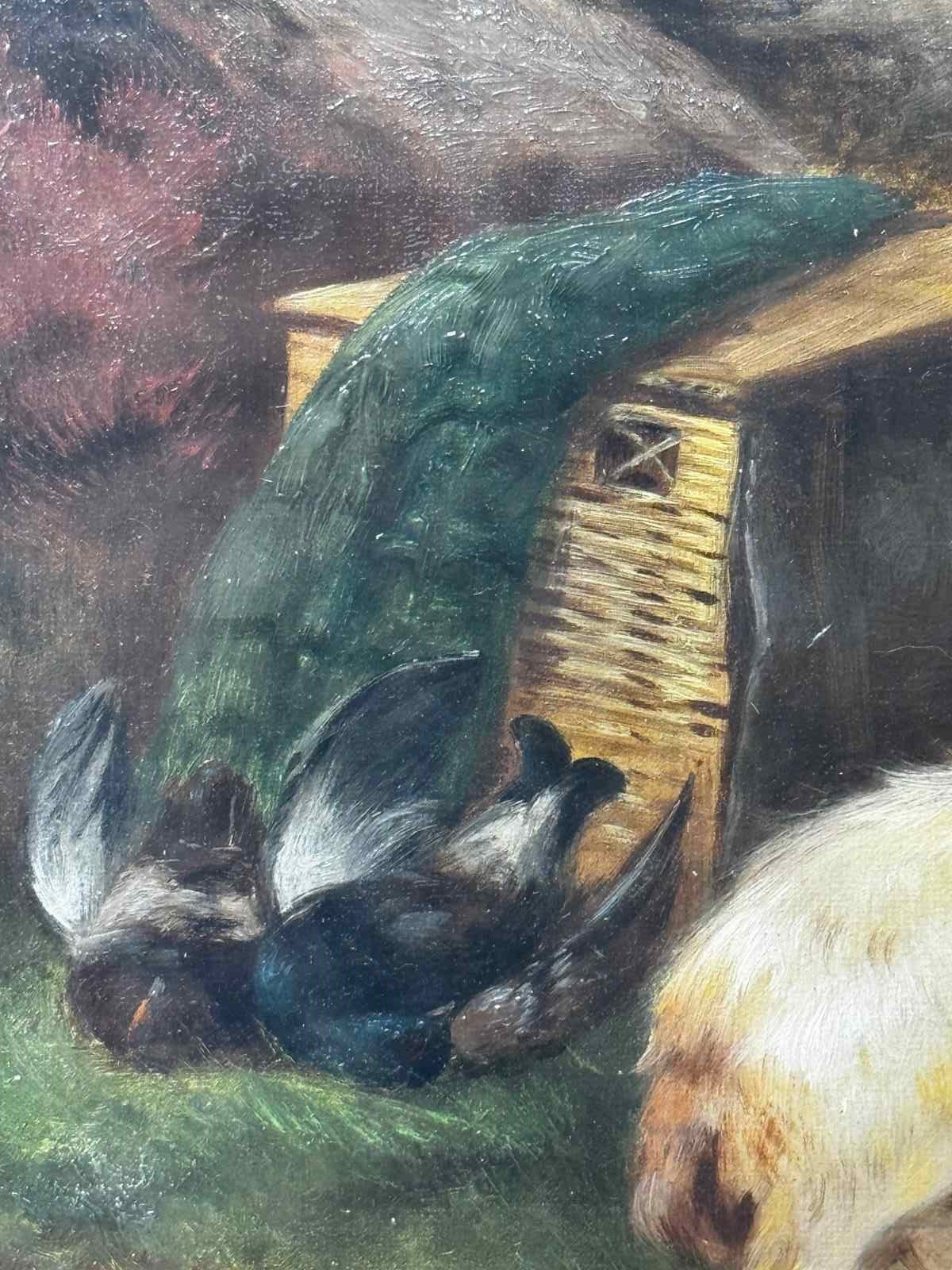
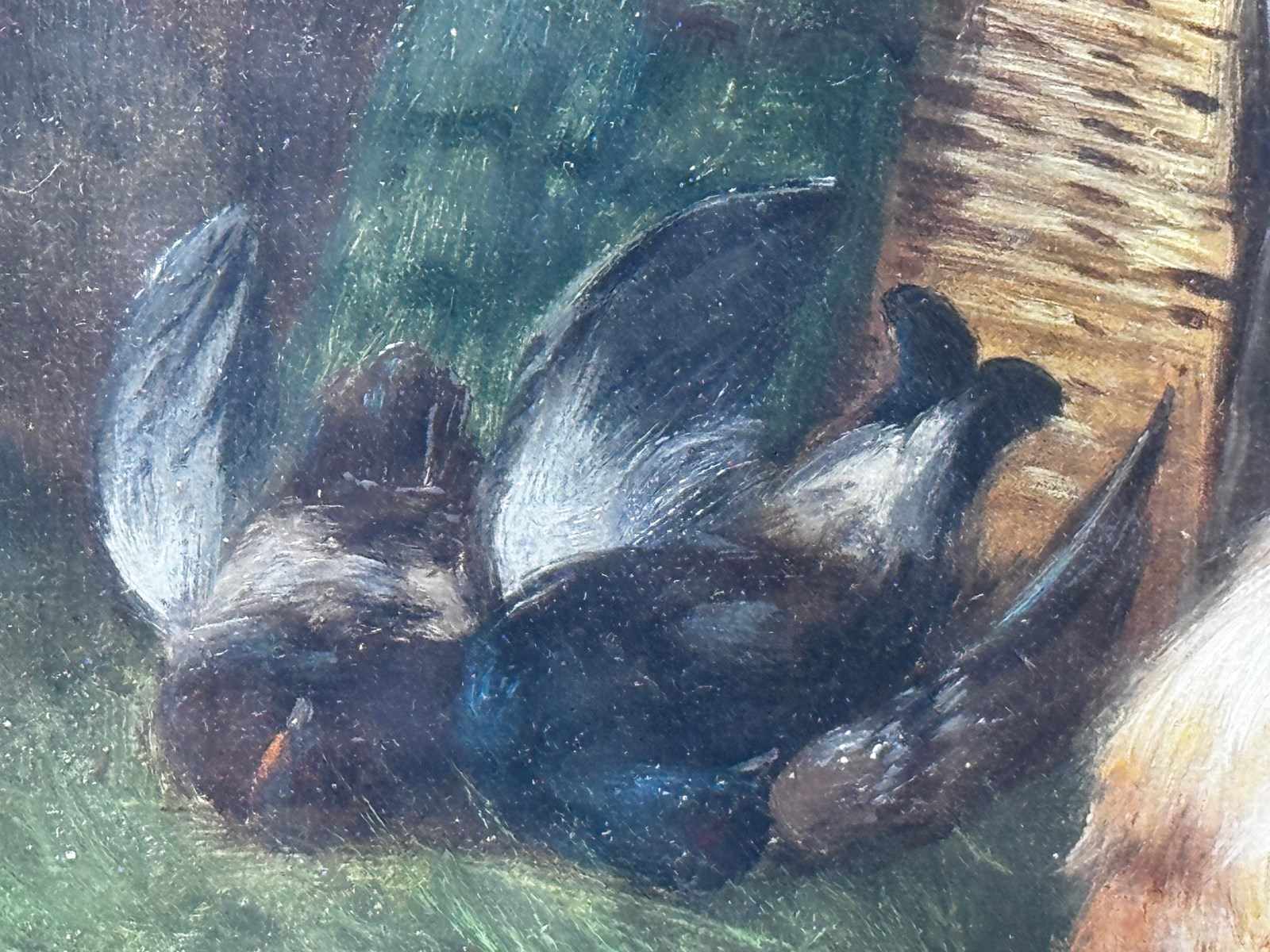
To the right of the pair stand two sturdy boulders. Resting against them is a large wicker basket brimming with game birds, their bodies spilling over the edge in a carefully arranged display of bounty. Beyond, the landscape recedes into heathered slopes and distant mountains painted in muted greens, browns and greys. Overhead, the sky is soft and atmospheric rather than stormy or dramatic, reinforcing the sense of calm that follows the exertions of the hunt.
Technique and Atmosphere
Cleminson’s handling of paint throughout the composition is confident and varied. The dogs’ coats are rendered with short, textured strokes that describe both musculature and character. The plumage of the birds is treated with softer, feathery touches, giving just enough suggestion of pattern and sheen without overworking the surface.
In the grasses and earth, the artist builds up layered greens and earth tones to evoke damp Highland ground, while the rocks and distant hills are handled with broader, more economical strokes. The colour palette is warm but natural: browns, blacks and whites in the animals, golden tones in the basket and game, set against cooler greens and bluish greys in the distant landscape.
Light in the painting is gentle and diffused, with subtle highlights on the dogs and the basket suggesting late afternoon or early evening. It is not the harsh, high-contrast light of midday, but the softer glow that collectors often associate with the best Victorian sporting pictures. Overall, the composition is balanced and assured, and the attention to detail marks this out as one of Cleminson’s more considered works.
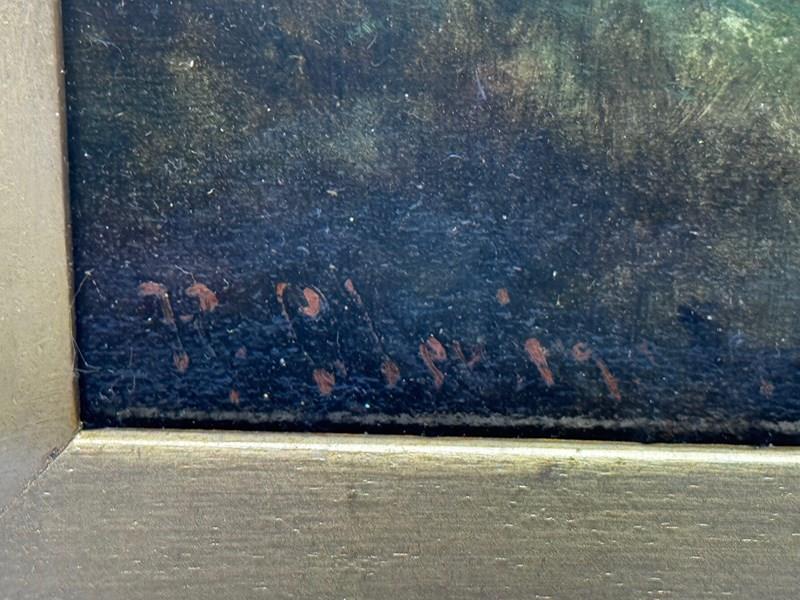
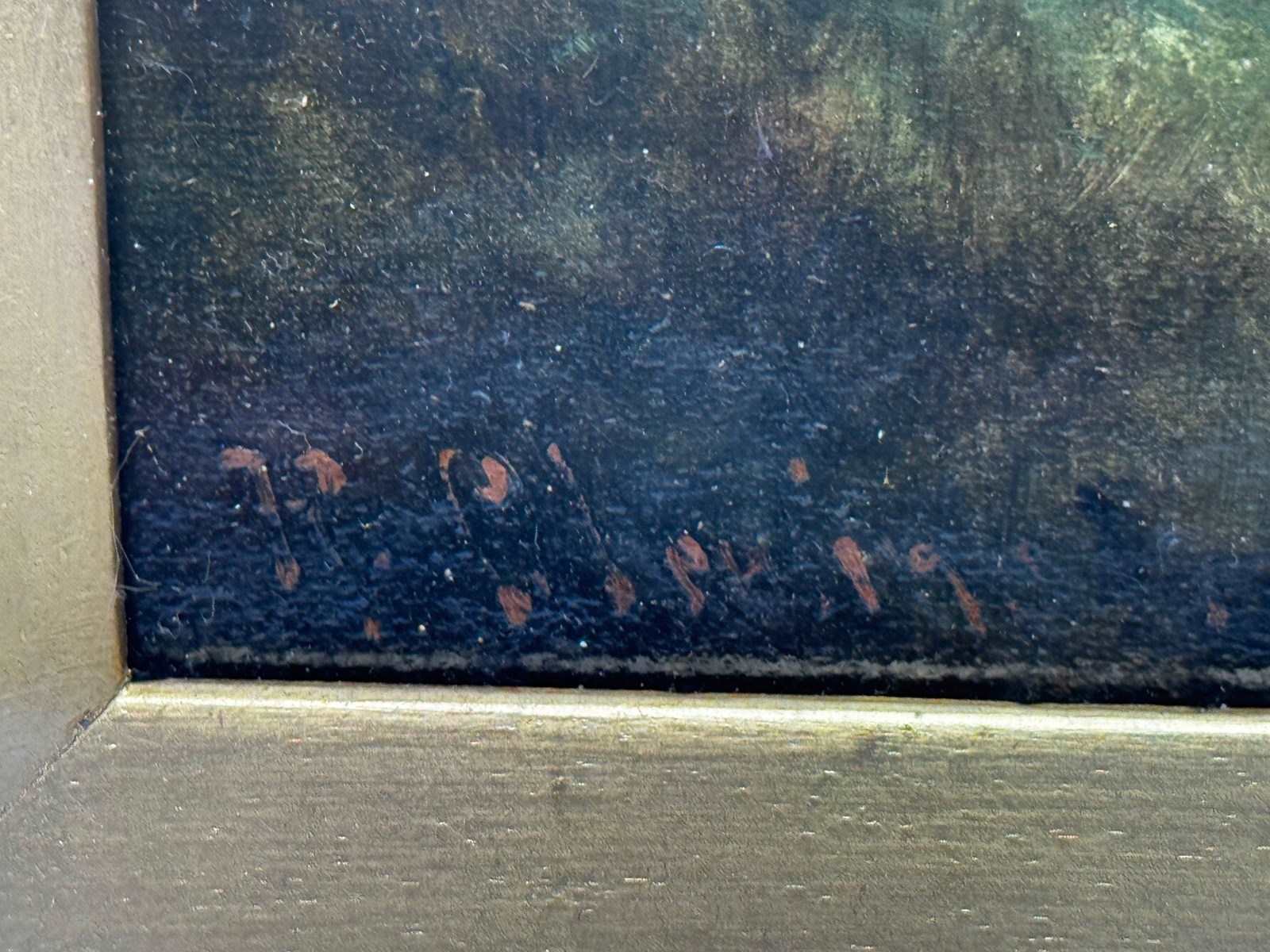
The painting is signed “Robert Cleminson” in the lower left corner, in a style consistent with other known examples by the artist, supporting a secure attribution.
Robert Cleminson: A Victorian Sporting Specialist
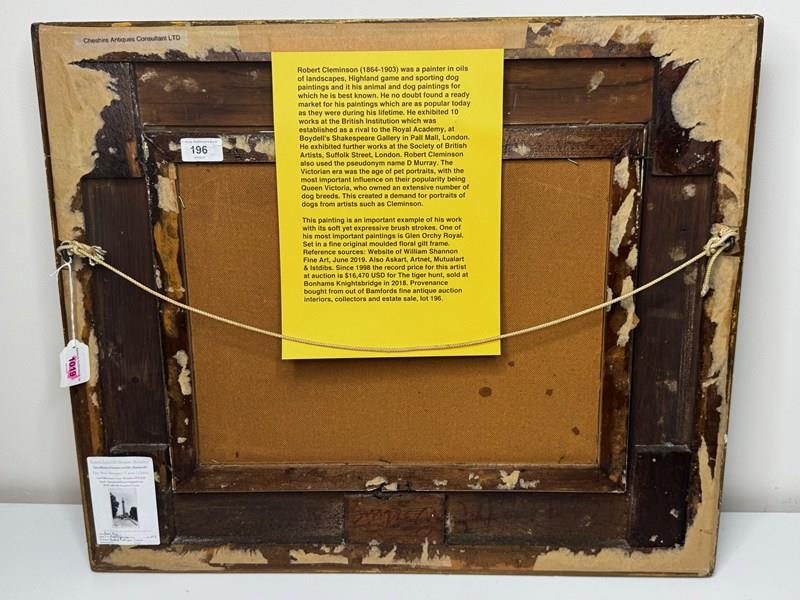
Robert Cleminson (1864–1903) was a British painter in oils best known for his landscapes, Highland game scenes and animal paintings. He developed a particular reputation for sporting dogs and game subjects, catering to the tastes of Victorian patrons who enjoyed shooting, stalking and rural estate life.
He exhibited ten works at the British Institution, an important exhibiting body in London, and showed further paintings at the Society of British Artists in Suffolk Street. These venues helped cement his position as a recognised professional painter rather than a purely provincial artist.
Cleminson’s work has continued to find favour with collectors, especially in the UK and the United States, where there is strong demand for 19th-century animal and sporting art. His auction record, achieved for a large and dramatic work titled The Tiger Hunt sold at Bonhams Knightsbridge in 2018, underlines the ongoing interest in his better pictures and in the genre as a whole.
Sporting Art and Victorian Culture
Paintings like “Game Dogs” are more than decorative images of animals and countryside. They are visual documents of a way of life that was central to Victorian identity, particularly for the landed and aspiring classes. Shooting and field sports were not only leisure activities; they were expressions of status, landownership and tradition.
Works of this kind would originally have hung in country-house interiors, sporting lodges, clubs and townhouses. They signalled the owner’s participation in, or admiration for, the rituals of the shooting season and the social world that went with it. At the same time, they reflect the Victorian tendency to humanise and celebrate animals, especially dogs, as loyal companions and symbols of fidelity, courage and refinement.
The Highland setting plays an important role in this cultural story. During the 19th century, Scotland was romanticised as a landscape of rugged beauty, sport and noble wildness. Sporting estates and deer forests proliferated, and artists responded by producing images that combined picturesque scenery with scenes of pursuit and reward. Cleminson’s painting taps into this tradition, offering a view that is both specific in its detail and emblematic of the broader genre.
The Original Gilt Frame
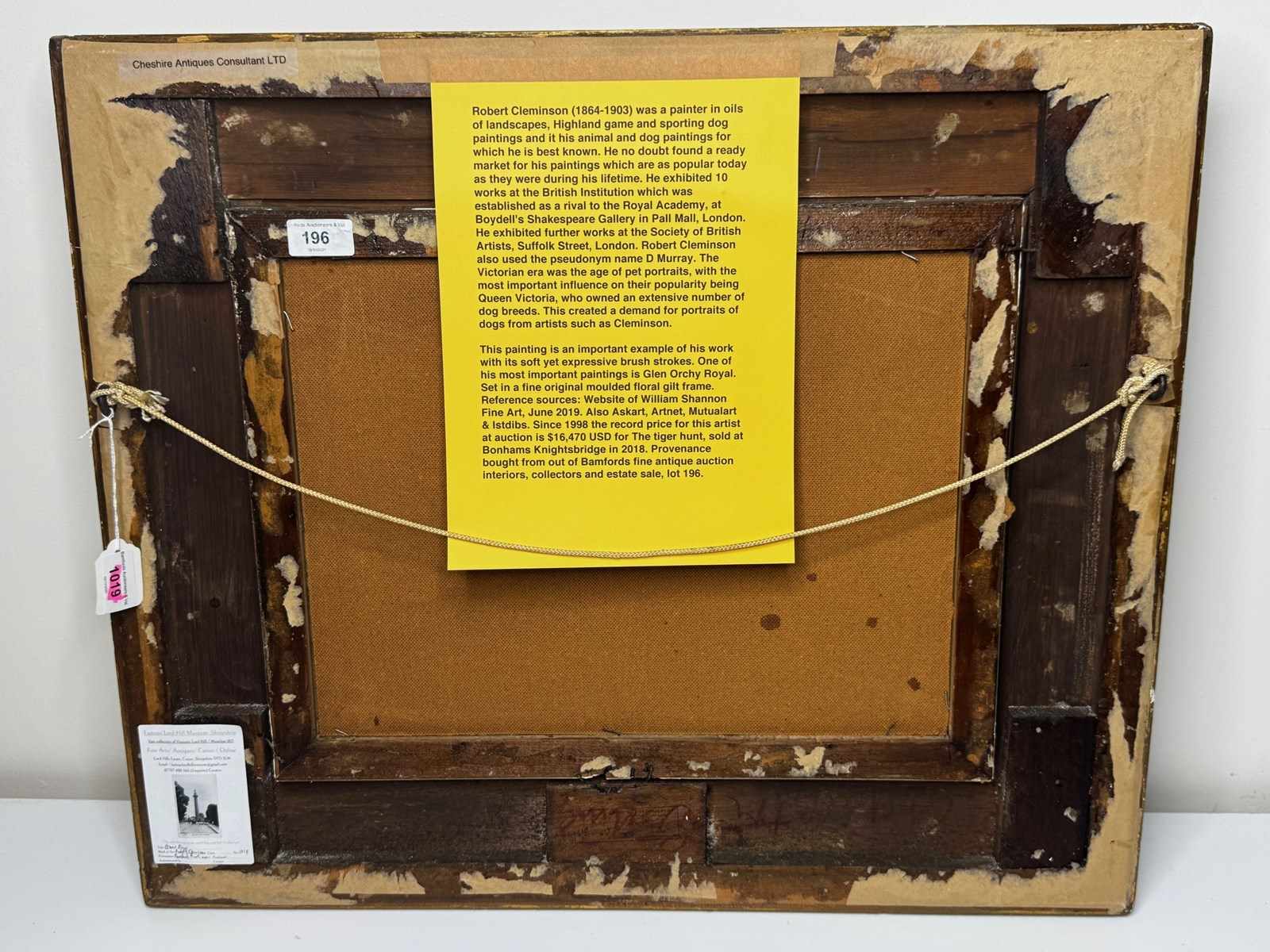
One of the notable strengths of this example is the survival of its original gilt wood frame. Substantial, weighing around 8 kg unwrapped, it features richly moulded floral and foliate gesso decoration typical of the late Victorian period. The frame does not merely enclose the painting; it forms part of the overall presentation, reinforcing its period character and intended setting.
A protective glass panel sits over the canvas, and a board backing has been fitted to the reverse. The presence of the glass has helped shield the painted surface from dust and physical contact over time. The picture is fitted with a hanging thread and ready to display.
In today’s market, original frames are increasingly valued. They provide historical context, preserve the proportions and feel intended by the artist and first owners, and avoid the slightly dissonant effect that can arise when a 19th-century painting is placed in a modern or mismatched frame.
Size and Display
The framed painting measures approximately 56.5 cm in height, 66 cm in width and around 9 cm in depth. It is therefore a good medium-sized piece: large enough to make an impact on a wall, but not so big as to be awkward in domestic interiors.
It would sit comfortably over a fireplace, above a sideboard, in a panelled study or library, or as part of a grouping of sporting and animal pictures in a hallway. The subject, palette and frame all lend themselves particularly well to traditional, country-house and lodge-style schemes, but the painting could also serve as a striking historic counterpoint in more contemporary settings.
Provenance and Collecting Appeal
The provenance of the painting is unusually well documented for a Victorian sporting work. Originally held in a private UK collection from the late 19th or early 20th century, it later entered the auction market and appeared at Bamfords Auctioneers & Valuers in Derby in 2020 and 2021, with labels from these sales still attached to the reverse of the frame. From there it was acquired and handled by Cheshire Antiques Consultant LTD and subsequently consigned to NY Elizabeth in Beverly Hills, where it was offered in online sales before returning to the dealer.
For collectors, such a clear chain of ownership is valuable. It not only supports the painting’s authenticity, but also anchors it within a traceable market history. When combined with a named artist, an original frame, a classic subject and good decorative presence, it adds up to a work that is both enjoyable to live with and reassuring from a connoisseur’s point of view.
An Evocative Survivor of the Sporting Age
“Game Dogs” encapsulates many of the qualities that make Victorian sporting art so enduringly popular: a strong, readable subject; animals full of character; a romanticised but believable landscape; and a tangible link to the rituals and values of another age.
For today’s collector or decorator, it offers not just a pleasant picture of dogs and game, but a glimpse into the visual world of the late 19th-century country house. Its honest signs of age, original frame and well-documented history only enhance its appeal, making it a rewarding piece for anyone with an eye for period British art, canine subjects or the rich tradition of sporting painting.
Item Info
Seller Location
Covent Garden, London
Item Dimensions
H: 56.5cm W: 66cm D: 9cm
Period
1890
Item Location
United Kingdom
Seller Location
Covent Garden, London
Item Location
United Kingdom
Seller Contact No
+44 (0)7494 763382
More from CHESHIRE ANTIQUES CONSULTANT LTD