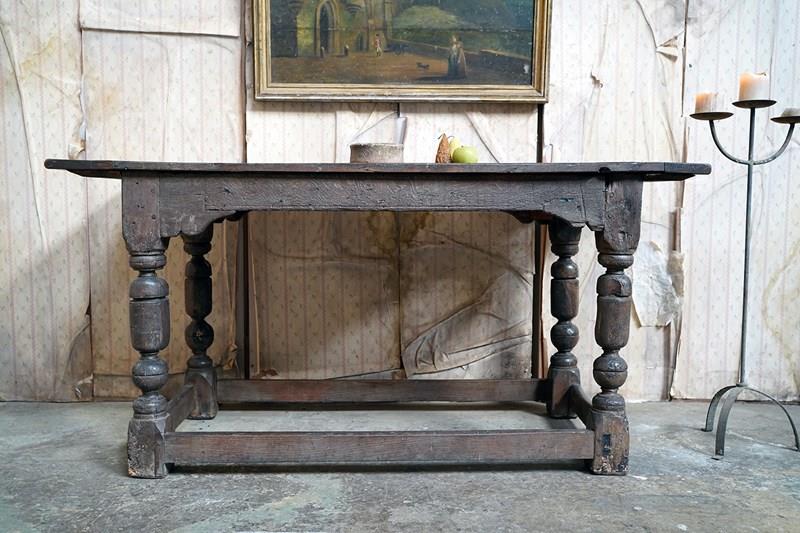
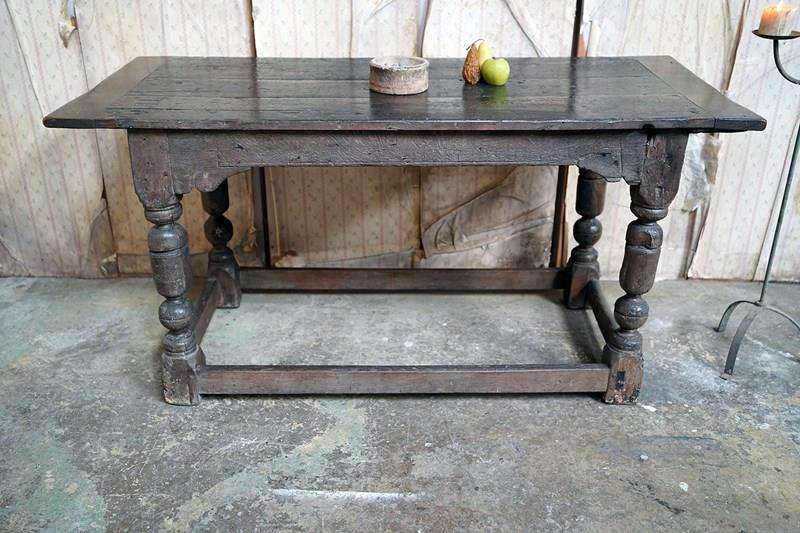
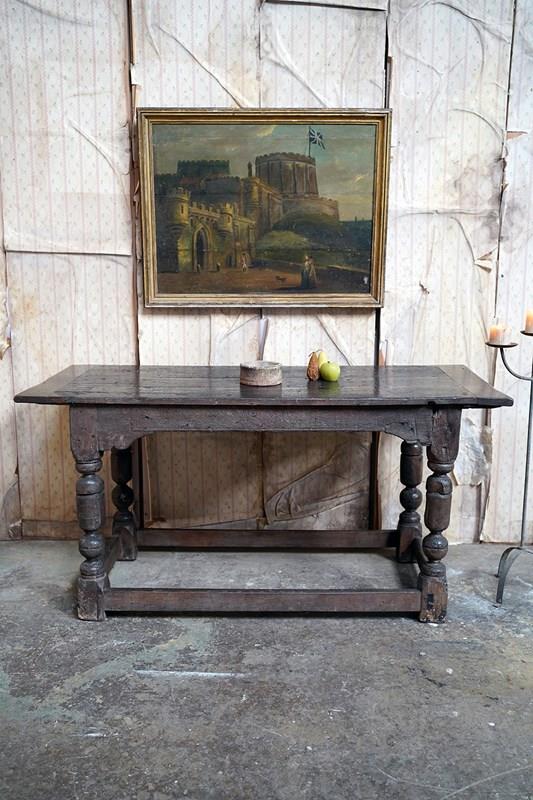
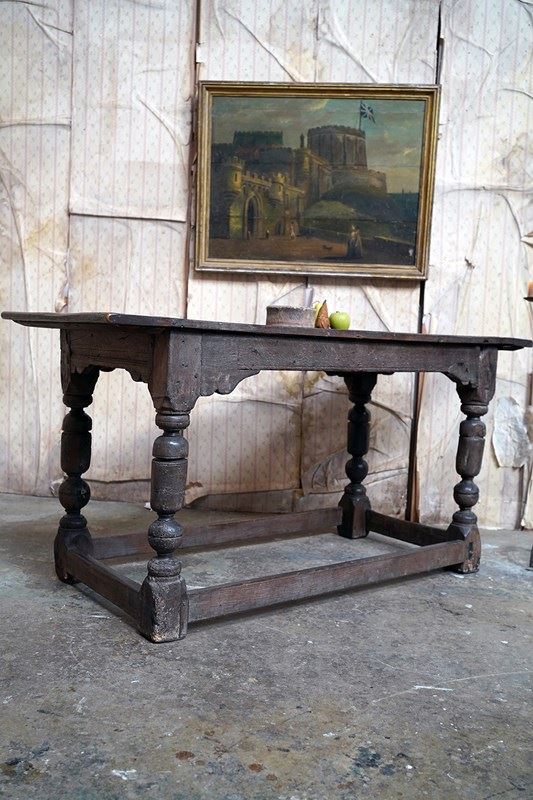
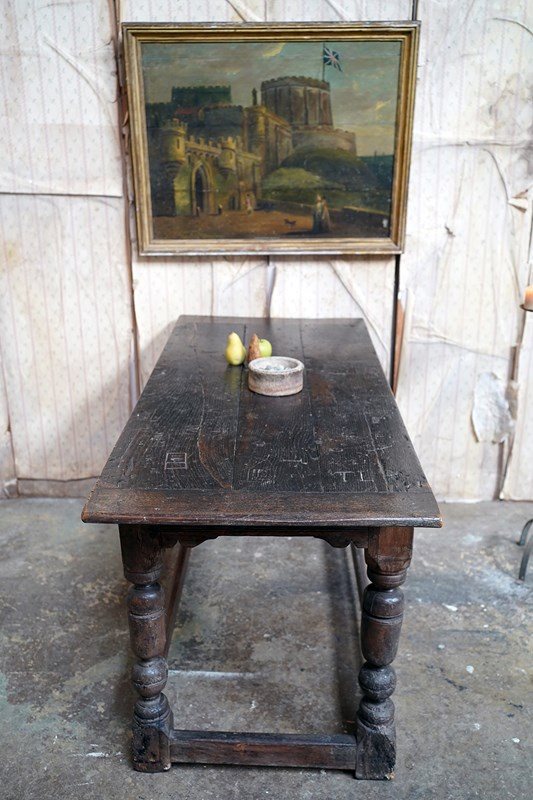
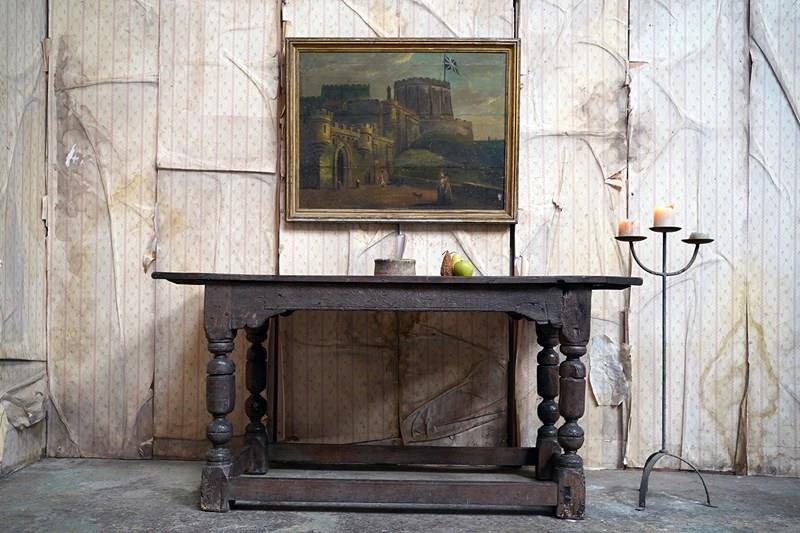
17Thc English Graffitied Oak Refectory Table; Southwick Hall C.1680
Stock No
3122
2013
Questions about this item?
Like this item?
Item Description
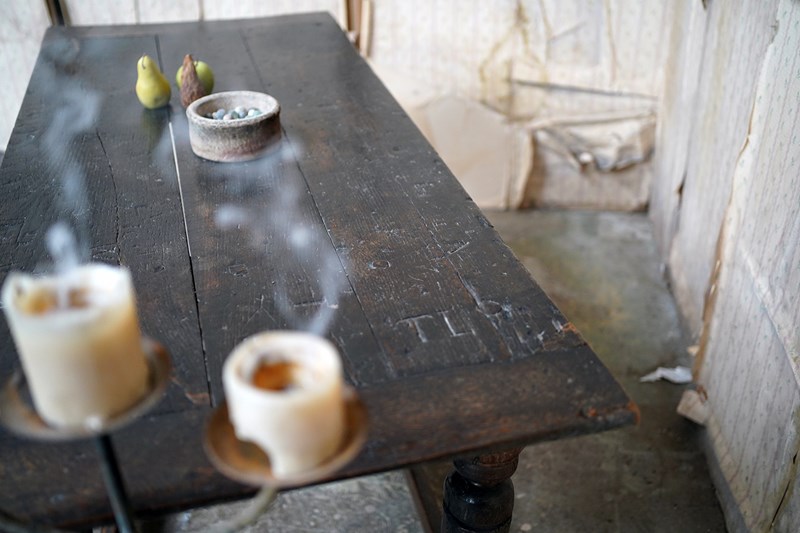
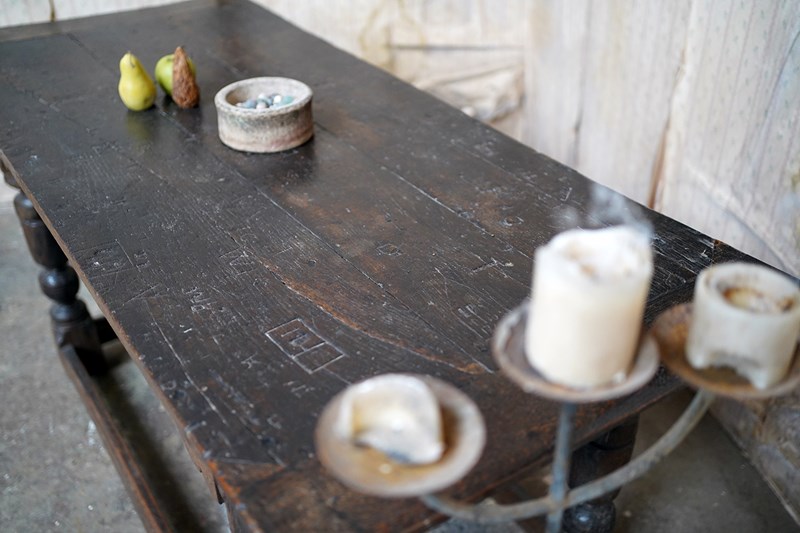
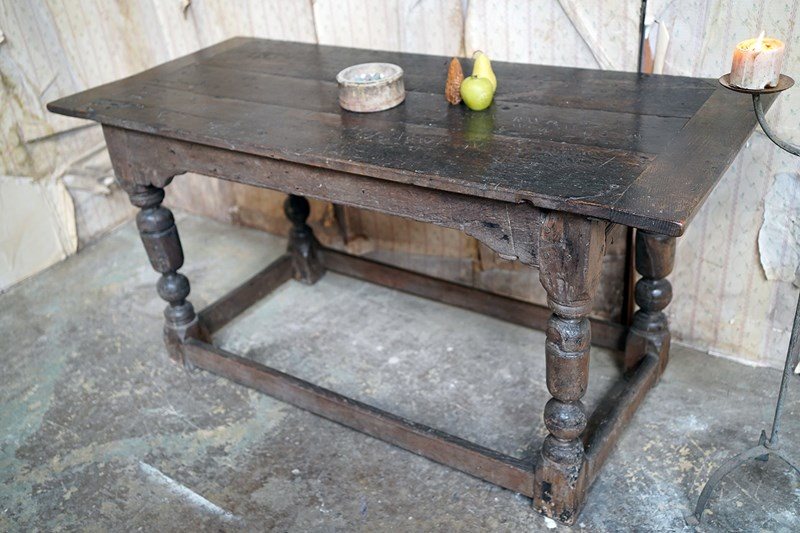
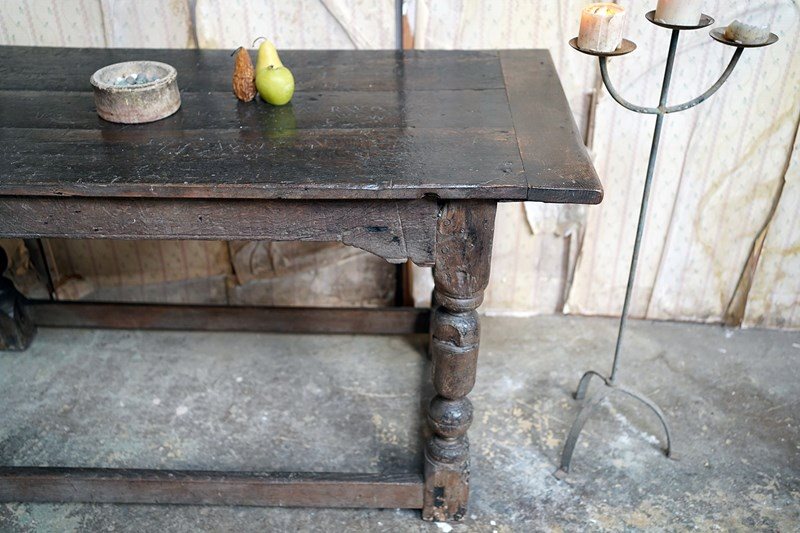
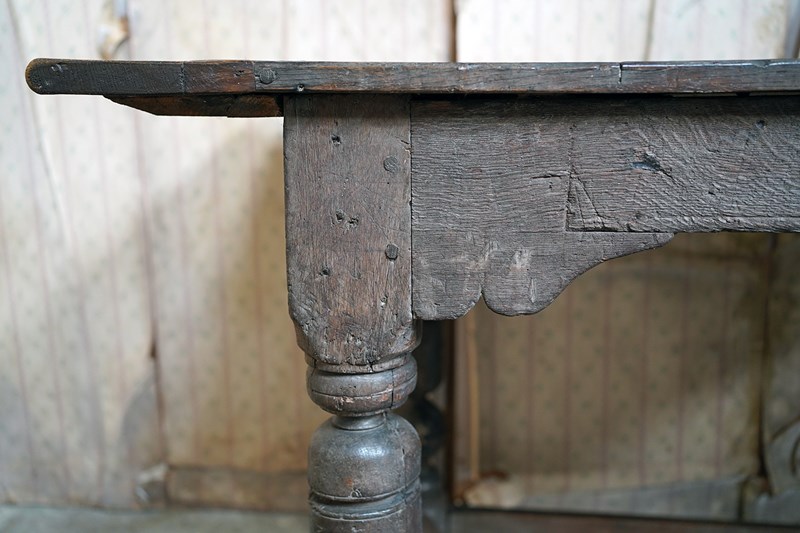
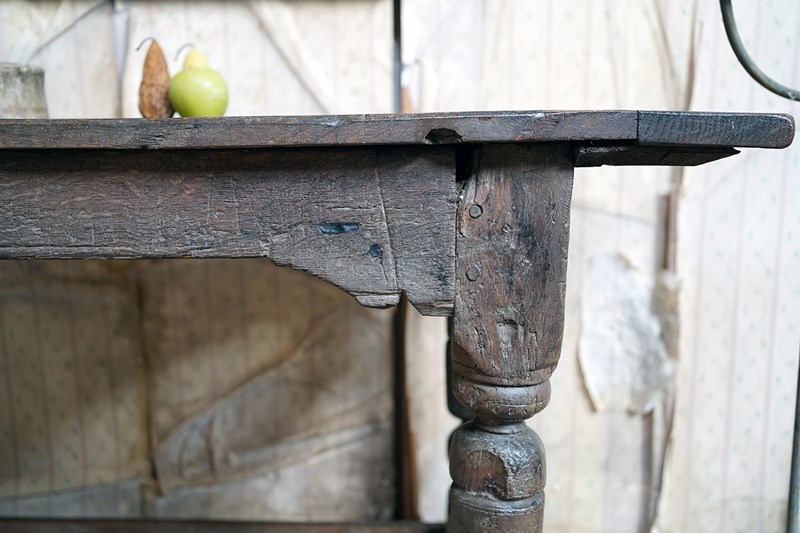
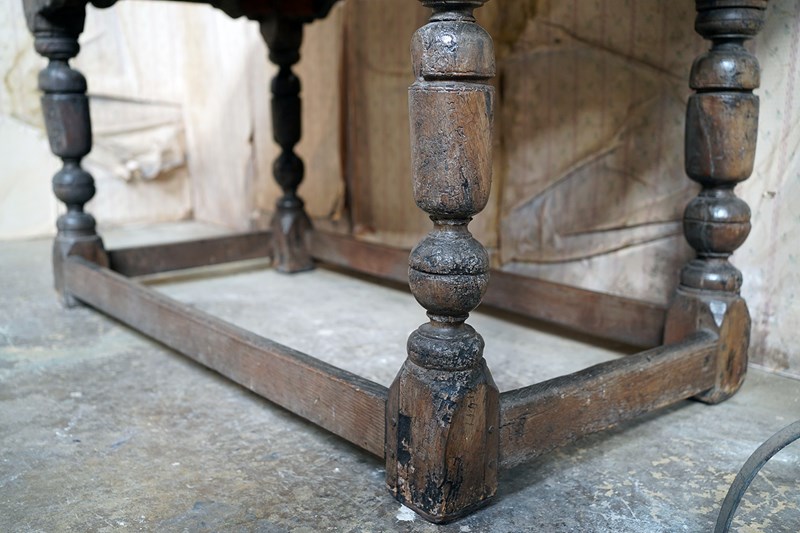
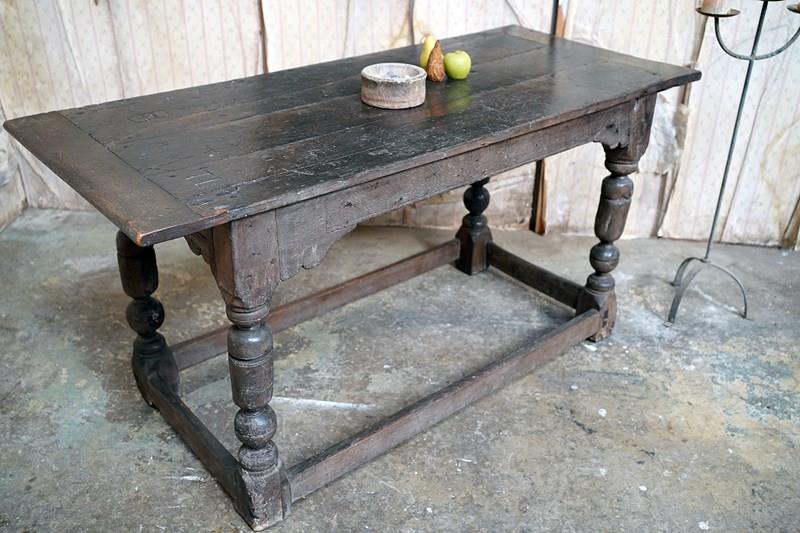
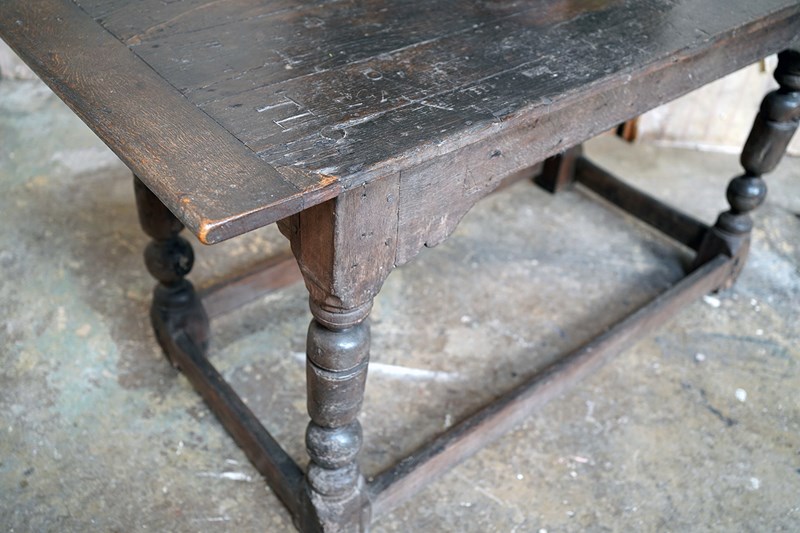
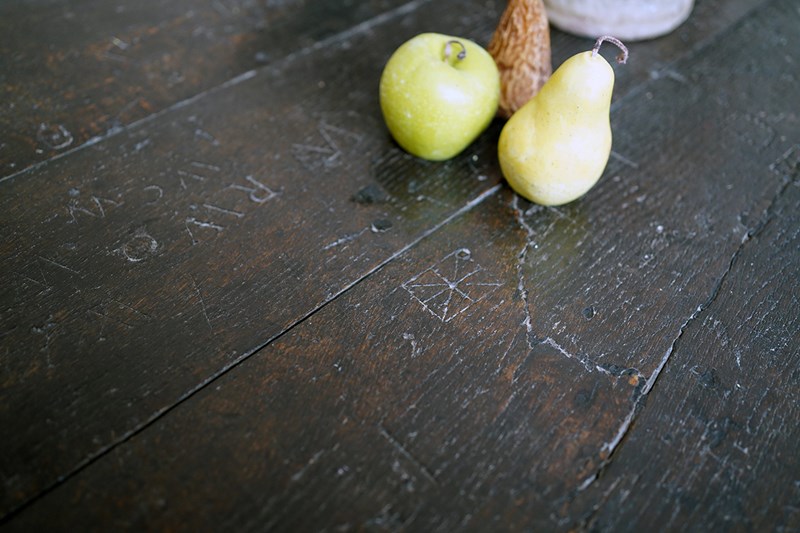
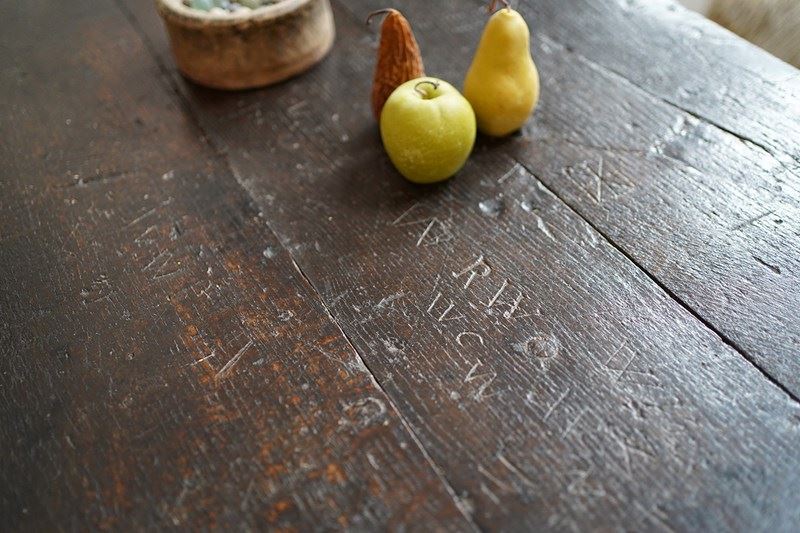
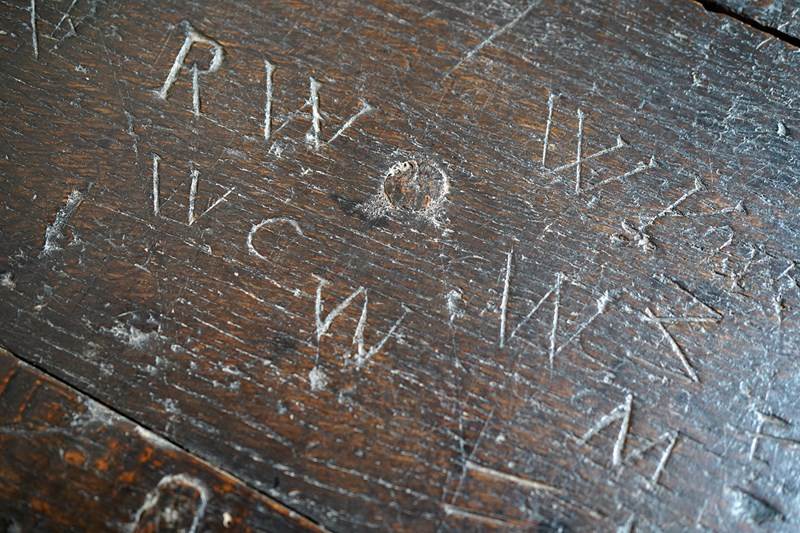
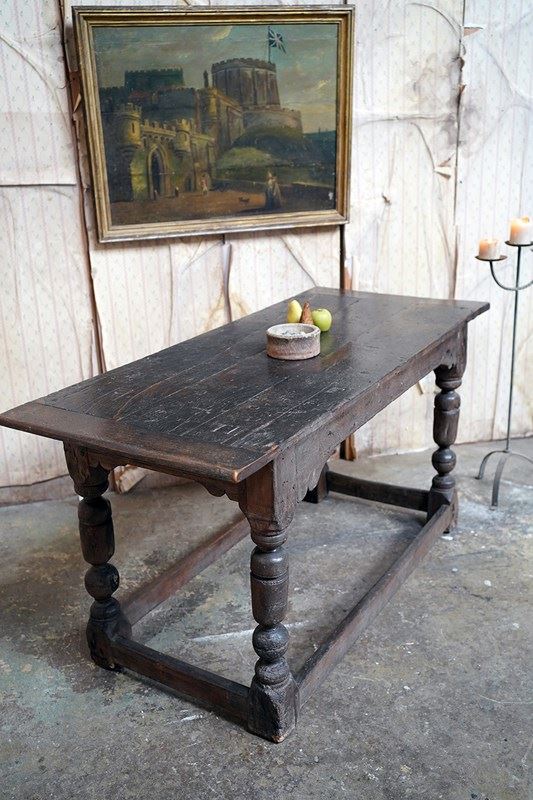
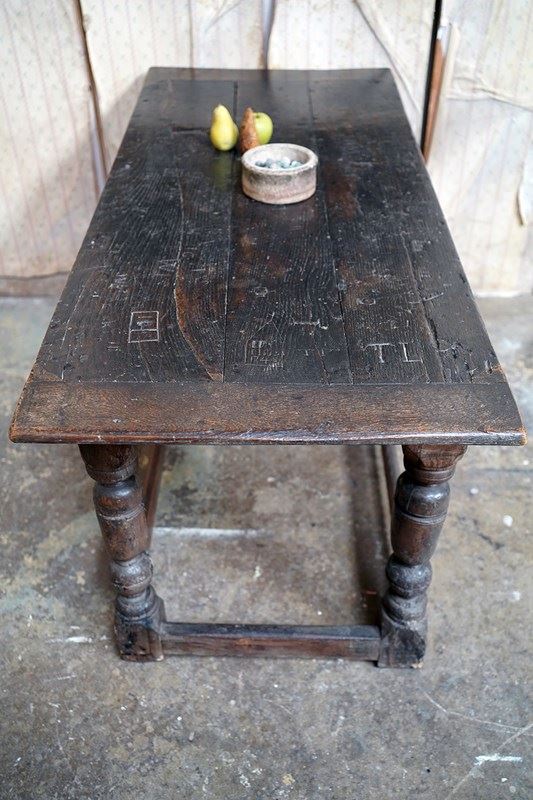
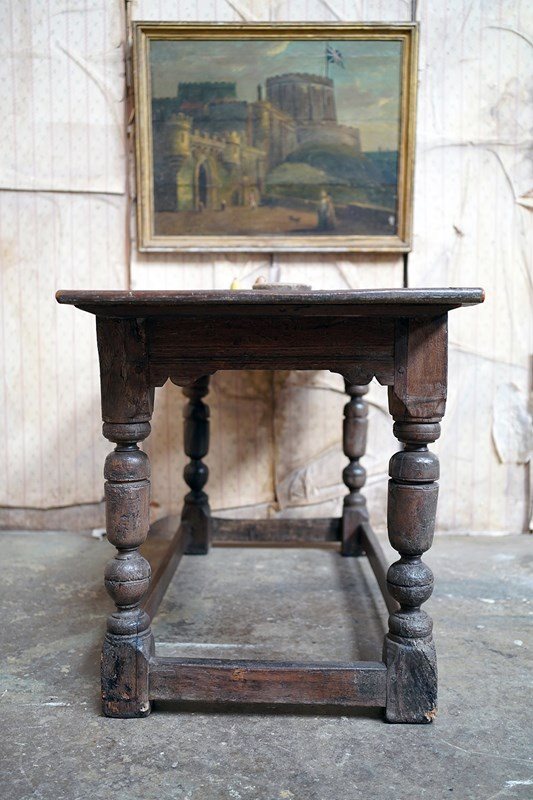
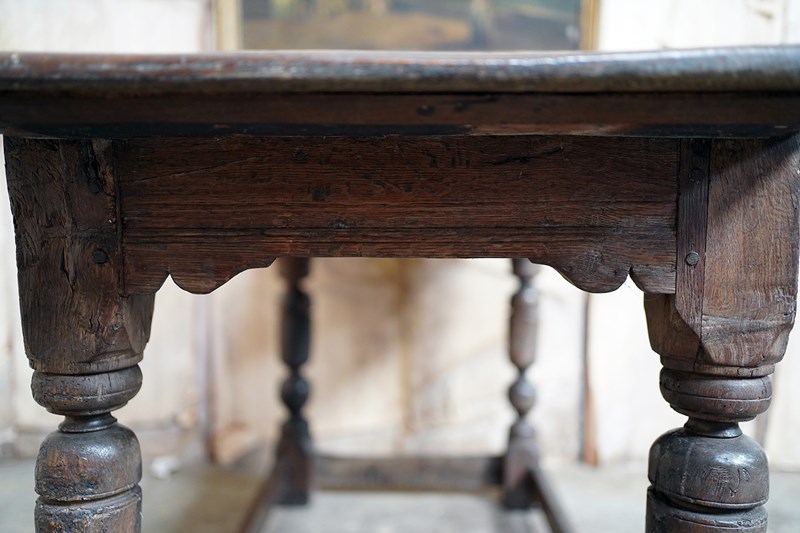
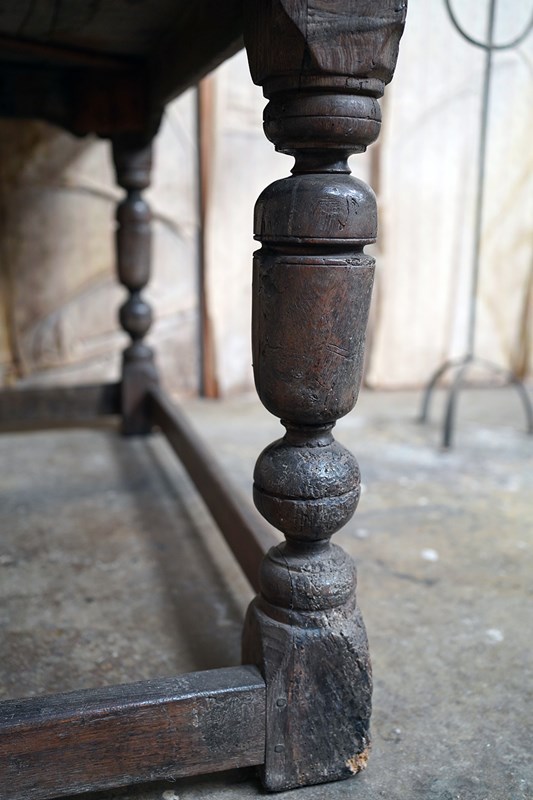
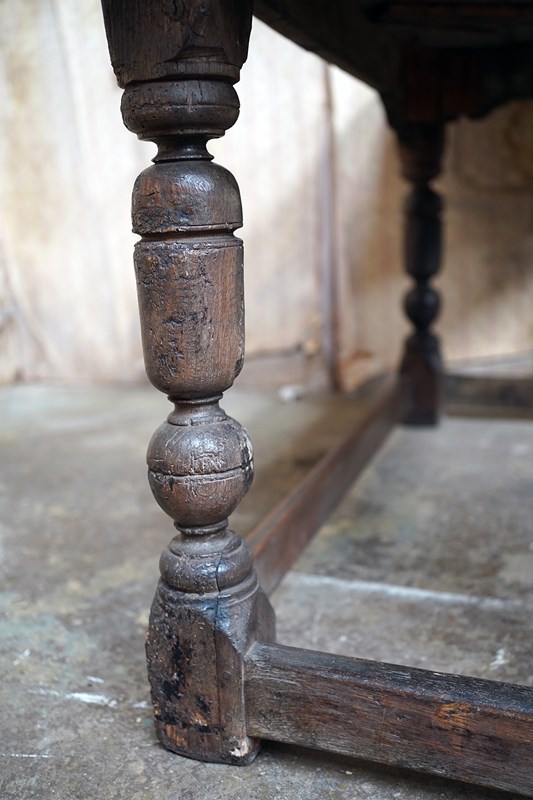
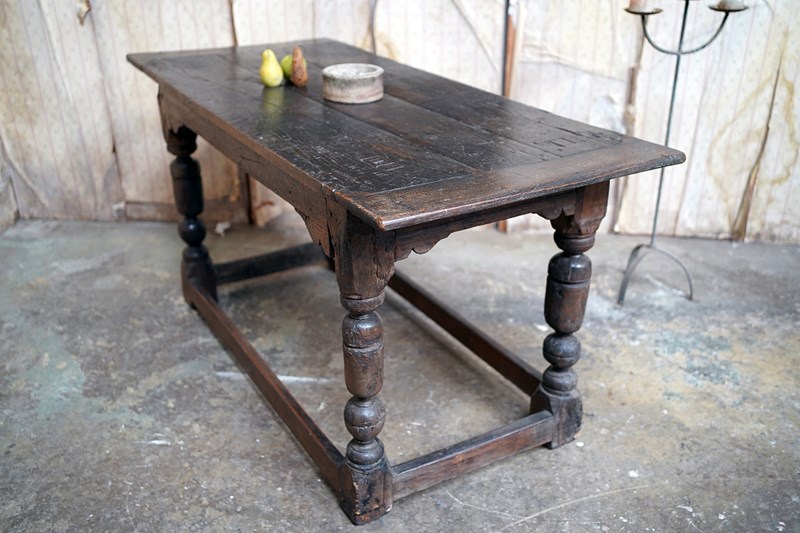
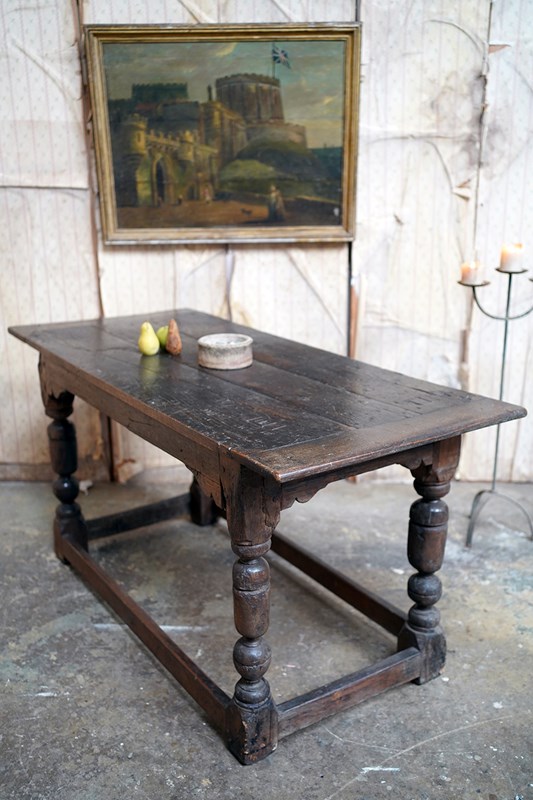
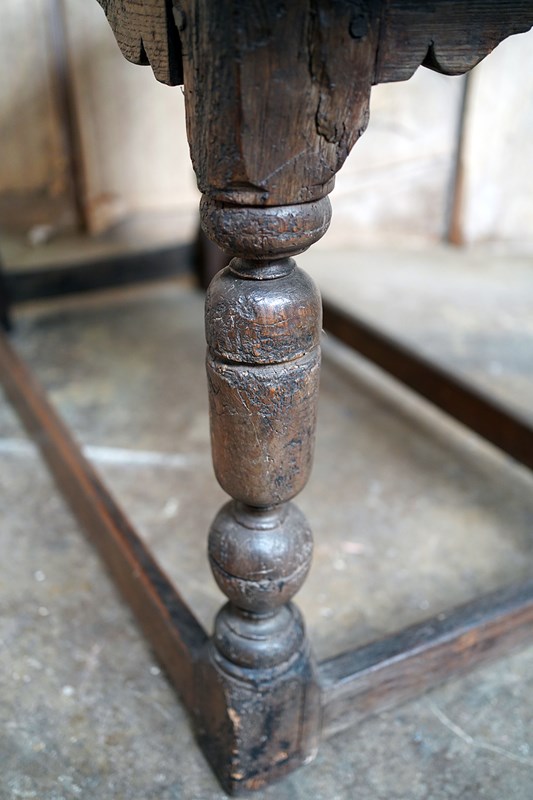
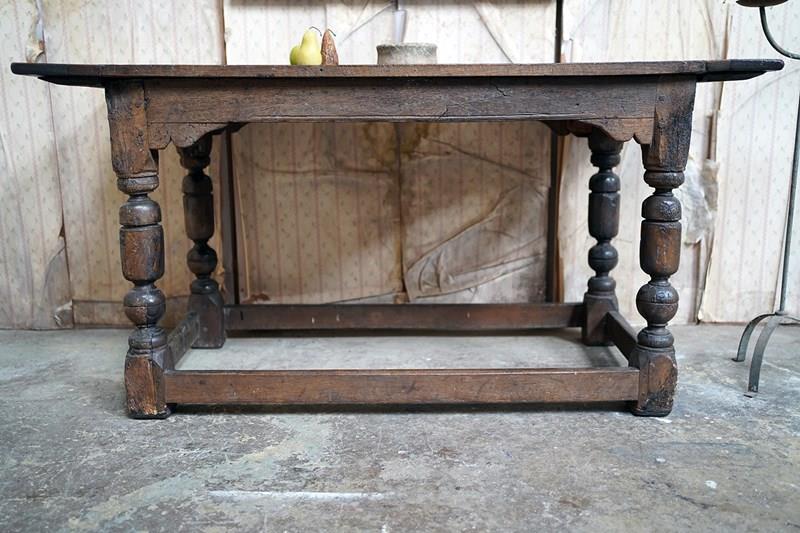
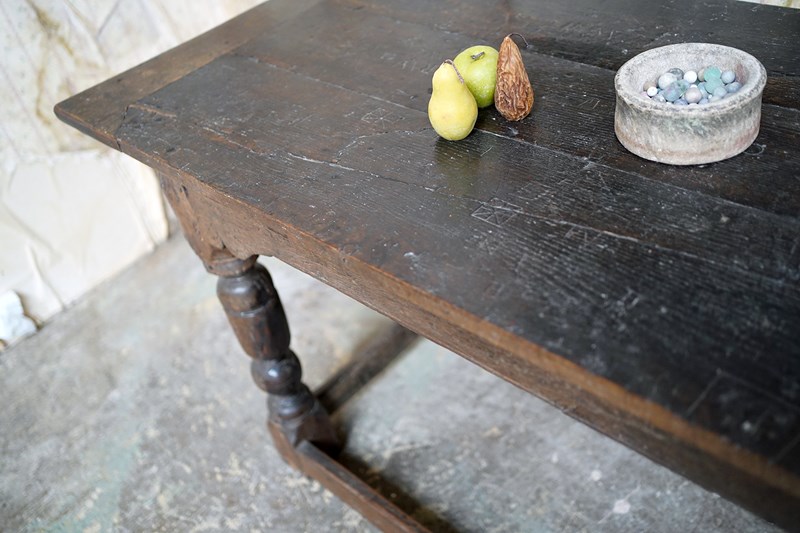
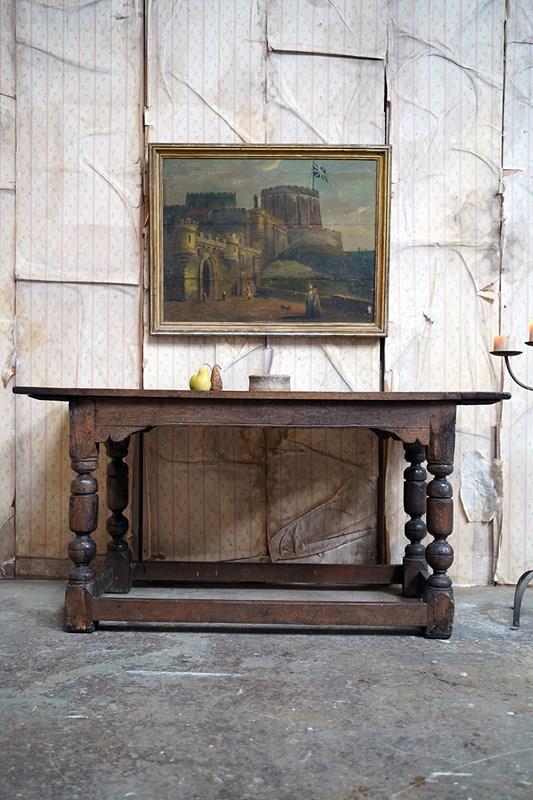
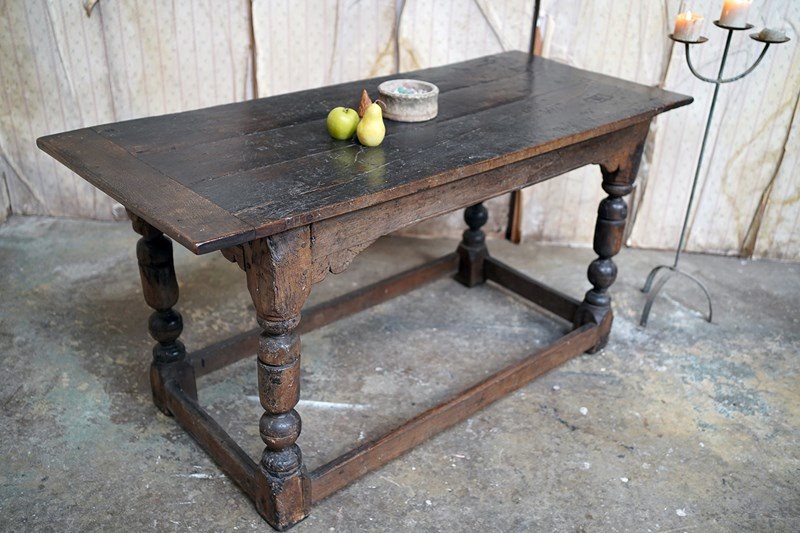
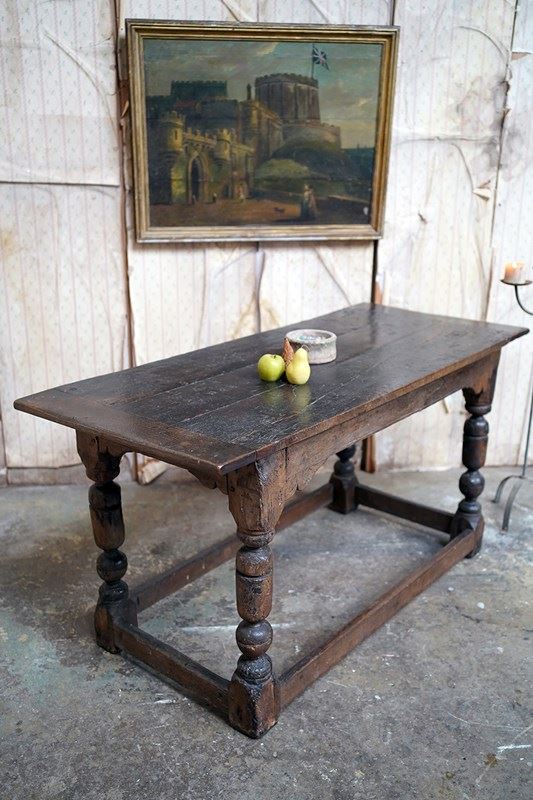
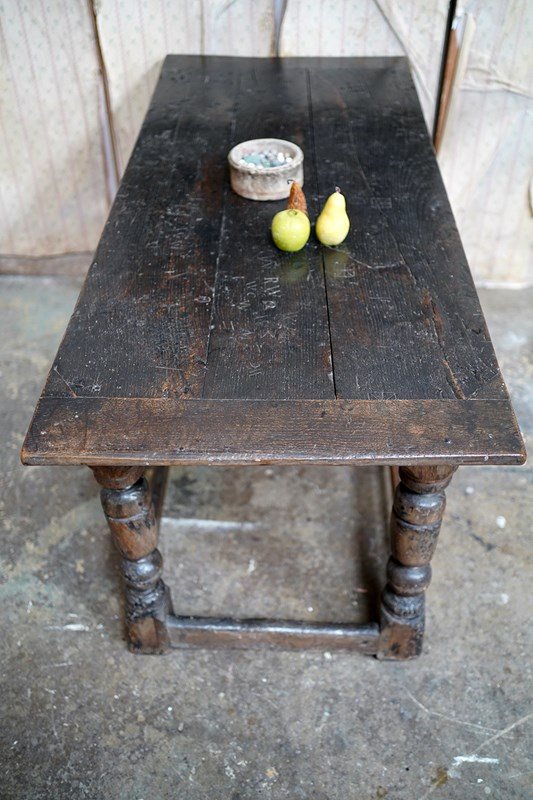
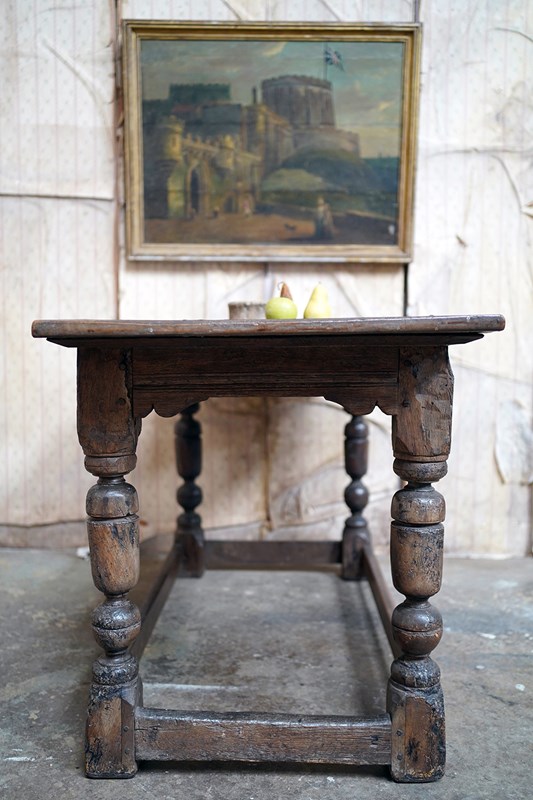
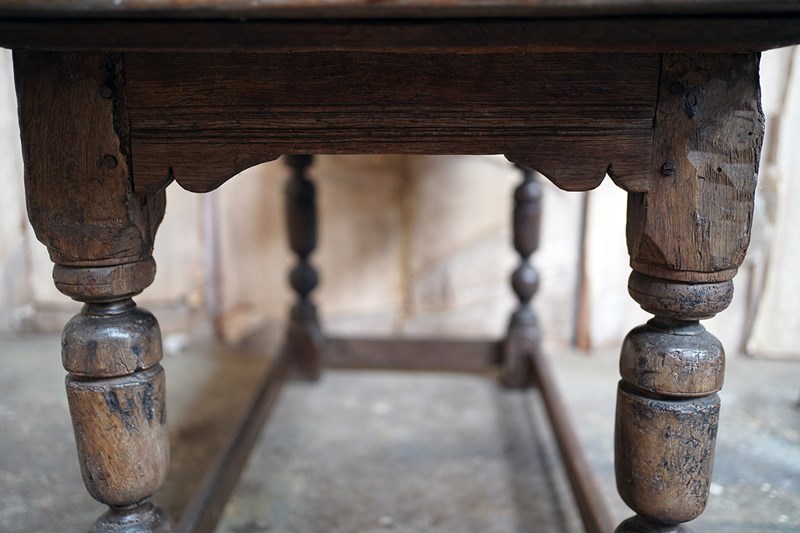
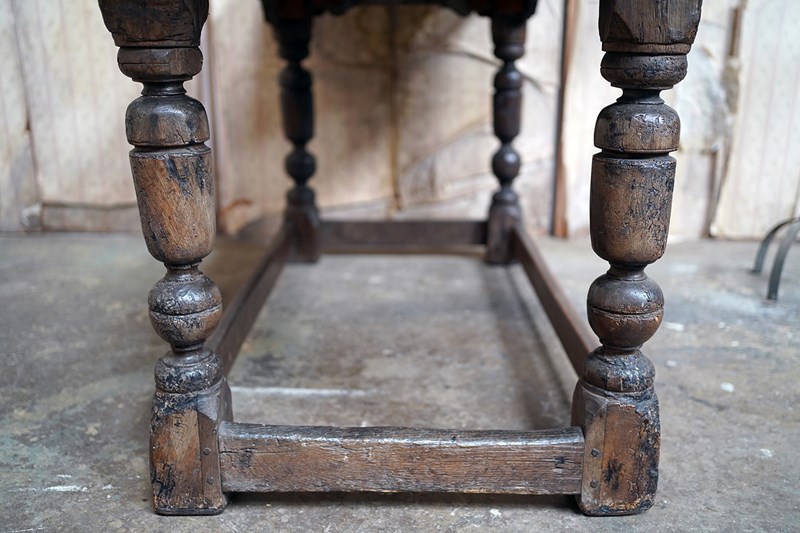
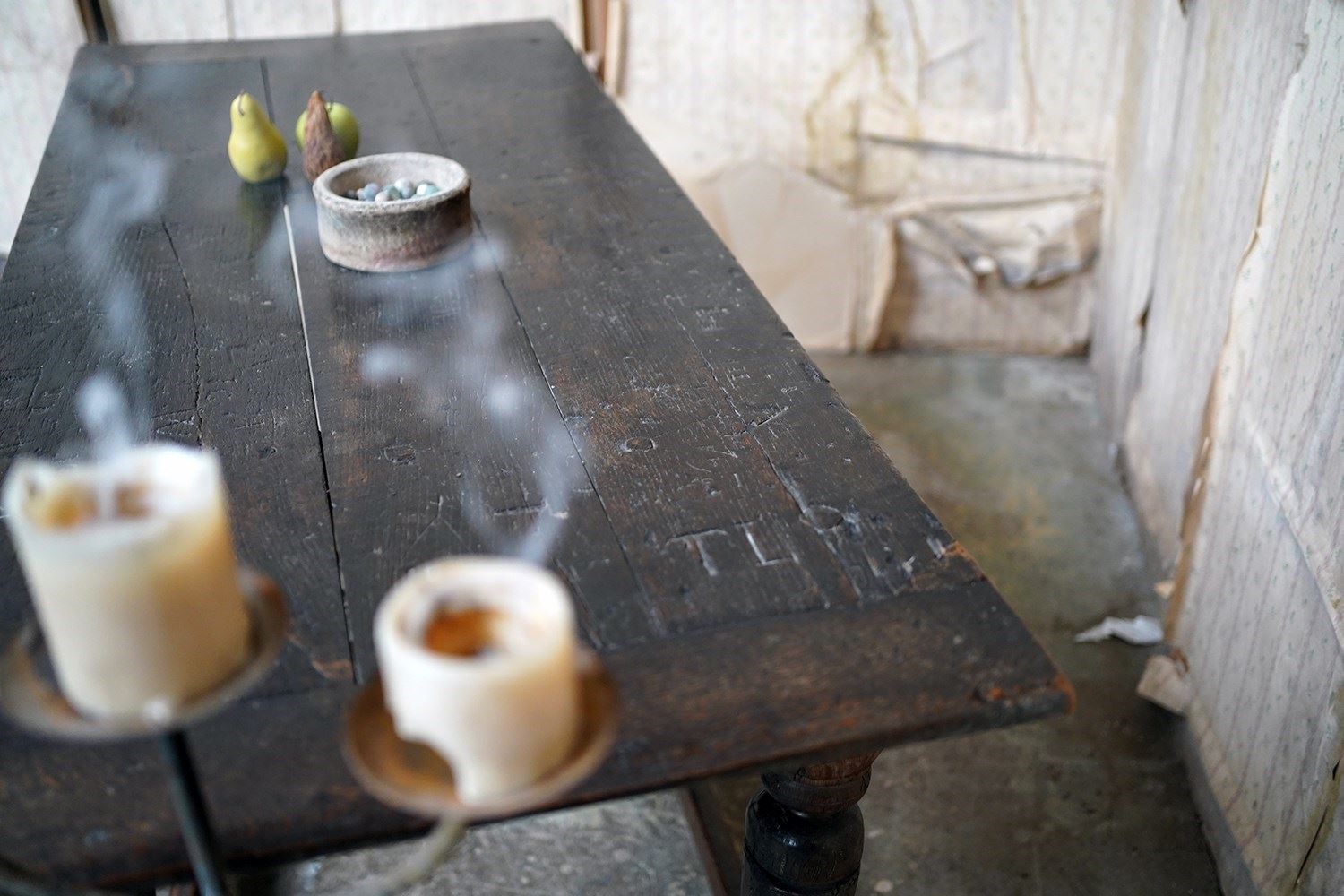
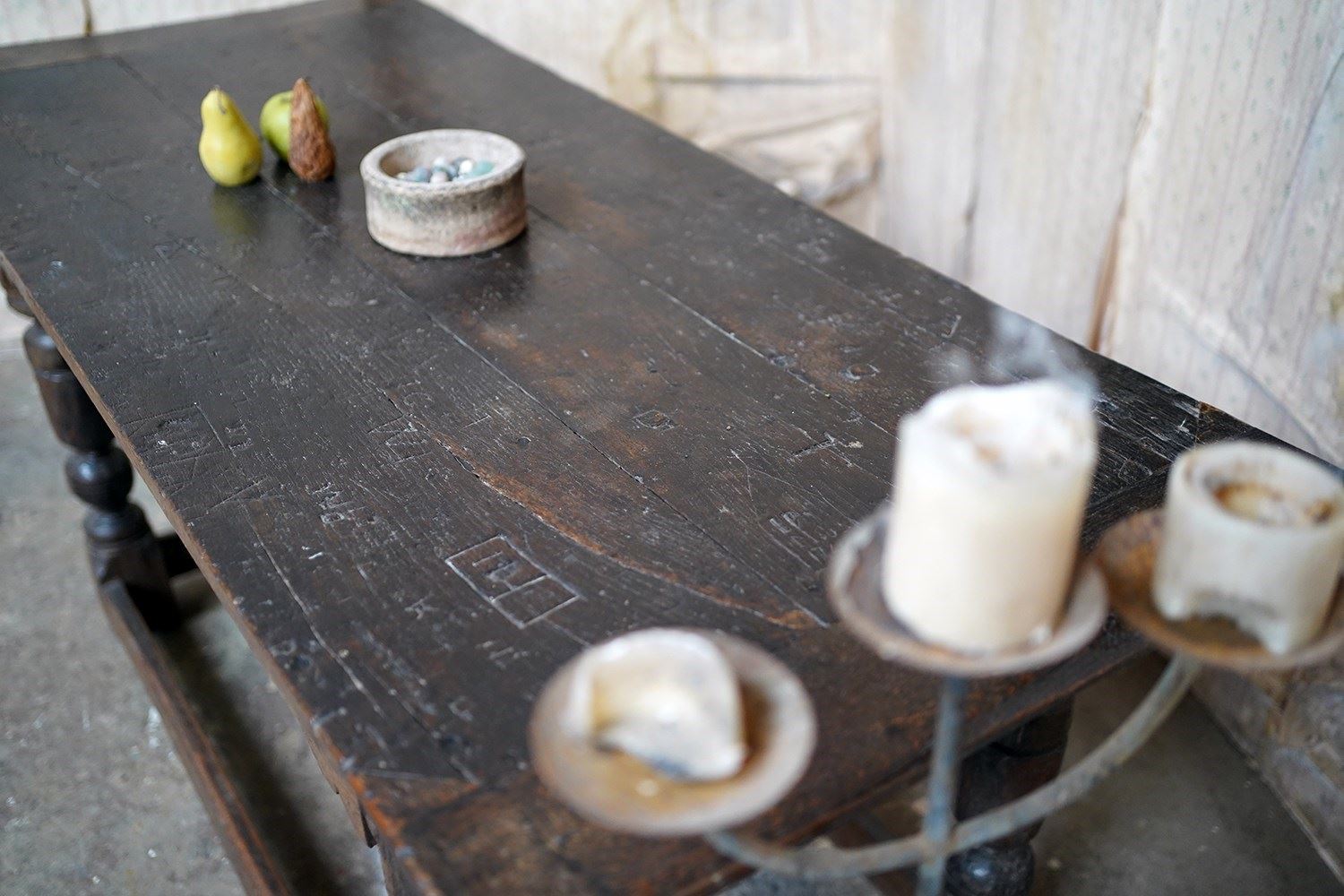
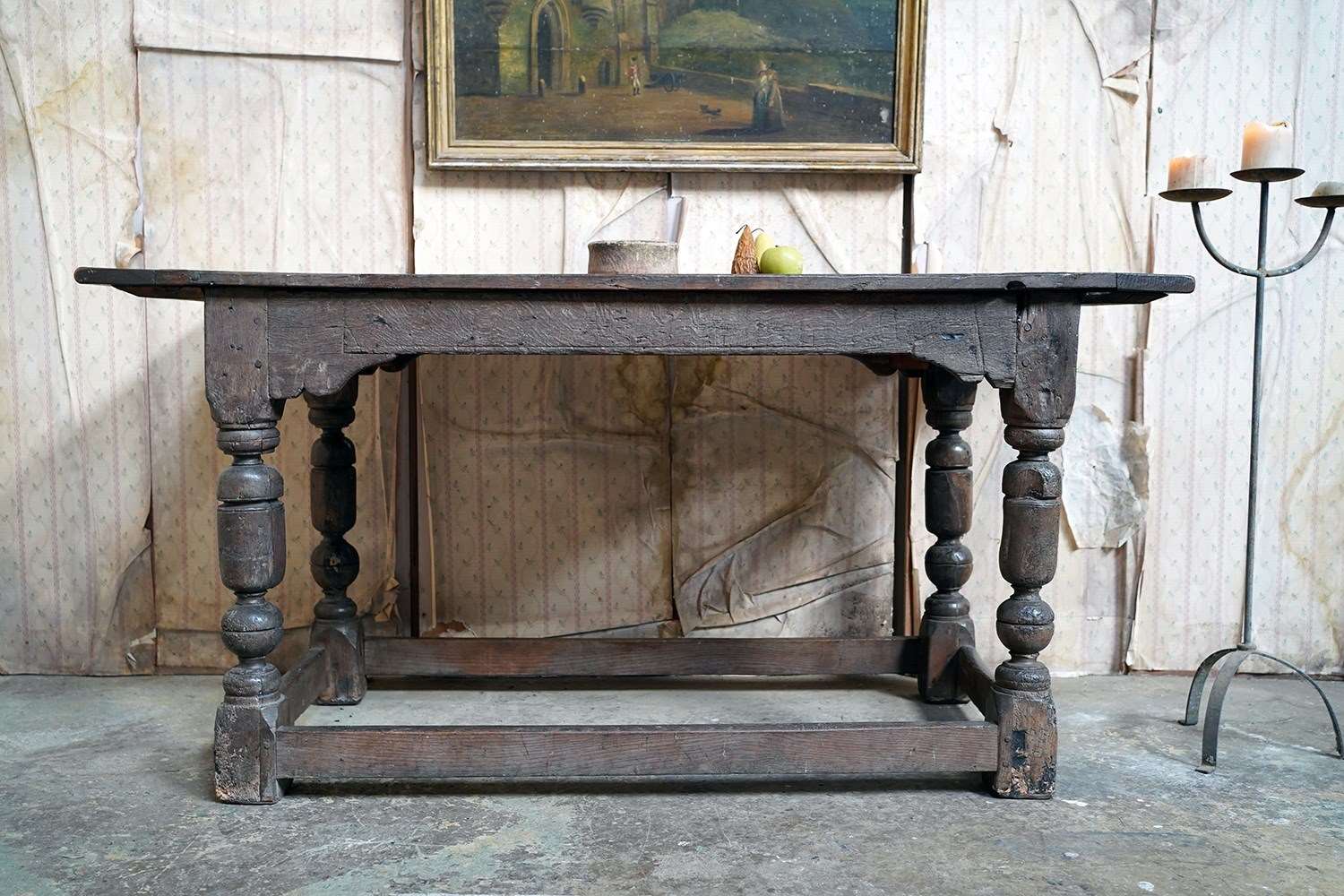
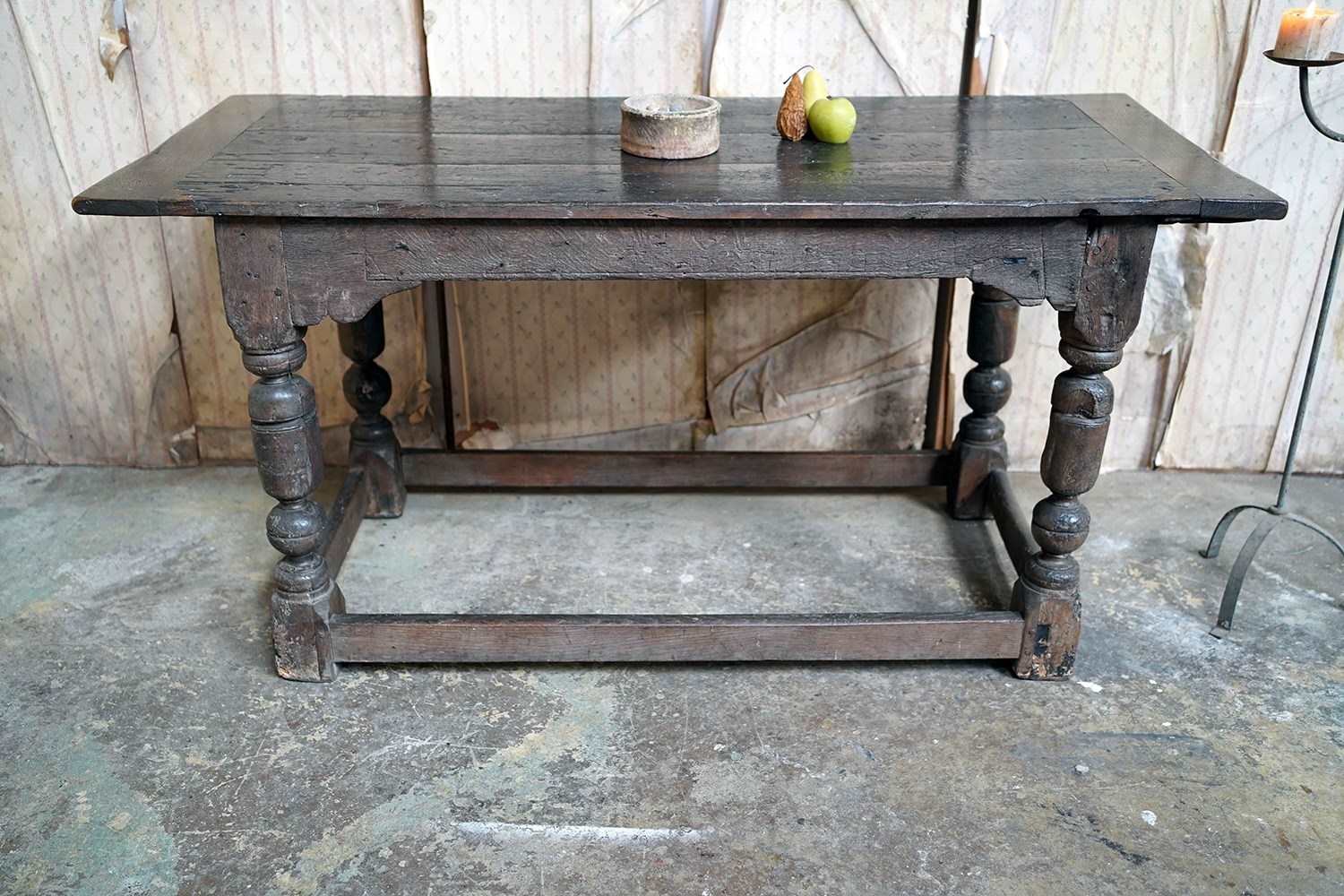
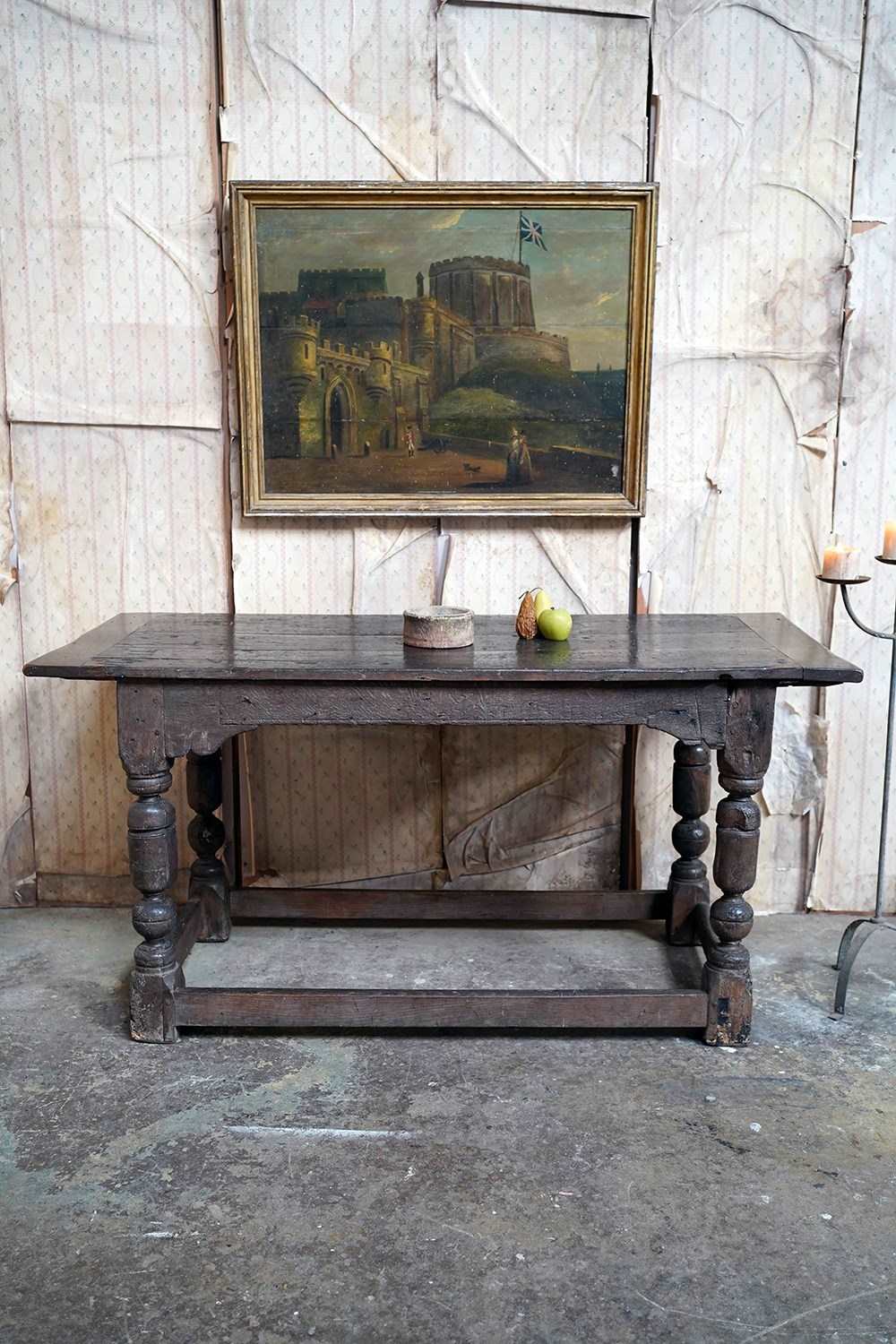
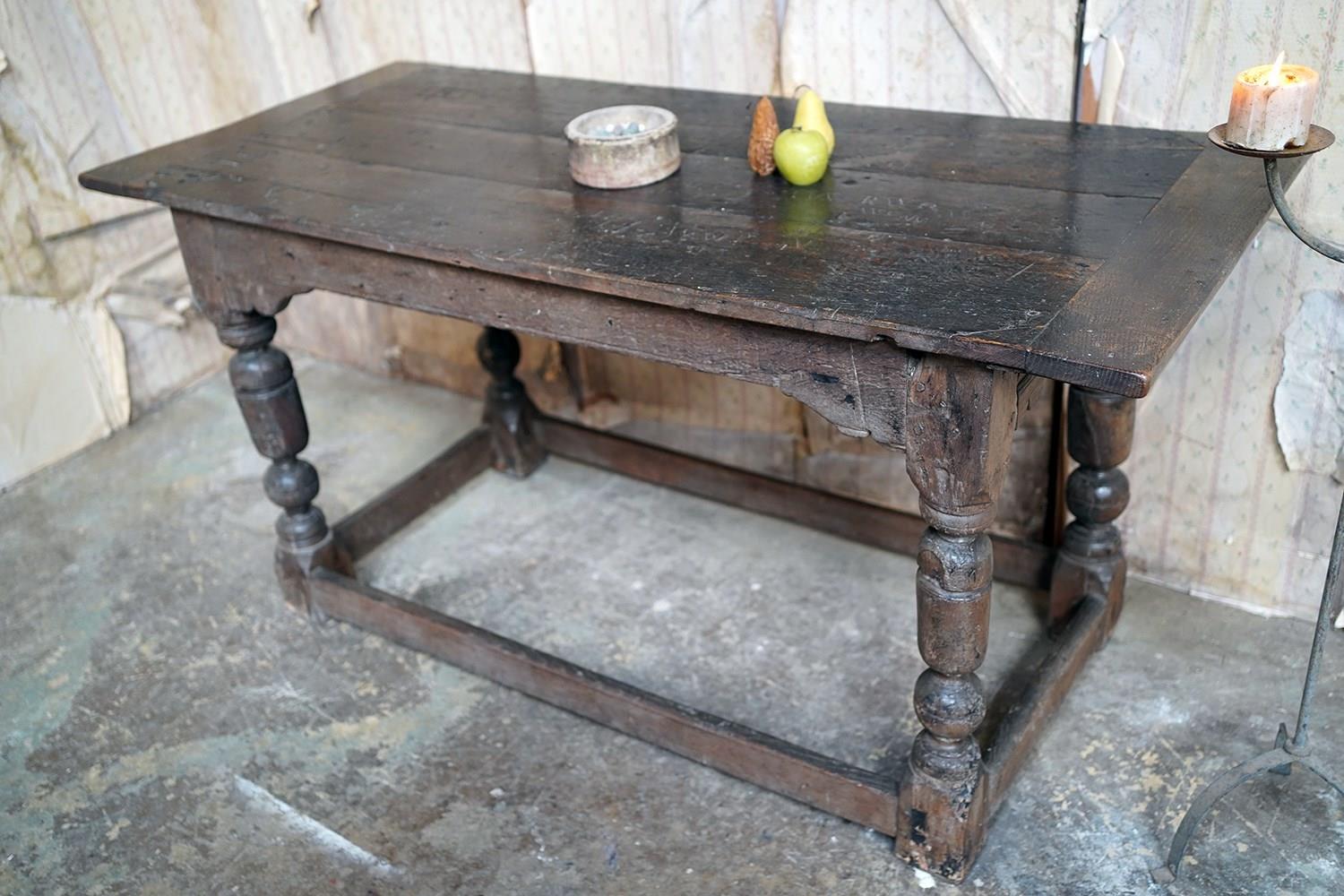
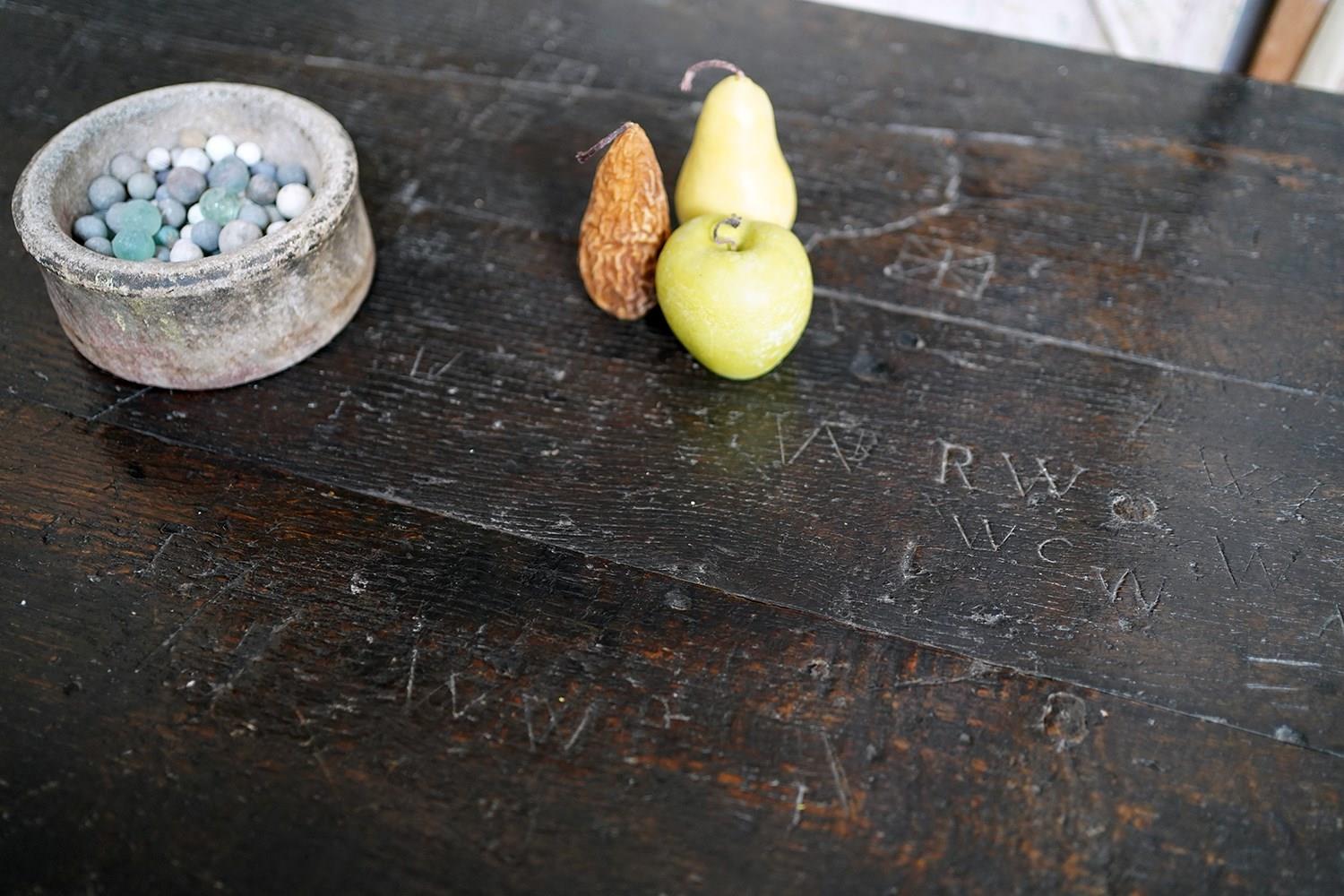
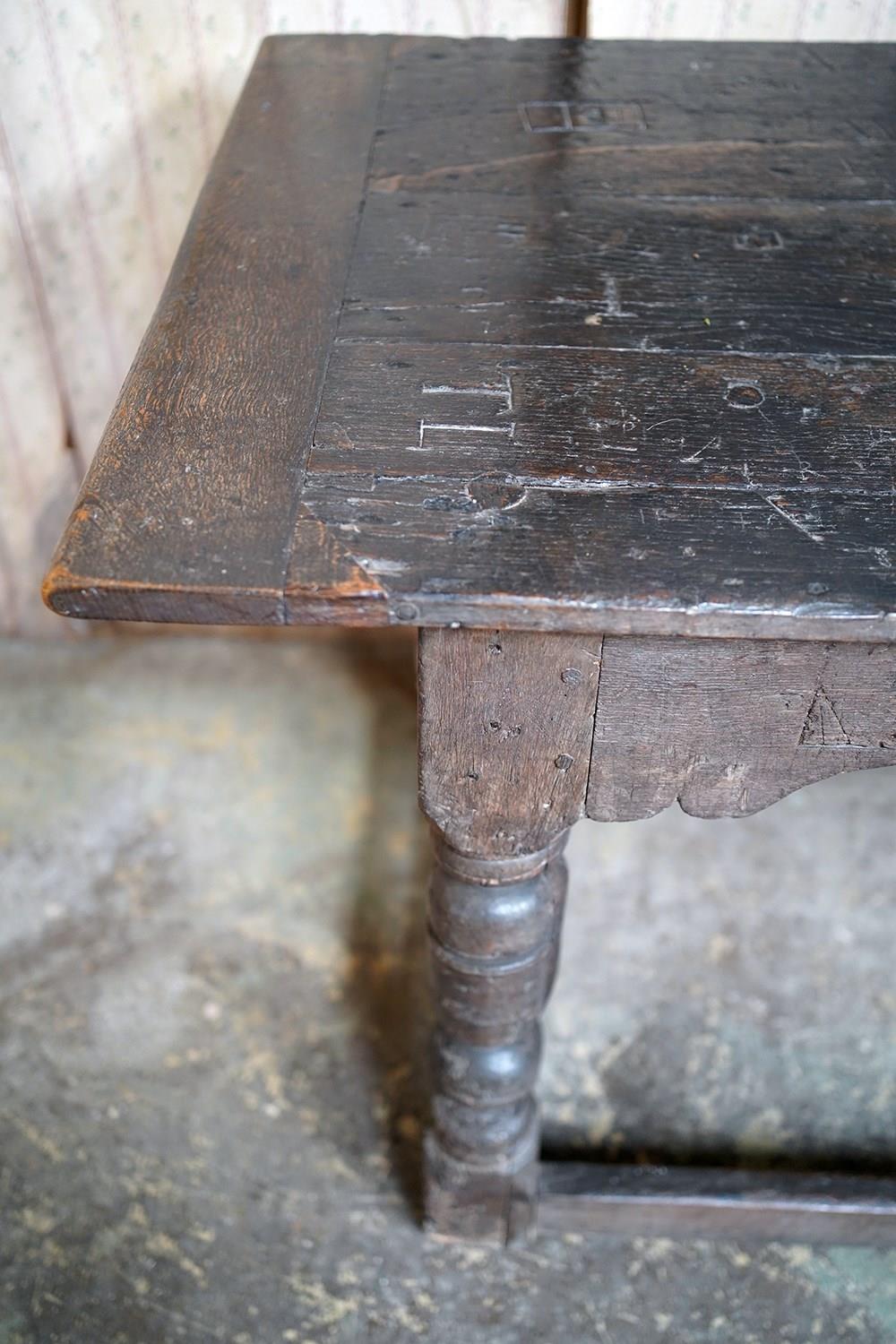
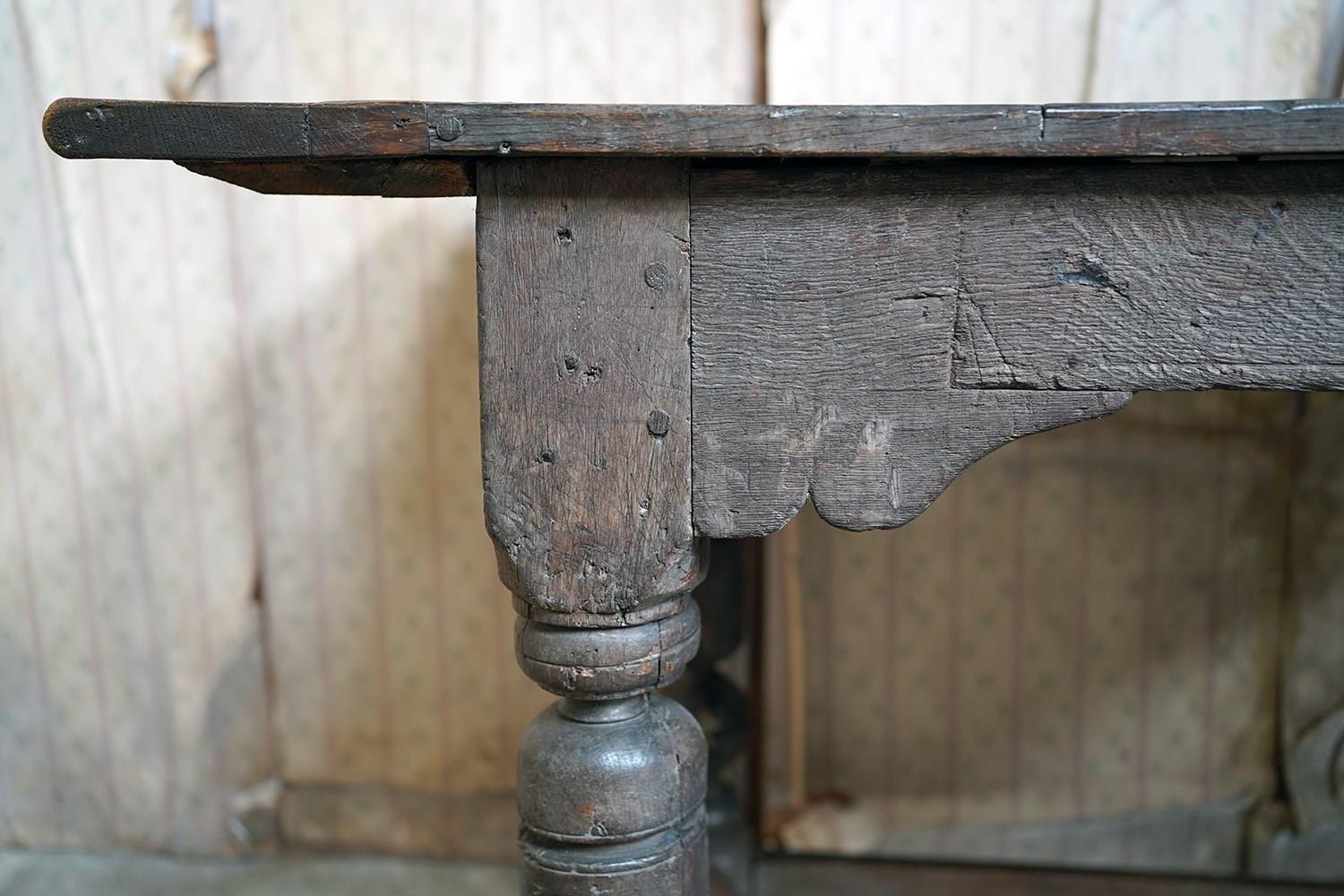
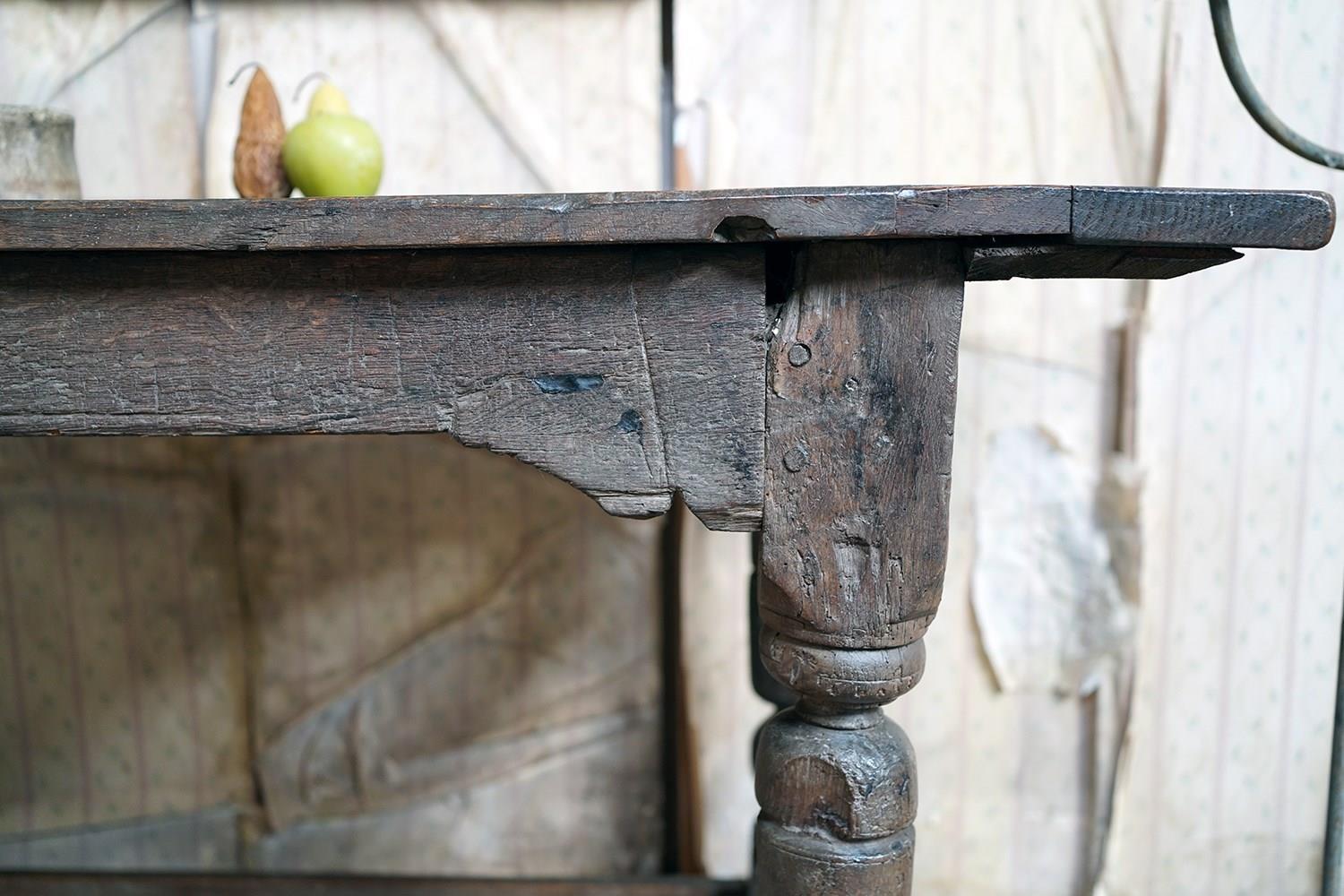
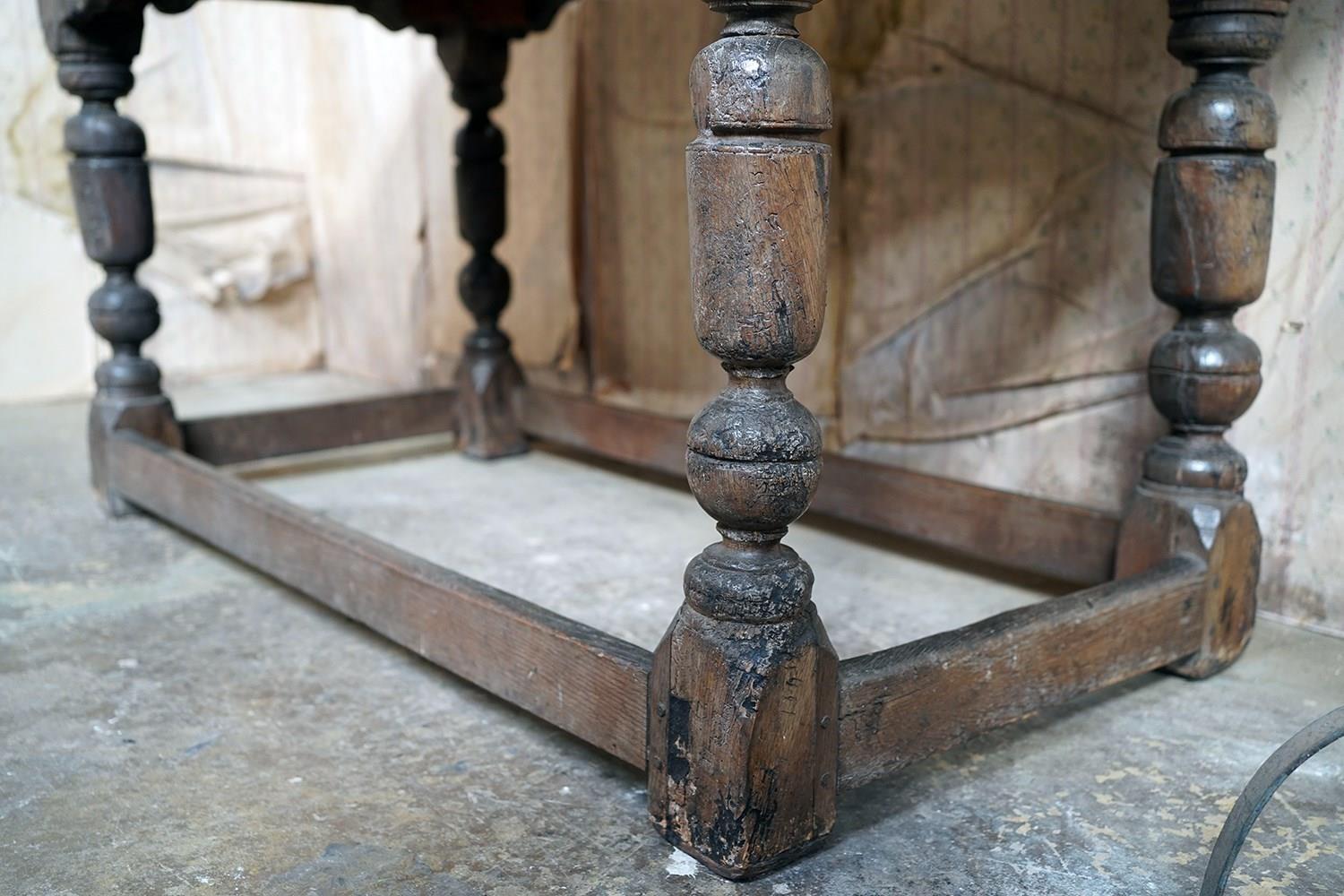
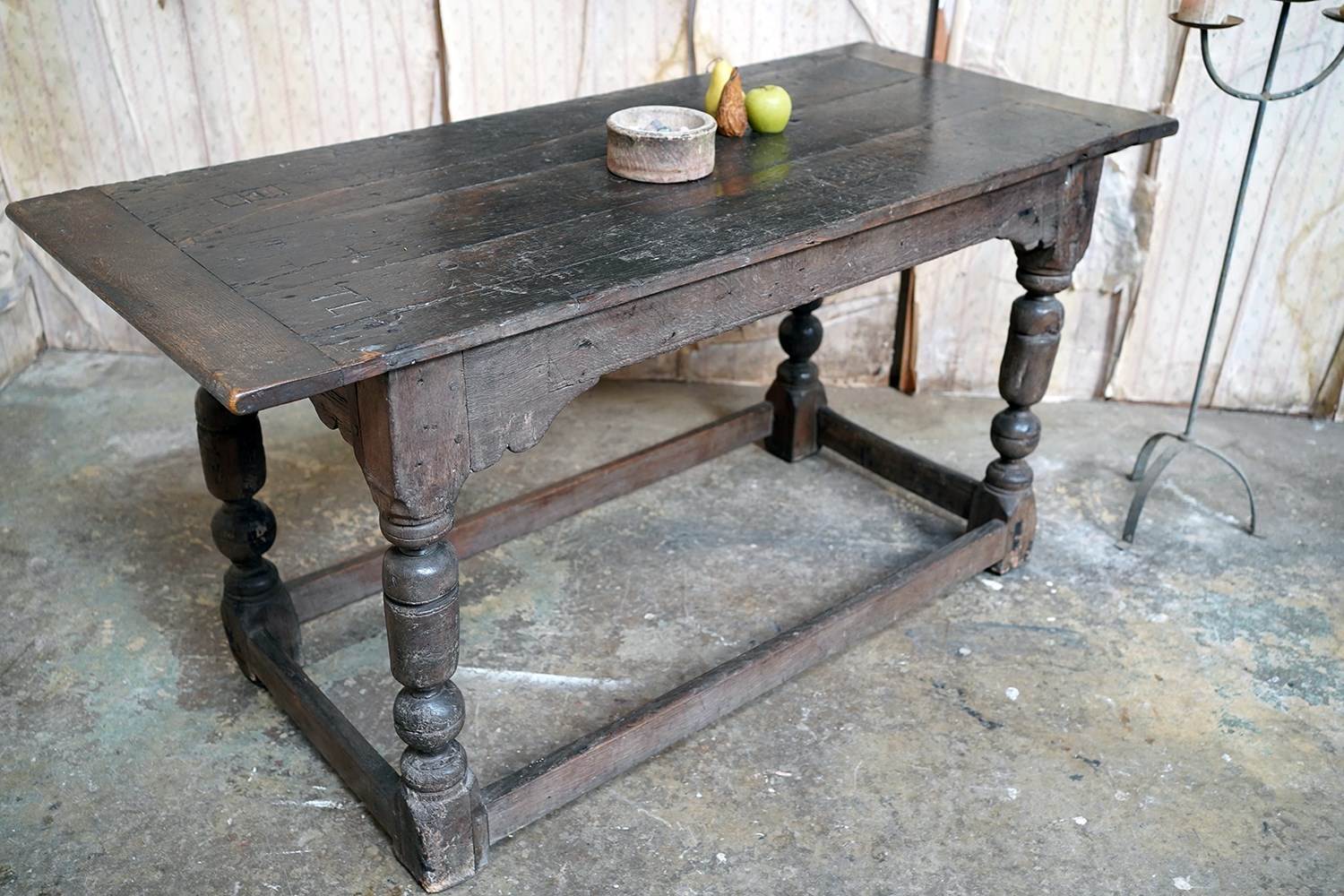
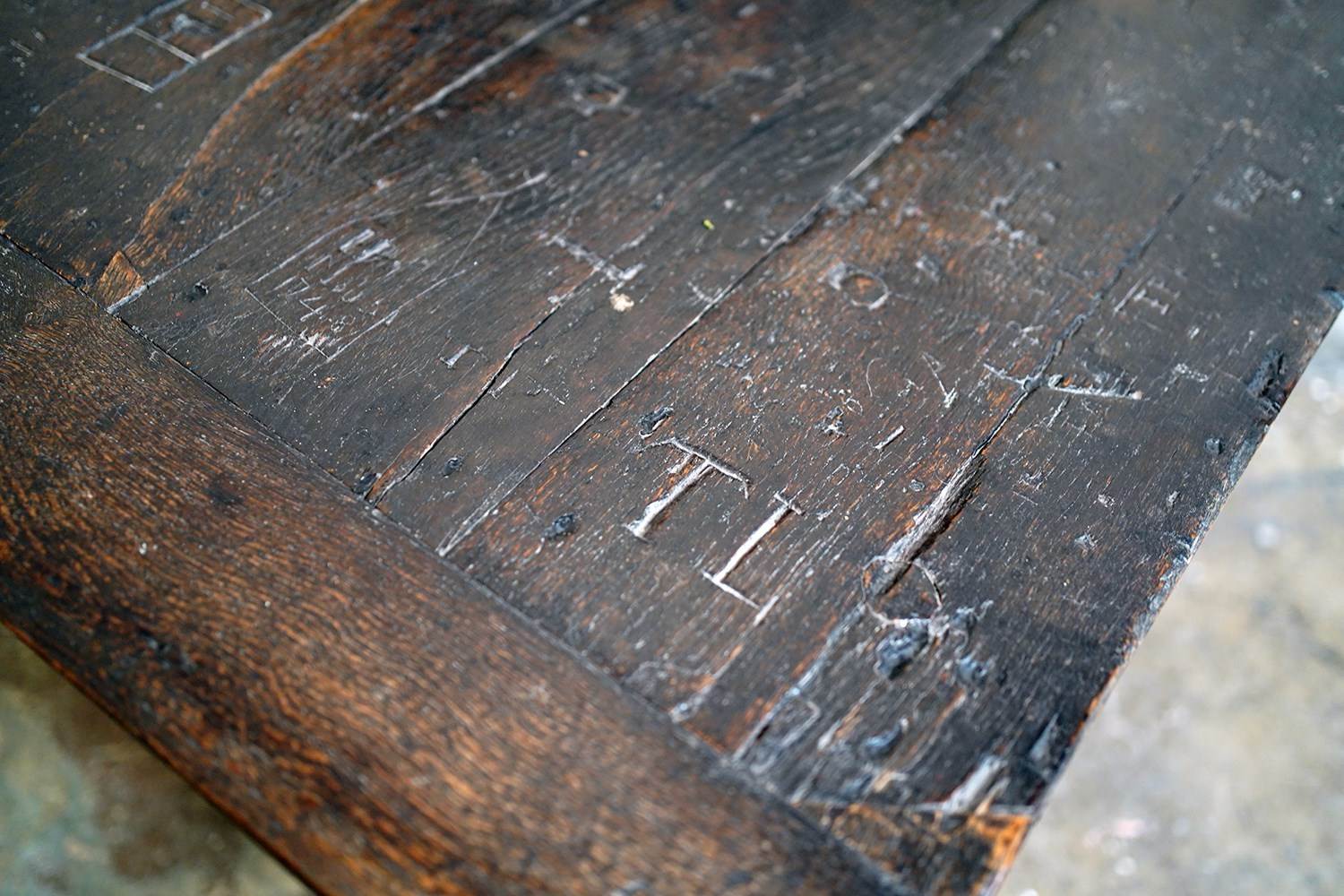
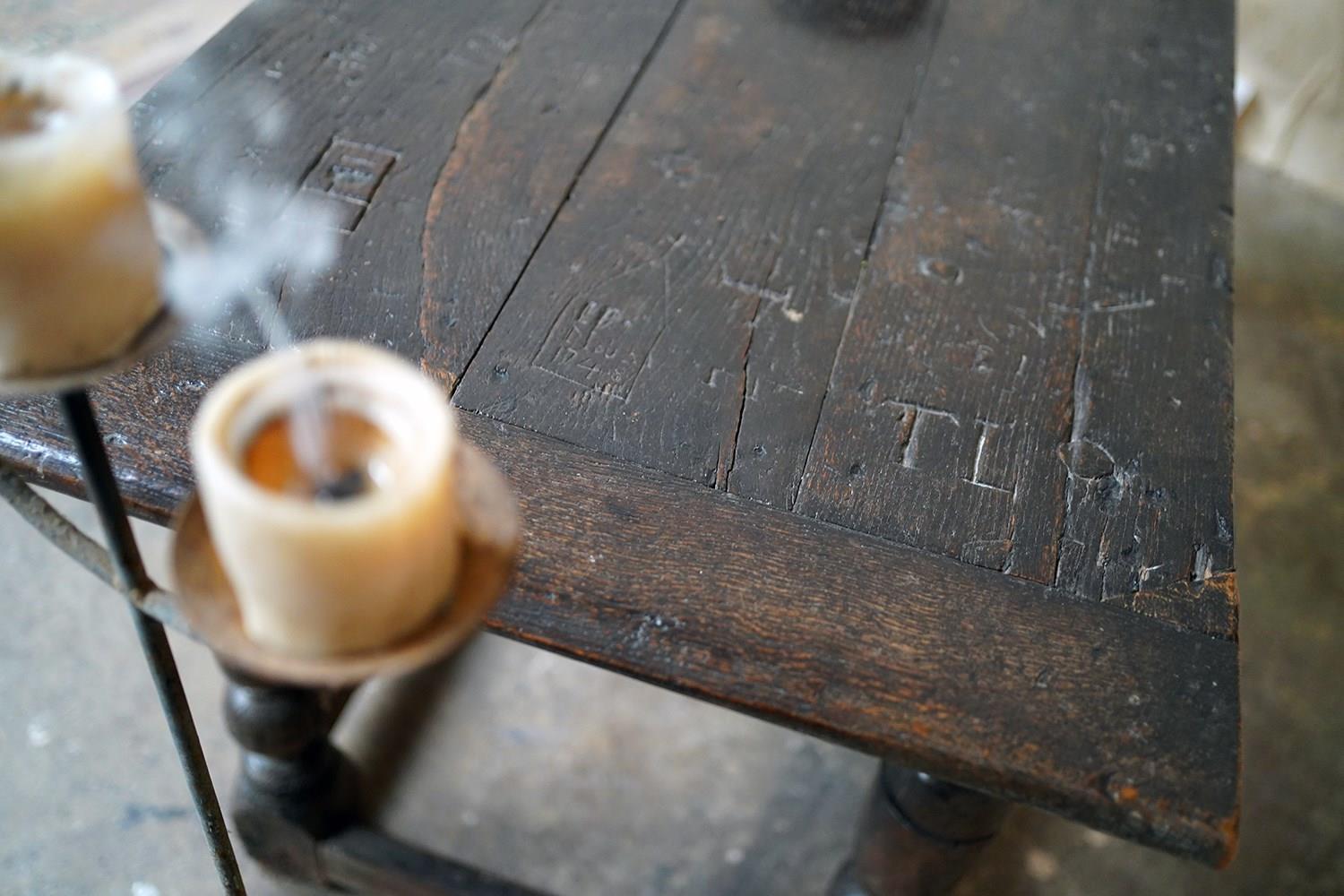
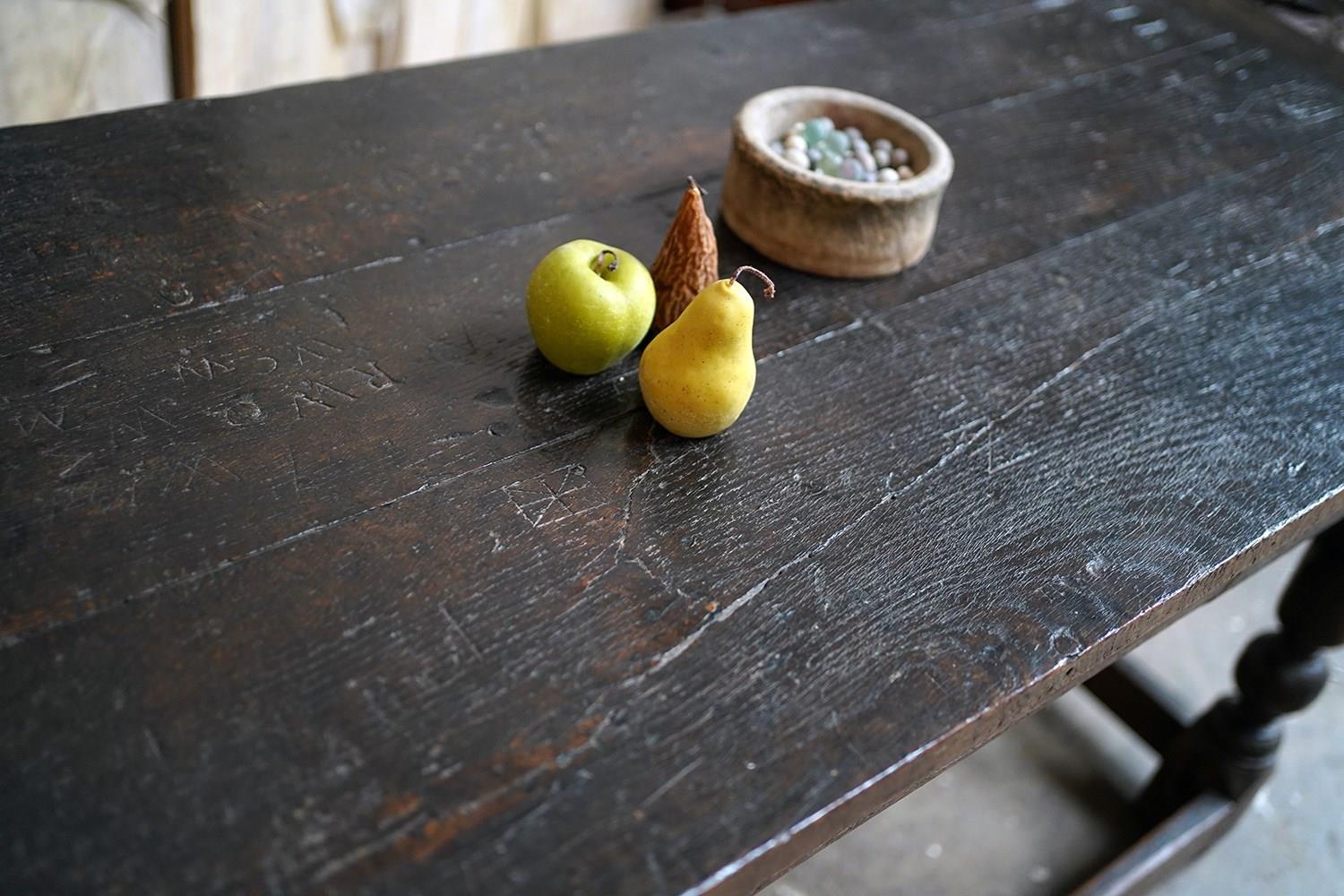
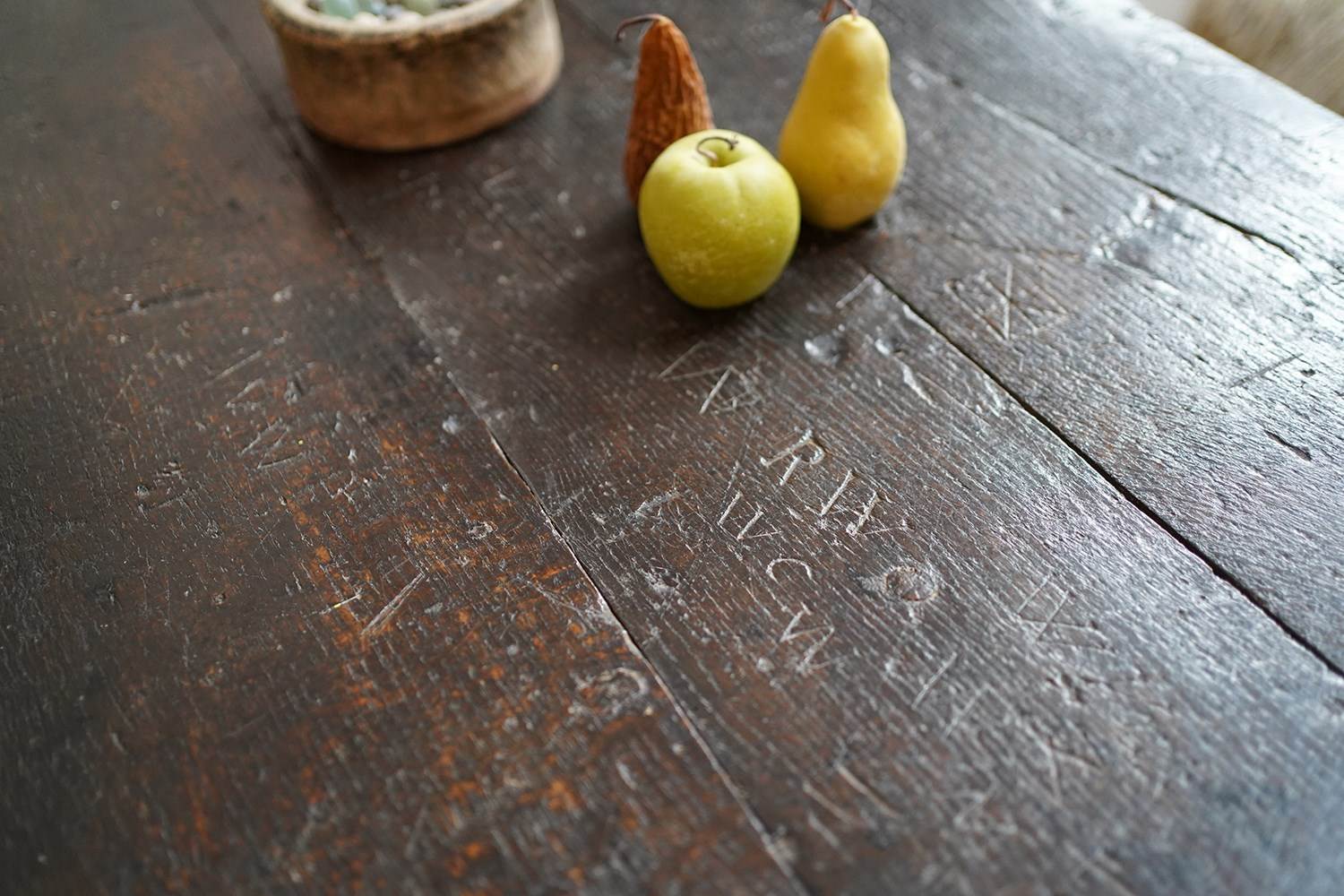
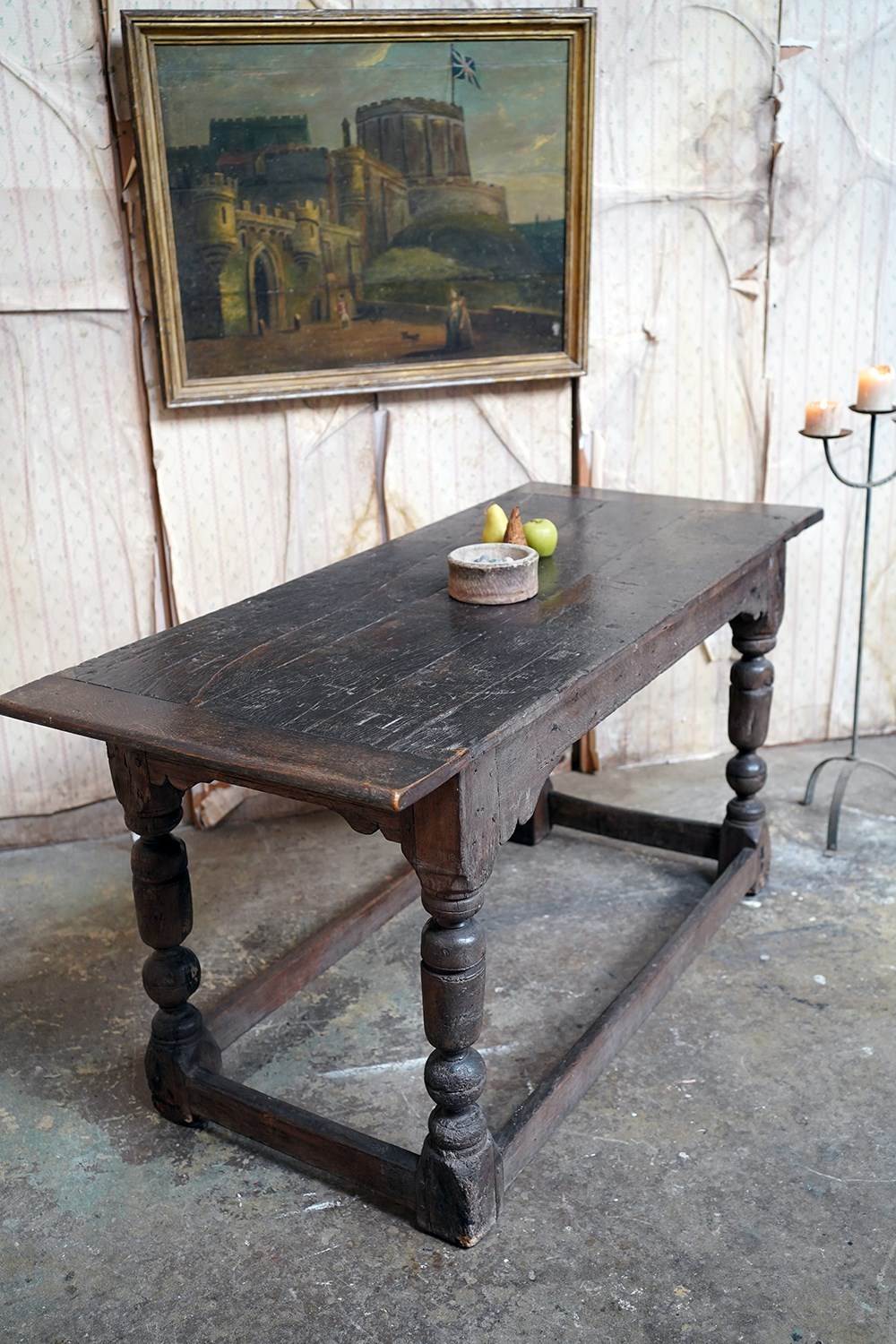
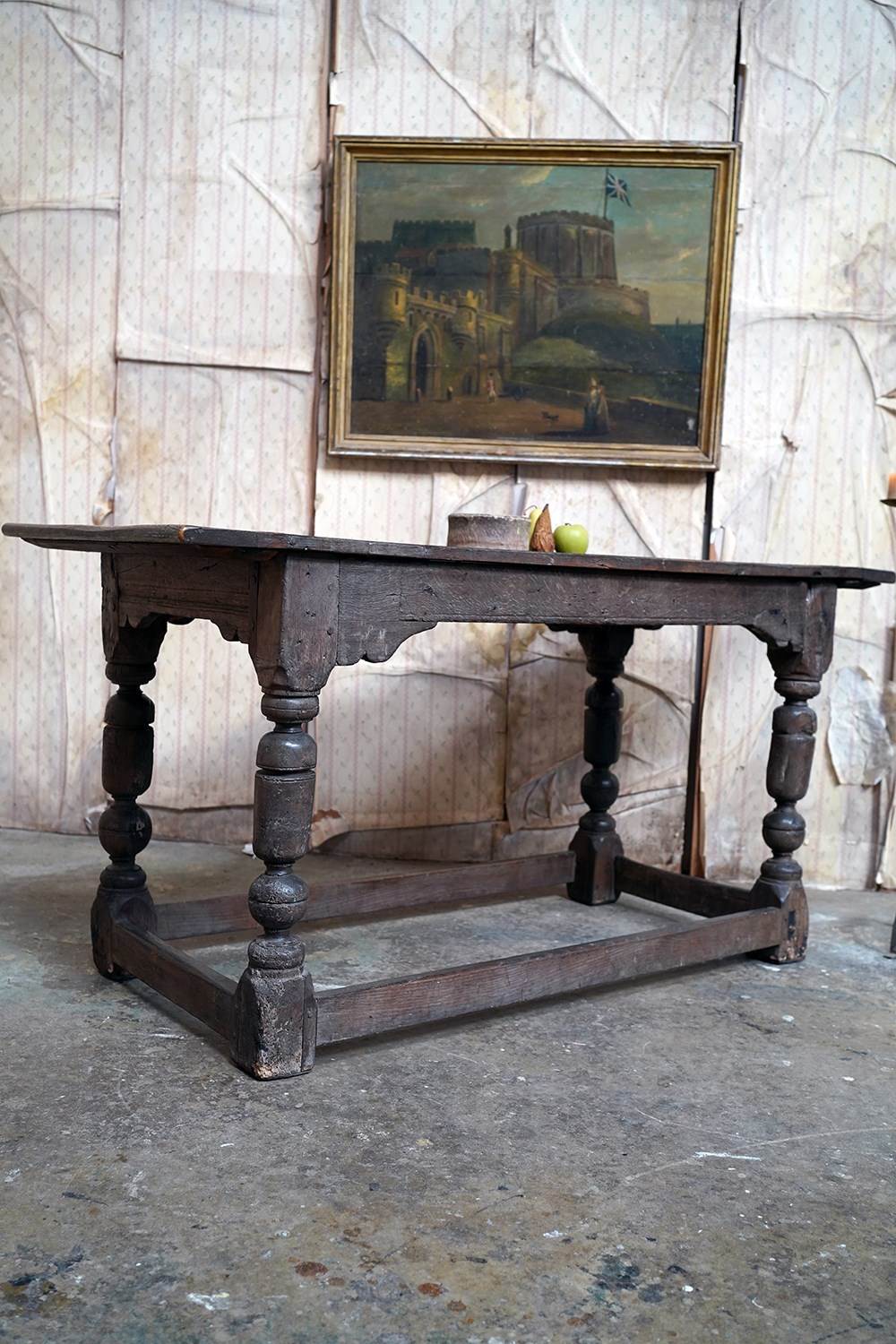
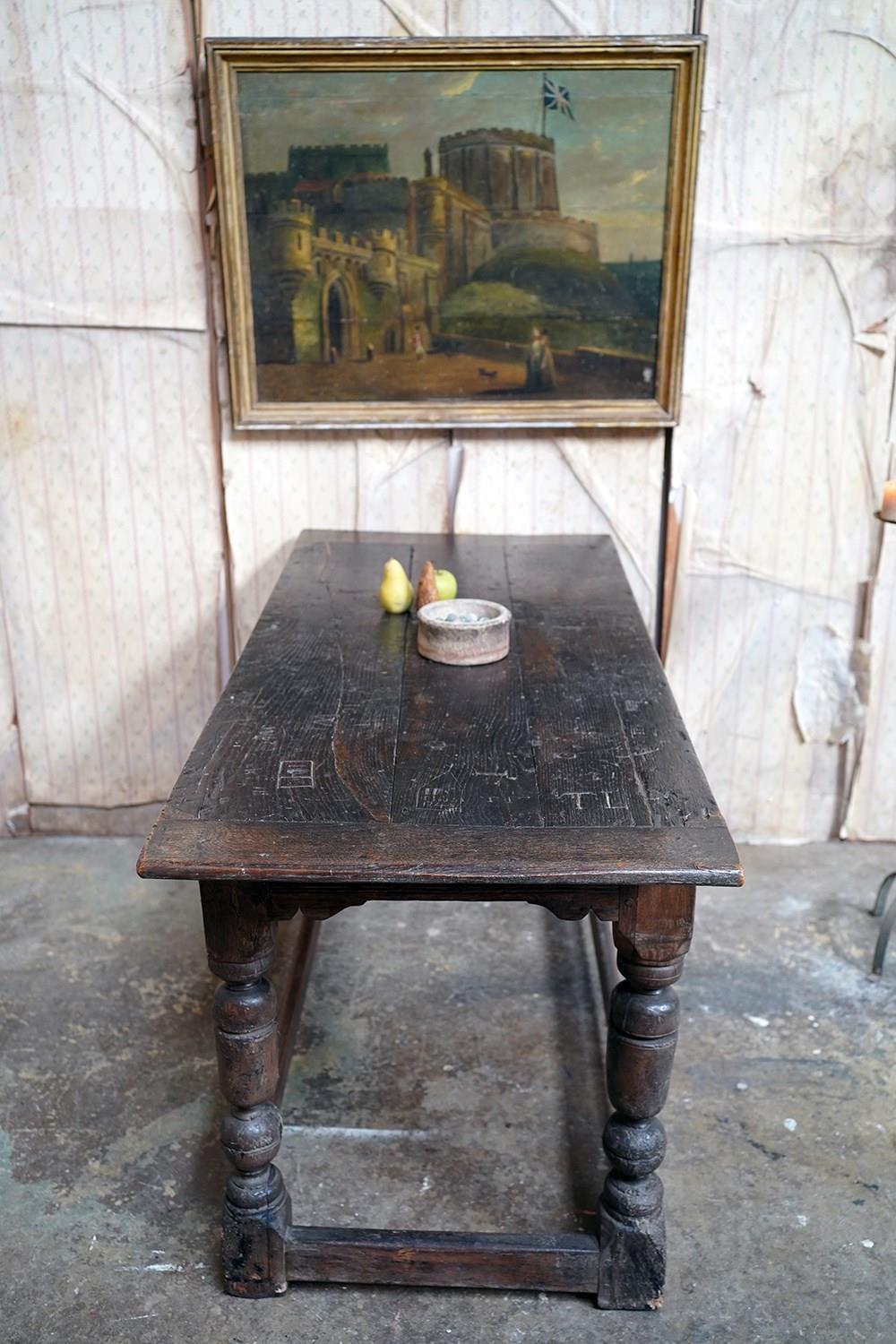
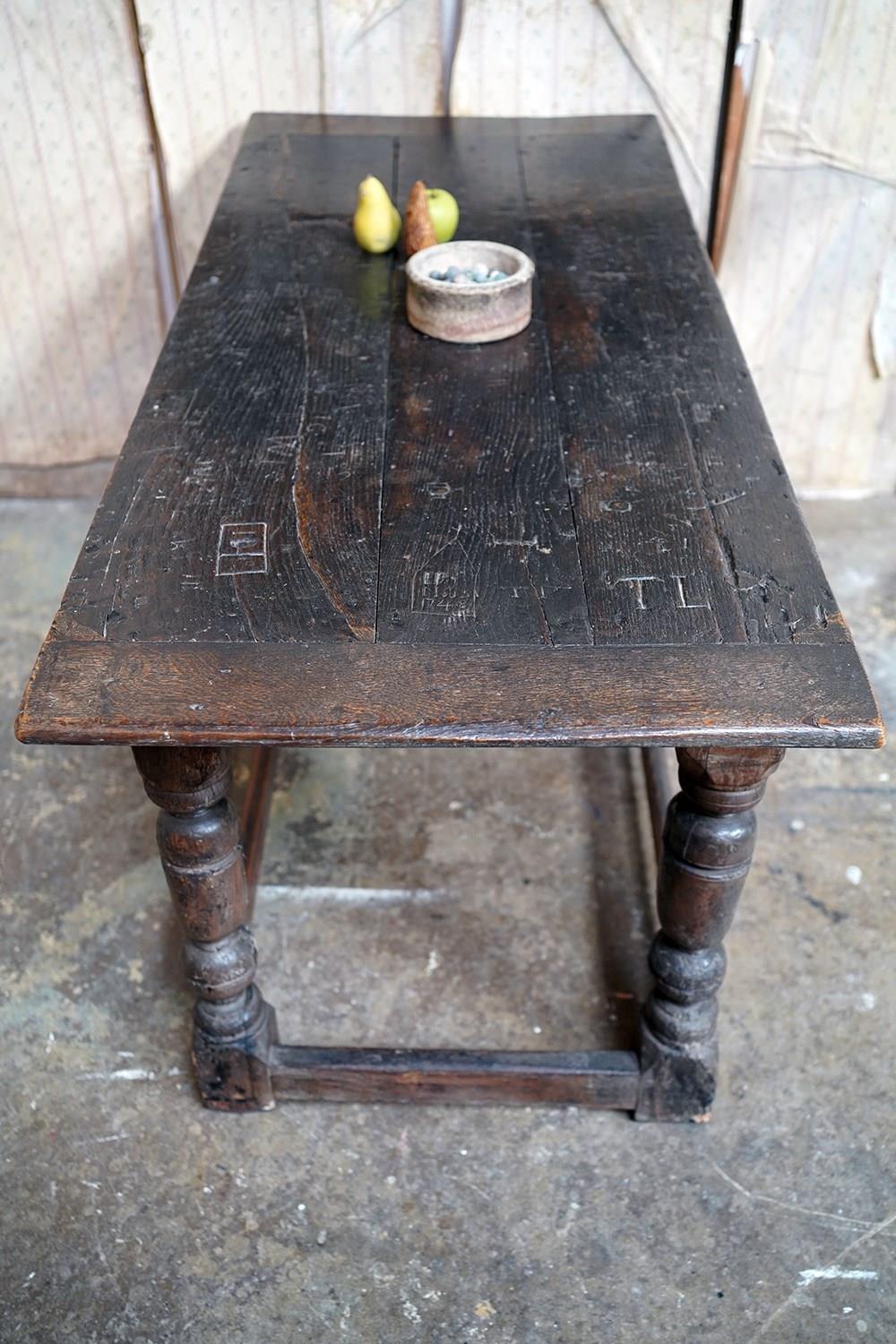
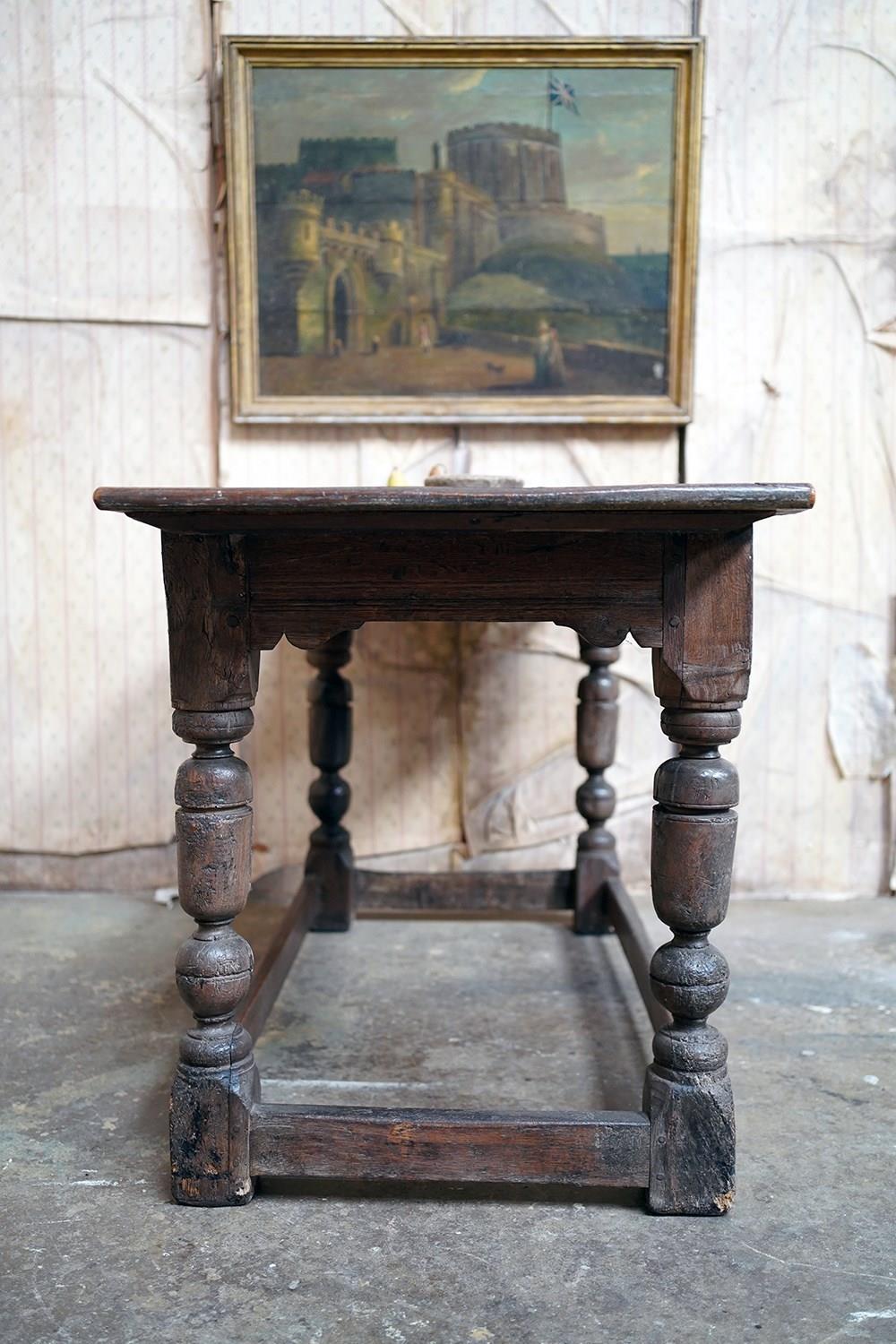
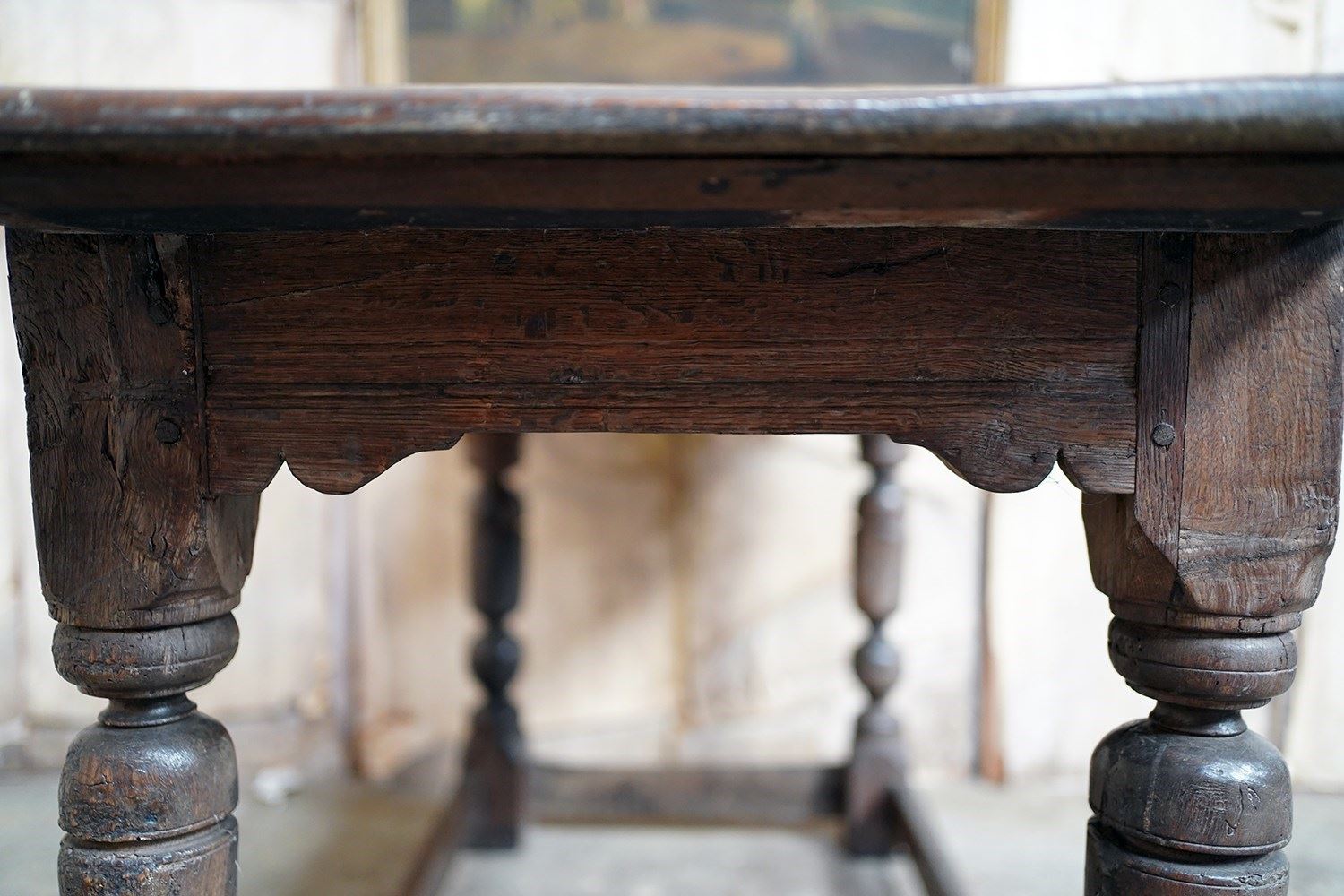
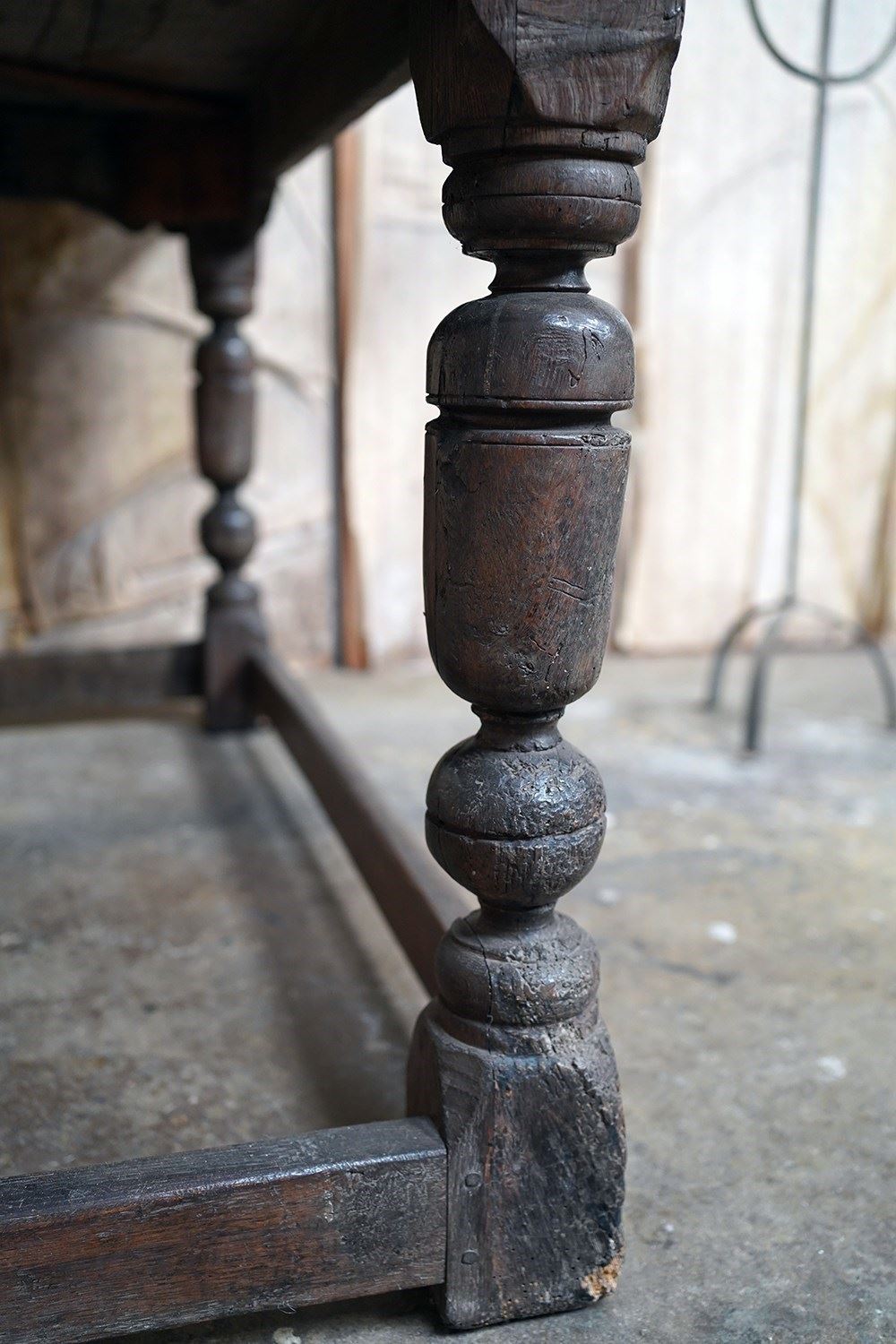
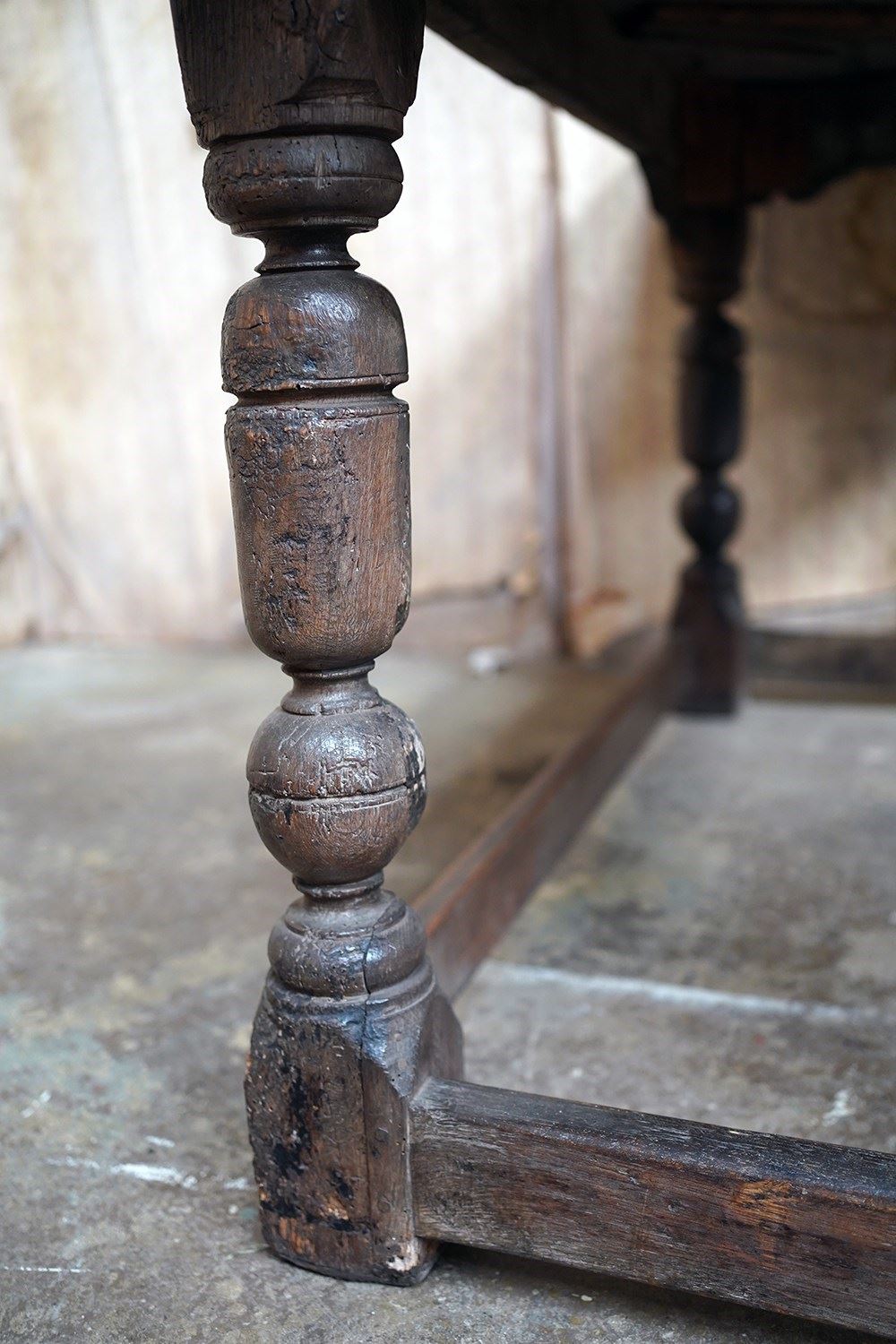
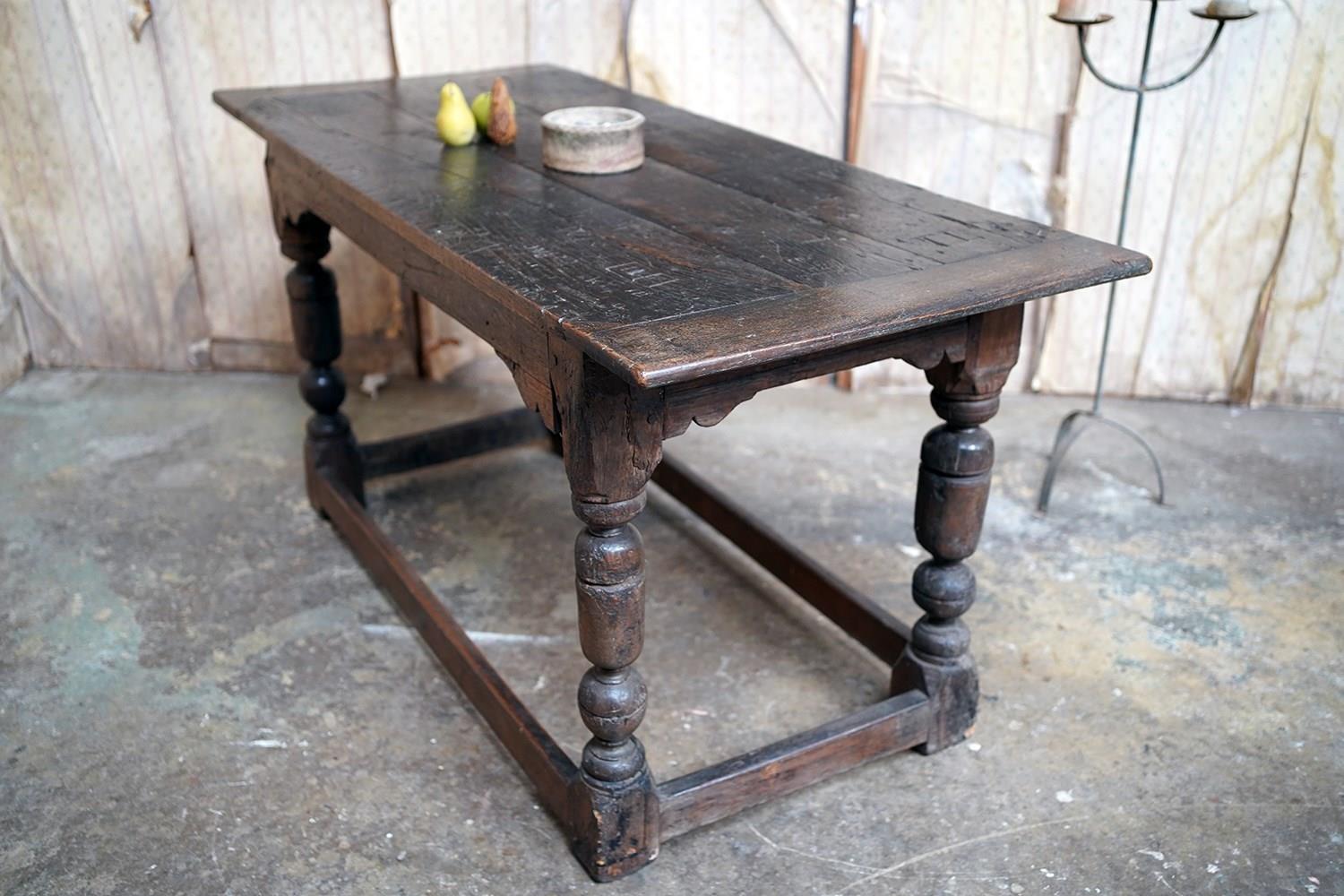
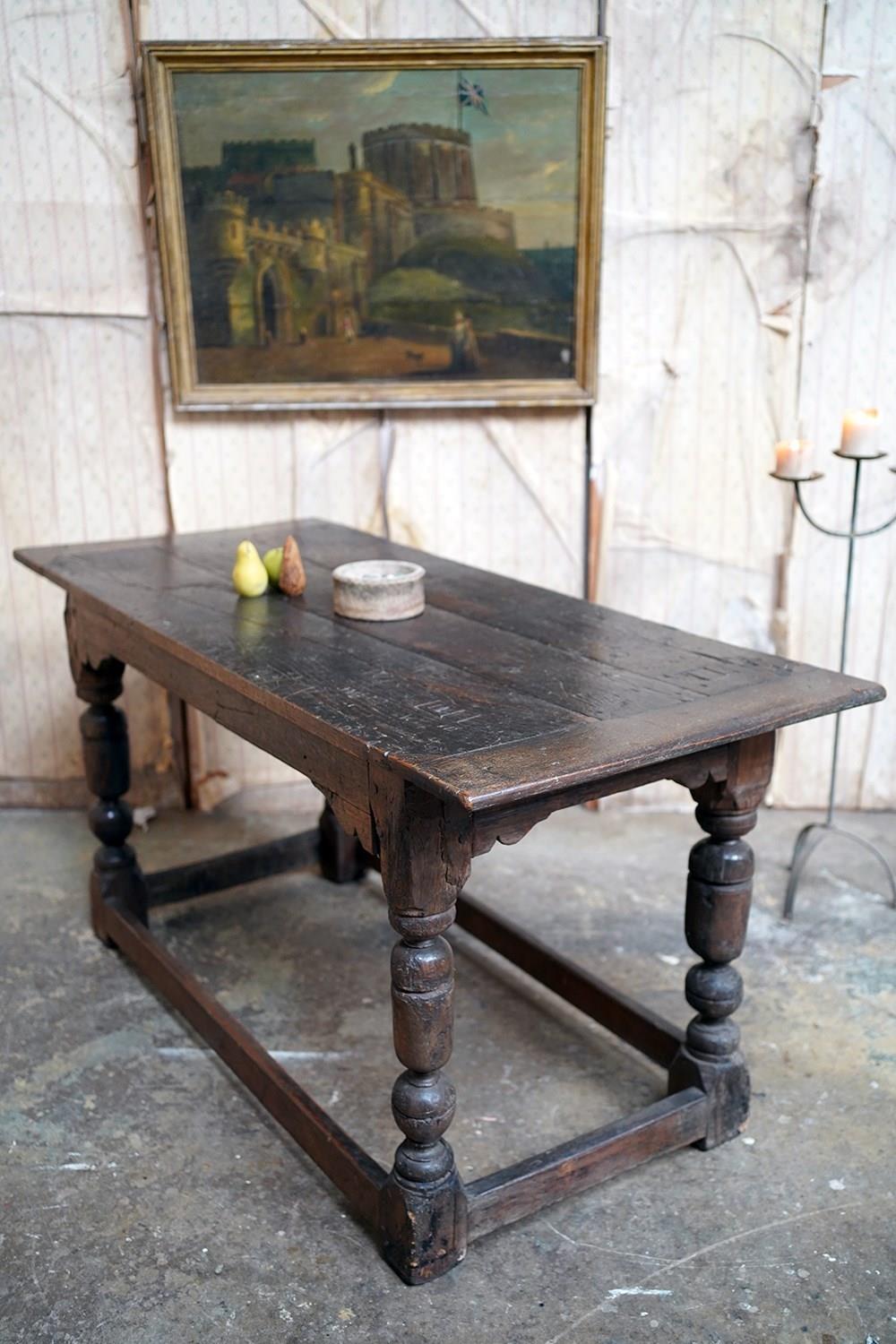
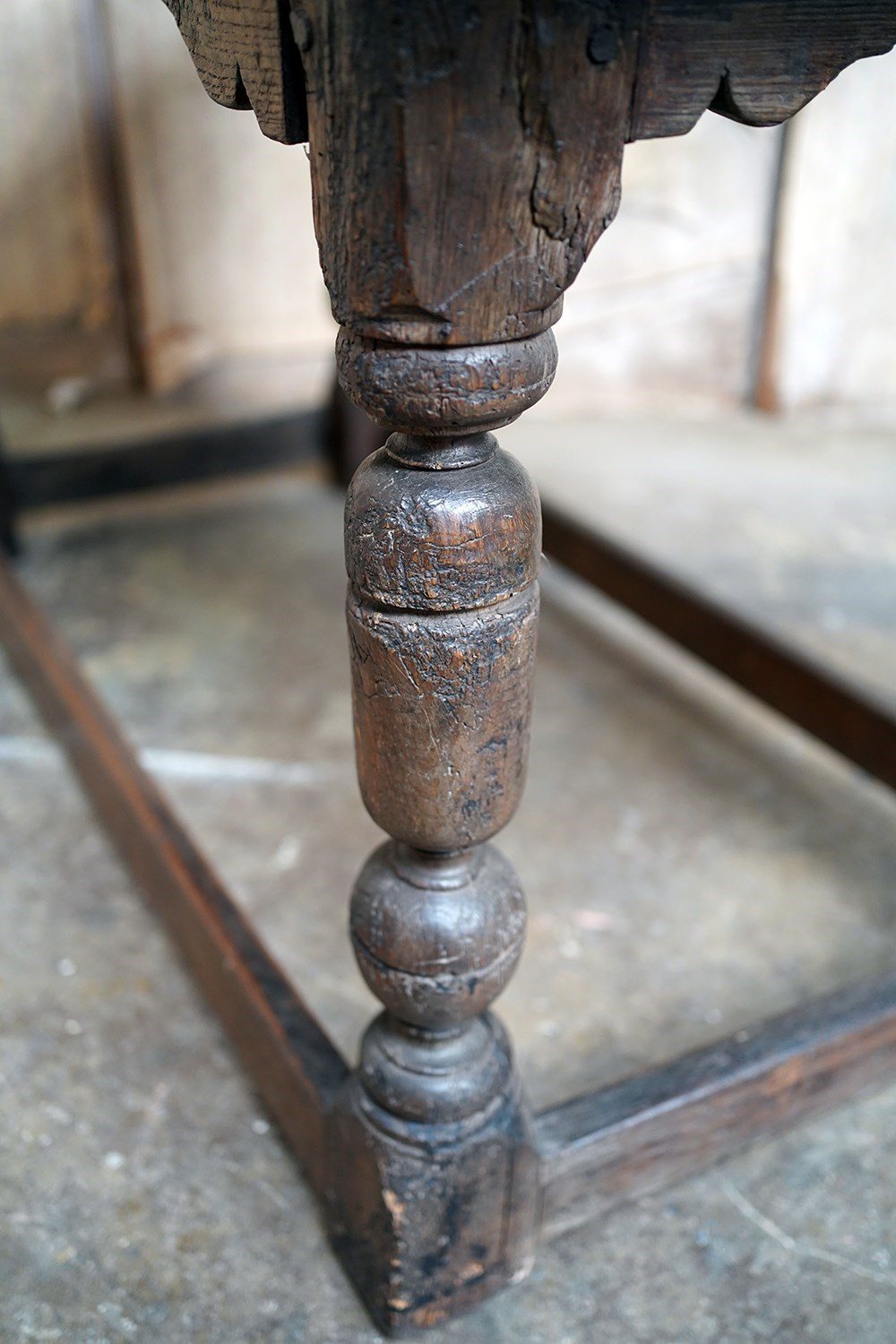
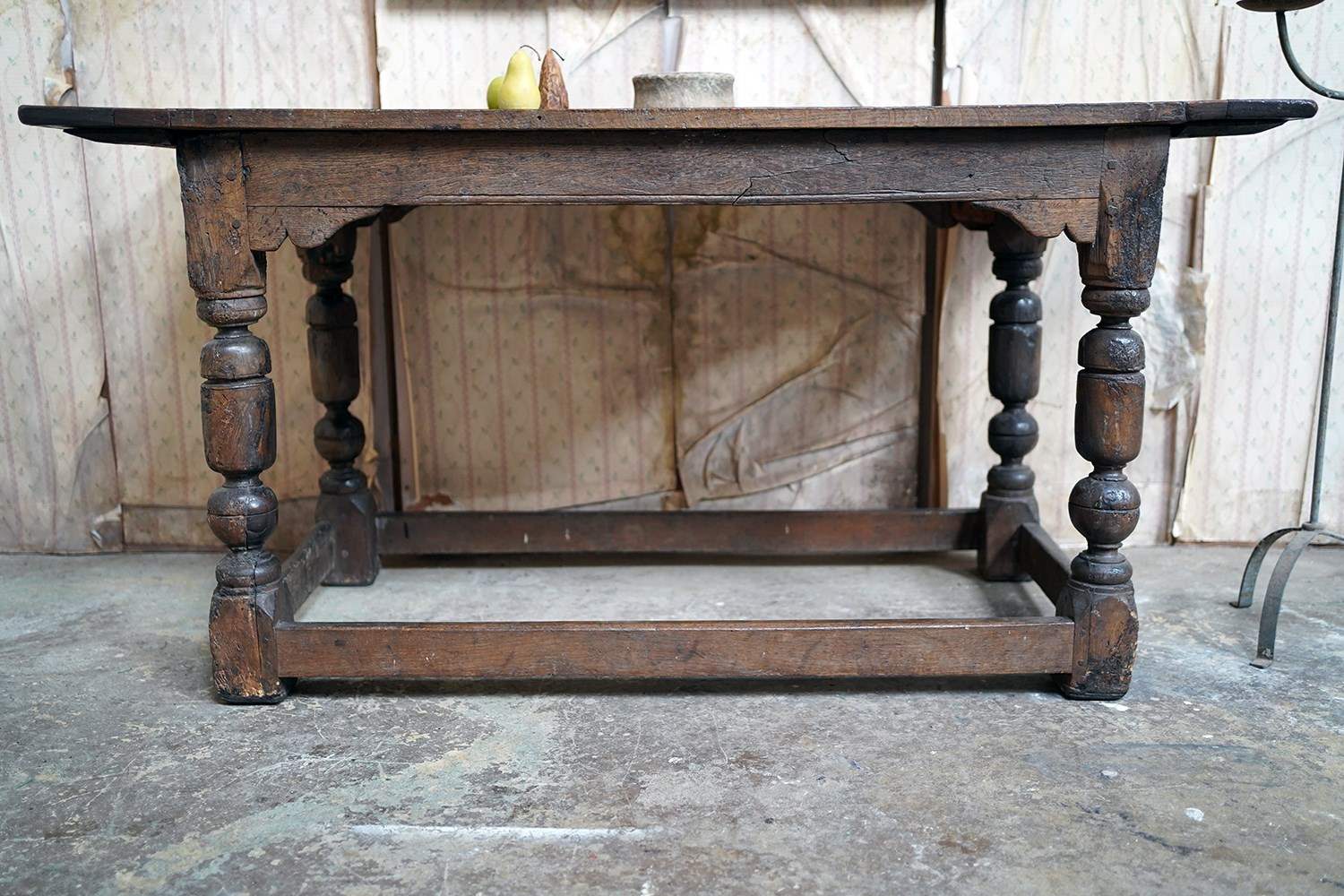
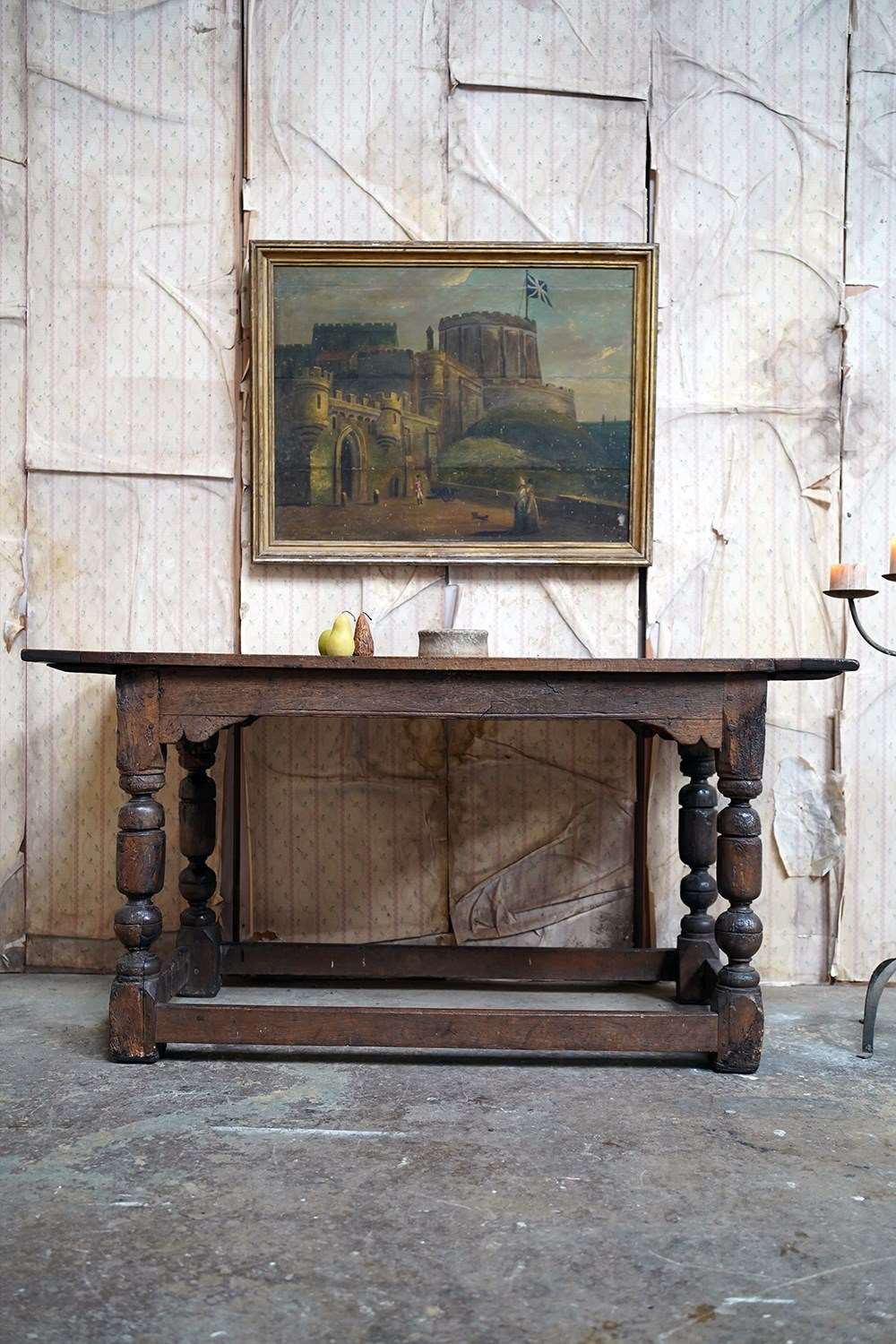
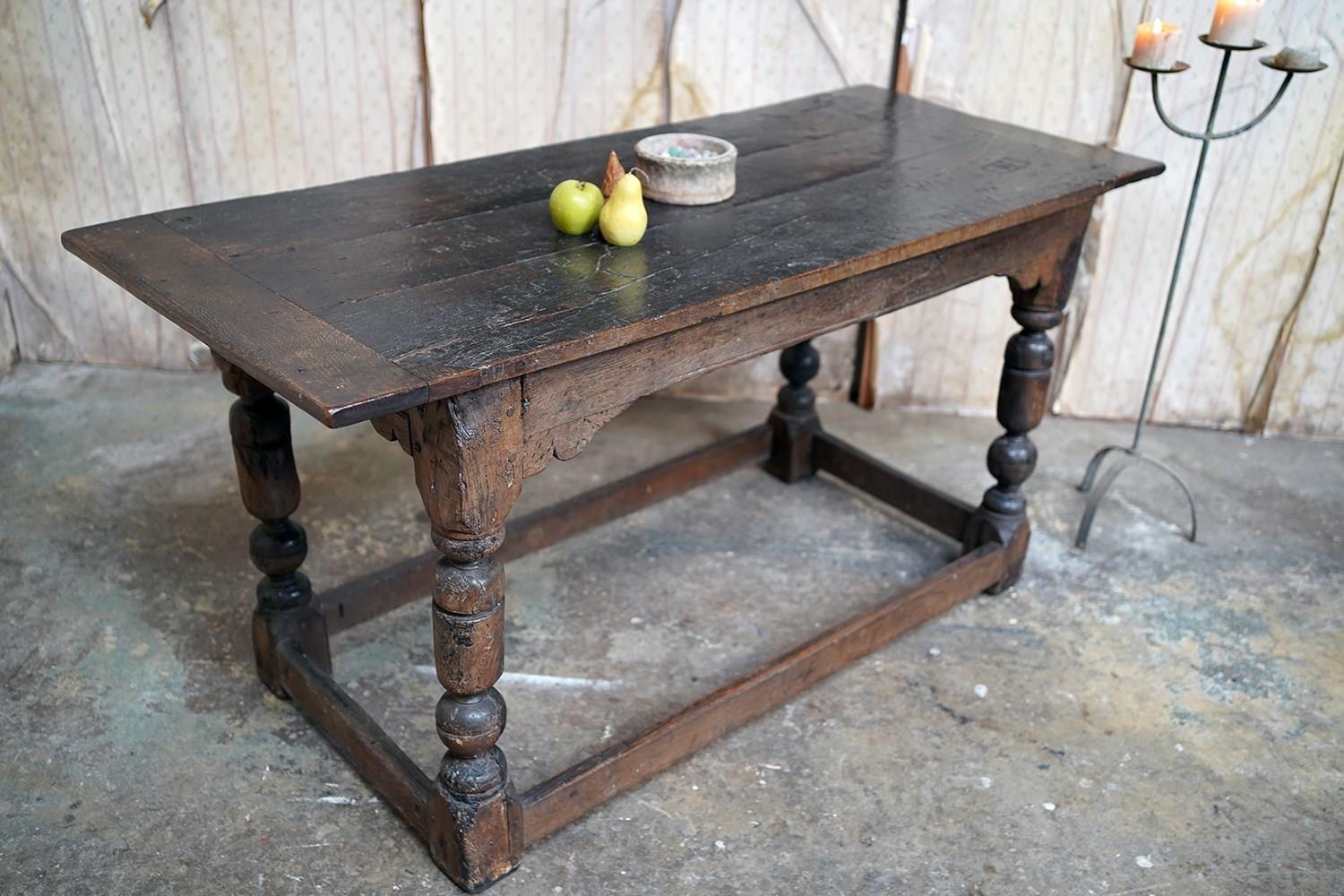
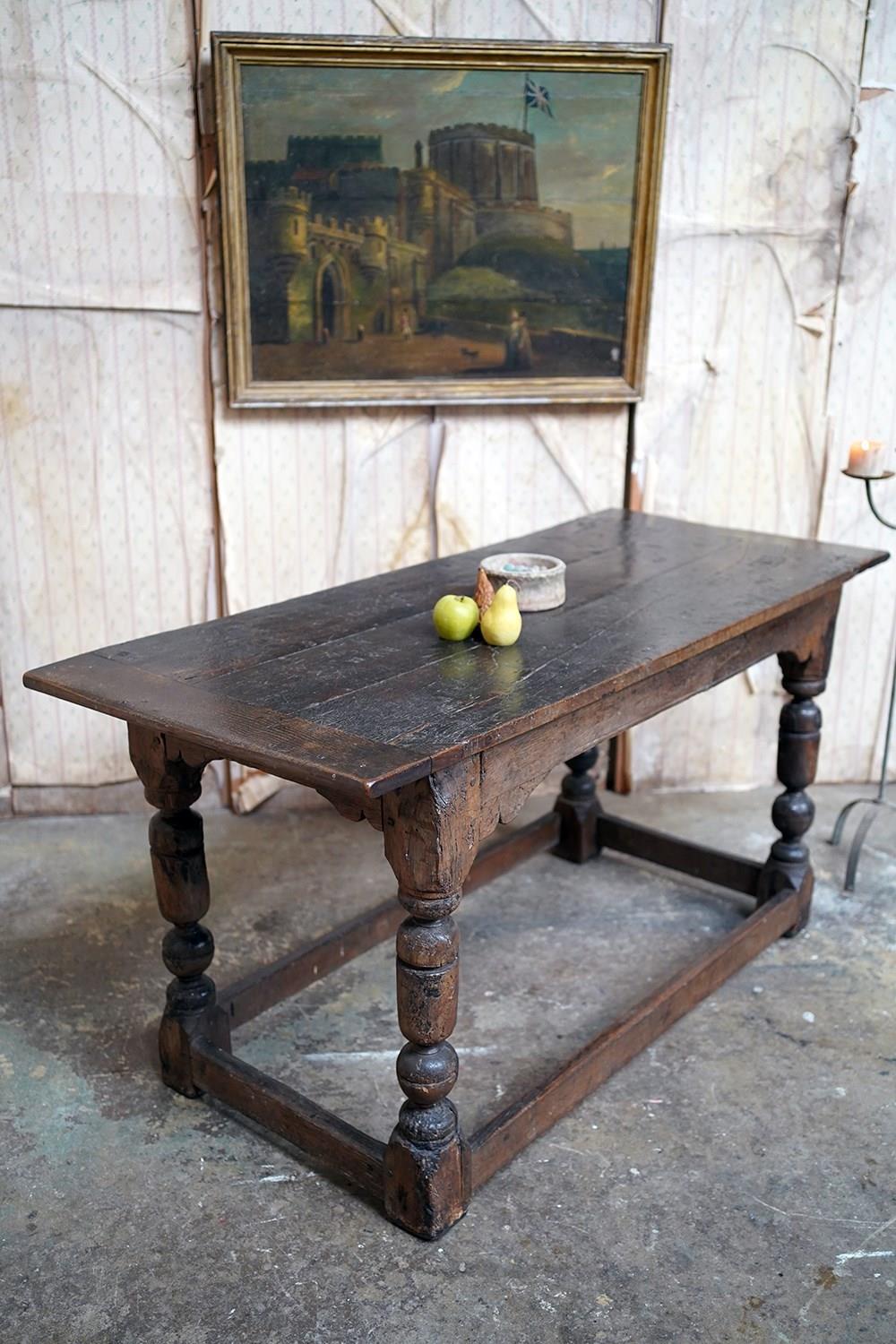
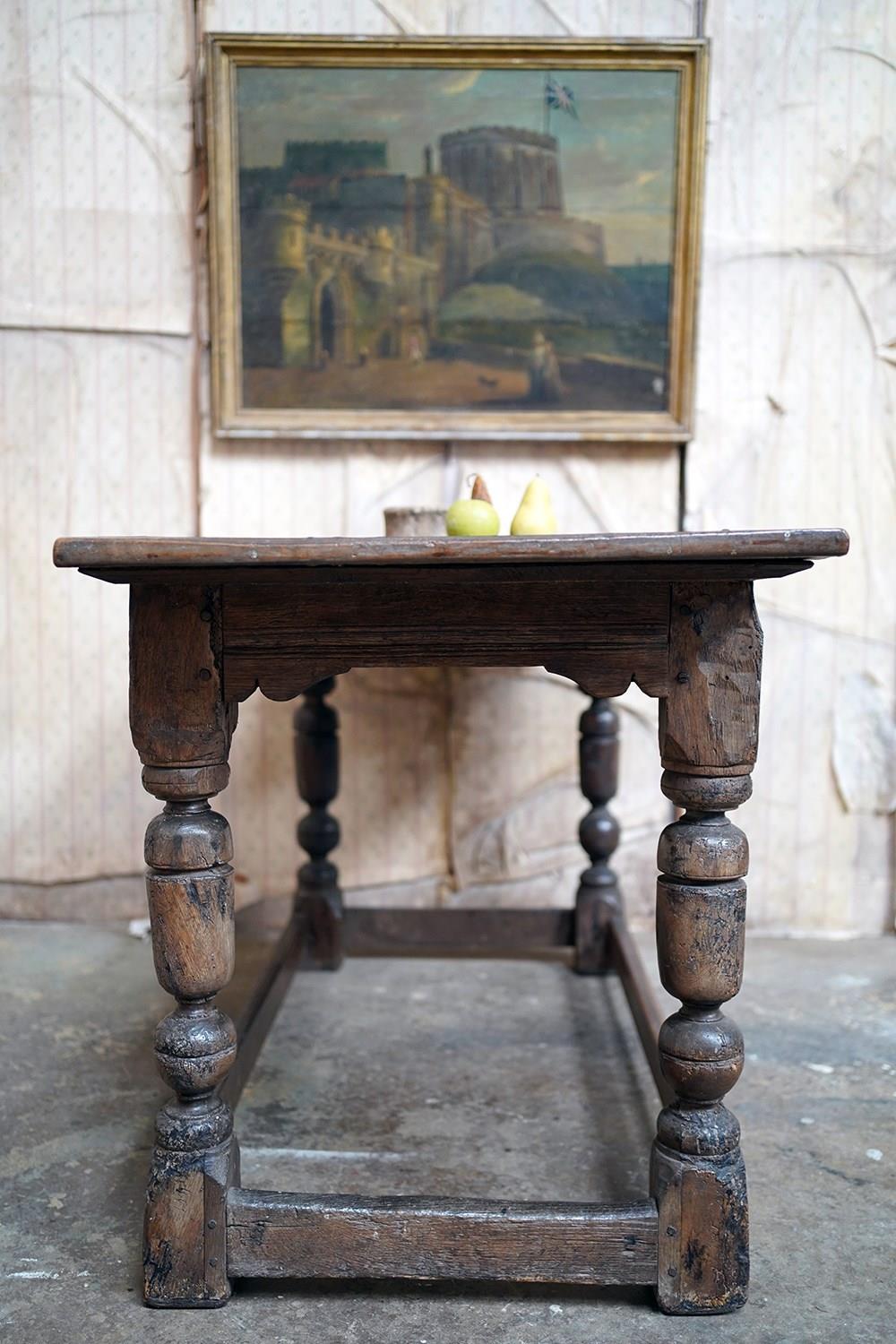
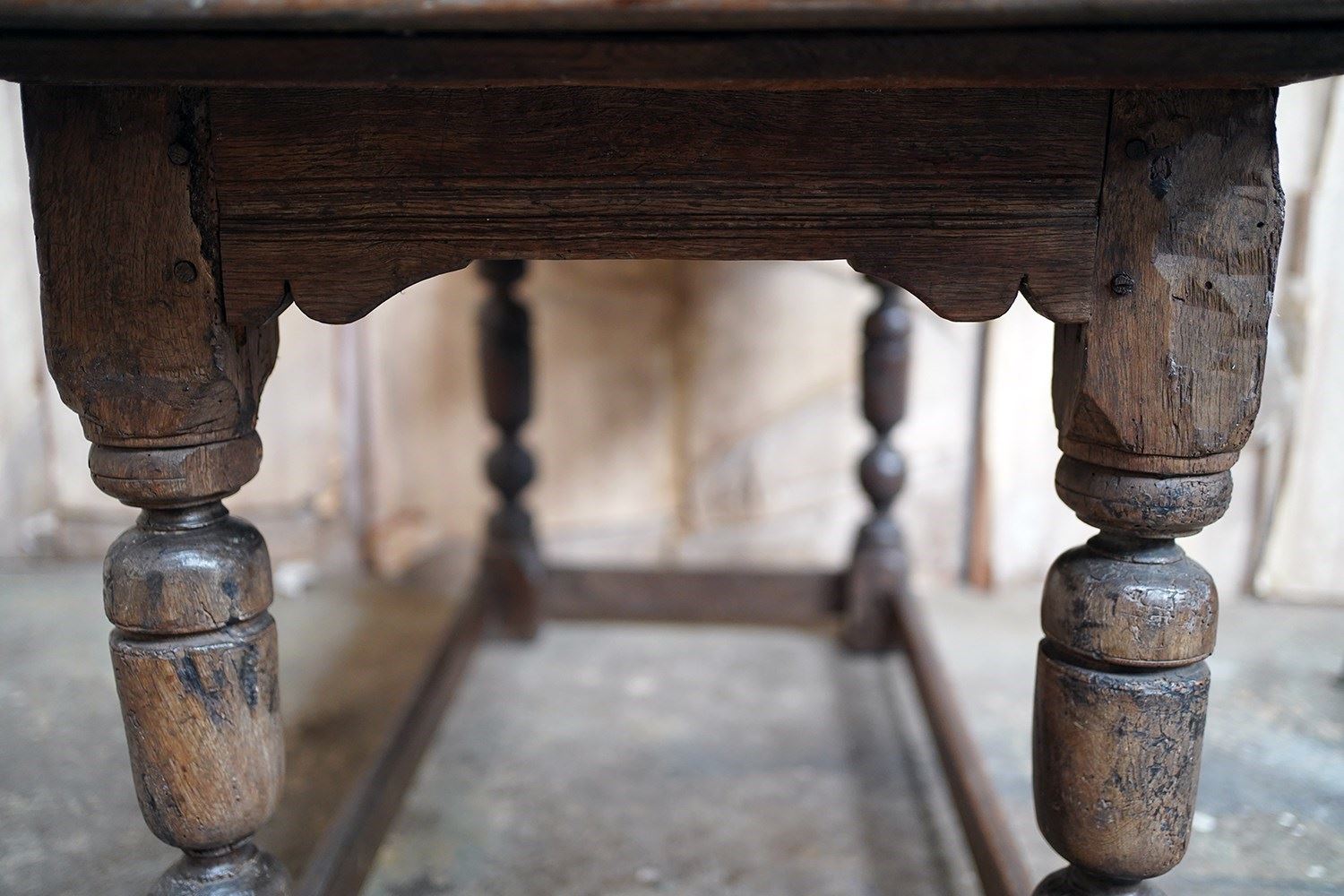
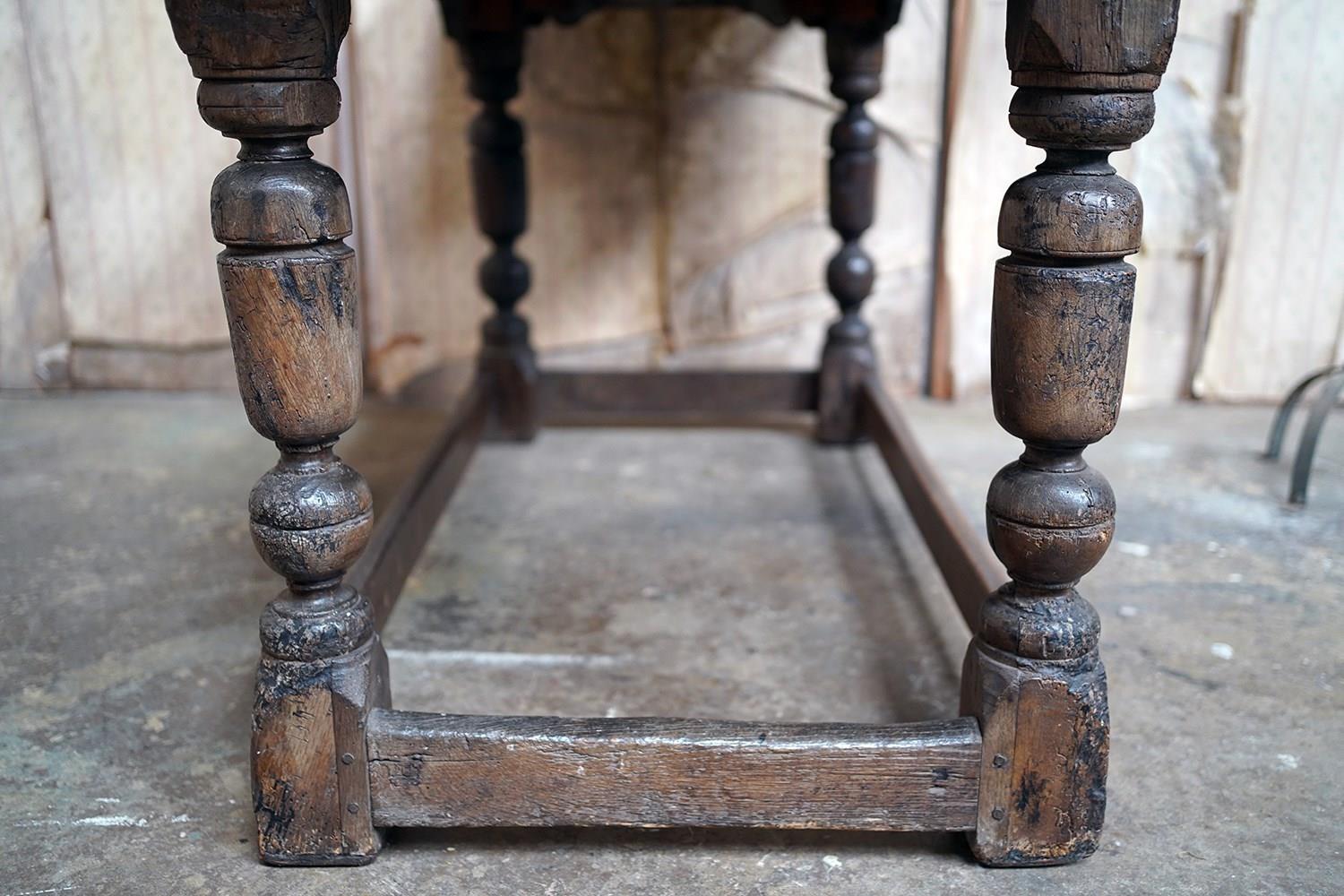
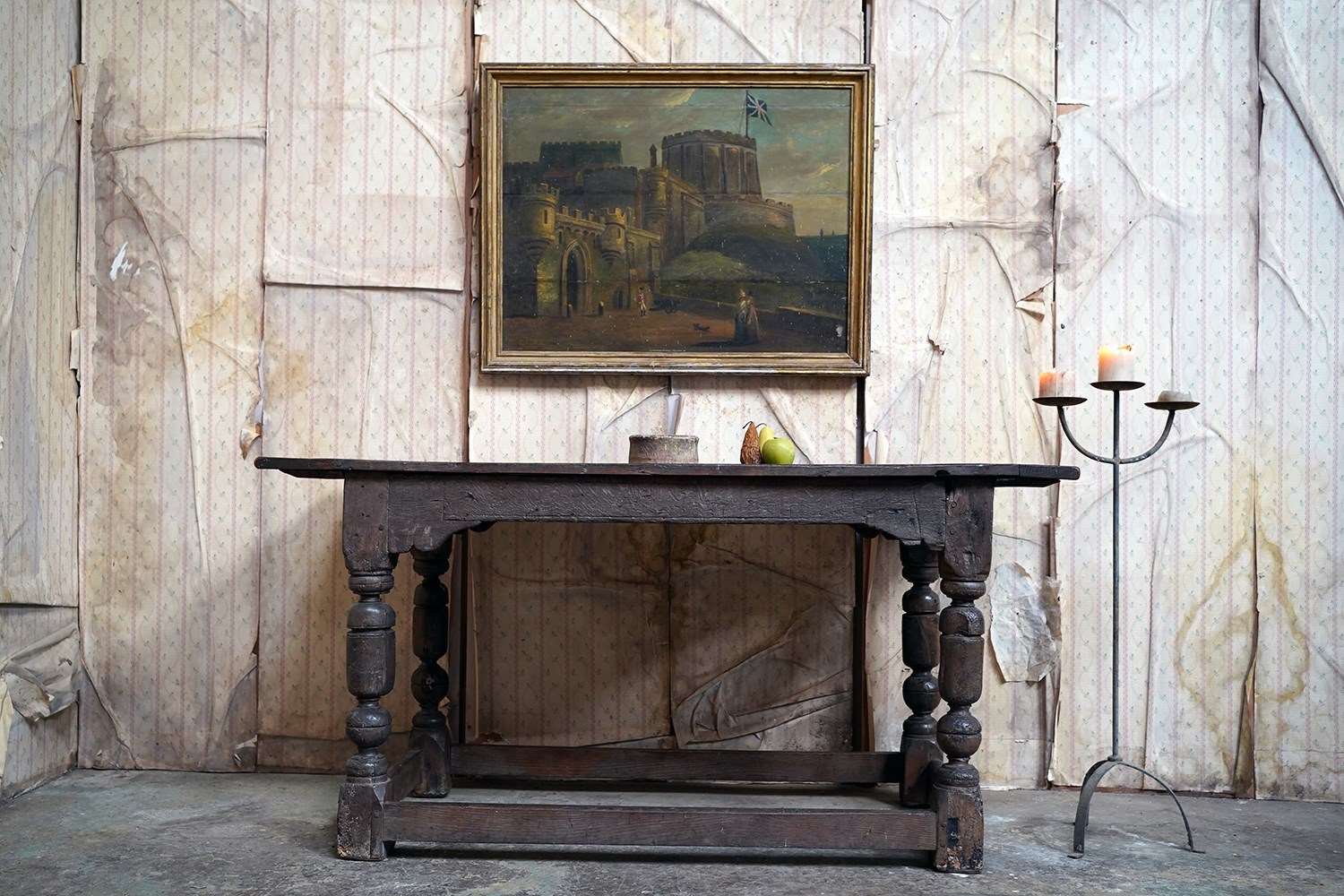
The unique oak refectory table having a three-plank top with extensive ancient chiselled graffiti, with initials of numerous persons, dates and motifs; the whole constructed from thick, well-seasoned planks with a single-board end construction and a gently chamfered edge, raised on boldly turned baluster legs and united by low stretchers, to a shaped apron and surviving from seventeenth century and Grade I Listed Southwick Hall, Northampshire, England.
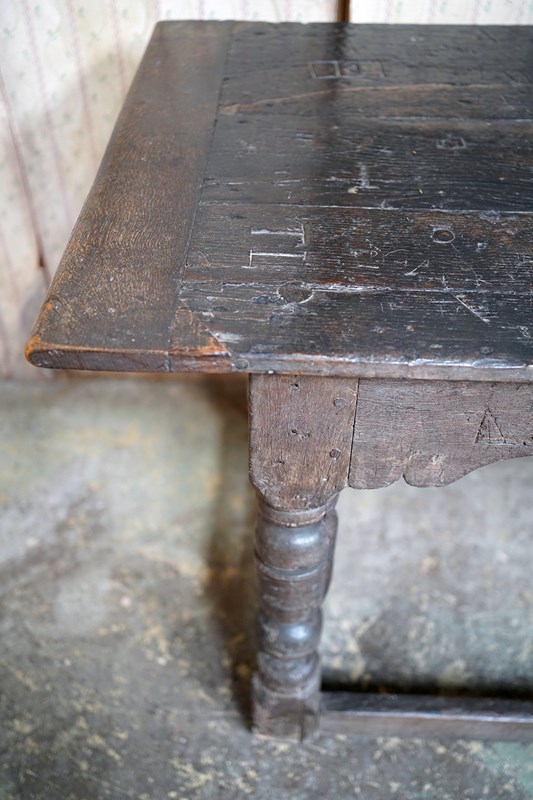
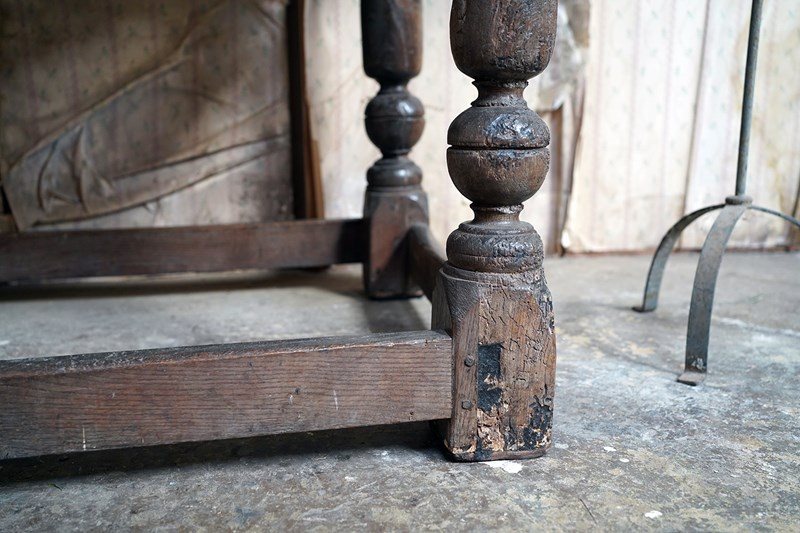
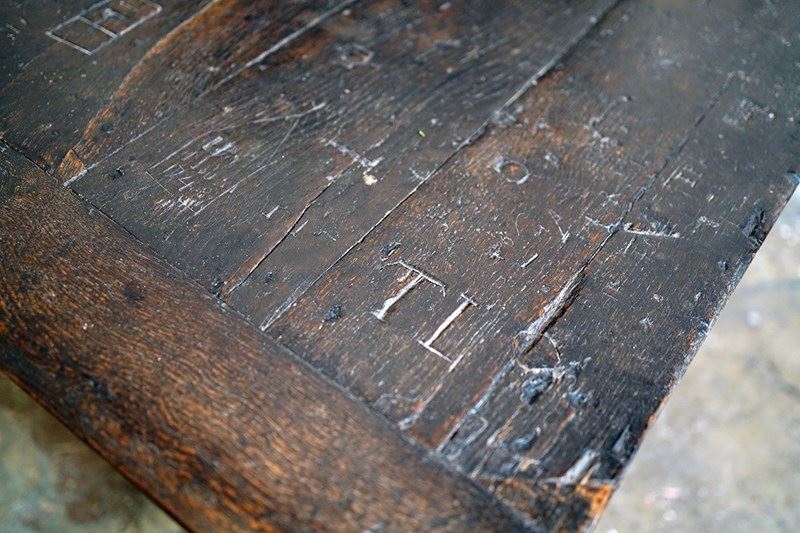
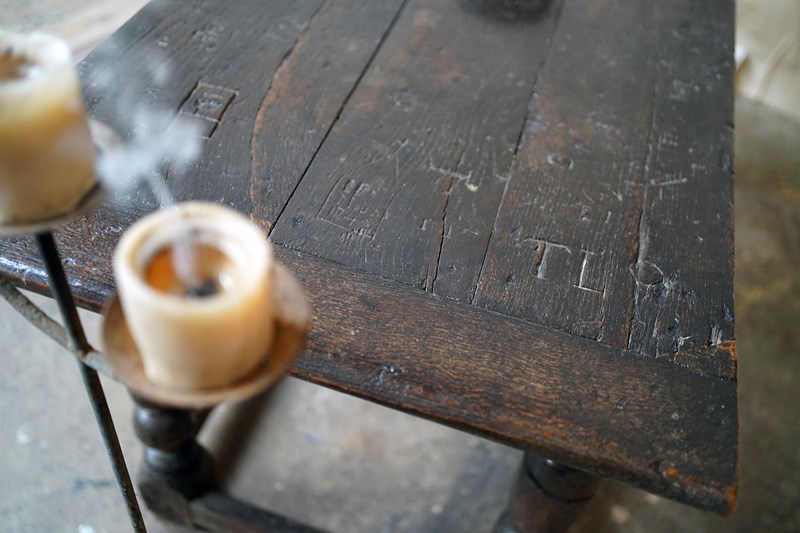
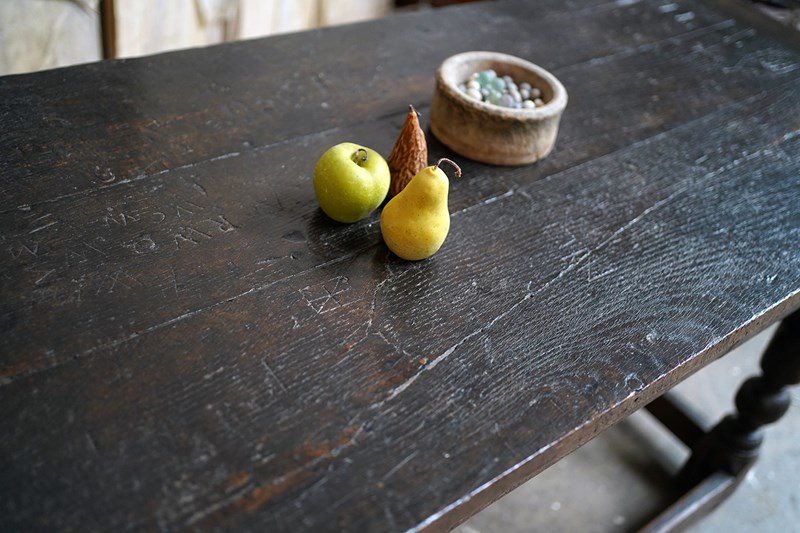
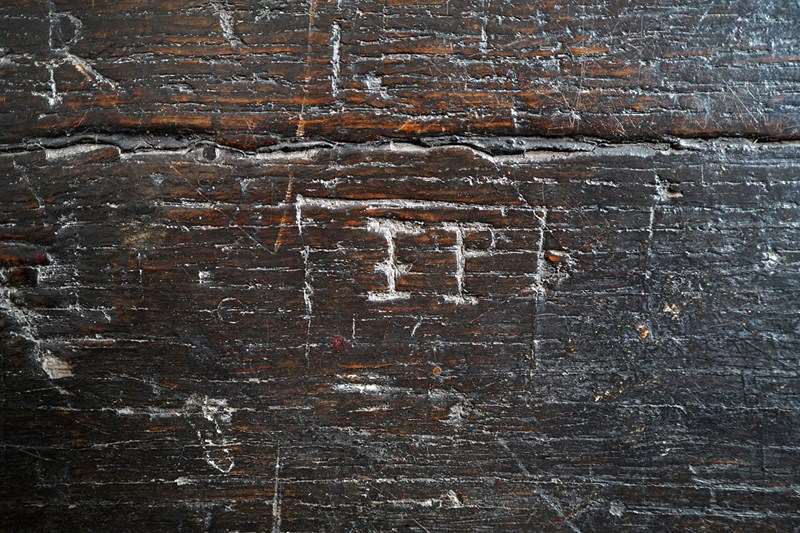
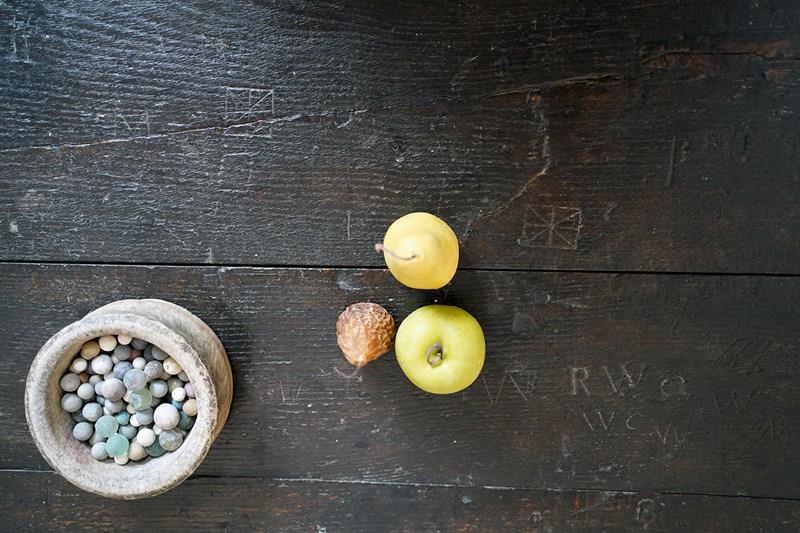
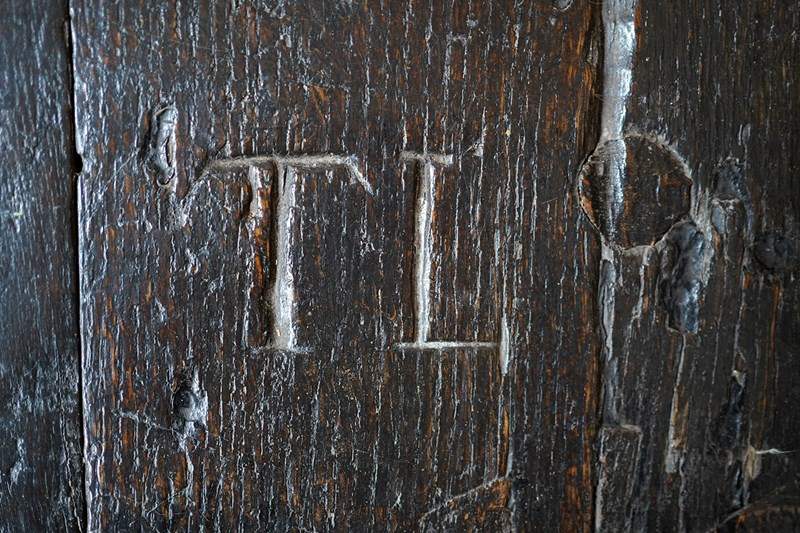
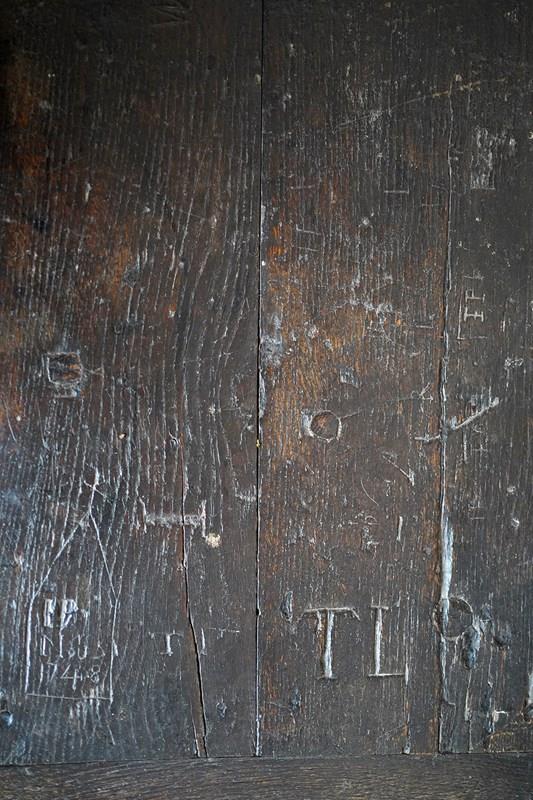
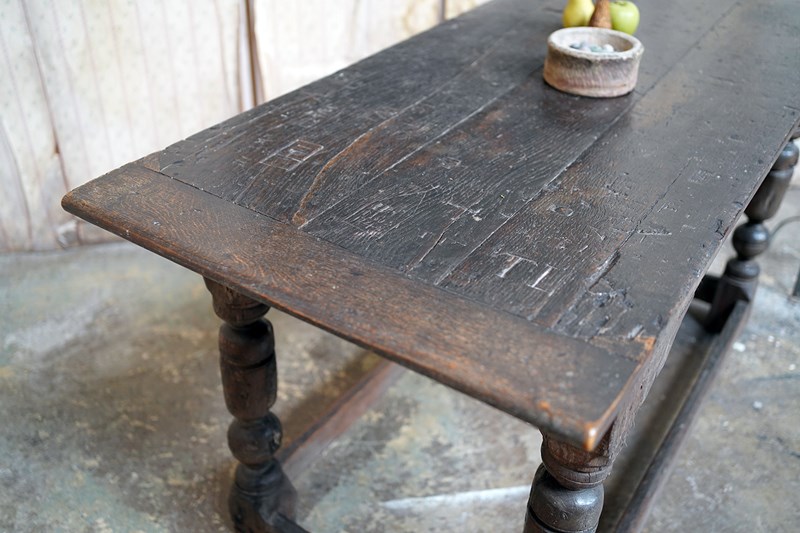
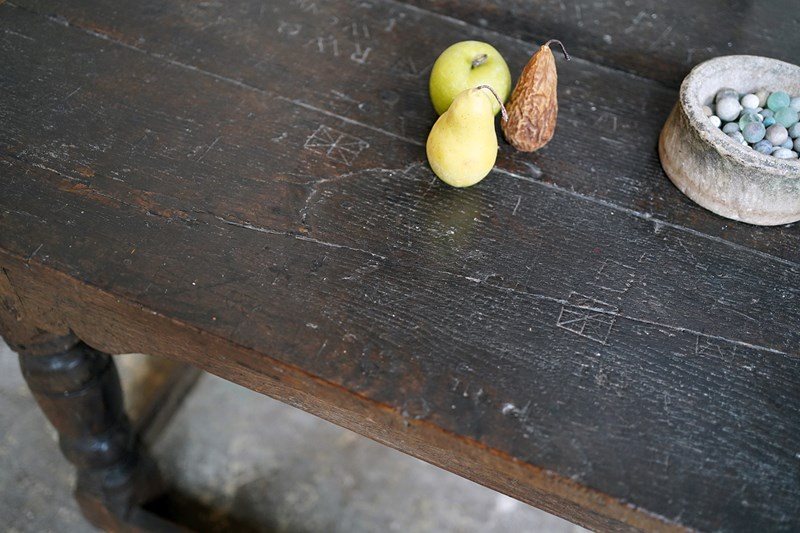
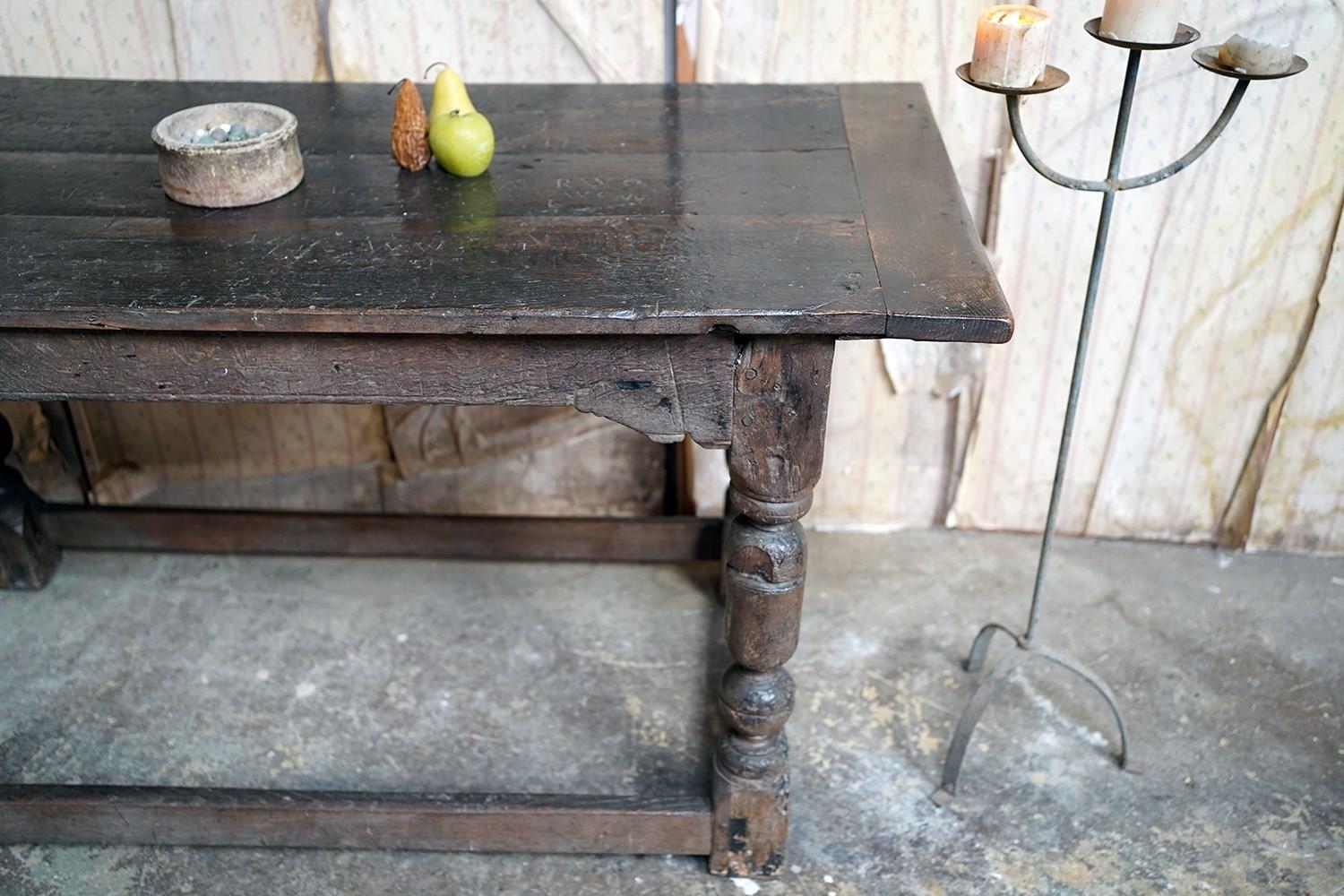
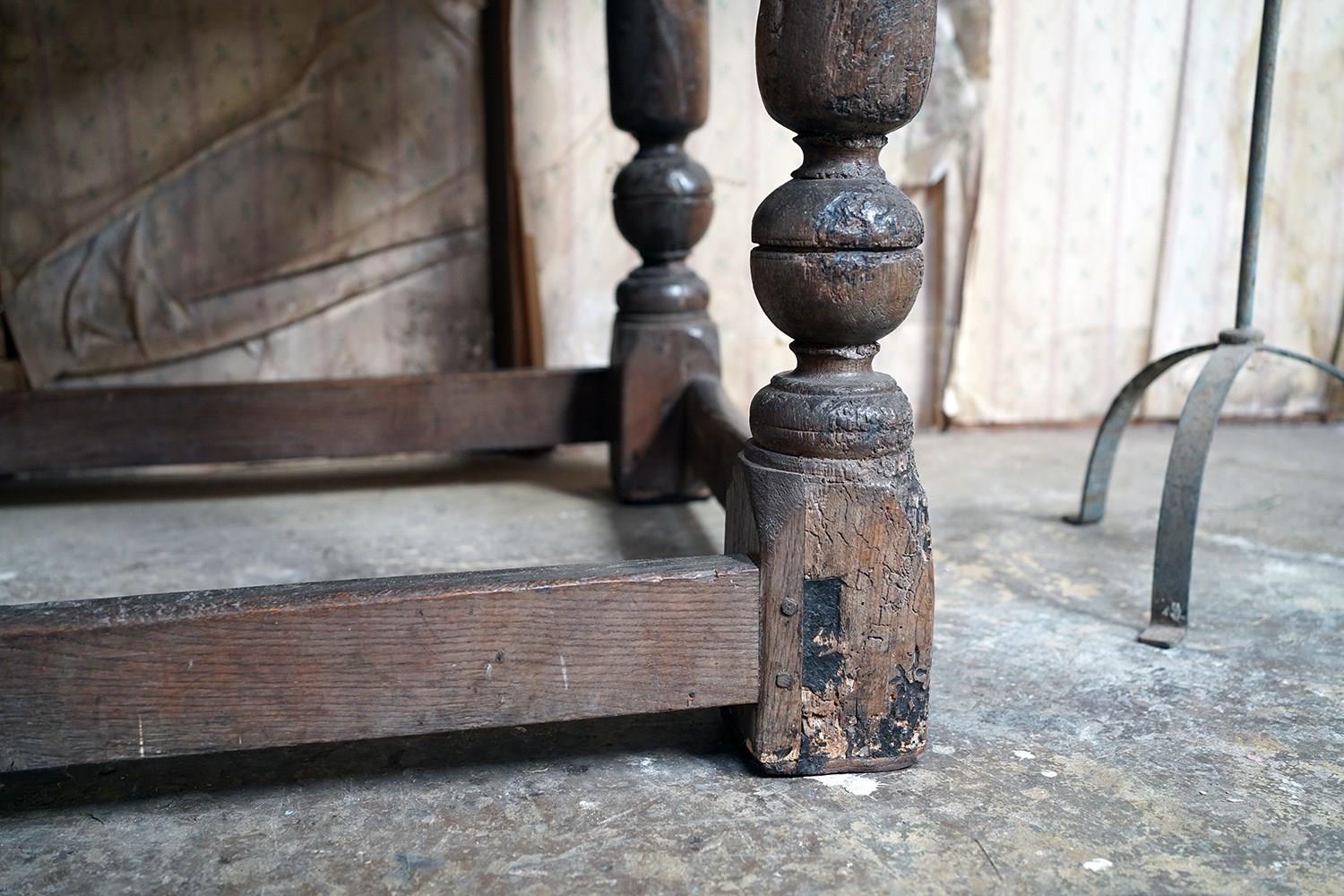
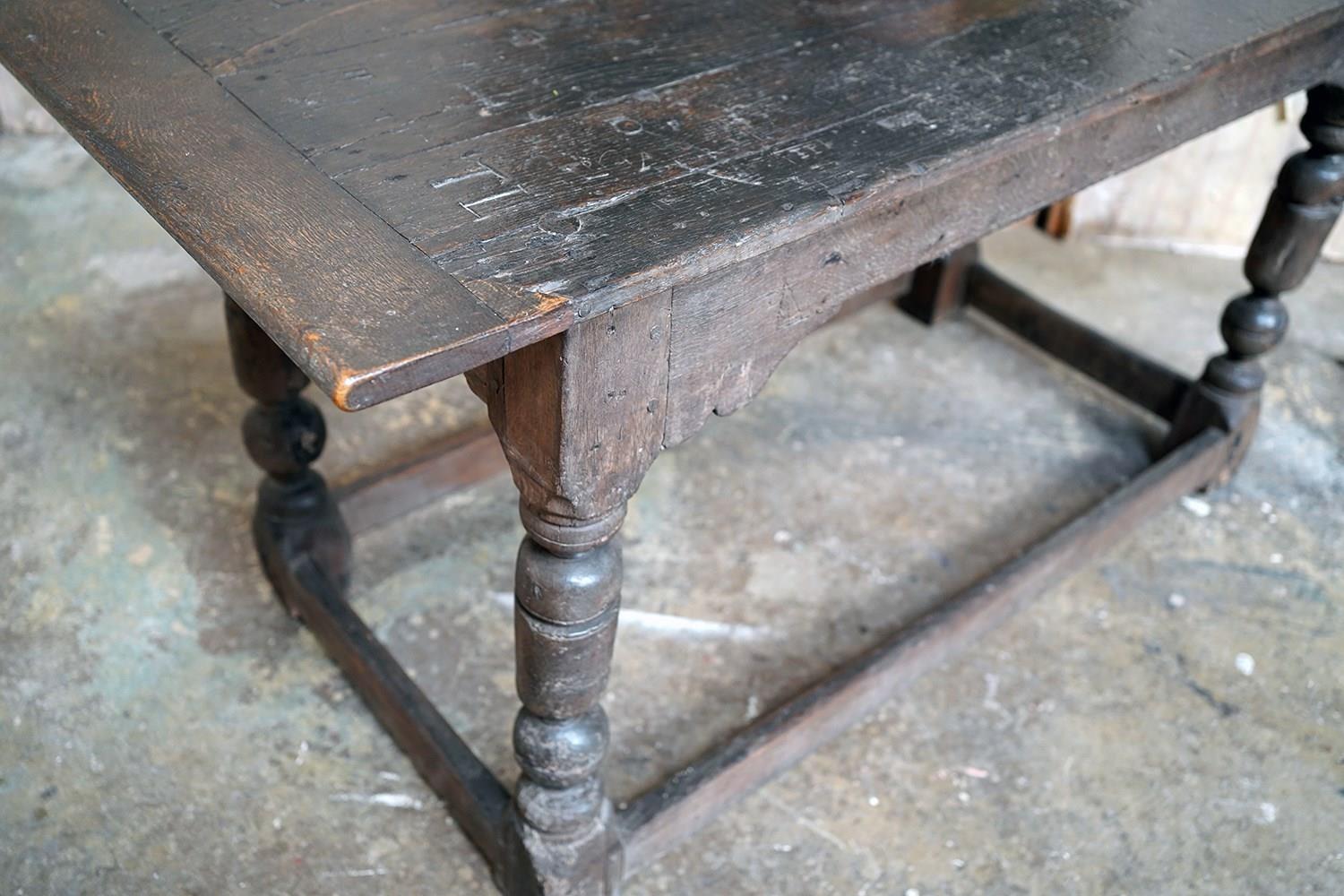
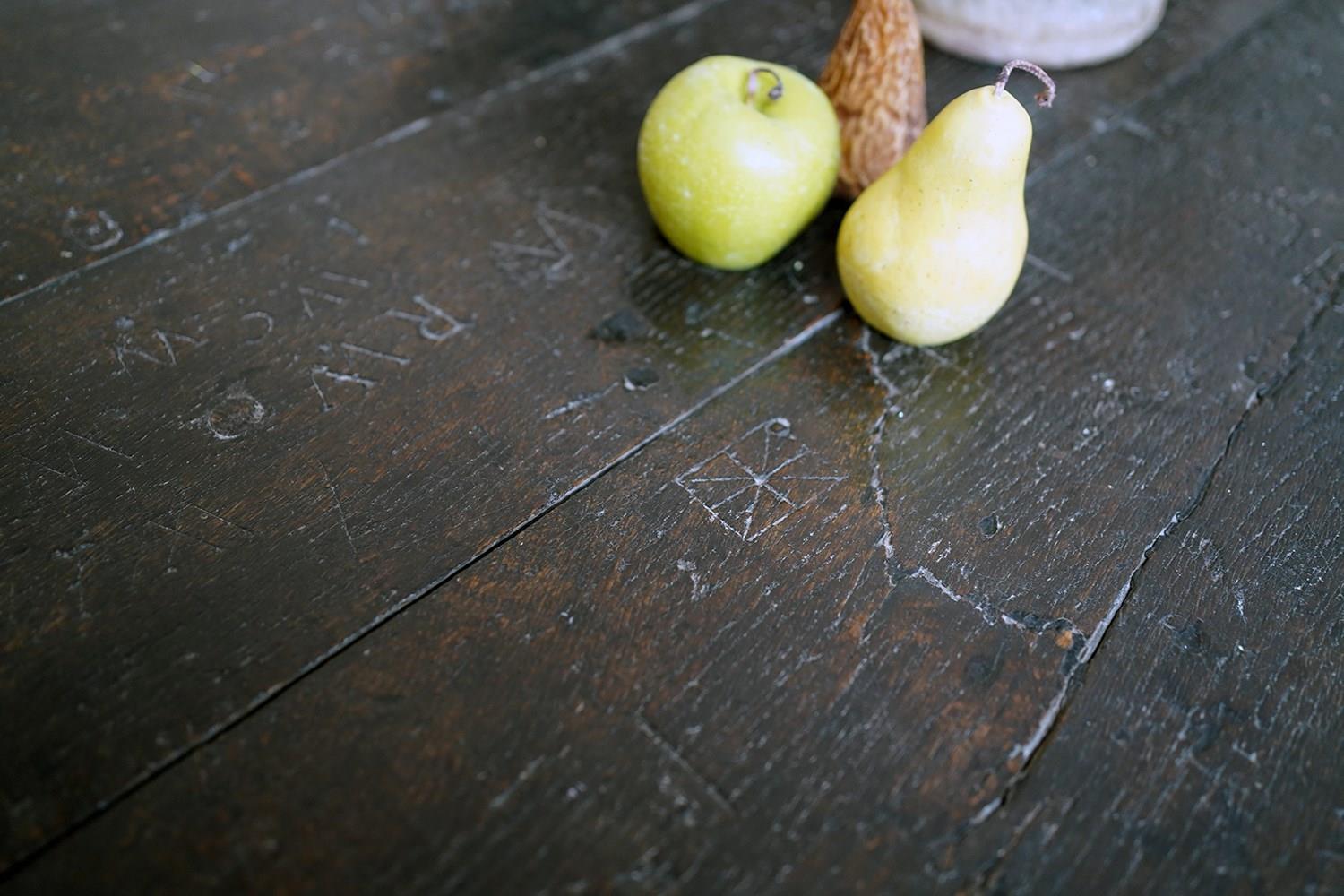
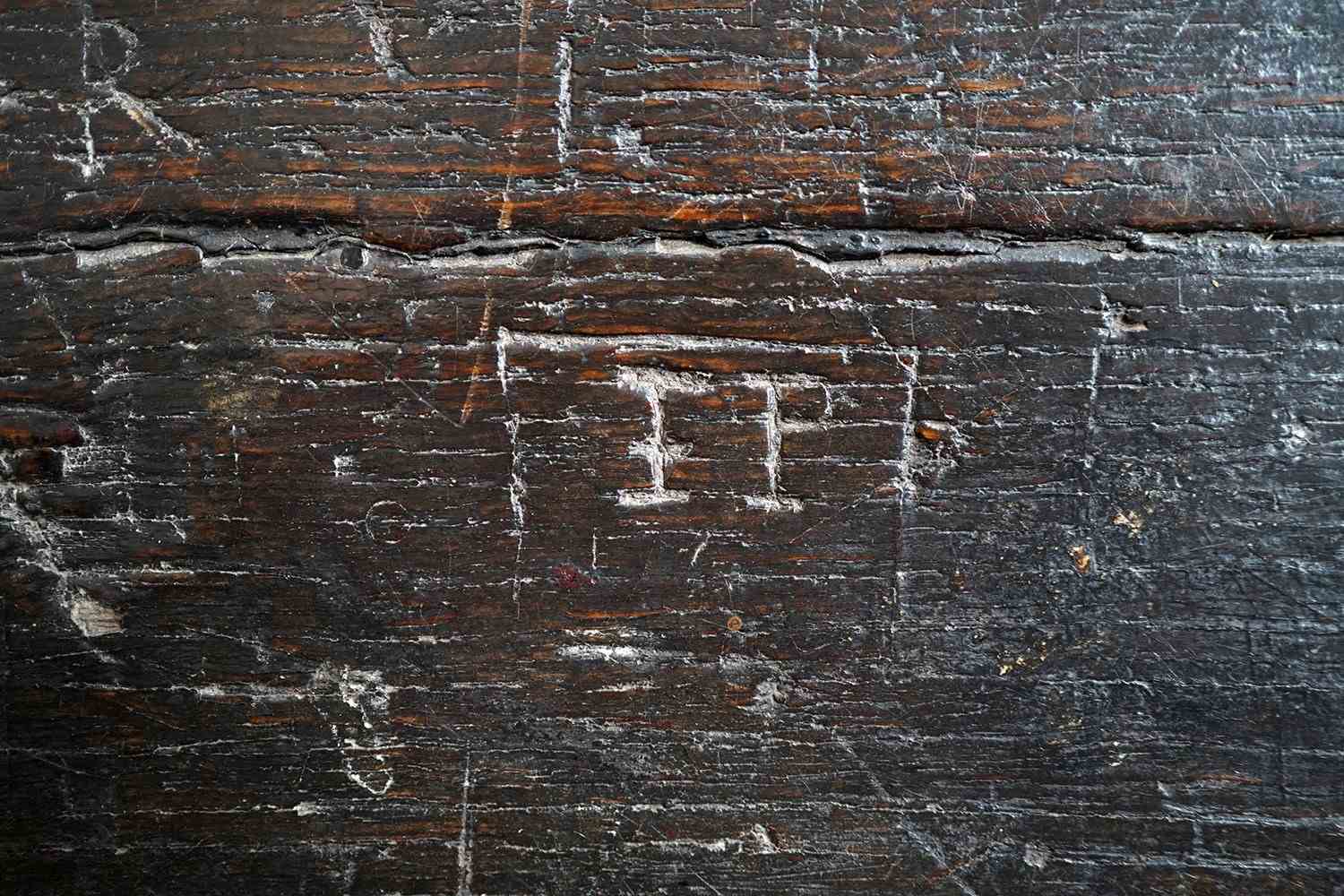
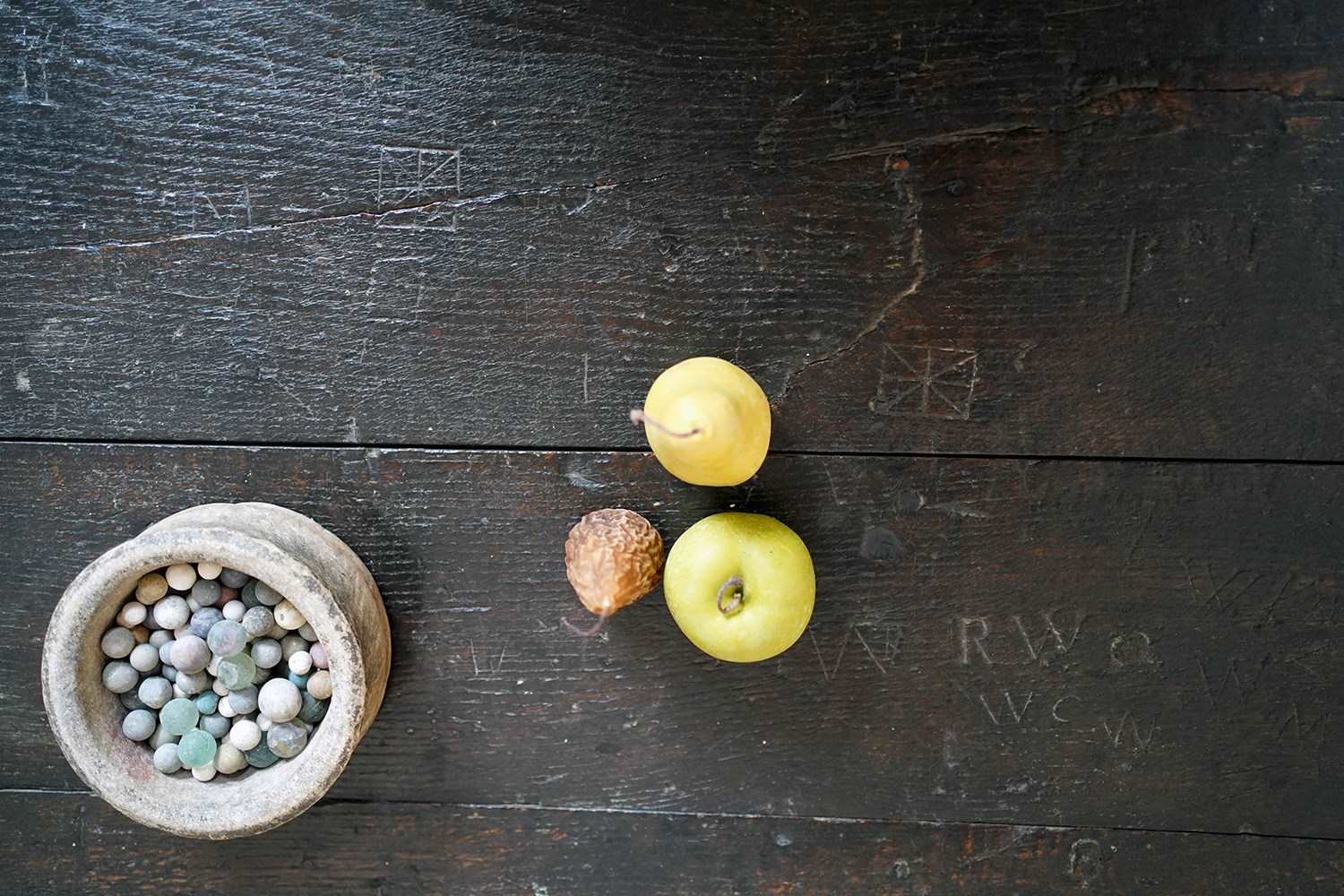
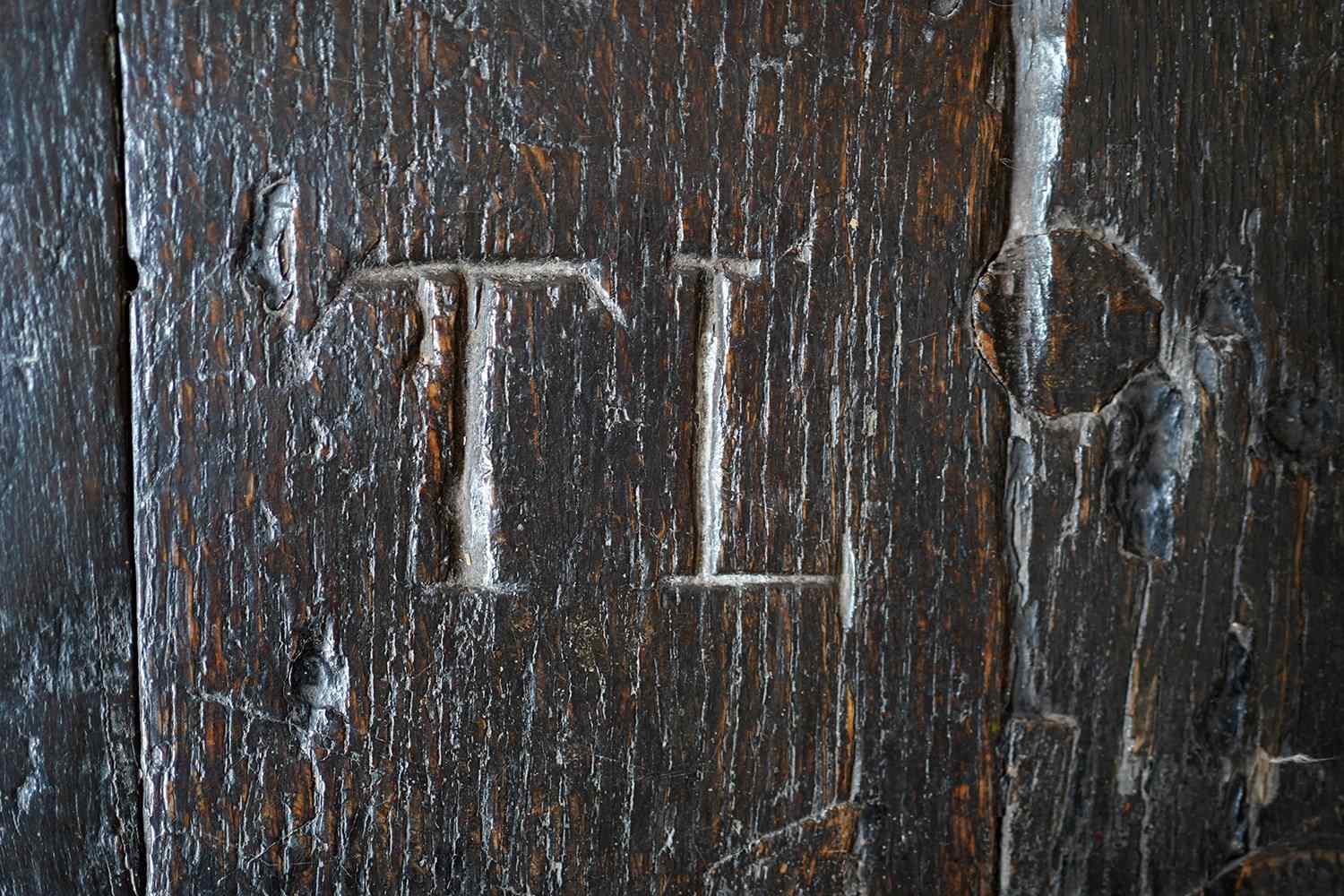
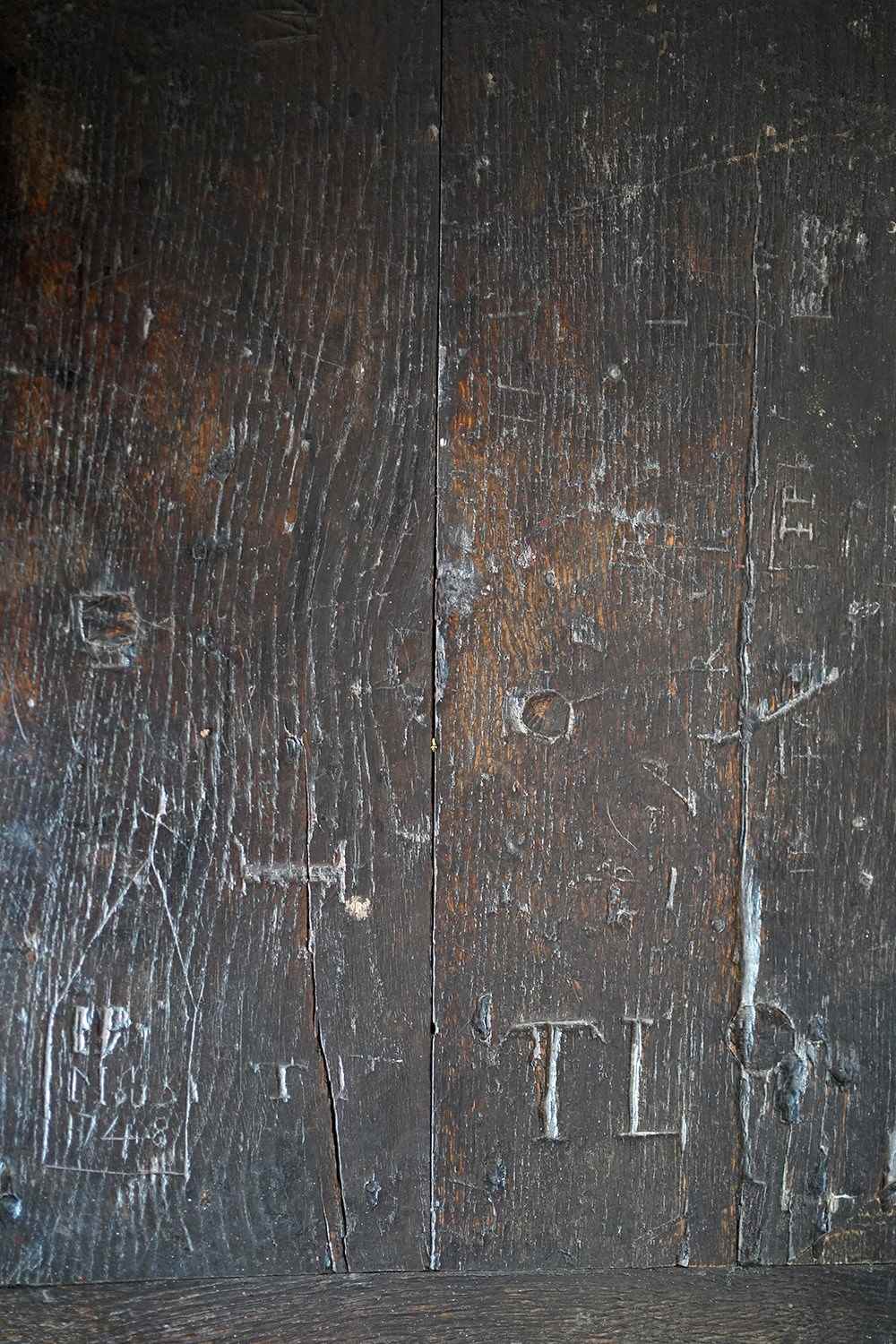
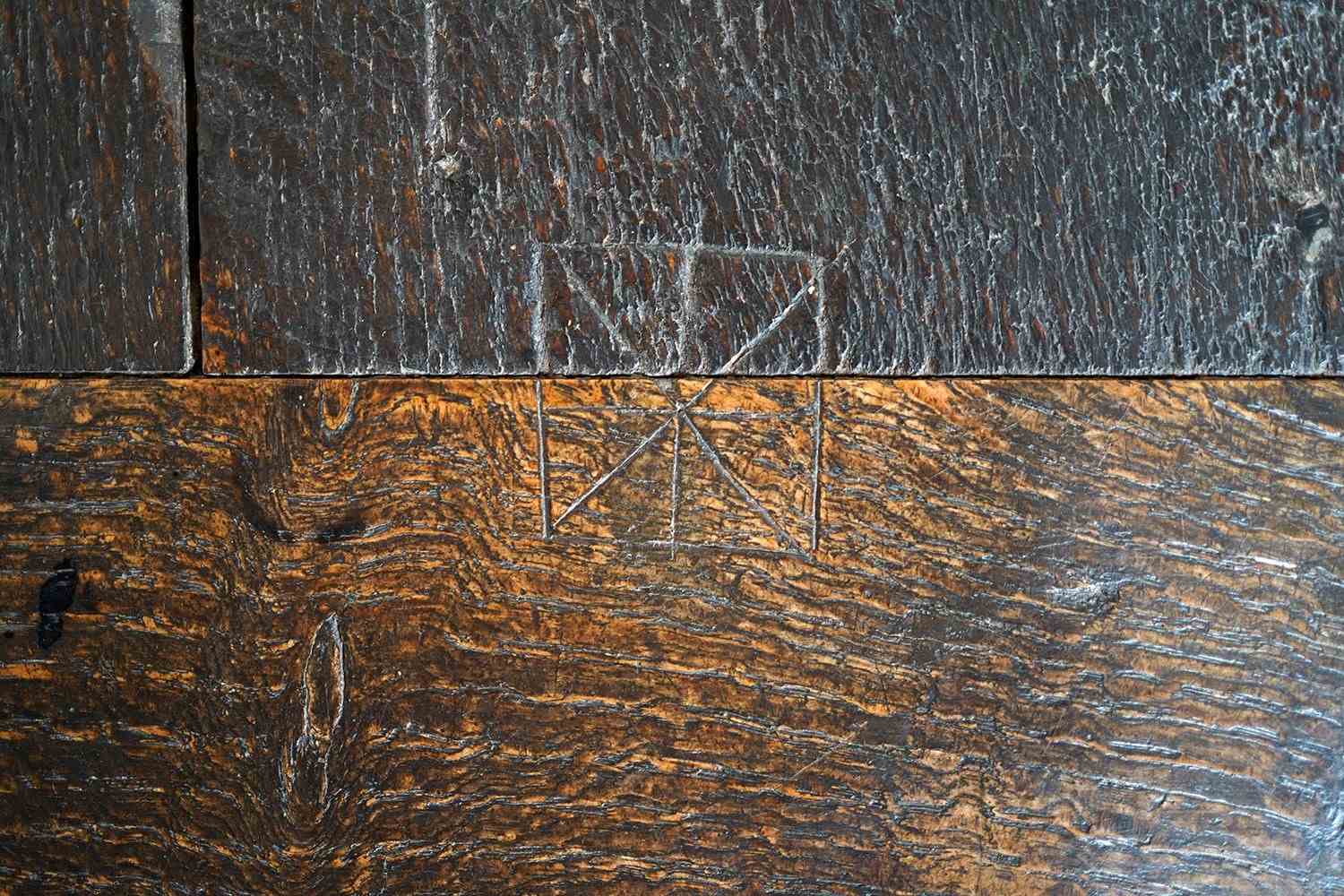
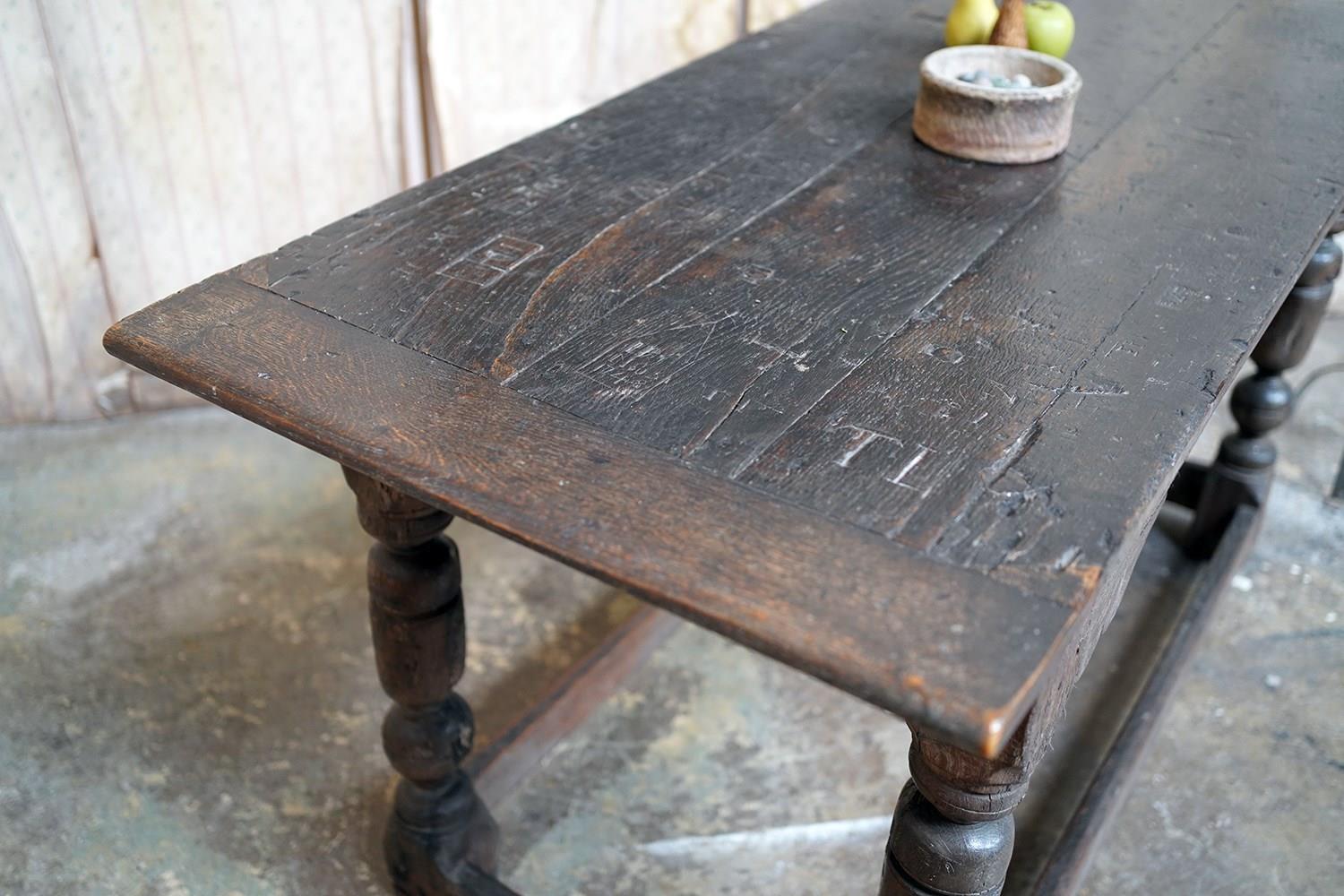
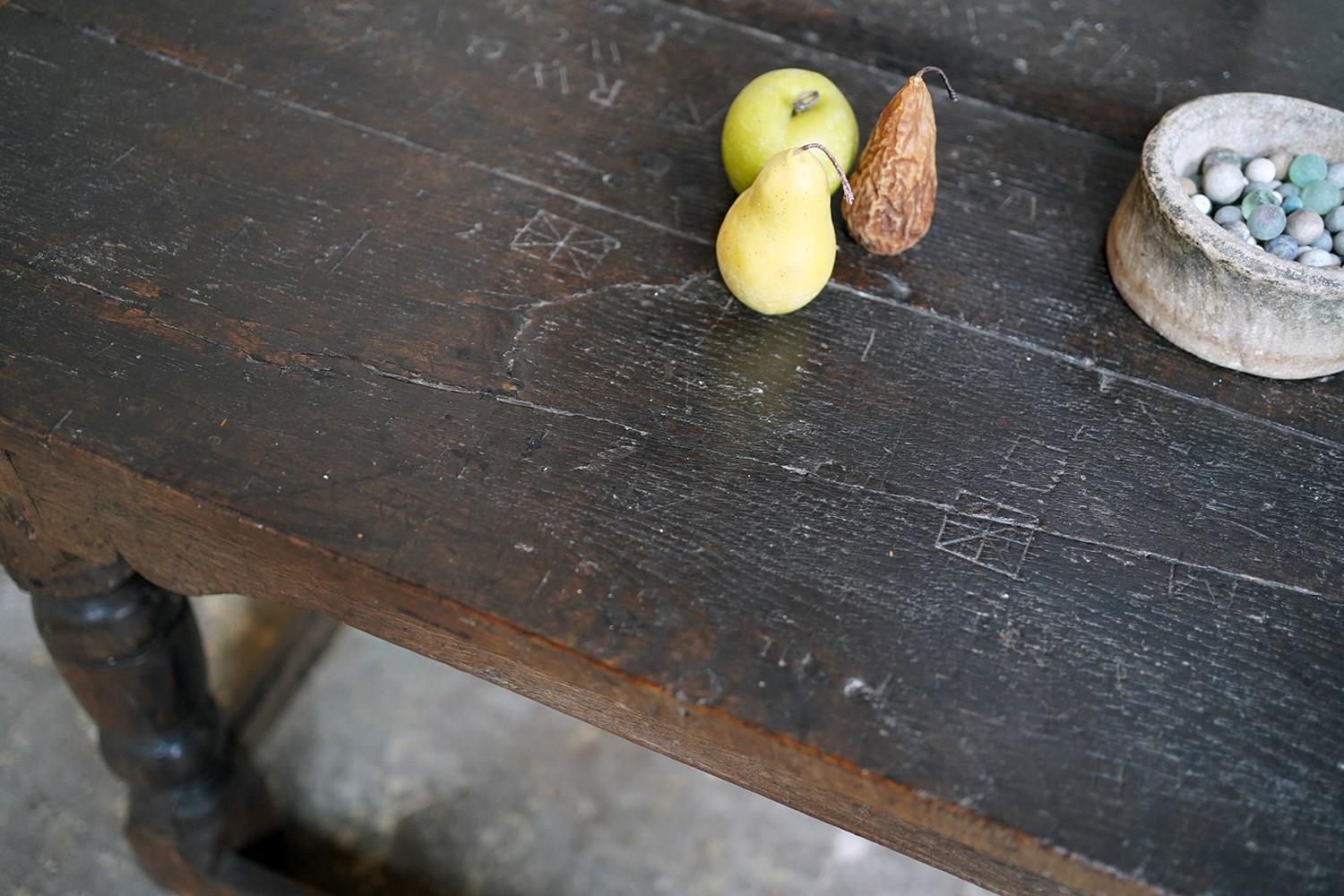
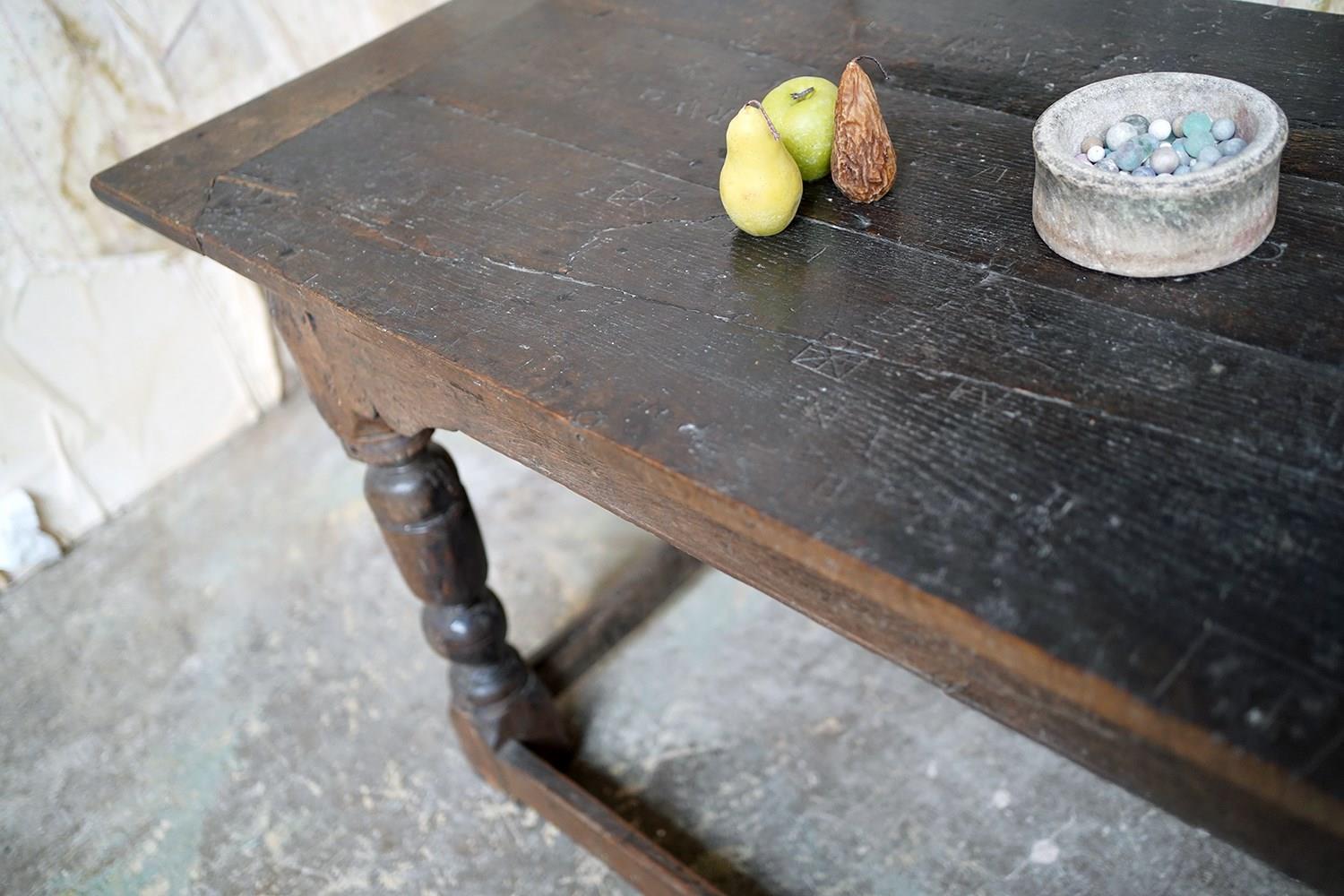
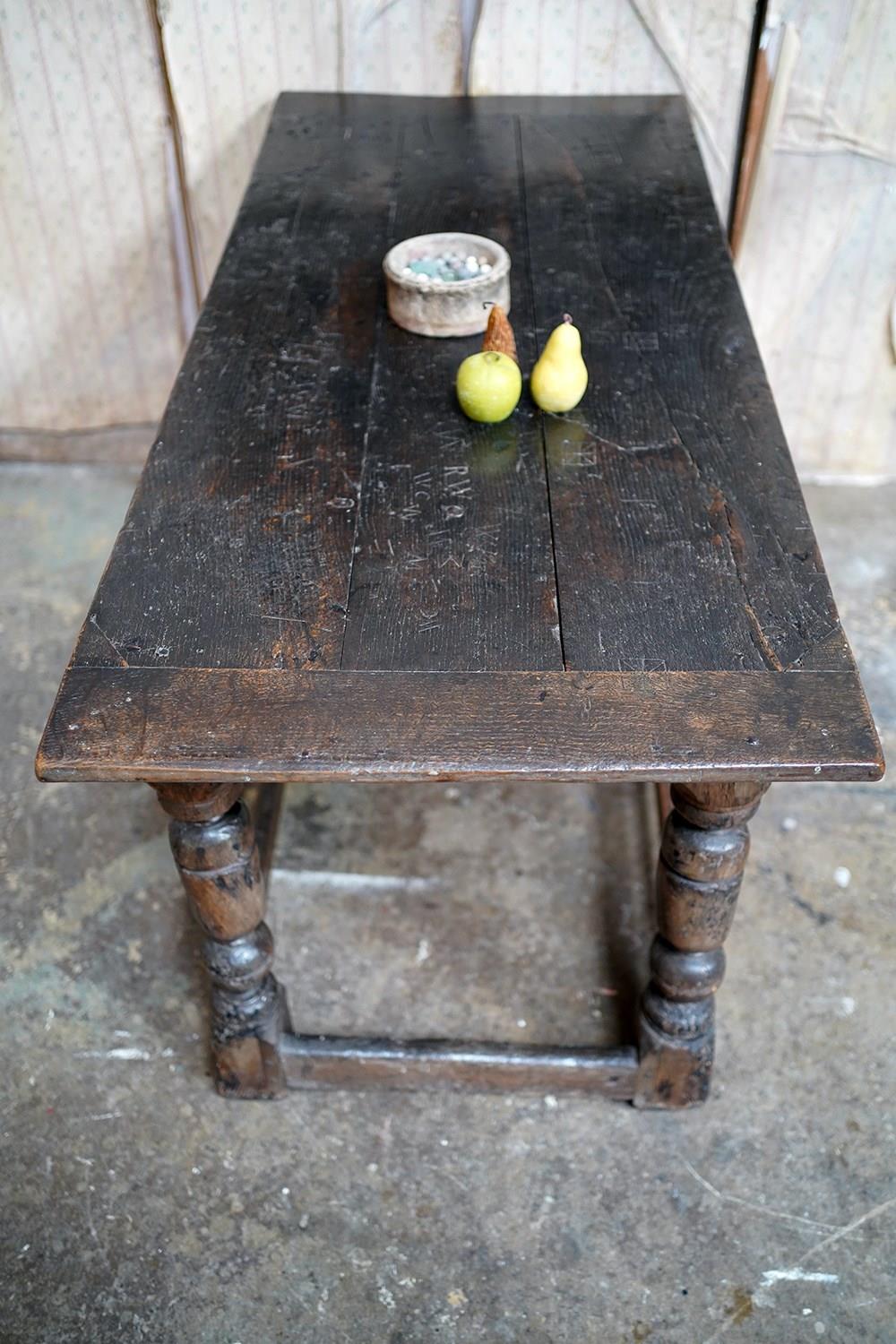
The surface is lustrously worn and richly patinated, bearing centuries of use, with the timber darkened to a near-black tone through age, handling and oxidation. The top displays extensive surface wear, knife marks, abrasions and age splits consistent with long domestic or communal use. Of particular note of course is the survival of the incised graffiti etched directly into the oak surface, including legible initials and dates alongside further linear markings, motifs and tally-like cuts. These marks are well-worn but clearly original and are not later embellishments. Structurally the table remains solid and usable, with old repairs and losses only where expected. The cleats are later and the top has been re-enforced underneath with cross batons and with two blocks to each corner. The legs are worn with historic worm and there are also multiple historic vertical dry cracks and repairs with the block feet worn with later screws added to re-enforce the stretchers.
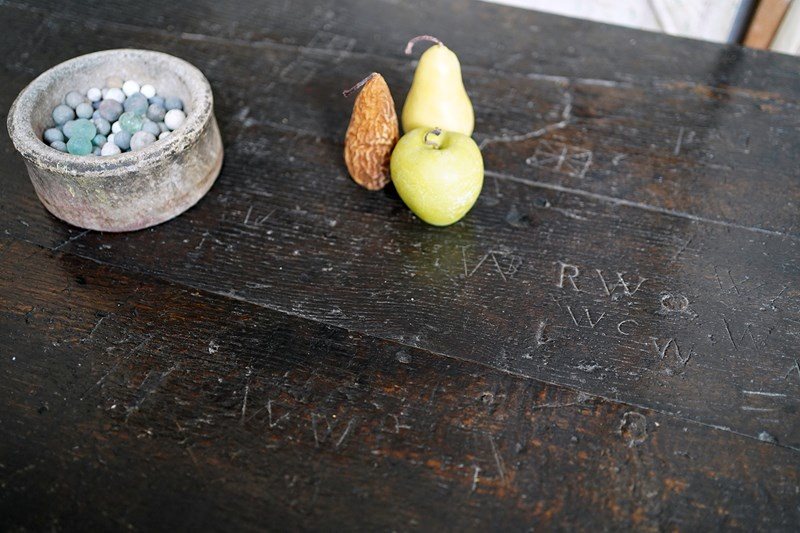
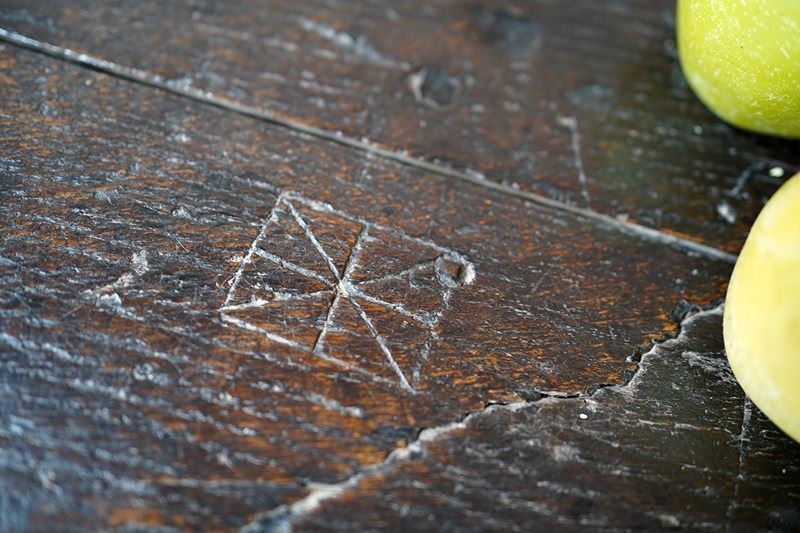
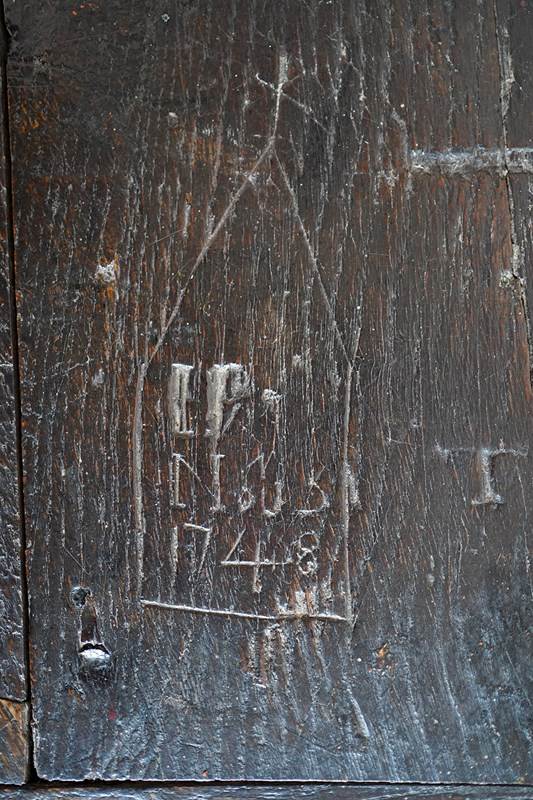
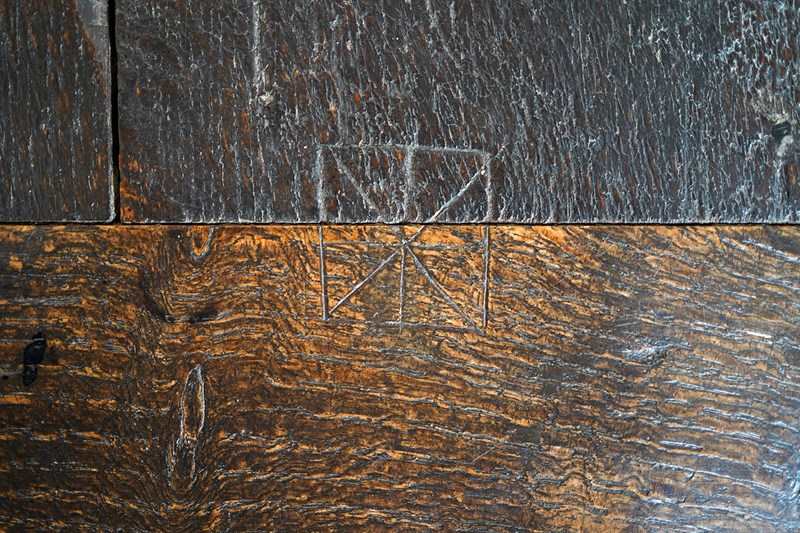
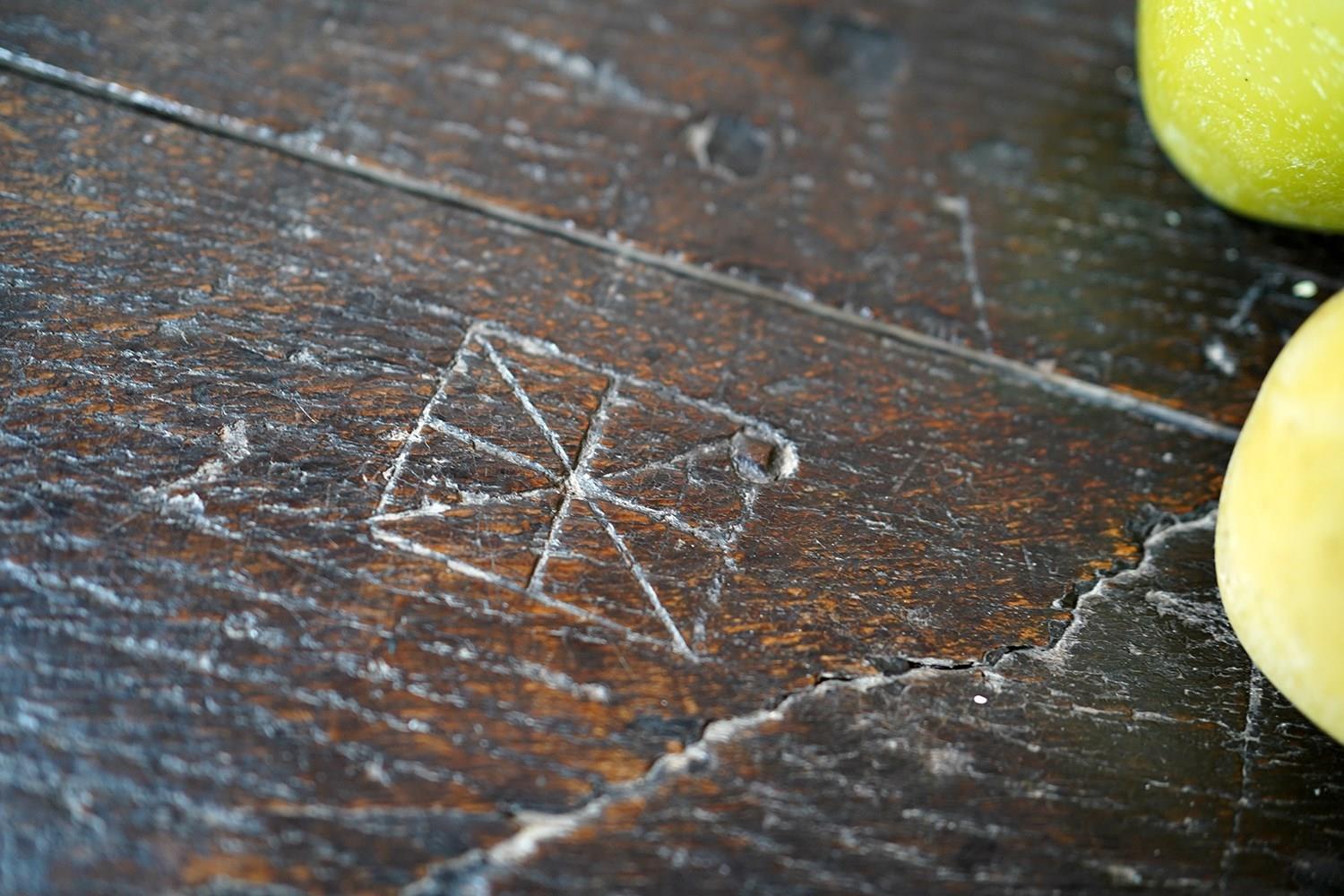
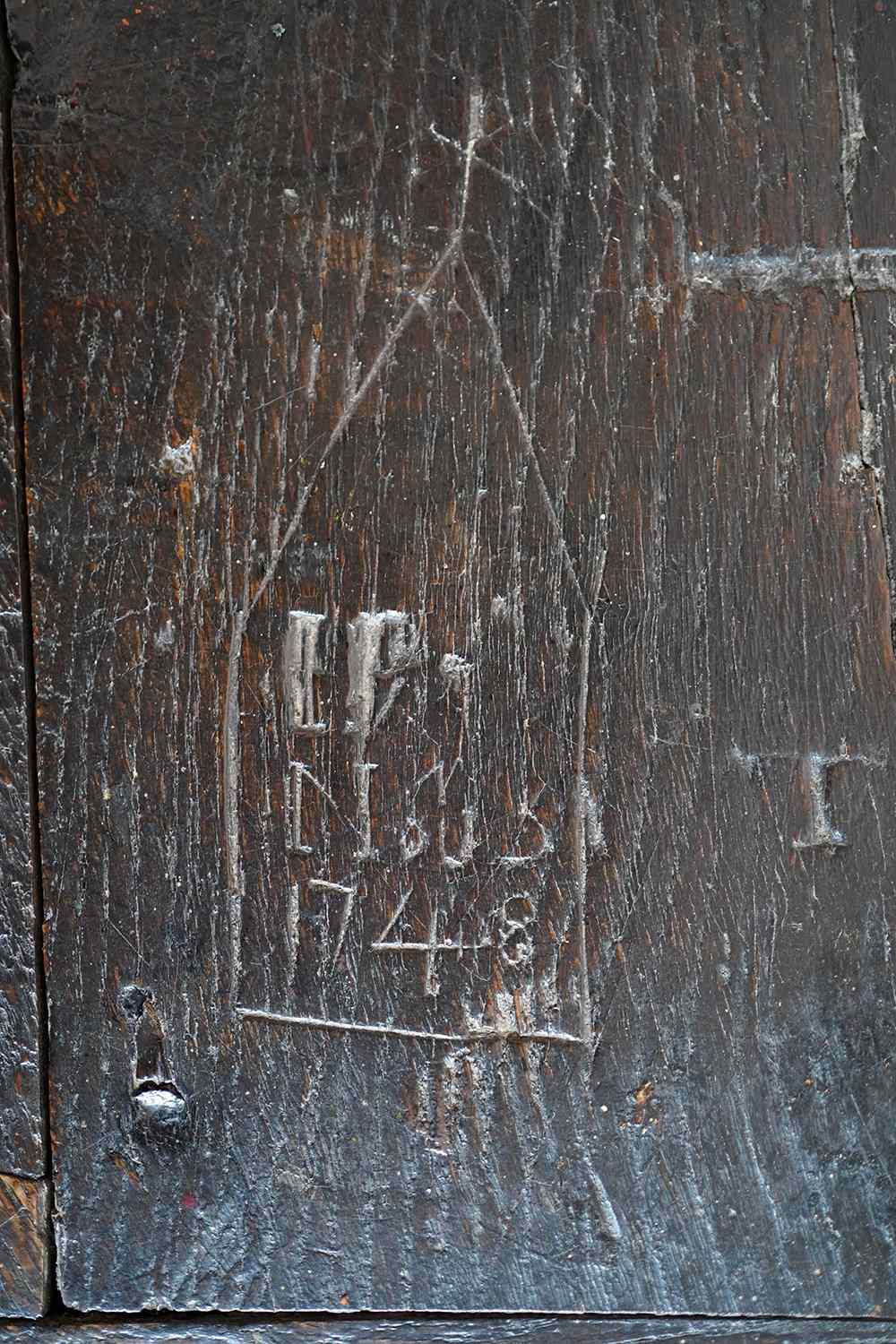
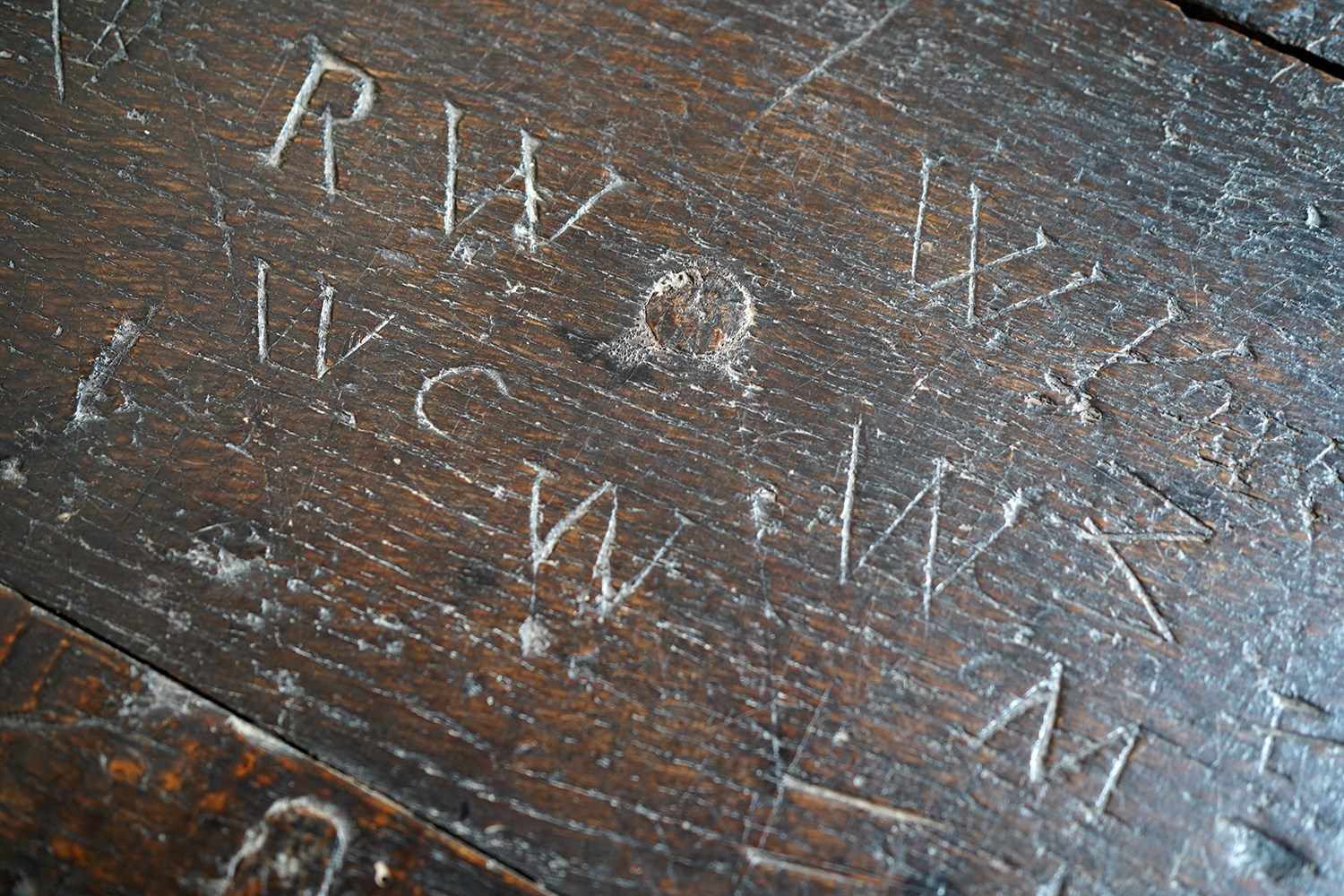
The inscriptions to the top include initials for RW, WC, WW, IP, TL, ID, LG, JG, dates of 1747 and 1748 within a chapel, whilst the single letter W appears often. There is also one repeated symbol, thrice, which is boxed saltire, and as it is repeated it is likely by the same hand and is likely a protective apotropaic mark which would guard against misfortune, protect food, household and occupants and reinforces the tables communal working-life use.
Tables of this form were the backbone of early English interiors, used in halls, refectories, kitchens and inns alike. The survival of period graffiti is especially rare and compelling, offering an intimate, almost archaeological connection to former occupants. Such marks were often made absent-mindedly while seated at table, during long meals, accounts, or moments of idleness, and they lend the piece an immediacy and narrative depth seldom encountered. The presence of a dated inscription firmly anchors the table’s working life to the early 18th century, whilst its construction is of seventeenth century origin.
Dating from the late Middle Ages, Grade I Listed Southwick Hall rises in a secluded valley near Oundle in Northamptonshire With its origins around 1300, the house remains a rare survivor among England’s great country houses. The Elizabethan reconstruction in the 1570s was undertaken by Thomas Thorpe, the mason who also worked on nearby Kirby Hall and Apethorpe Palace, a favourite royal residence of James I. Over the centuries, Southwick Hall has passed through just three families: the Knyvetts (1300–1441), Lynnes (1441–1841), and Caprons (1841–present day) — each contributing a fascinating cast of characters. From soldiers and politicians to lawyers and artists, they include a Lord Chancellor under Edward III; a protégé of Lord Cecil Burghley associated with the execution of Mary Queen of Scots at nearby Fotheringhay; Oliver Cromwell’s mother, Elizabeth; the Enlightenment scientist George Lynne VI; and his son George VII.
In summary, this is a rare and atmospheric refectory table of strong vernacular form, distinguished by its untouched surface, powerful patination and the survival of early graffiti, all folded into superb provenance.
Item Info
Seller
Seller Location
Olney, Buckinghamshire
Item Dimensions
H: 81cm W: 165cm D: 71cm
Period
c.1680
Item Location
United Kingdom
Seller Location
Olney, Buckinghamshire
Item Location
United Kingdom
Seller Contact No
+44 (0)7729 213013
More from DOE AND HOPE