Antique Arts & Crafts Octagonal Wall Mirror, Embossed Brass Grapevine, Bevelled
Stock No
11358
2010
- £350.00
- €404 Euro
- $467 US Dollar
Questions about this item?
Like this item?
Item Description
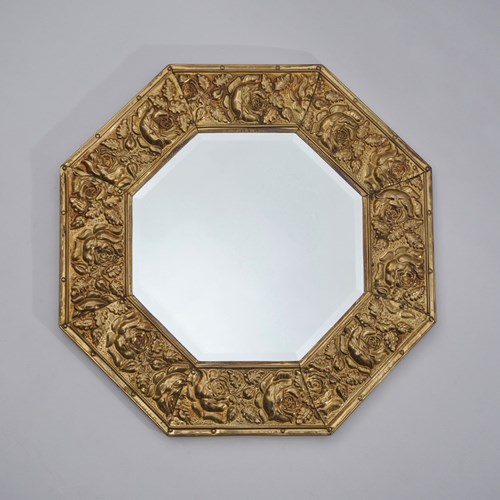
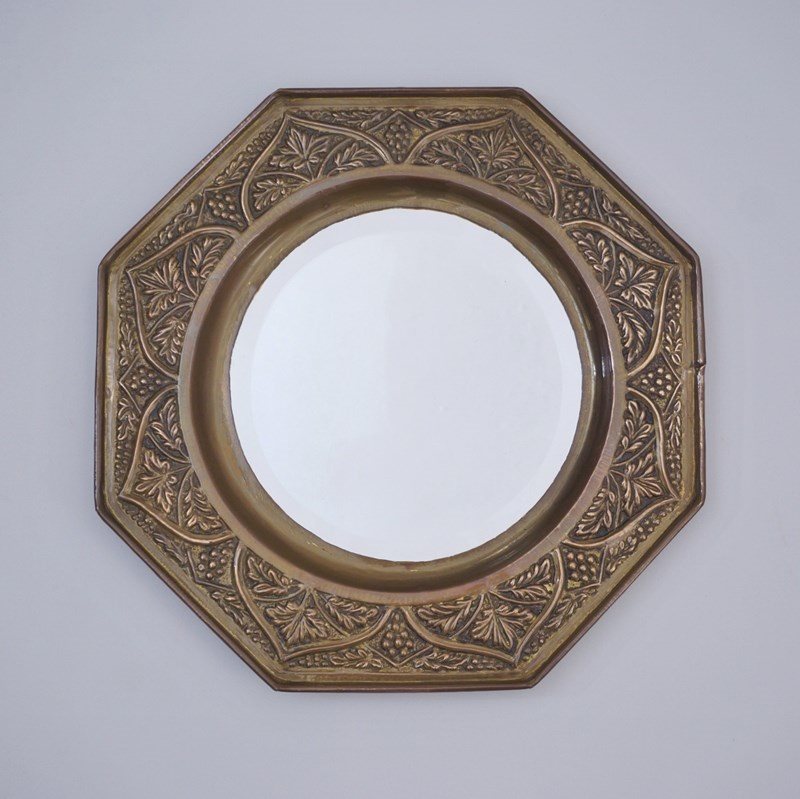
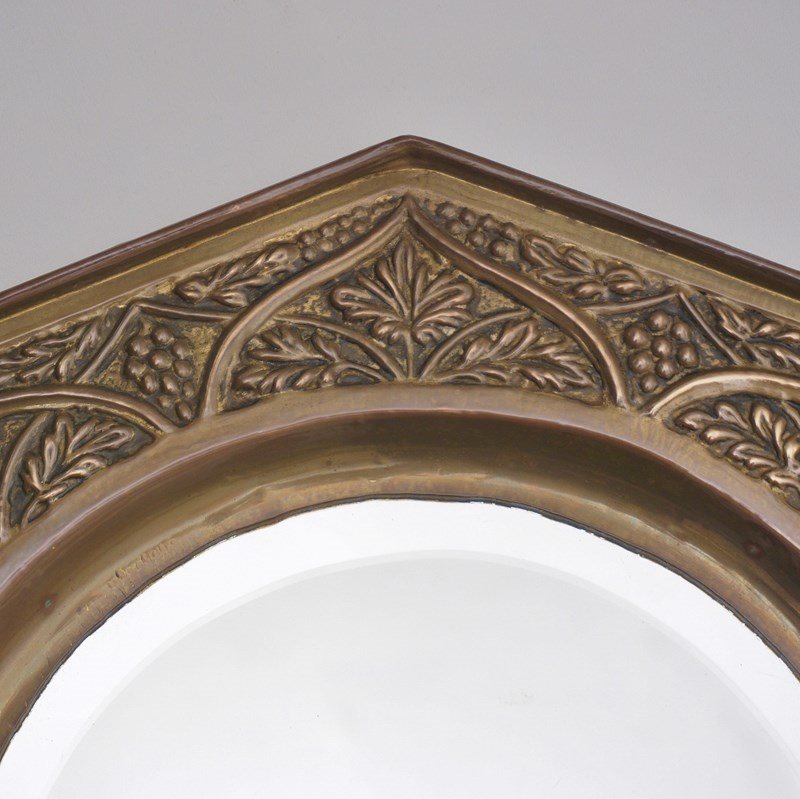
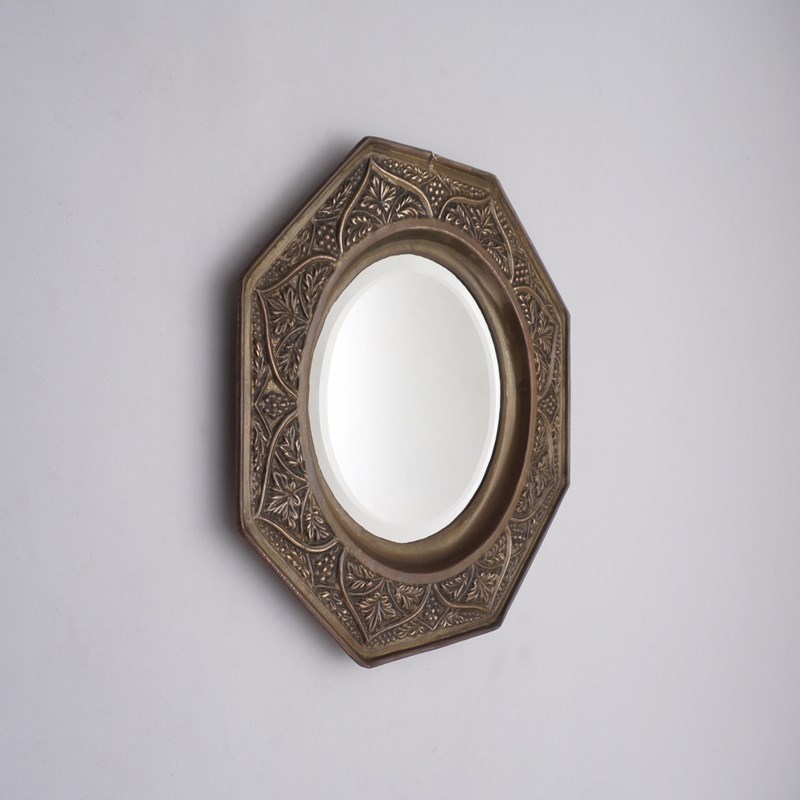
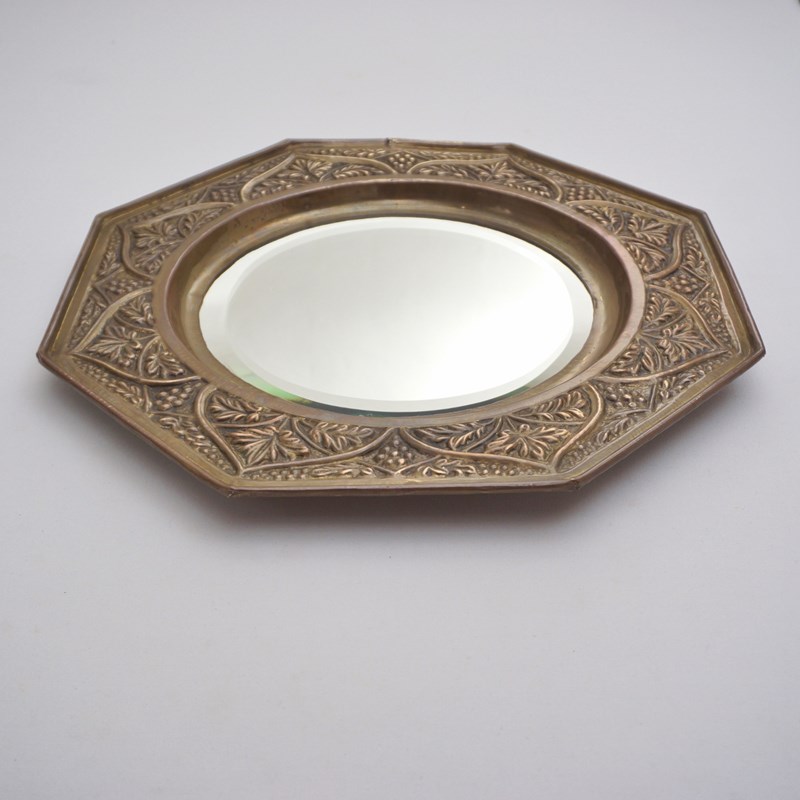
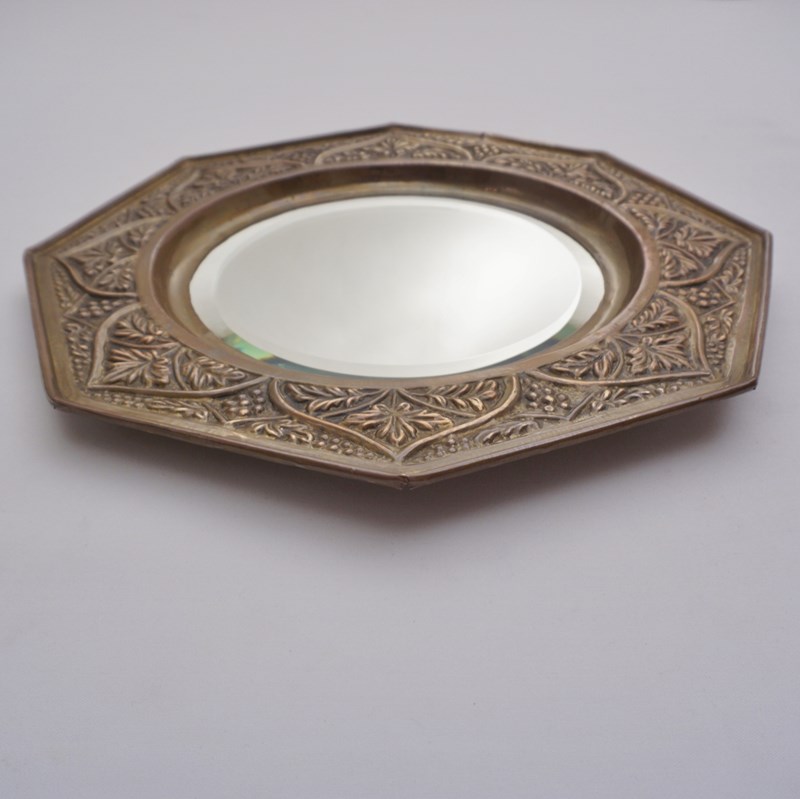
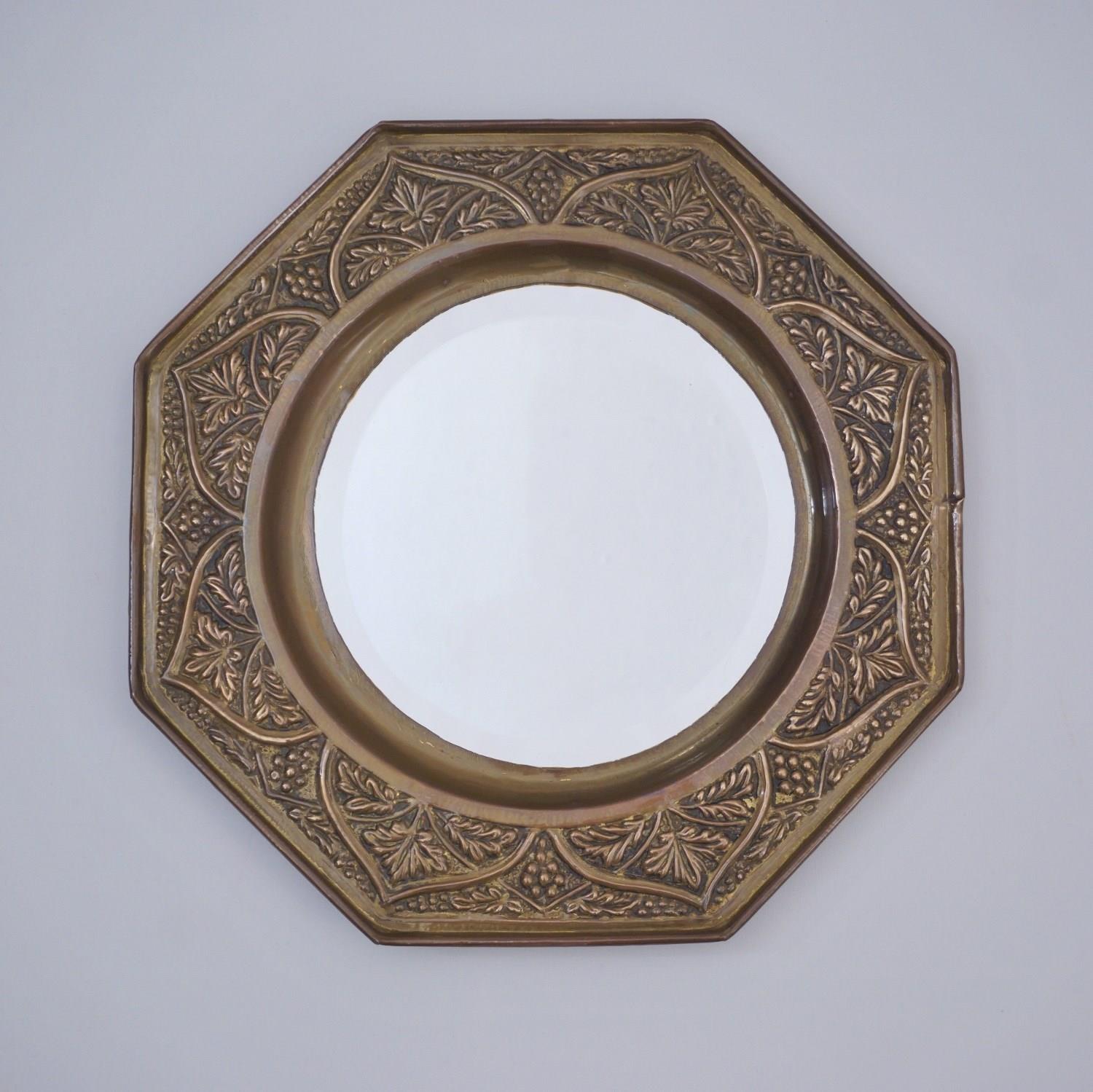
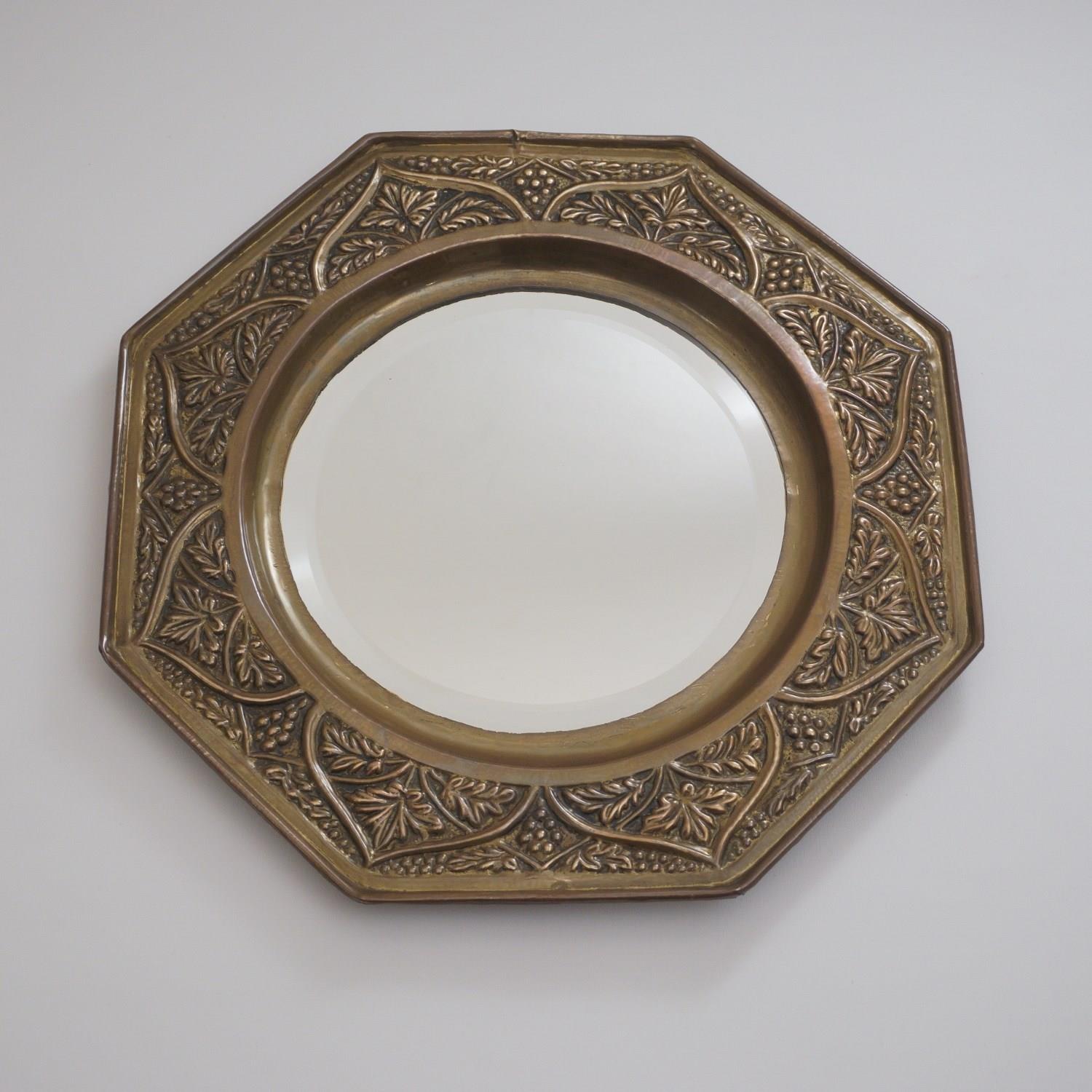
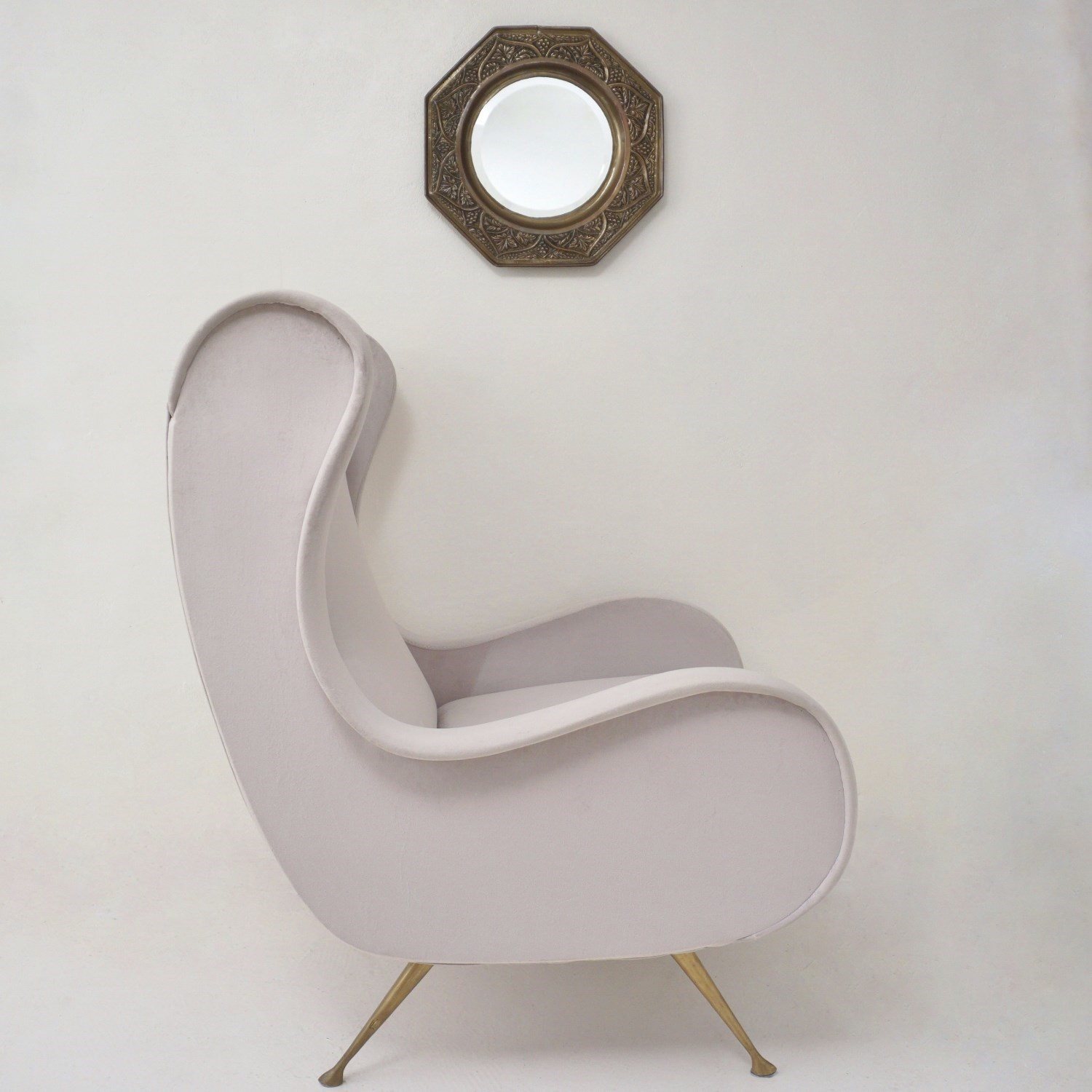
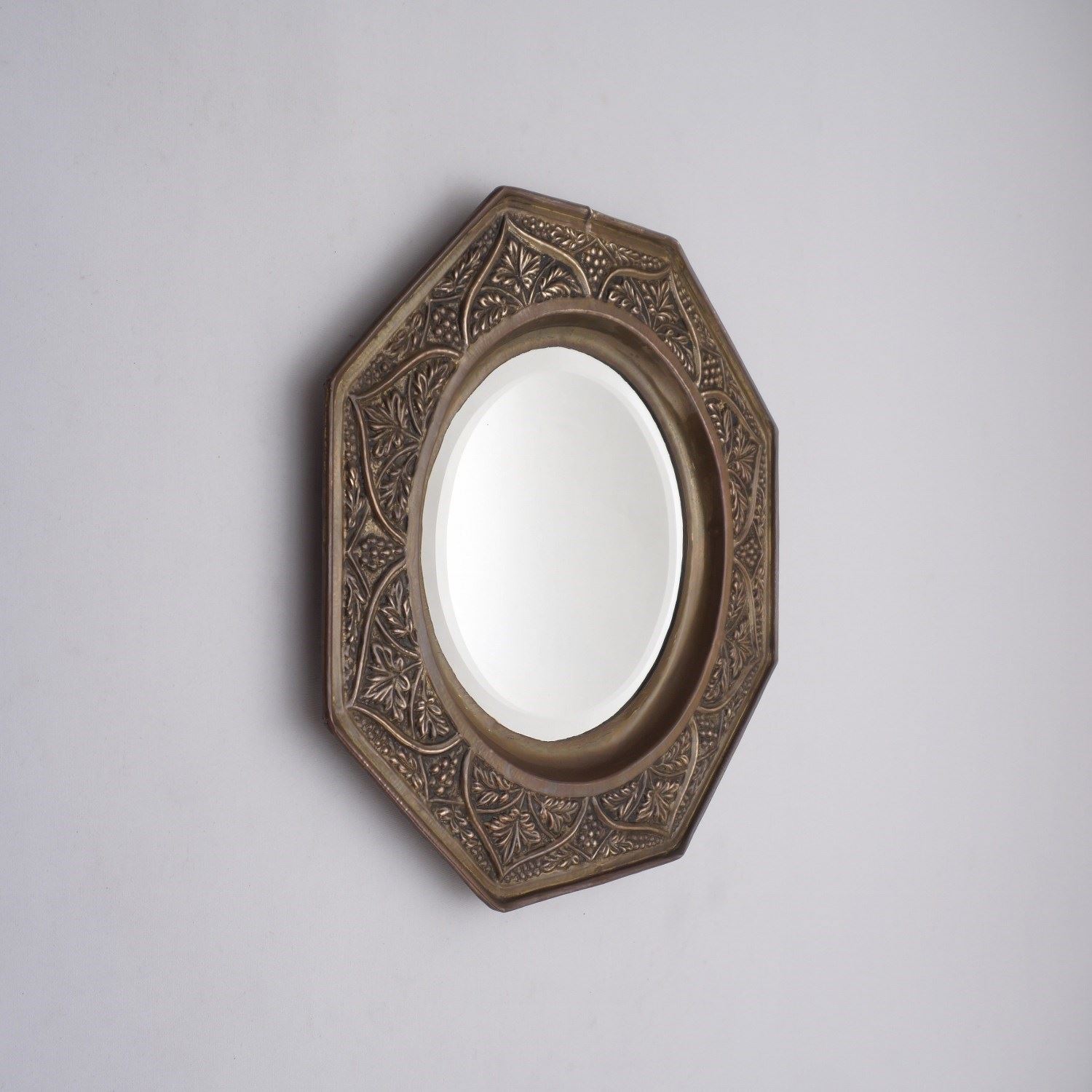
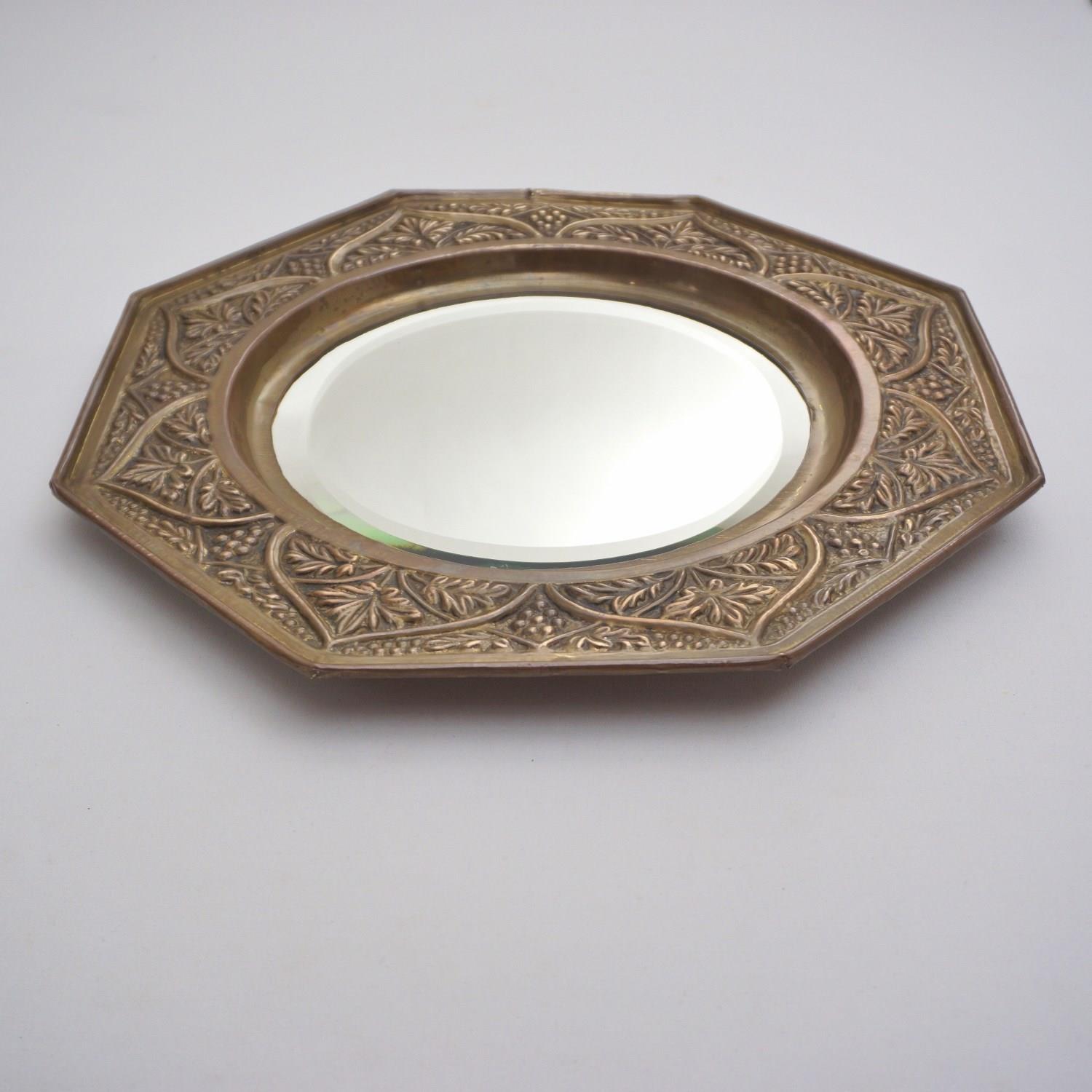
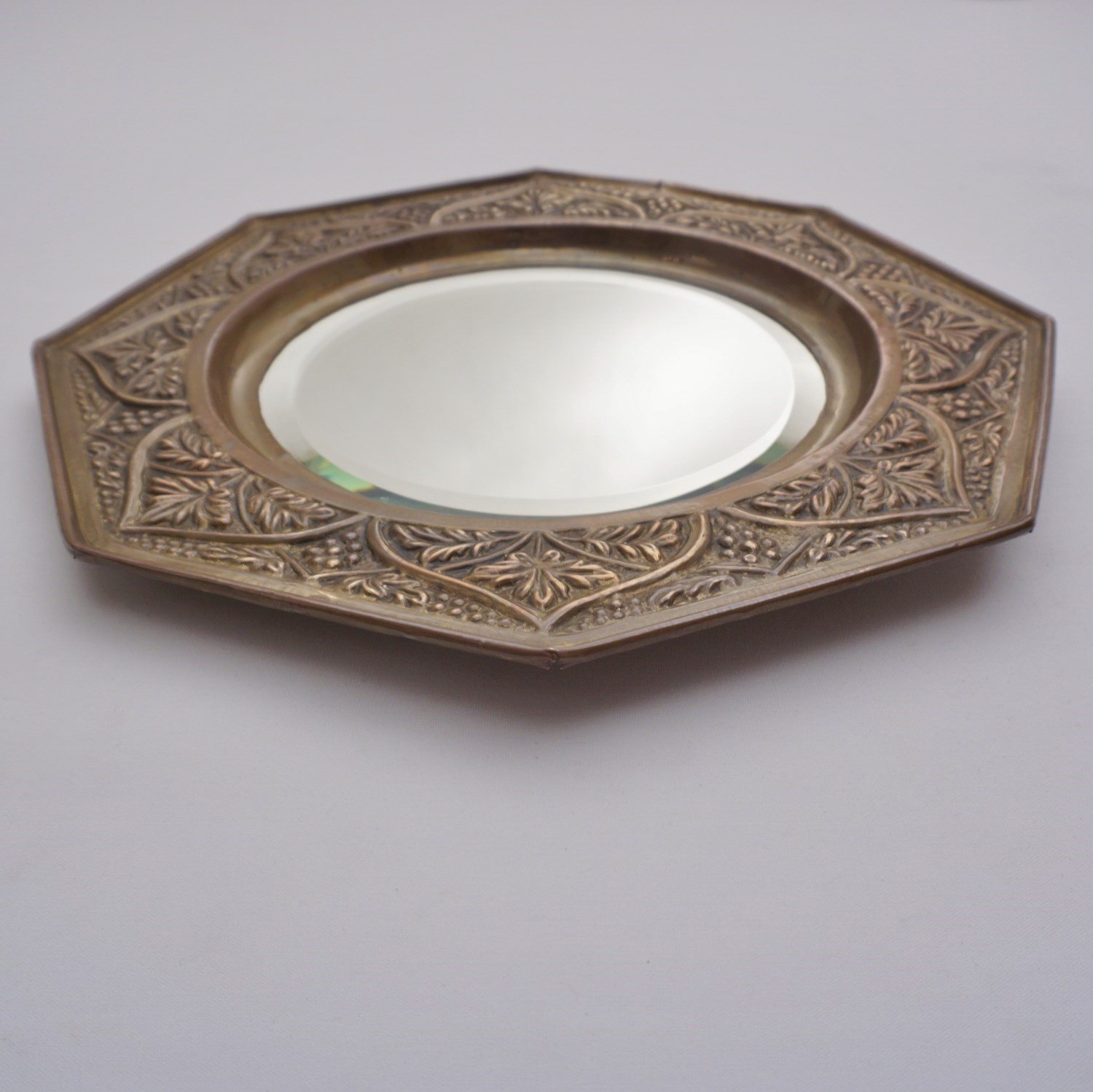
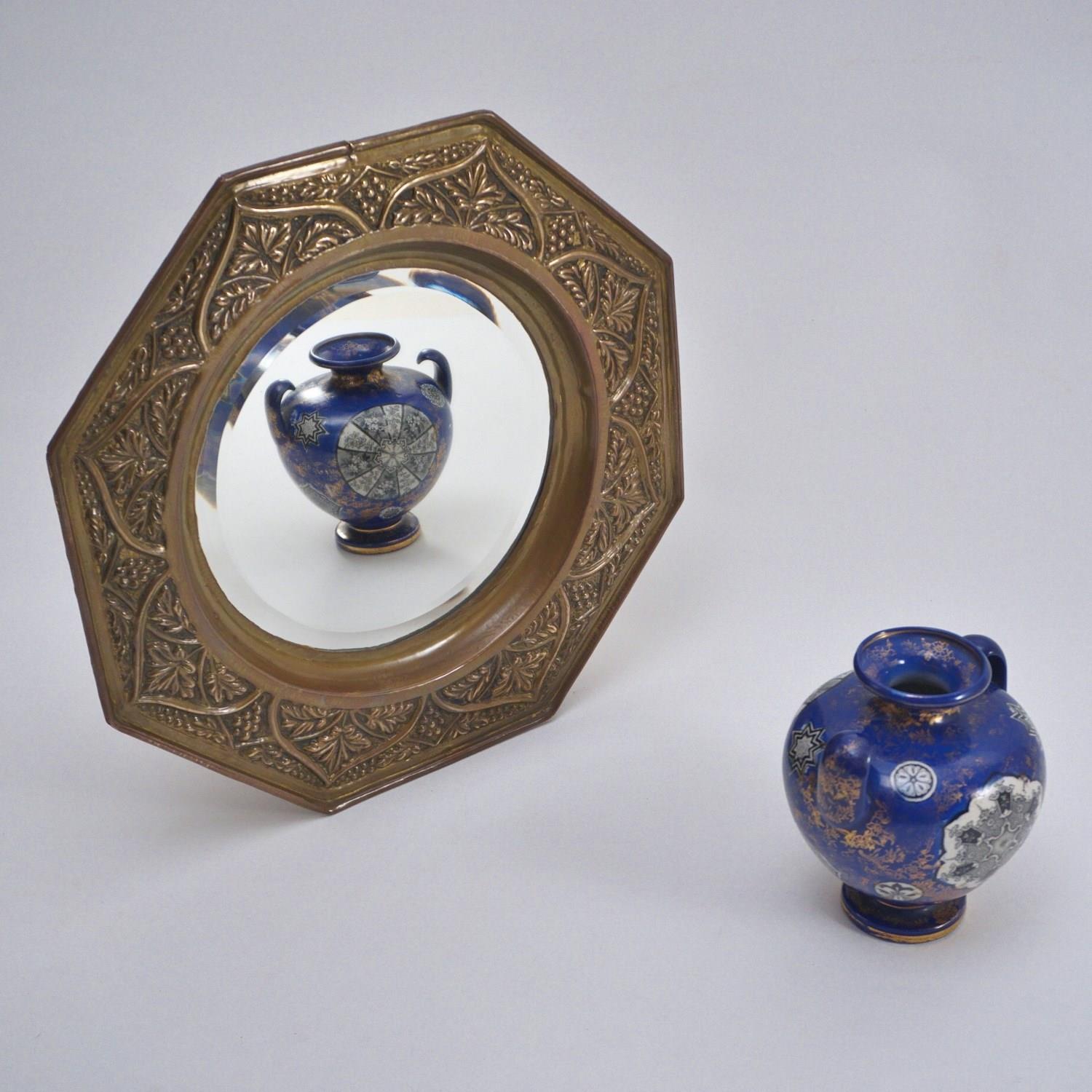
Antique Arts & Crafts octagonal wall mirror with embossed brass grapevine, bevelled, in the style of Keswick School of Industrial Arts, 1900`s ca, English.
This antique mirror has been gently cleaned while preserving the aged patina. It is ready to hang.
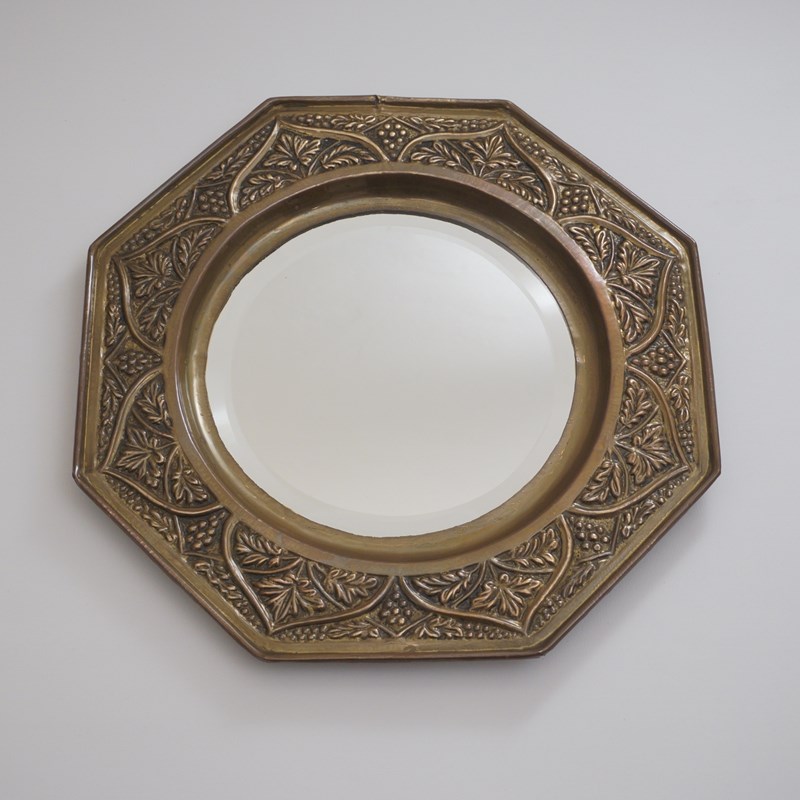
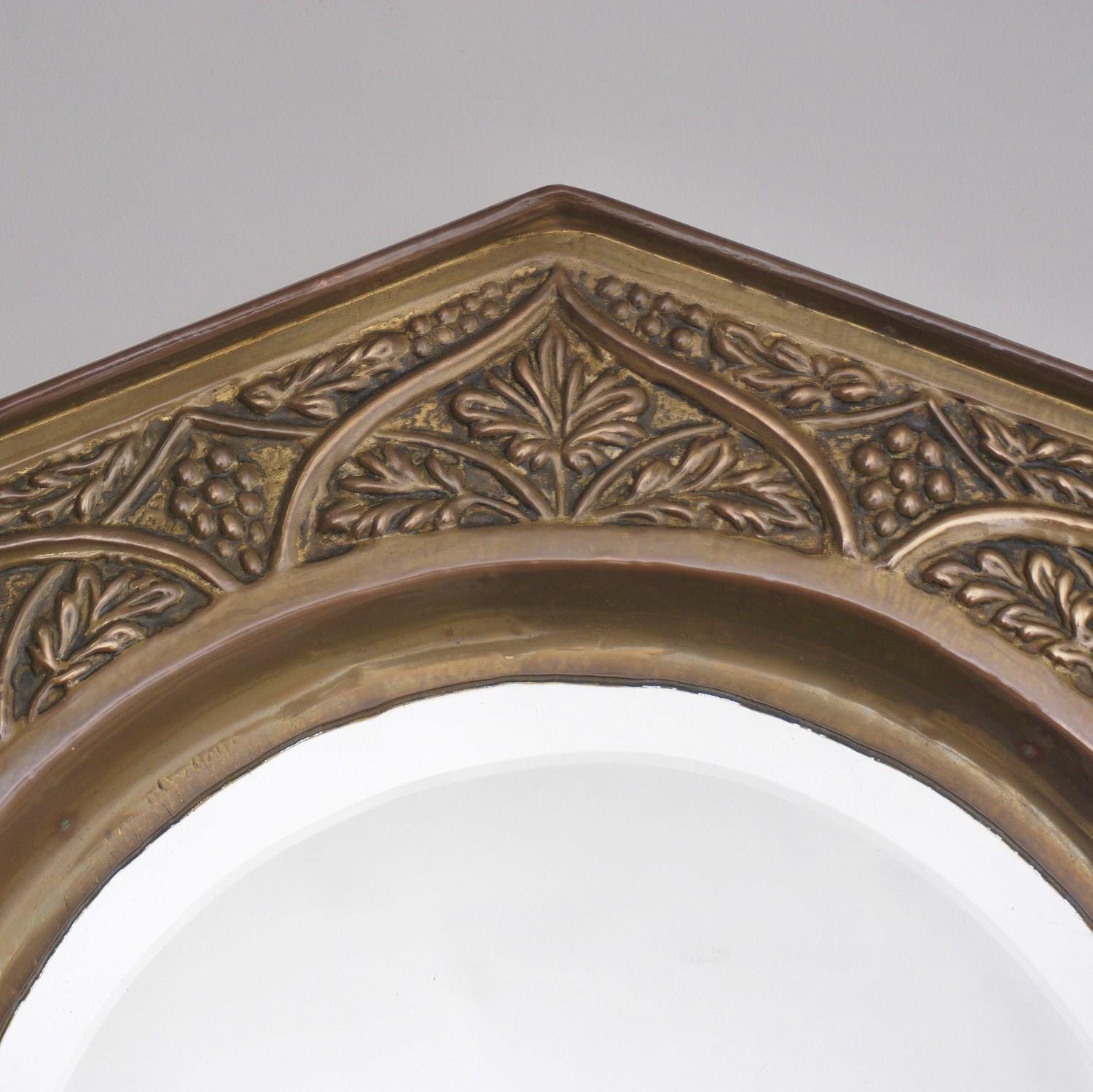
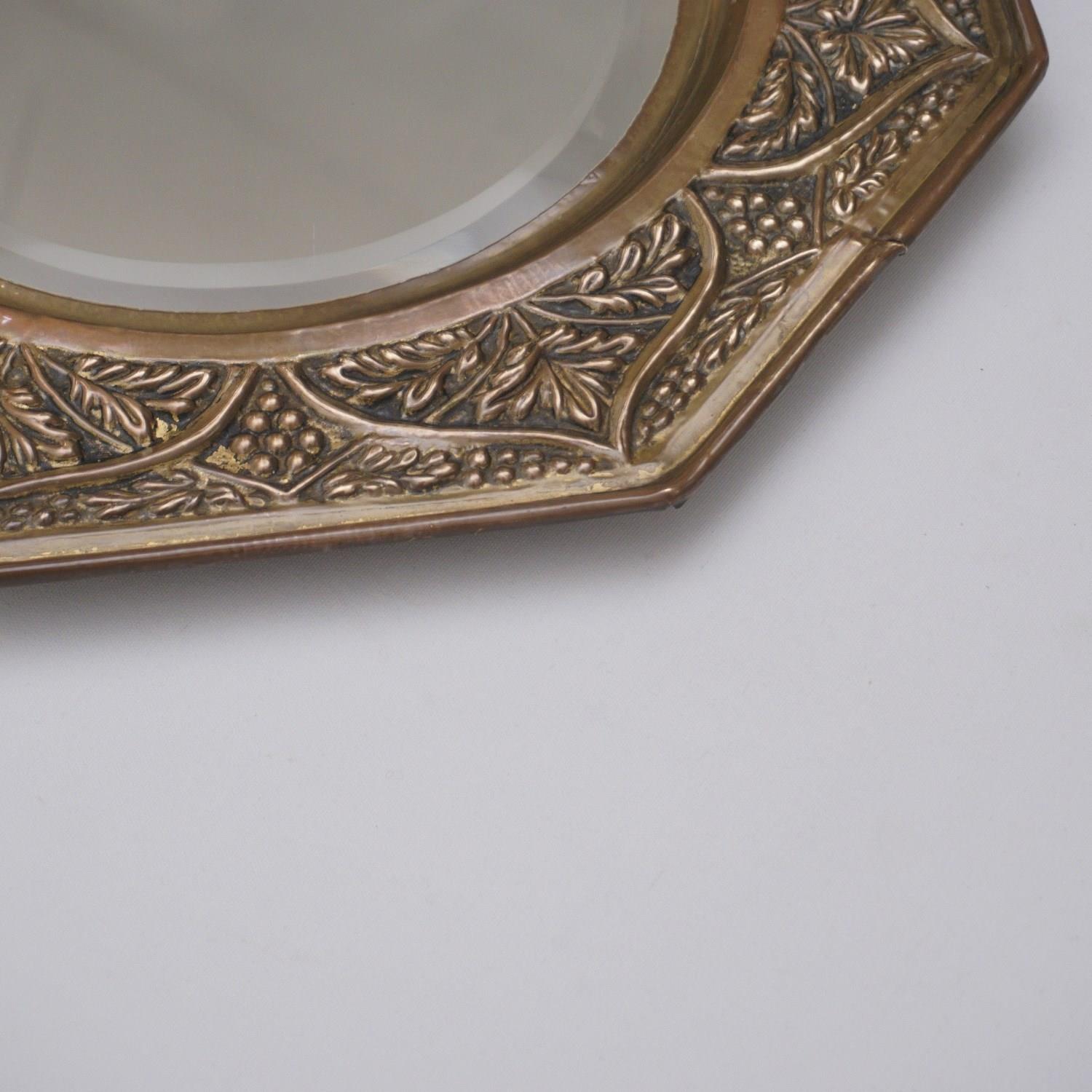
While this mirror is unmarked, it could be the work of the Keswick School of Industrial Arts because of the style and a combination of handmade & early machine made features. It exemplifies the ideals & techniques of the Arts & Crafts Movement: the frame covered with embossed & hammered brass; the use of heavy-gauge brass and the repoussé (hand-hammered from behind) technique were central to KSIA`s curriculum, which aimed to restore the dignity of handcraft in an industrial age; the stylized, naturalistic decoration of trailing grapevines and leaves is a signature KSIA theme, often inspired by the Lake District landscapes surrounding the School; the combination of an octagonal frame, a circular bevelled mirror is a known configuration used by the School`s artisans around 1900–1910.
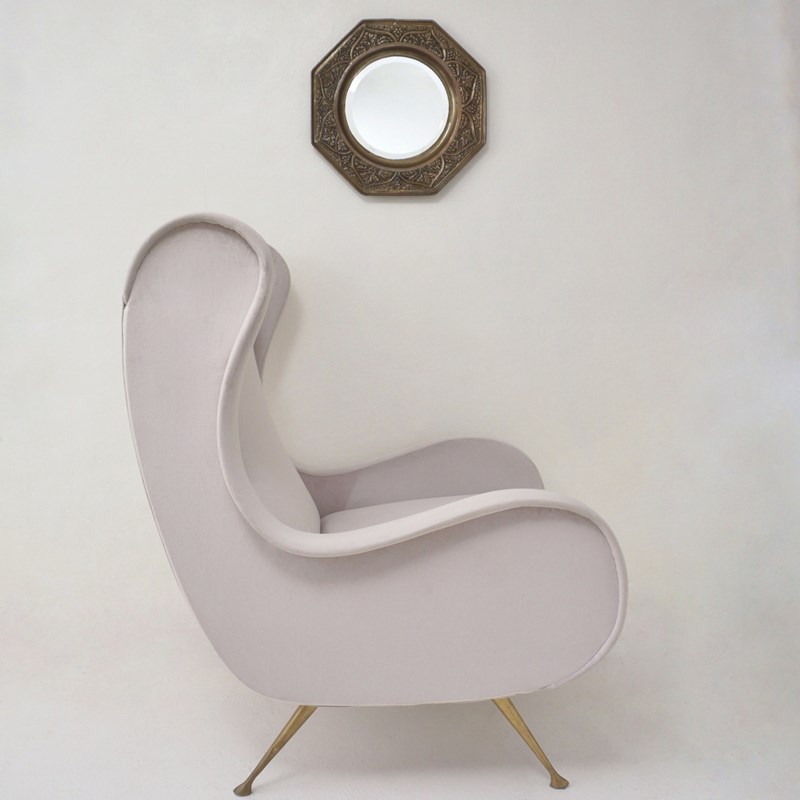
With applied grapevine & foliate decoration this mirror is strongly influenced by the Arts & Crafts Movement but kept modern with its minimal form. The combination of the geometric eight-sided frame and the soft, rounded interior mirror makes it a versatile piece for both period style and modern interiors. It represents a high-quality example of early 20th Century metalwork, focusing on durable materials and clear, nature-inspired craftsmanship. It would sit elegantly over a mantle, sideboard, chest of drawers, in a cloakroom, or by the front door. It would suit a range of interiors such as Arts & Crafts, Art Deco, Hollywood Regency, Traditional, Country or Contemporary.
The brass frame has the warm original antique patina preserved developed over the years.
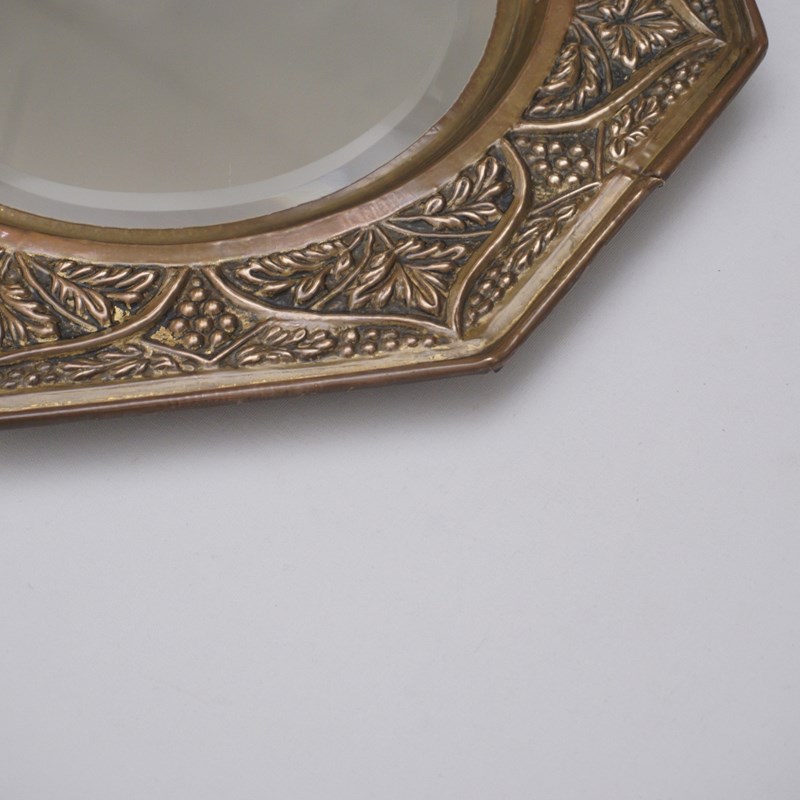
The frame is handmade of solid brass. The use of sheets of brass can be seen around the piece. It is decorated using the repoussé technique, where the metal is hammered from behind to create a raised pattern of grape vines & leaves.
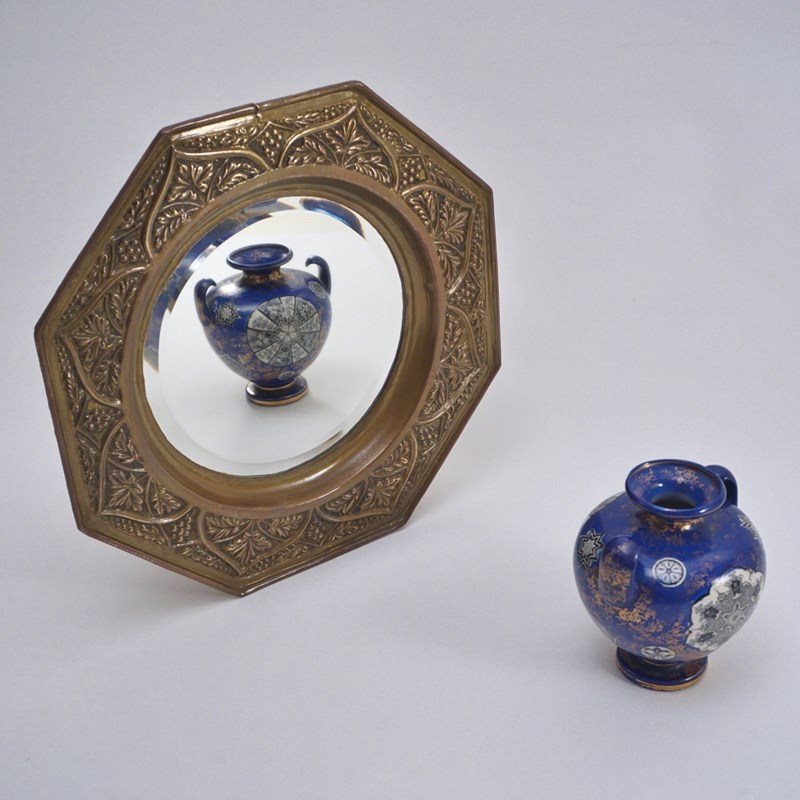
At the center is a circular mirror with a bevelled edge. This thick bevelling catches the light and adds a sense of depth to the piece. The mirror is a circular plate recessed into the center of the octagonal frame. It sits within a deep, stepped basin that creates a funnel-like effect, drawing the eye inward.
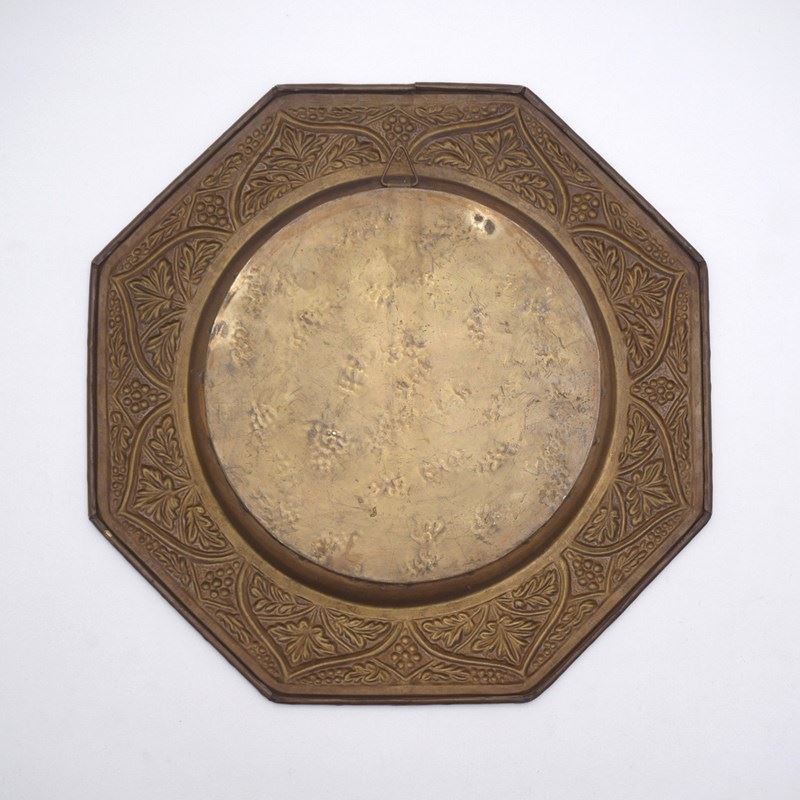
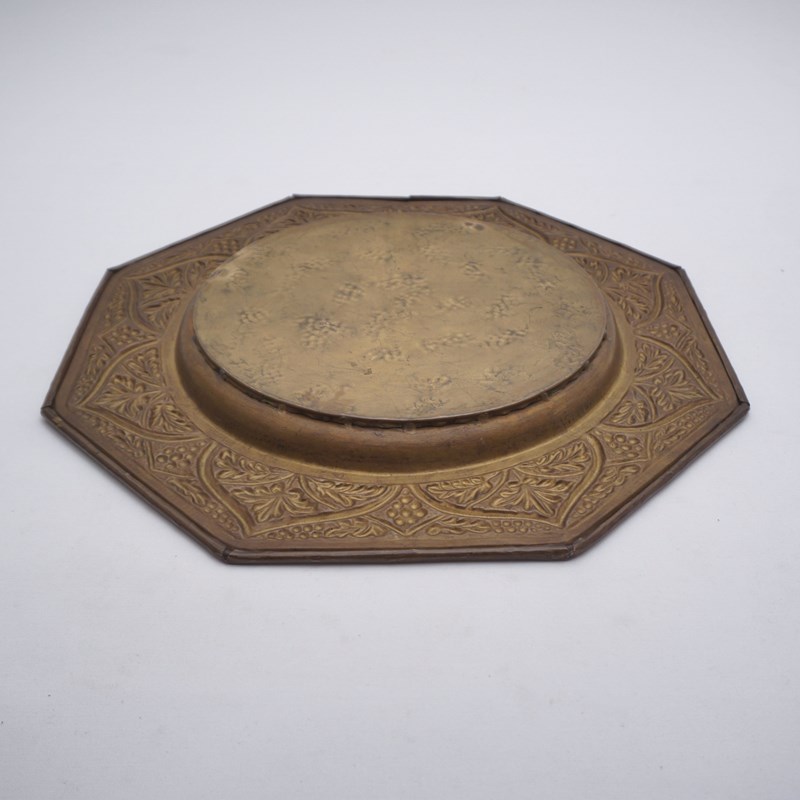
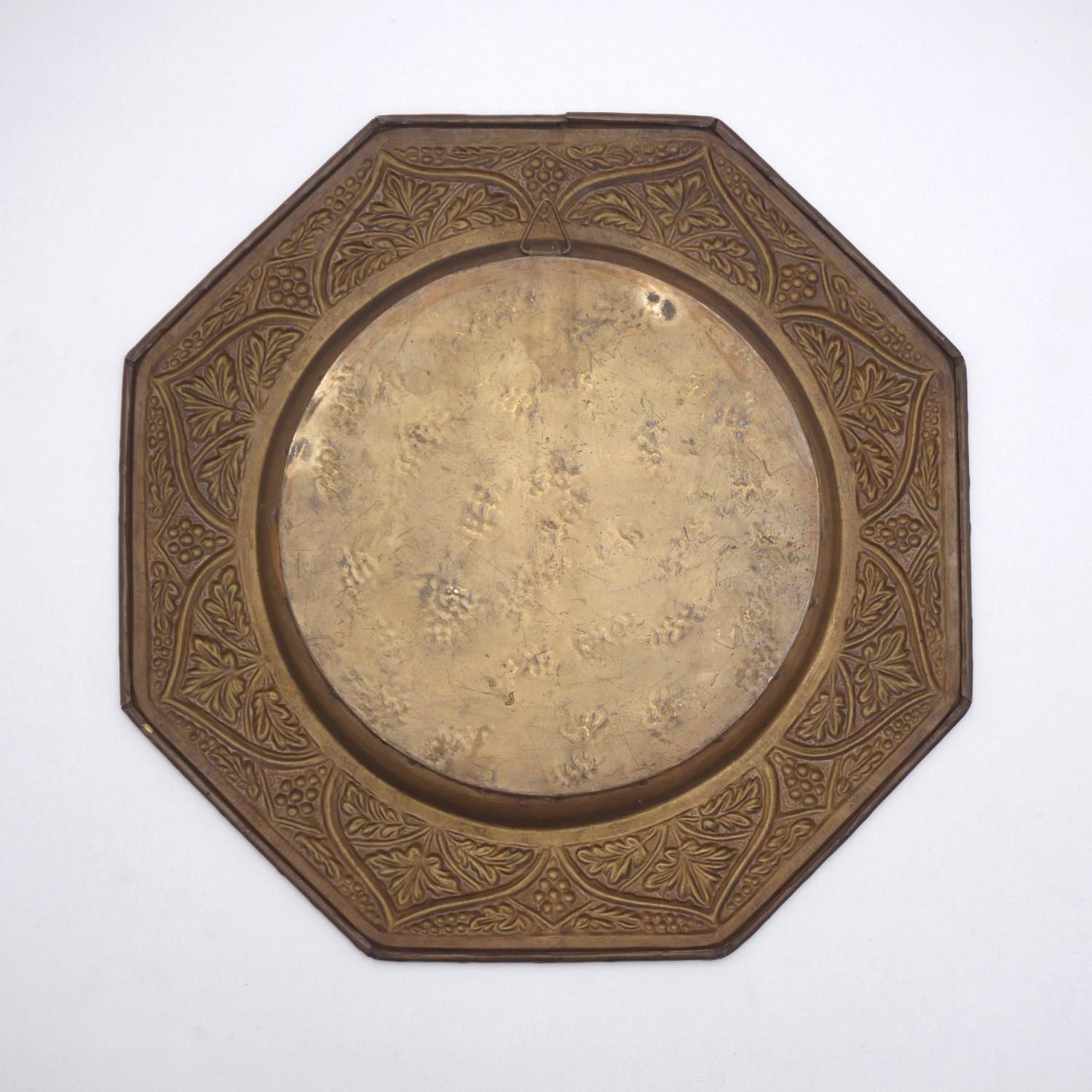
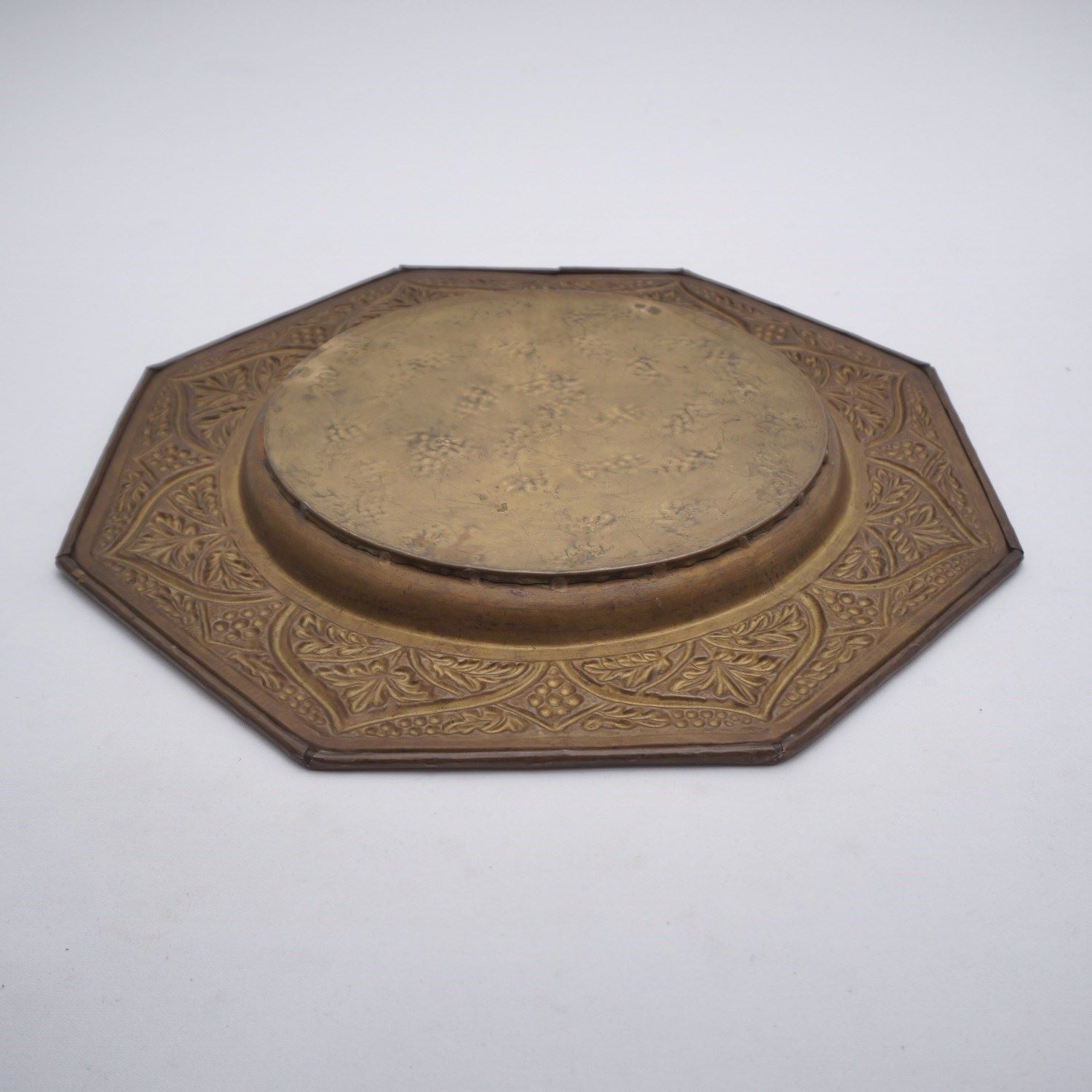
The back of this mirror in a sheet of hammered brass features a raised, circular central pedestal set within a wide, stepped octagonal frame. It creates a tiered profile with a flat, recessed outer rim and a prominent flat topped center adding depth when hanged on the wall by a triangular brass ring.
This antique mirror is in good condition for its age. The antique patina has been preserved. The metal frame is sound and the joints are tight, with no cracks or dents, and only minor marks & light rubbing in line with age. The mirror surface is clean & very reflective, with no chips. Minor superficial marks and very tiny foxing in places, as expected with age & use.
Additional dimensions:
The total external dimensions are: Height: 39 cm, Width: 39 cm, Depth: 2.5 cm.
The dimensions of the silver mirror round surface are: Diameter: 23 cm
Bevelled: 1.5 cm
Packing is offered free of charge. We take special professional care with packing. For safe transport the mirror will be wrapped in bubble wrap, foam and an outer layer of card. It would then easily fit into a box with loose fill packing suitable for posting with a courier. We ship with reliable couriers (signed for, tracked & insured).
MAIN DELIVERY CHARGES:
Within London (UK): £ Free
UK Mainland: £ Free
European Union: £ 70
United States/Canada: £ 100
Japan: £ 60
Australia £ 125
Rest of the World please enquire.
ARTS & CRAFTS MOVEMENT IN BRITAIN HISTORY
The Arts & Craft Movement took its name from the Arts and Crafts Exhibition Society, a group founded in London in 1887.
The late 19th Century marked the beginning of a change in the value society placed on how things were made. This was a reaction to not only the damaging effects of industrialization but also the relatively low status of the decorative arts. Arts and Crafts reformed the design and manufacture of everything from buildings to jewellery. The Arts and Crafts leaders wanted to develop products that not only had more integrity but which were also made in a less `dehumanising` way.
The movement was influenced by art critic John Ruskin (1819-1900), whose work had suggested a link between a nation`s social health and the way in which its goods were produced. Ruskin expressed: "Fine art is that in which the hand, the head, and the heart of man go together".
The Keswick School of Industrial Art (KSIA) was founded in 1884 by Canon Hardwicke Rawnsley and his wife Edith as an evening class in woodwork and repoussé metalwork at the Crosthwaite Parish Rooms, in Keswick, Cumbria. The enterprise, designed to alleviate unemployment, prospered, and within ten years more than a hundred men were attending classes. A new building was erected for the school at a nearby site. The school closed in 1984.
Item Info
Seller
Seller Location
London, London
Item Dimensions
H: 39cm W: 39cm D: 2.5cm
Period
1900`s ca, English
Item Location
United Kingdom
Seller Location
London, London
Item Location
United Kingdom
Seller Contact No
+44 (0)795 6645492
More from ROOMSCAPE