What the sash is, how it should be mounted, and what to check before you acquire
⁂
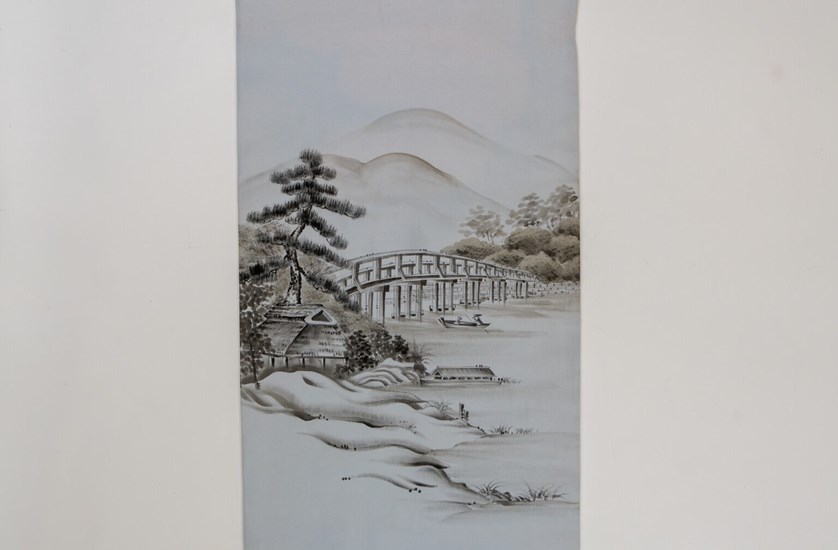
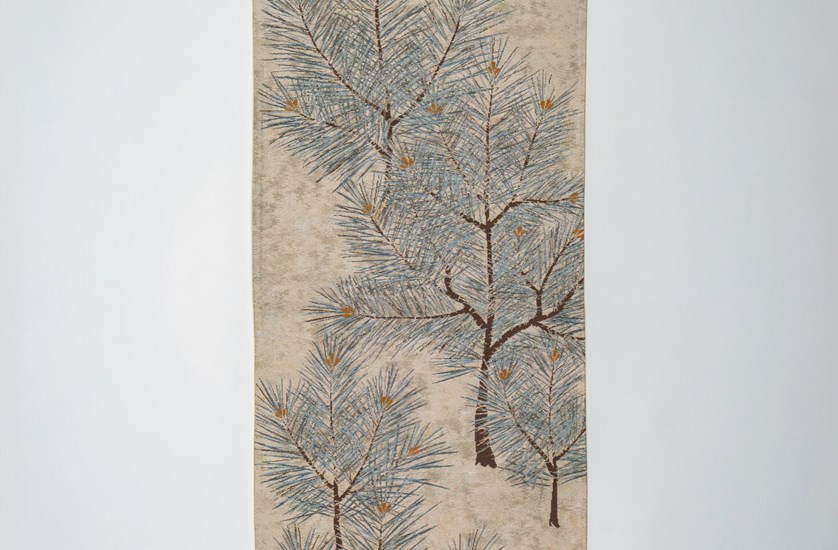
Japanese obi wall art is a woven silk obi, the wide sash worn with a kimono, mounted on a rod or frame so it hangs as a vertical panel of textile art. In a pared-back modern room it reads as a single tall column of pattern and sheen above a console, a bed, or a stairwell: closer to a hanging artwork than to soft furnishing. The obi is the art. Ceremonial obi were woven densely, often with metallic brocade, for occasions that demanded weight and presence, and that density is what lets the silk carry a wall. A full obi runs roughly 30 to 35 centimetres wide and several metres long.
Two terms overlap in client conversations and describe different objects. An obi wall hanging is the sash itself: long, narrow, structurally dense, made for vertical hanging. Kimono wall art usually means a panel cut from the body of the garment, wider, carrying figurative or scenic motifs across more cloth. The obi gives graphic intensity in a tall format; the kimono gives a broader pictorial field.
The real choice is between an untouched sash and a piece deliberately cut and constructed for the wall.
Whole, cut, or framed
A maker working honestly with an obi has three choices: leave it whole, cut it, or frame it. Leaving it whole preserves the object as woven, and some collectors want exactly that. Cutting opens a different practice: selecting the section where the motif resolves, then constructing it into something built to live on a wall rather than folded in a drawer. Framing sets a cut section behind glass or float-mounts it on linen.
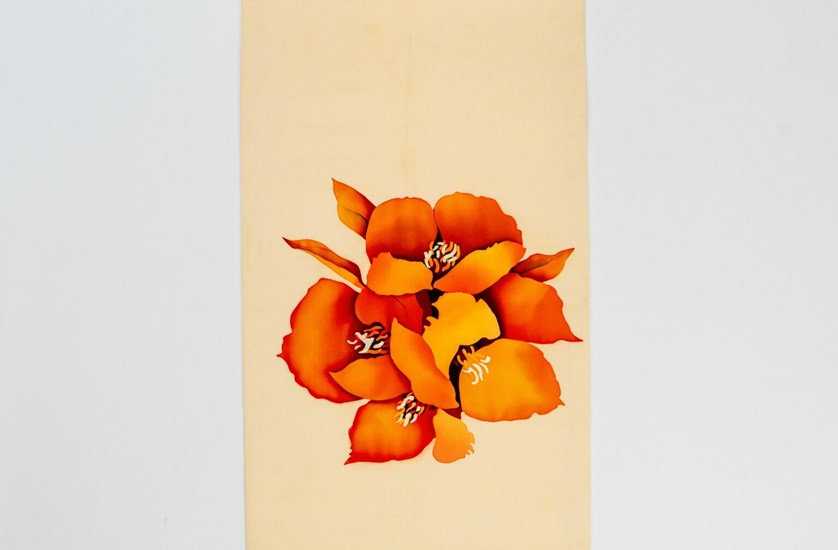
Renaras works in the second tradition. Each silk textile painting is cut from a single obi and hung between a top and a bottom wooden bar, so the silk falls flat and true. The ethic behind the cut is mottainai, the Japanese principle of honouring what already exists rather than discarding it: the sash's life continues in a form made for the wall. Because every piece is cut from one sash, each is unrepeatable.
Rod-hung or framed
Rod-hung suits the long, unbroken proportion of an obi. The full surface stays visible, both faces of the weave catch light as the day moves, and the piece keeps the softness and slight movement of cloth. A top bar alone lets long silk bow over time; a second bar at the bottom weights it and holds it flat. Framing suits a single resolved motif: the front face held behind glass, taut on its mount, reading as a contained art object. Neither is wrong. The proportion of the silk and the temperament of the room decide.
What to check before you acquire
Weave density first: ceremonial obi are heavy, and a flimsy hand signals a lesser sash. Then the mounting, since a single top rod is rarely enough for silk of this length. Then the edge finish: a cut piece should be cleanly constructed, with no raw fray on show. Last, honesty about the silk. A maker should tell you whether a piece is whole or cut, and from what.
A finished piece in Japanese ceremonial silk is a different acquisition from a loose sash in an auction lot: the silk has been selected, cut to its resolved motif, and constructed to hang the day it arrives. The making is what you pay for.
Each Renaras piece is documented as to what it was, so you can place it knowingly and explain it in a proposal. Browse the current silk textile paintings on Decorative Collective, and message through the platform for trade pricing or to talk through a piece for a particular wall.
⁂
Renaras transforms vintage Japanese ceremonial silk into contemporary one-of-a-kind objects. One silk. One story. One piece. Never repeated. Available through Decorative Collective.
Renaras · Decorative Collective — One silk. One story. One piece. Never repeated.