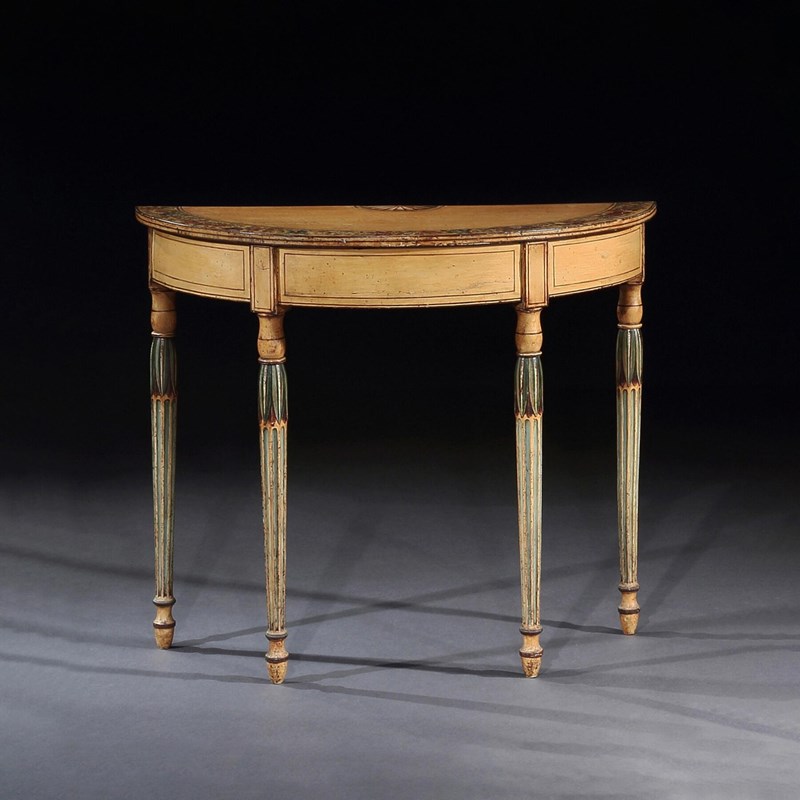
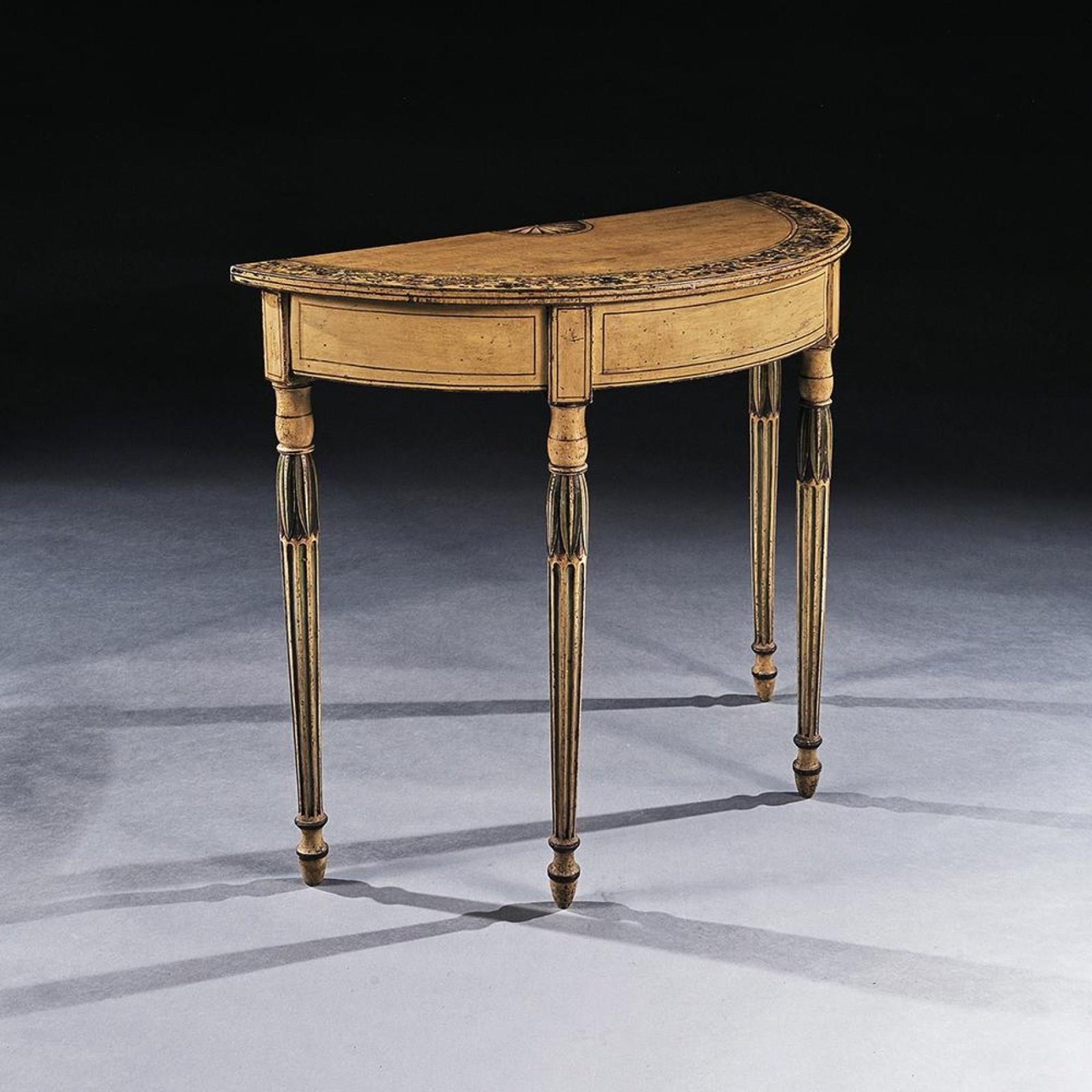
Georgian Painted Demi-Lune Pier Table Likely By Seddon, Sons And Sons And Shackl
Stock No
3088
2013
Questions about this item?
Like this item?
Item Description
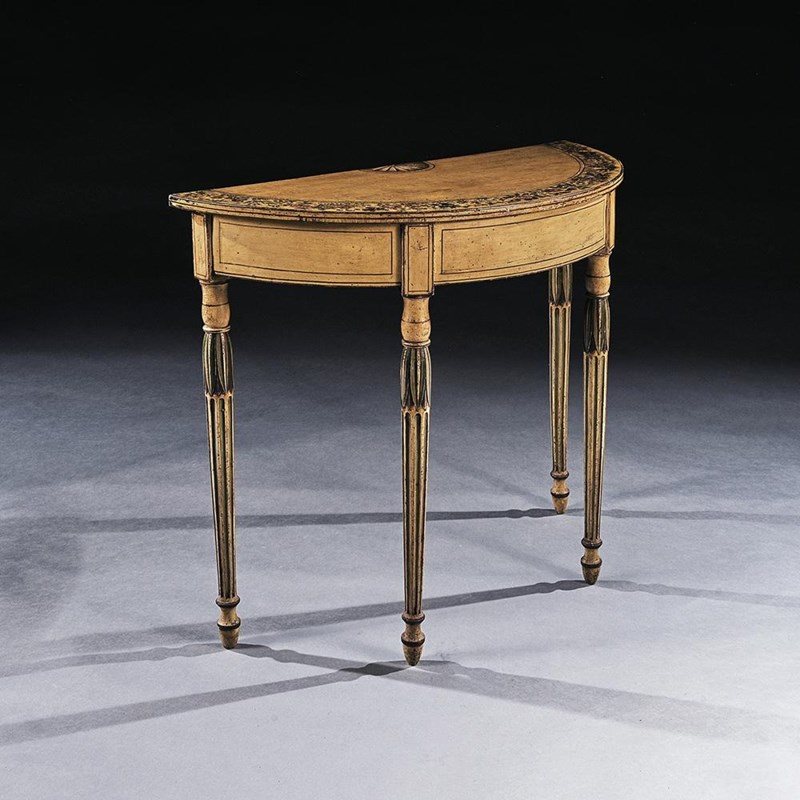
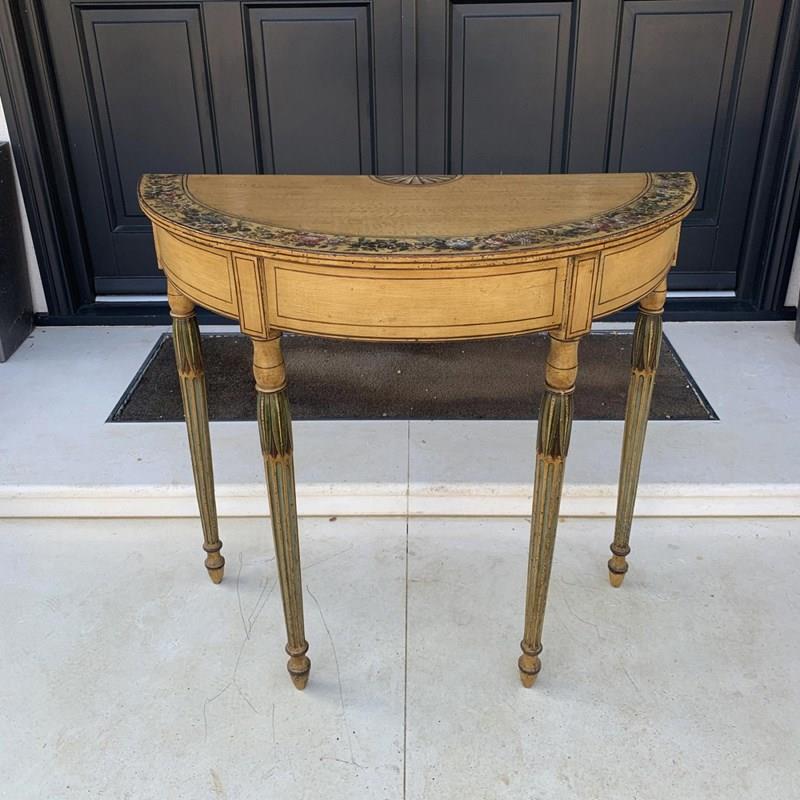
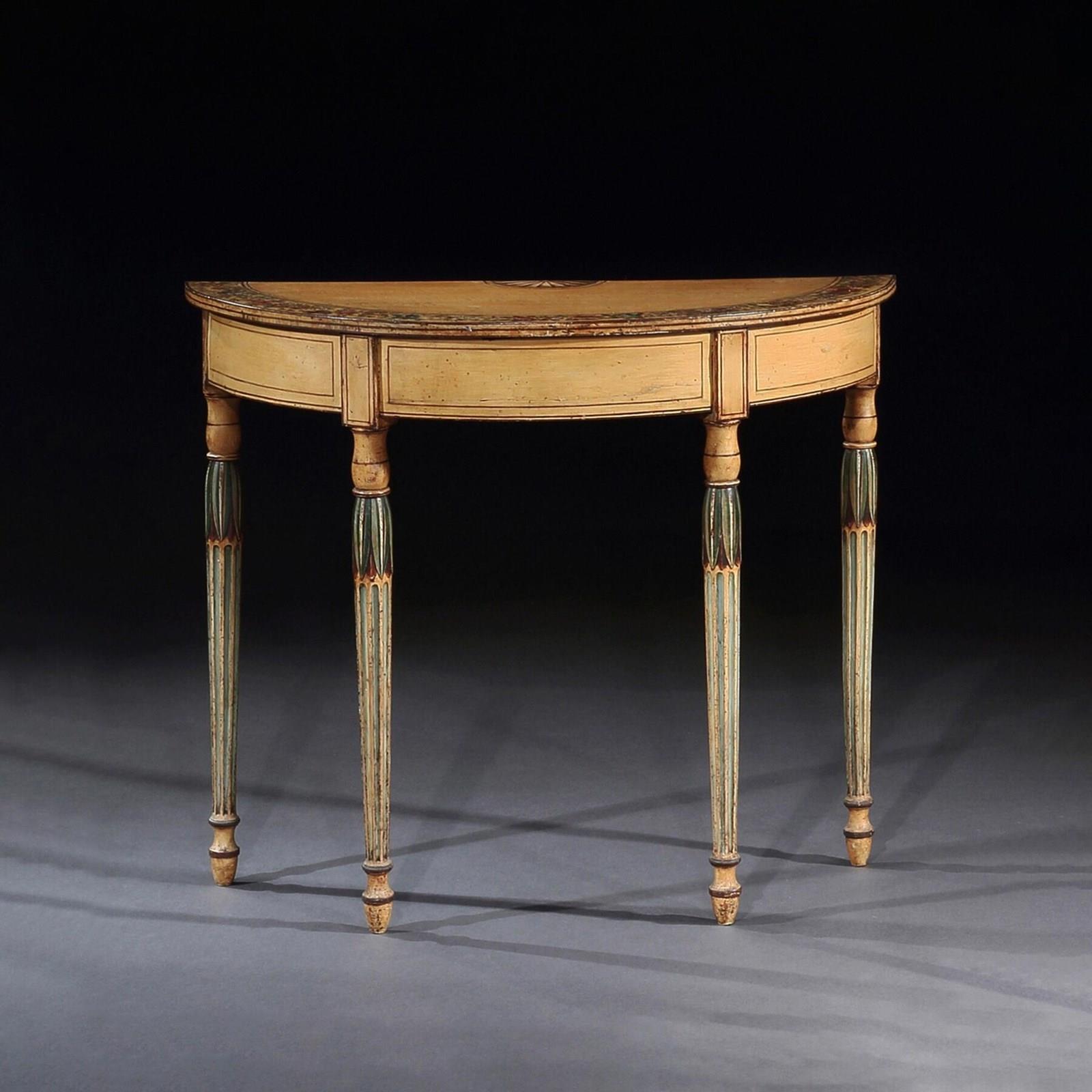
A Very Fine and Rare Late 18th Century Painted Demi-lune Pier or Side Table very possibly by Seddon,
English London made Circa - 1795
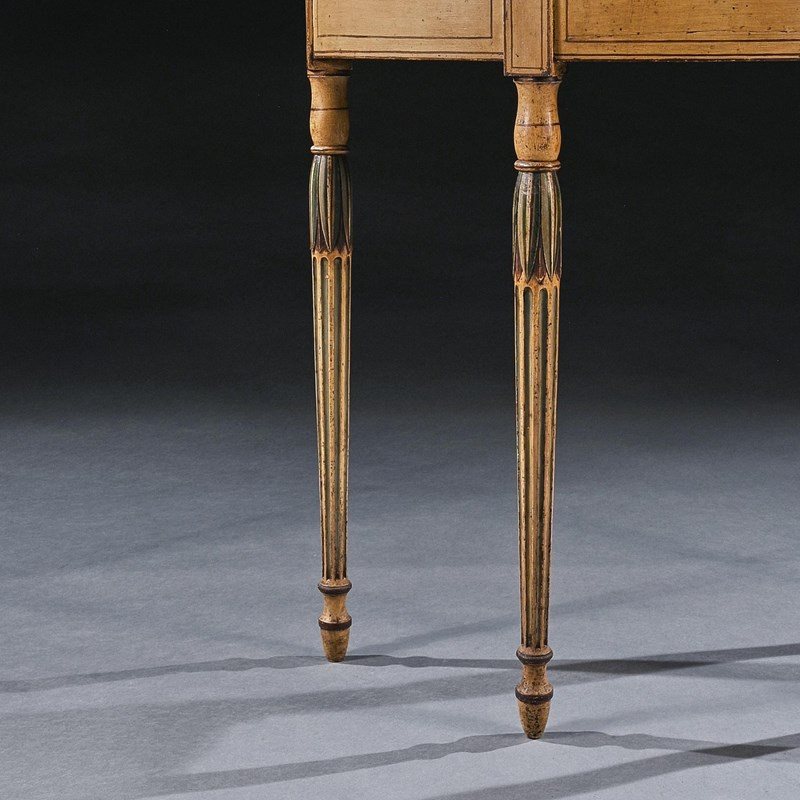
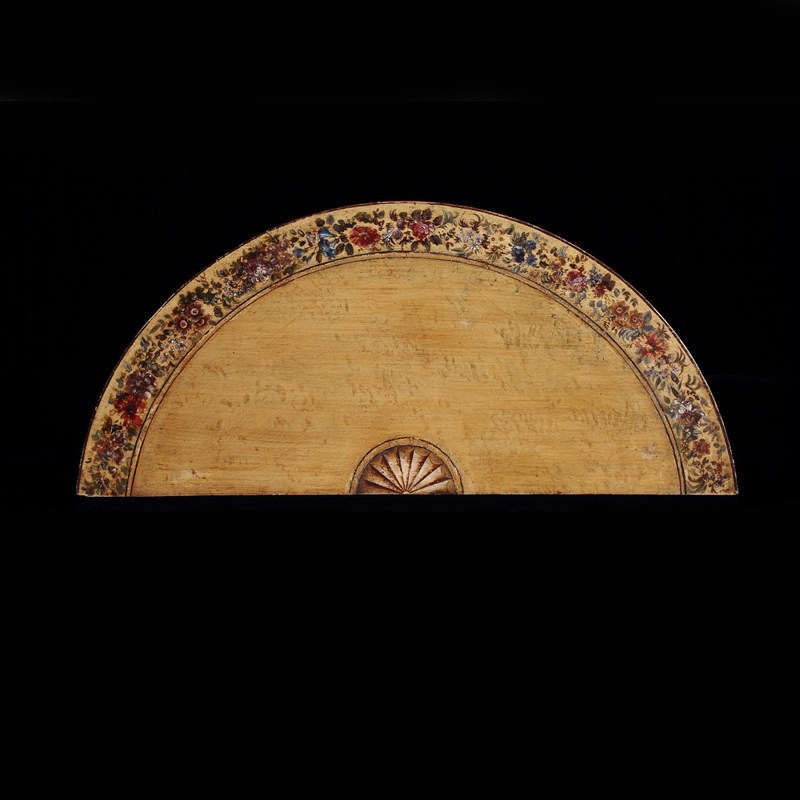
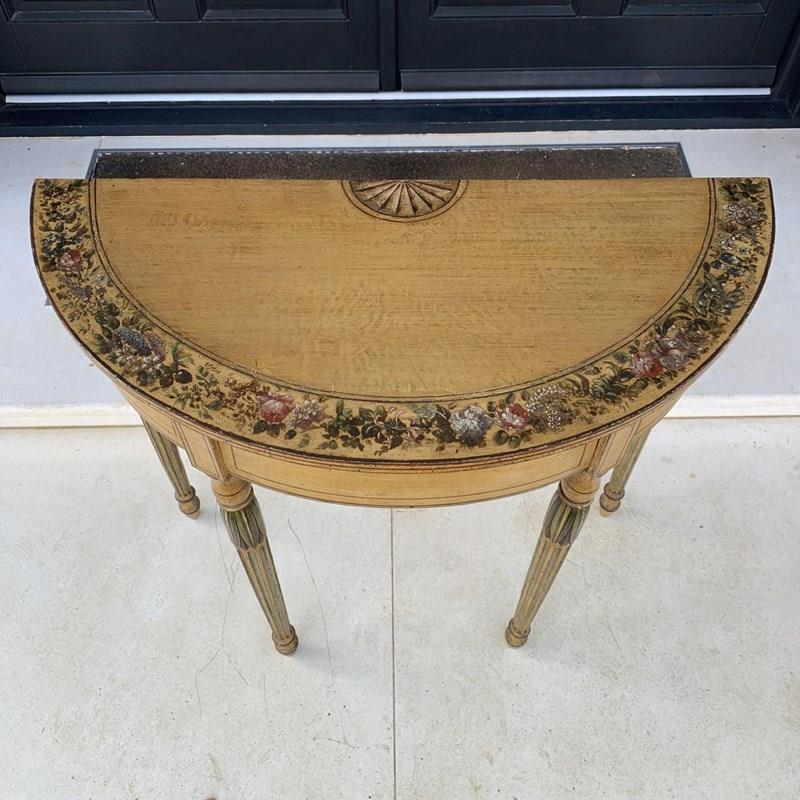
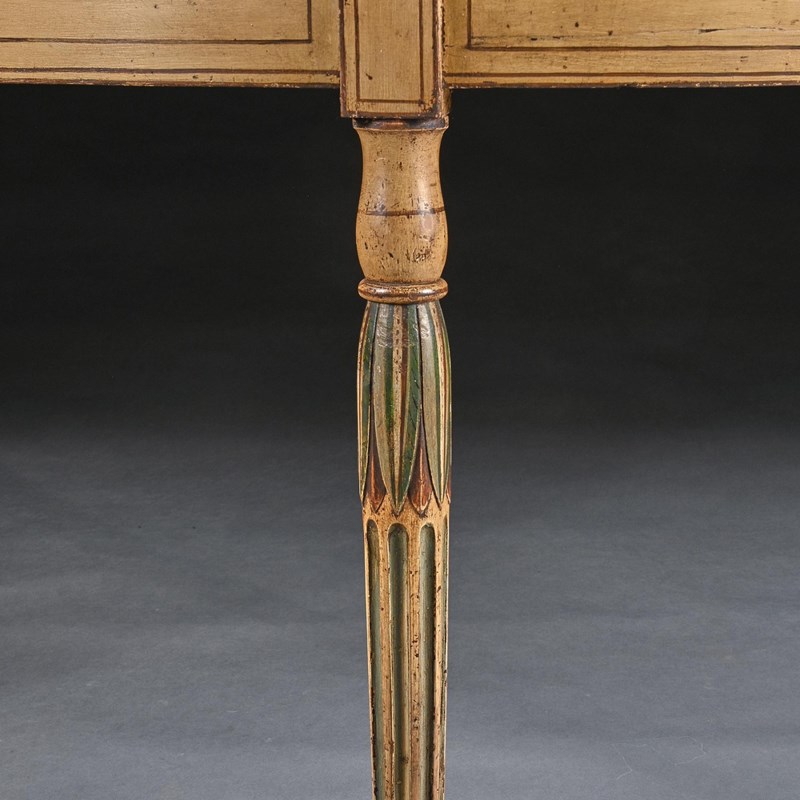
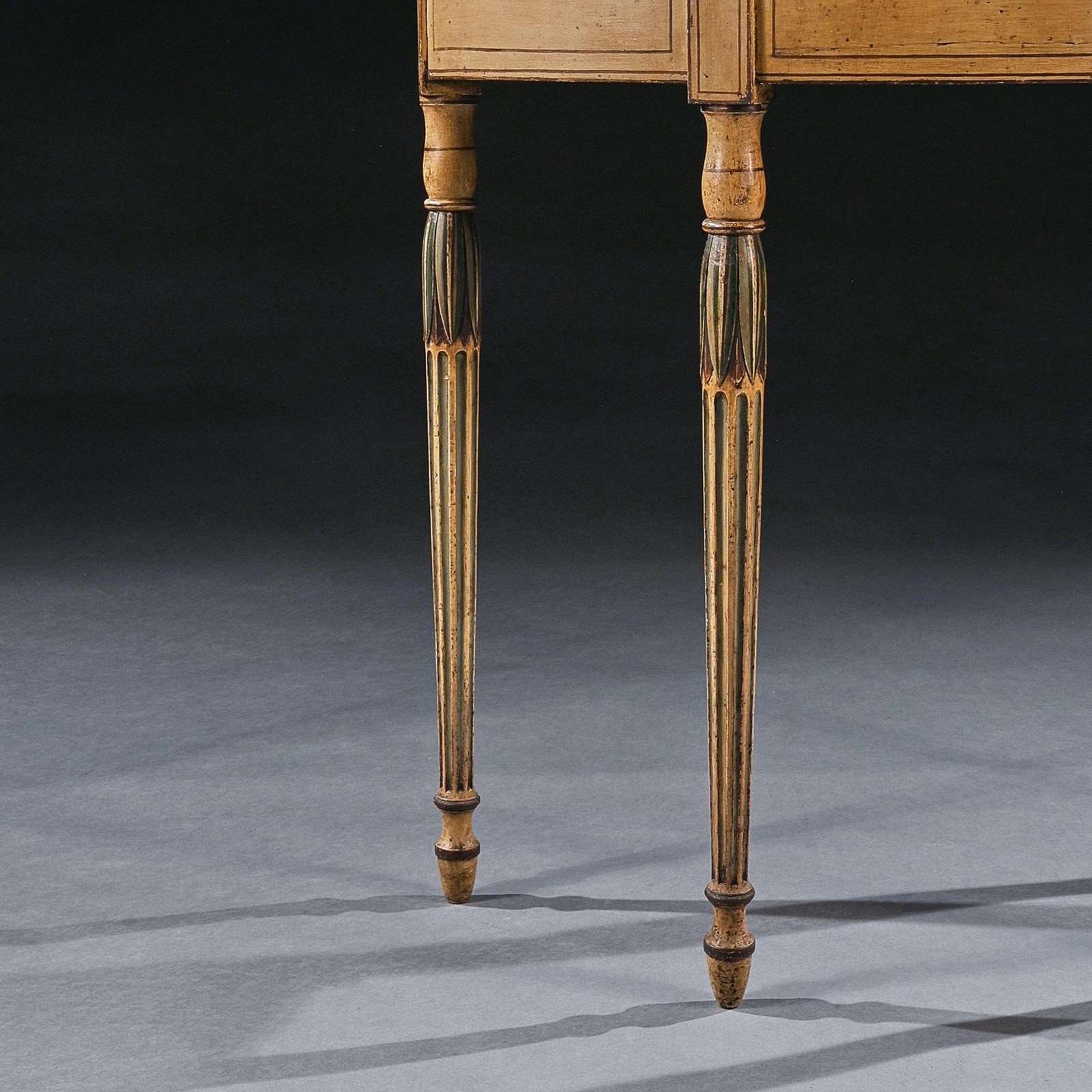
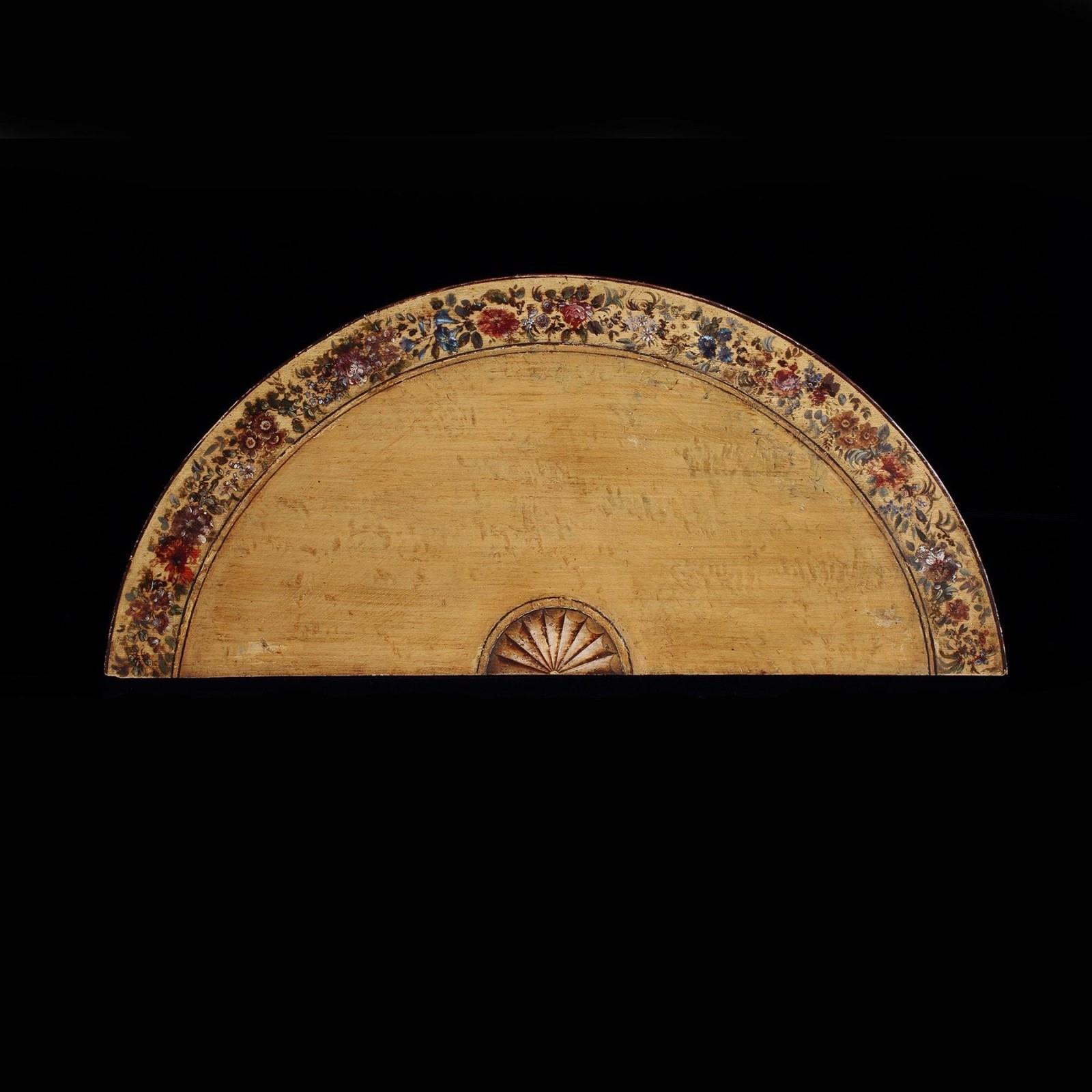
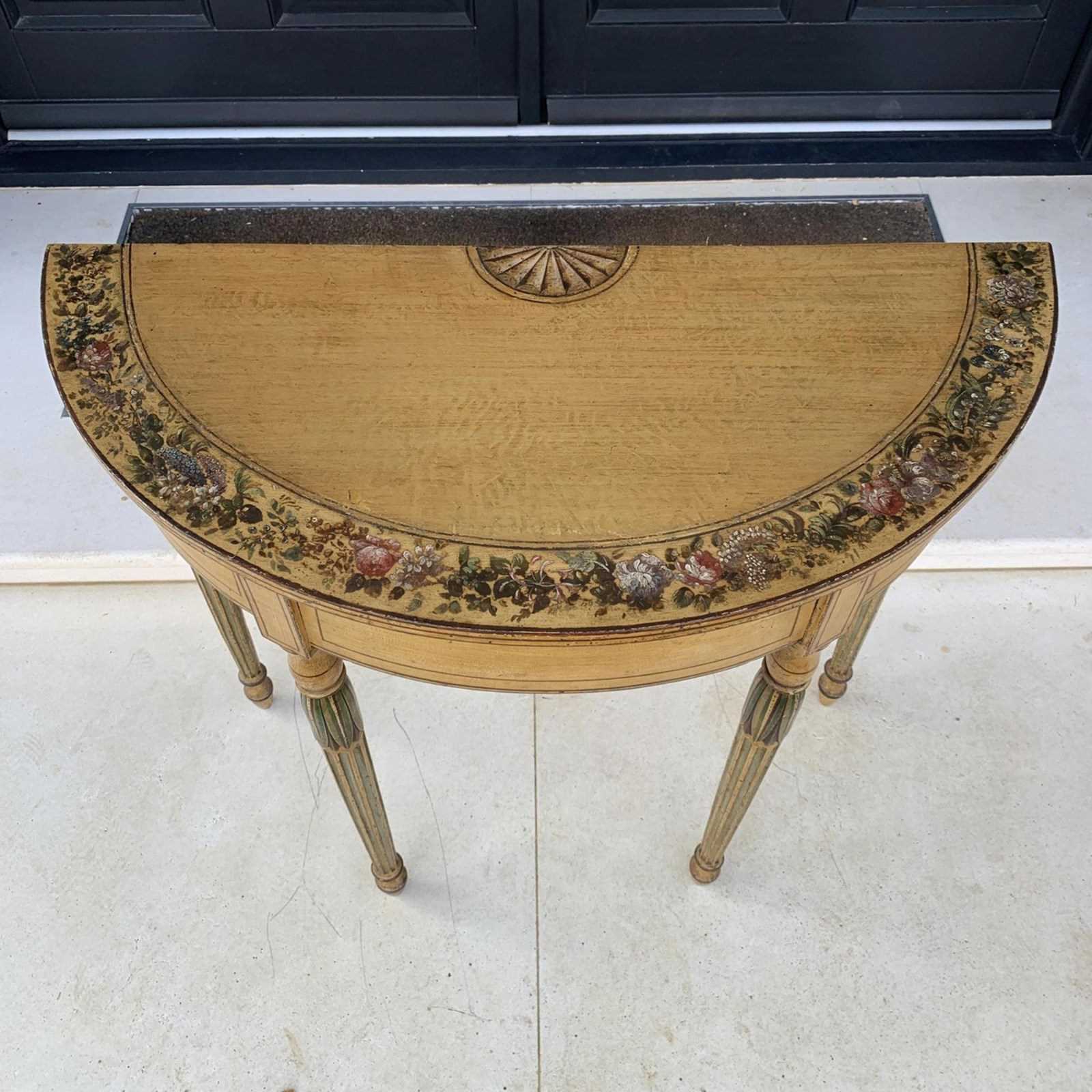
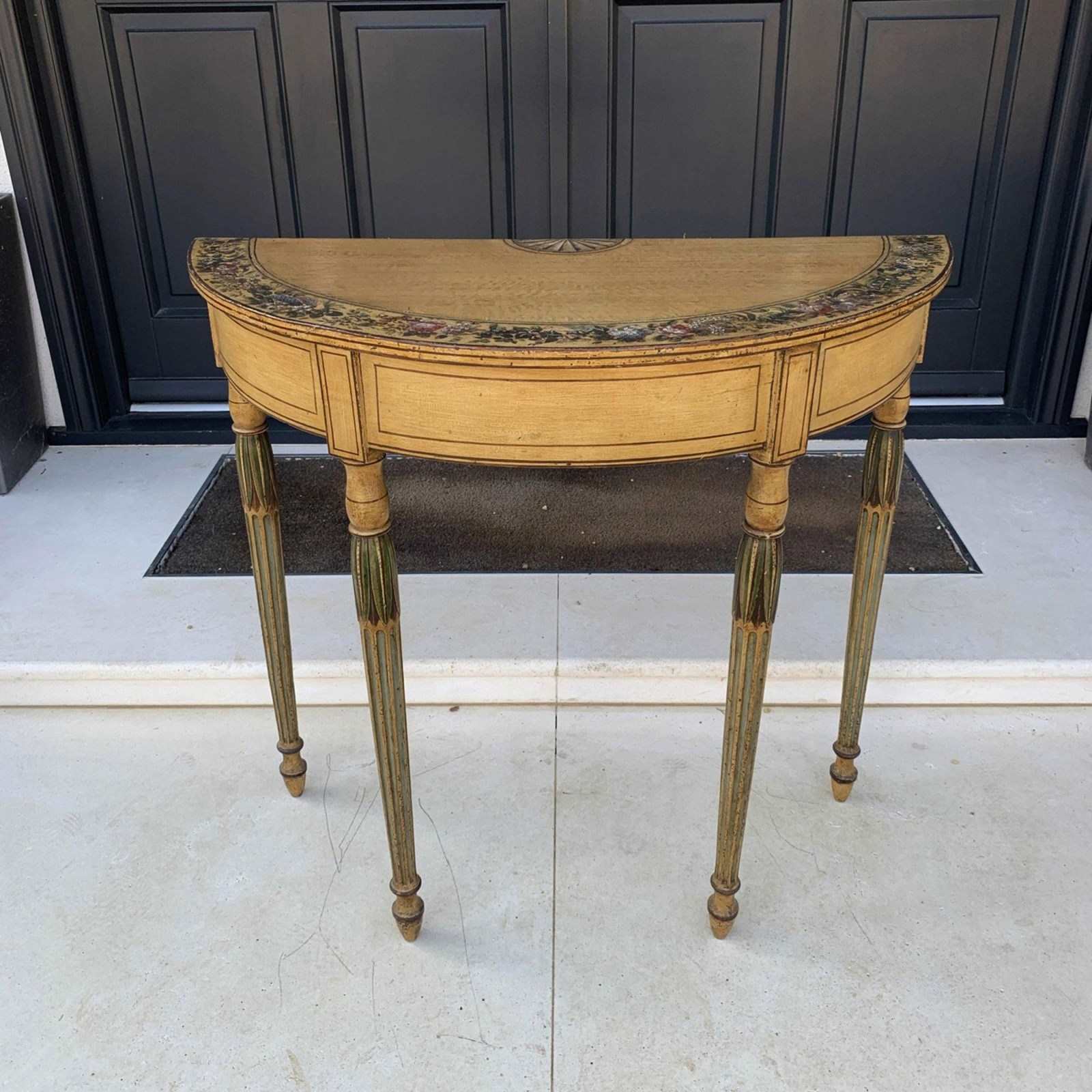
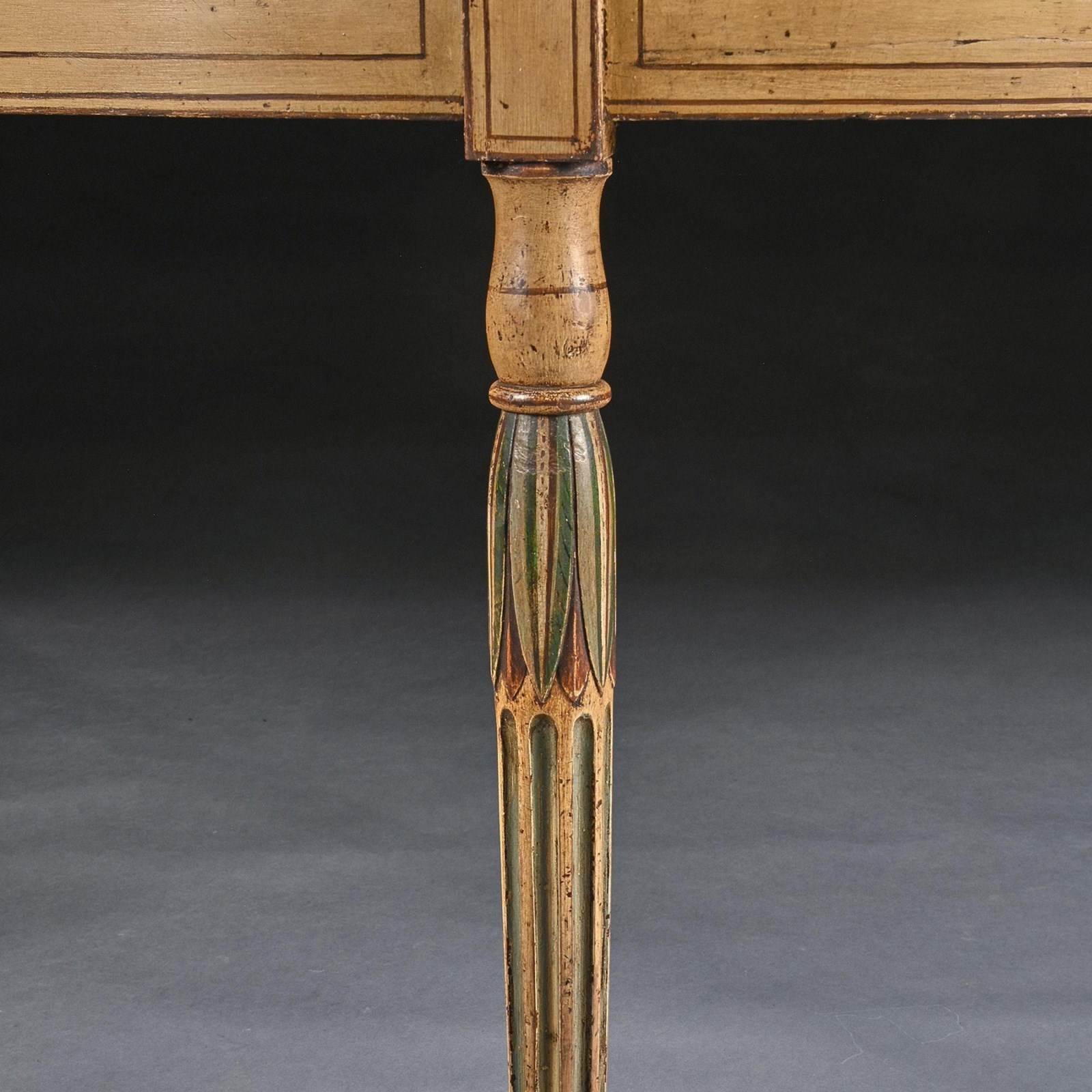
Of semi-circular or demi-lune shape, this fine table is decorated throughout with a painted wood grained finish in imitation of pale west Indian satinwood. This has then been embellished with painted panels on the frieze and end blocks in the geometric manner and with fine painted paterae and panels of flower painting on the top of the piece. The turned legs are likewise adorned with leaf painted sections and trompe l'oeil simulated fluting of exceptional quality. The paintwork survives in excellent original condition, a real rarity on pieces of this age, with only the solid paintwork to the top having been cleaned back and a waxed coating applied to protect it from damage through use.
The demi-lune design is of the most widely-seen and successful of late 18th century table forms with examples being designed by the likes of Sir William Chambers, James Wyatt and of course, Robert and James Adam. Tables of this form were made by all the leading cabinetmakers of the period but the present example can be attributed to the firm of Seddon, Sons and Shackleton of Aldersgate Street based on the fine paintwork which was a hallmark and speciality of the firm's production.
The cabinet-making firm established by George Seddon in the early 1750s was a prolific one. In the Gentleman's Magazine of 1768 an entry noted a fire on the premises of Mr. Seddon, 'one of the most eminent cabinet-makers in London', which resulted in £20,000 in damages; in 1783 another fire destroyed an enormous £100,000 in property.
The German diarist Sophie von La Roche visited Seddon's workshops in 1786 and wrote extensively about her visit. Her remarks read as follows:
'We drove first to Mr. Seddon's, a cabinet-maker, and before leaving for Windsor I must tell you a little about our unusual visit there. He employs four hundred apprentices on any work connected with the making of household furniture-joiners, carvers, gilders, mirror-workers, upholsterers, girdlers-who mould the bronze into graceful patterns-and locksmiths. All these are housed in a building with six wings. In the basement mirrors are cast and cut. Some other department contains nothing but chairs, sofas and stools of every description, some quite simple, others exquisitely carved and made of all varieties of wood, and one large room is full up with all the finished articles in this line, whilst others are occupied by writing-tables, cupboards, chests of drawers, charmingly fashioned desks, chests, both large and small, work- and toilet tables in all manner of wood and patterns, from the simplest and cheapest to the most elegant and expensive.
Charming dressing-tables are also to be seen, with vase-shaped mirrors, occupying very little space, and yet containing all that is necessary to the toilet of any reasonable person. Close-stools, too, made like a tiny chest of drawers, decorative enough for any room. Numerous articles made of straw-coloured service wood and charmingly finished with all the cabinet-maker's skill. Chintz, silk and wool materials for curtain and bed-covers; hangings in every possible material ; carpets and stair-carpets to order ; in short, anything one might desire to furnish a house ; and all the workmen besides a great many seamstresses ; their own saw-house too, where as many blocks of fine foreign wood lie piled, as firs and oaks are seen at our saw-mills. The entire story of the wood, as used for both inexpensive and costly furniture and the method of treating it, can be traced in this establishment'.
This remarkably evocative and useful account has long been used by furniture historians to demonstrate the size and importance of the firm but despite this, and the fact that George Seddon left upon his death an estate worth some £36 million in modern terms, few pieces by the firm are labelled or can be connected with the small number of documented commissions.
Width: 33 inches - 84cm
Height: 30 inches - 77cm
Depth: 14 1/2 inches - 37cm
Item Info
Seller
Seller Location
Stevenage, Hertfordshire, Hertfordshire
Item Dimensions
H: 77cm W: 84cm D: 37cm
Period
Circa 1795
Item Location
United Kingdom
Seller Location
Stevenage, Hertfordshire, Hertfordshire
Item Location
United Kingdom
Seller Contact No
+44 (0)1438 869819
More from LOVEDAY